

Based on a legacy article about a regional mover franchise switching from cardboard to foldable moving bags, plus product spec notes on handles, straps and folding storage.
A regional mover ran the numbers on a foldable moving bag and approved the purchase on the spot. The bag cost more than a cardboard box, so the franchise assumed the premium had to come back somewhere else, and the vendor's slide said it would. That assumption is where most of these programmes start to go wrong.
The pitch sounds like free money. Buy a reusable bag once, stop buying cartons on every job, and watch equipment spend fall. It reads as a straightforward swap, and the arithmetic on the slide is usually clean. What the slide leaves out is the number that actually decides the outcome: how many times each bag comes back to the warehouse in usable condition.
The pitch that sounds like free money
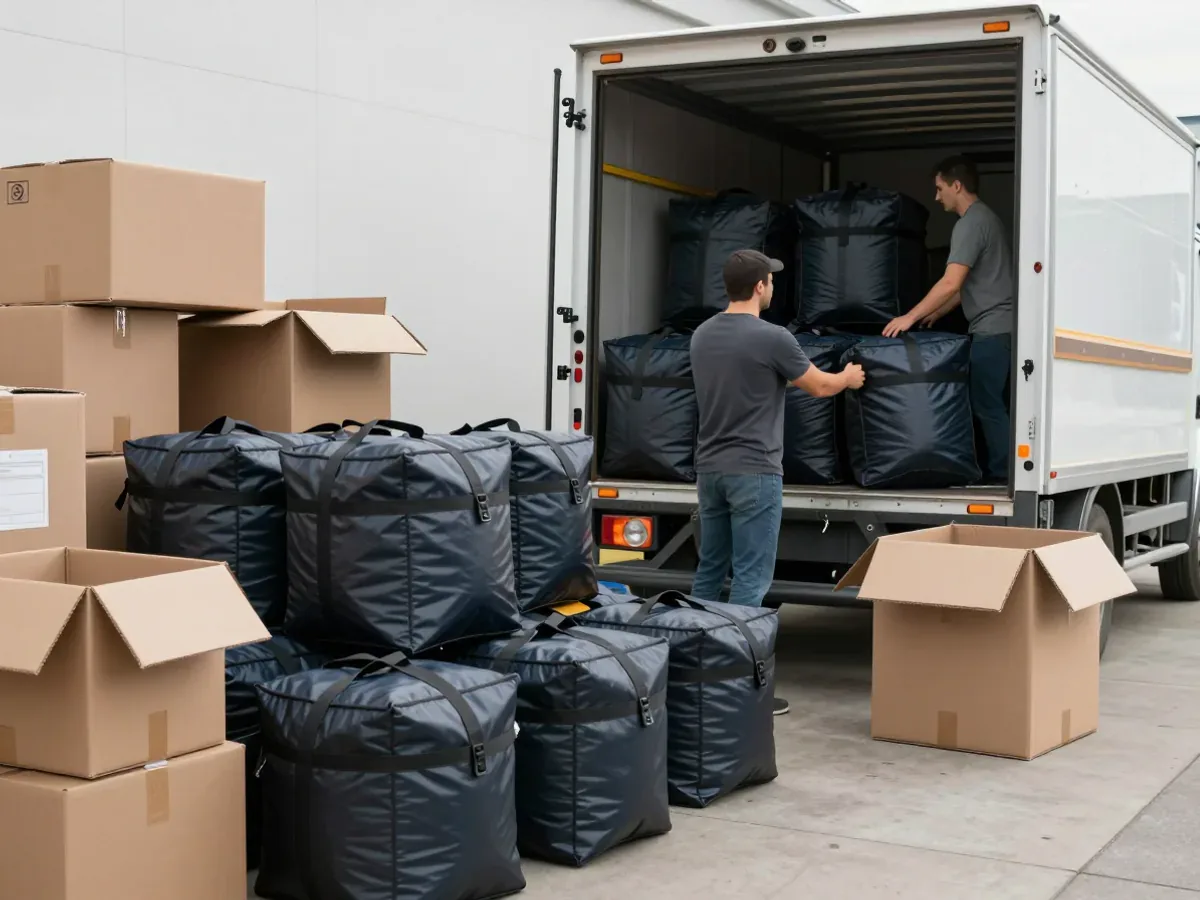
A moving franchise buys boxes, tape and packing material on every job, and that spend repeats with each move. A single move can consume dozens of boxes that are used once and discarded. Foldable moving bags change that math because one bag can replace a one-use box and survive many moves.
That is the claim, and it is not wrong. A reusable bag does replace a carton, and a franchise that buys foldable moving bags instead of cardboard boxes can cut its equipment spend materially. The problem is the word "can." It describes a possibility, not a guarantee, and the difference between the two lives in the reuse count.
Why the bag price looks like the whole story
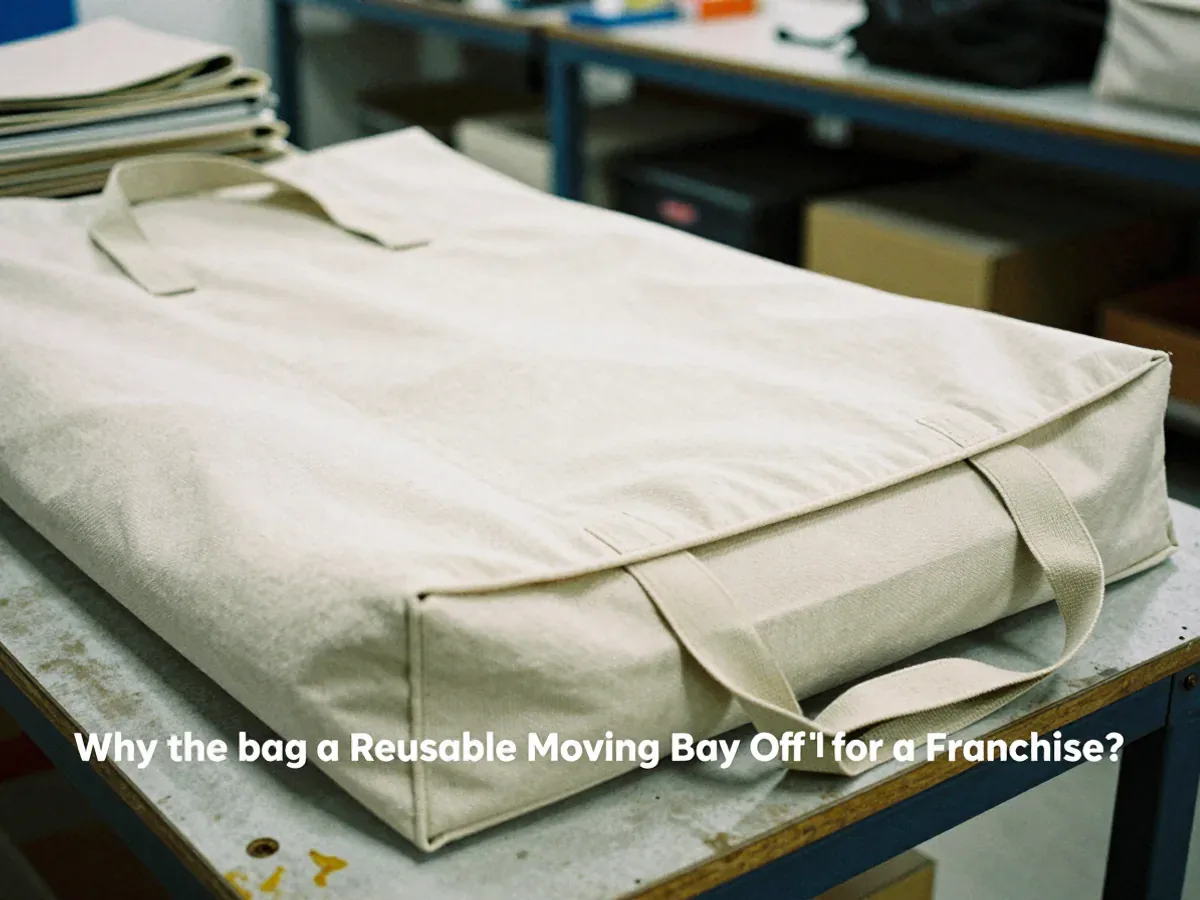
When a buyer compares a foldable moving bag against a cardboard box, the comparison is one line item against another. The bag costs more per unit. The box costs less. On that single line, the box wins every time, and the buyer has to justify the gap with something.
The justification usually comes from the vendor in the form of a reuse assumption. If the bag lasts ten moves, the cost per move drops well below the box. If it lasts two, the bag is more expensive than the carton it replaced, and the franchise has spent money to make its equipment budget worse.
The saving is not in the bag's price but in the reuse count. A cardboard box survives one job; a heavy-duty bag rated to 80 lbs survives many. The franchise that rationalises its moving equipment to reusable bags cuts the repeat spend, but only if the bags keep coming back.
Where the arithmetic breaks on a real job

On paper, every bag survives every move. On a real job, the bag meets a crew that loads it in the rain, drags it across a threshold, stacks it under heavier items and lifts it by whatever edge is closest. The failure points are rarely the fabric panel. They are the handle, the zipper and the strap join.
A bag that tears on the second job does not deliver the reduction. It delivers a replacement order, a crew that stops trusting the bag and a warehouse shelf full of units that failed early. The franchise then faces a choice between buying more bags and quietly returning to cartons, and the second option usually wins because it is familiar.
There is a second break in the arithmetic that buyers notice later. A bag that folds flat is only an advantage if the warehouse has a place to put it and a process to bring it back. Because it folds flat, a franchise can slot it efficiently and load it onto a truck without wasting space, but that only holds when the return loop is managed rather than assumed.
What a franchise should actually measure before switching
The measurement that matters is not the bag price. It is the number of round trips a bag completes before it leaves service, and that number has to be observed rather than quoted. A pilot on one truck and one crew, tracked over a set number of jobs, will tell a franchise more than any vendor slide.
Track three things during the pilot. First, how many bags return from each job and how many are missing or damaged beyond use. Second, which component fails first, because that tells the buyer what to reinforce in the next order. Third, how much warehouse space the folded bags consume between jobs, since a bag that saves money on cartons but eats a bay is not free.
A franchise that runs this for a month will have a real reuse count instead of a promised one. That count, multiplied by the bag's unit cost, gives a cost per move the buyer can defend to the finance team. Without it, the switch is a guess dressed up as a plan.
How to spec a bag around the reuse loop

Once the reuse count is known, the spec should be written to protect it. The bag has to survive the operational abuse of professional moving. TIIOCTI builds heavy-duty moving bags from woven PP or Oxford, holding up to 80 lbs, with reinforced cross-stitched handles and a double-zipper closure. Those details exist because the handle and the zipper are where reuse is lost.
The strap system deserves the same attention. A surrounding strap spreads the load on a large moving bag, and a metal D ring sewn into the strap join gives the crew a fixed point to grab instead of a seam. A reinforced side handle lets a loaded bag be lifted with two hands, which is how a crew actually moves a full bag up a stairwell.
The body matters too. A tear resistant body with a black webbing handle will take more contact with truck beds and door frames than a lighter shell. A zippered extra large tote for home or office packing gives the crew one closure to check instead of a folded flap that opens under load. Each of these choices is a bet on the bag coming back.
Folding flat closes the loop. A bag that folds flat for storage between jobs keeps the warehouse aisle clear and makes the return process quick enough that crews actually follow it. A bag that does not fold gets stacked in a corner and forgotten, and a forgotten bag has a reuse count of one.
A short self-check before the first order
Before the first order goes out, a franchise can run a short list against the sample and the plan. None of it requires a lab, and all of it catches the failures that turn a saving into a cost.
- Does the sample carry a load at the rated weight without the handle stitching pulling?
- Does the zipper run cleanly when the bag is full and the sides are under tension?
- Does the strap join hold when the bag is lifted by one strap from a loaded position?
- Does the bag fold flat to a size the warehouse can slot without a dedicated bay?
- Is there a written return process so bags come back to the warehouse instead of ending up on a customer's shelf?
- Has the reuse count been observed on a pilot, or is it still a vendor assumption?
A franchise that can answer all six has a defensible case for the switch. One that cannot is buying a bag and hoping the arithmetic works, which is the same bet as buying cartons and hoping the price falls.
FAQ
How many moves should a reusable moving bag survive before it pays back?
The payback point depends on the bag price and the carton spend it replaces, and both are commercial terms a franchise should confirm with its own numbers. The useful rule is to observe the reuse count on a pilot rather than accept a quoted figure, then compare cost per move against the carton baseline.
What load should a heavy-duty moving bag handle for professional use?
TIIOCTI's woven PP or Oxford bags hold up to 80 lbs with reinforced cross-stitched handles. A franchise should test the sample at its own typical load, since crew habits and item mix vary by route.
Does folding flat actually matter for warehouse space?
It matters when the return loop is managed. A bag that folds flat can be slotted efficiently and loaded onto a truck without wasting space, but only if the warehouse has a place for it and a process to bring it back.
What handle and strap details should a franchise check on a sample?
Check the cross-stitched handle under load, the double-zipper closure when the bag is full, the surrounding strap that spreads the load, the metal D ring at the strap join and the reinforced side handle for two-handed lifting. These are the points where reuse is usually lost.






