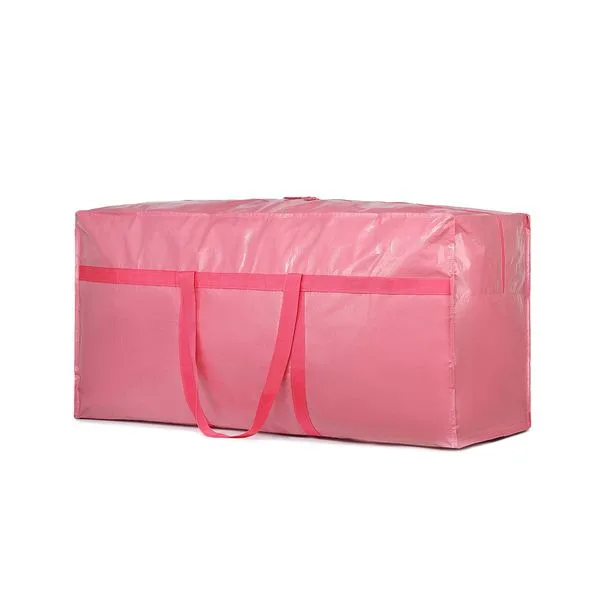
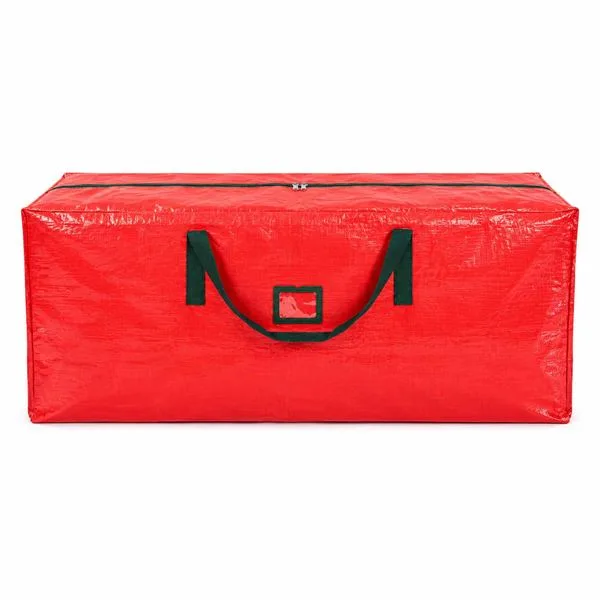
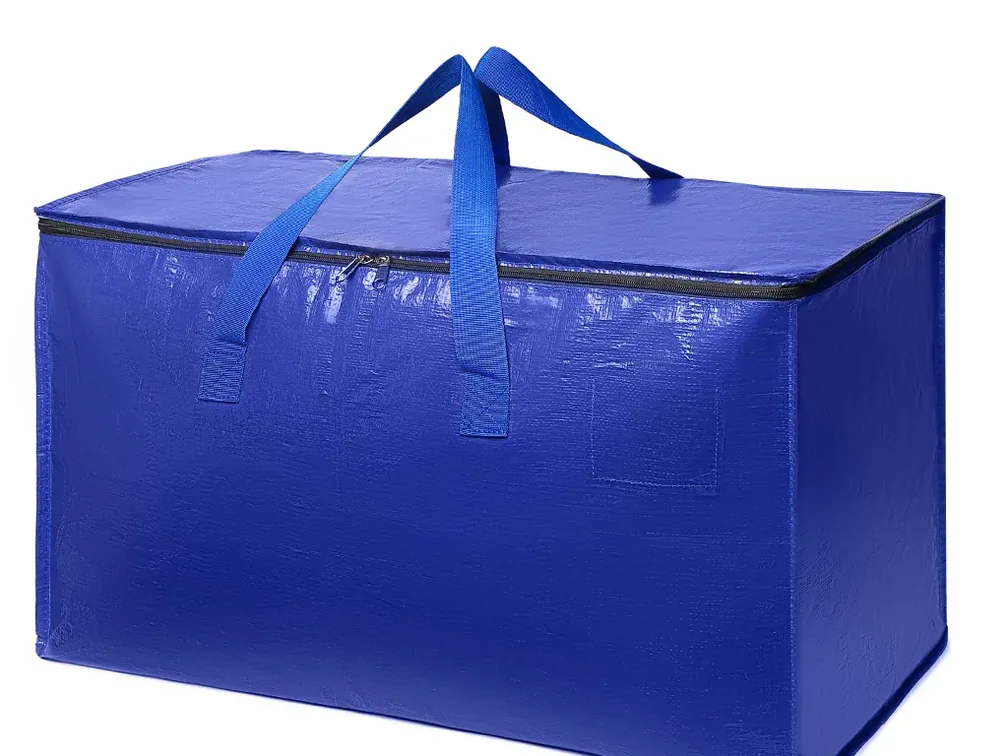
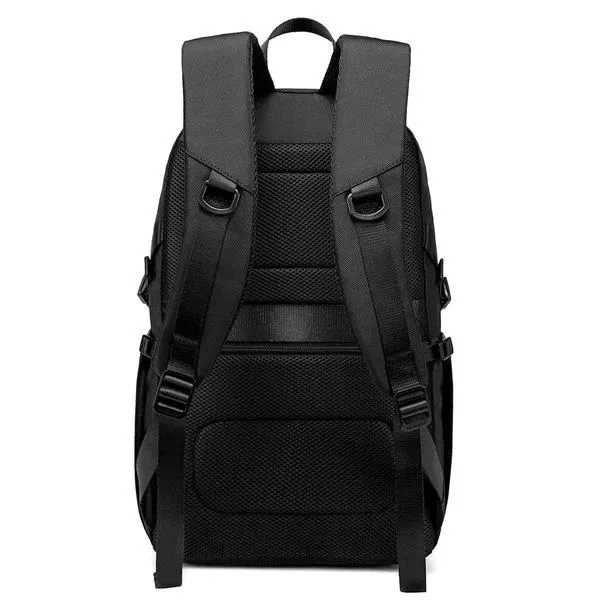
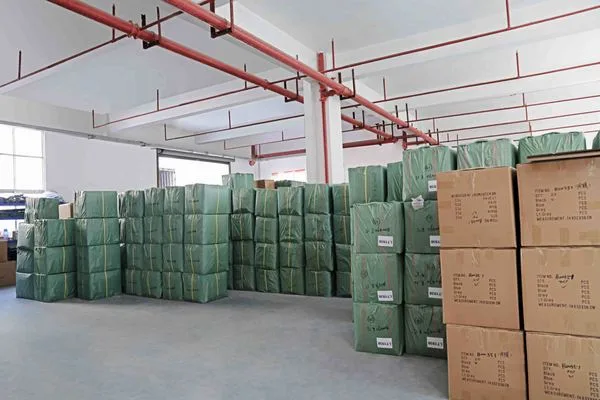
Based on a standard moving bag purchase order and production line checks.
A purchase order for 10,000 moving bags listed the body as 60 by 35.4 in, and the buyer's freight forwarder converted it to 24 by 35 inches. The conversion looked clean on paper, but the handle drop length had been written in centimetres only, and nobody noticed the mismatch until the carton dimensions came back from the forwarder. That single unit slip is a small version of a larger problem: a moving bag spec sheet carries claims that look like facts, and the buyer has to decide which ones actually protect the order.
The certification line on a supplier's website does not cover the refund when a handle tears on a third-floor landing. What matters is whether each claim on the sheet ties to a document, a test, and a physical feature the buyer can check. Walking down a typical moving bag spec sheet, line by line, shows where the real risk sits.
The capacity number and the load path behind it

The first line on most moving bag sheets is a capacity figure in pounds or kilograms. It reads like a single fact, but it is a summary of several decisions: the woven body, the seam, the handle webbing, and the stitch pattern at the join. A number without those details is a marketing line, not a specification.
Ask what the capacity figure was measured on. A static lab figure describes a bag sitting still with weight inside it. A moving crew does something different: it lifts, swings, and sets the bag down on a truck bed, often with the load shifting inside. The sheet should say which condition the number describes, and it should name the test method behind it.
The physical check is simpler than the paperwork. Look at where the handle meets the body. A dense stitch block at the join spreads the load across more fabric than a single row of stitching. An X stitch at each end of the handle join locks the webbing against pull in two directions. A nylon webbing handle stitched into the bag body carries the load through the seam rather than through a bar tack alone.
Handle attachment: stitch pattern, load path, and the test behind it

The handle is where most moving bag complaints begin, and it is the line buyers read fastest and verify least. A sheet that says "reinforced handle" has said almost nothing. The useful version names the webbing material, the stitch type at the join, and the test the attachment passed.
On the bench, the check is visual and measurable. A tape measure across the stitch block shows whether the join is as wide as the sample approved. The stitch count per centimetre shows whether the sewing floor held the density the sample carried. If the sheet claims a load figure for the handle, the report behind it should describe how the handle was pulled and what failed first.
This is also where a system certificate misleads. A factory can hold a quality management certificate and still ship a handle with a thin stitch block, because the certificate describes how the factory manages process, not how strong this bag's handle is. The document that speaks to the handle is a product test report tied to the bag's construction.
Material and sustainability claims: what the paperwork must tie to
Recycled content claims appear on more moving bag sheets every season, and they arrive in two very different forms. One is a material statement: the supplier says the woven polypropylene contains recycled resin. The other is a chain-of-custody document that traces a specific lot of material from source to finished bag.
Only the second form survives a retail audit. A material statement with no transaction record behind it gives the buyer a claim to repeat and nothing to defend. When a retail buyer asks for proof, the supplier needs a document that names the material, the quantity, and the lot the bags were made from.
The verification step is to ask for the document that covers the specific order, not the factory's general certificate. A certificate framed on the office wall covers a scope and a period. A transaction record covers the material in this lot. If the sheet claims recycled content, the paperwork should name the lot and match the ship date.
Bottom corner and label area: small lines that decide returns

Two lines near the bottom of a moving bag sheet get almost no attention and cause a steady share of returns. The first is the bottom corner. A moving bag spends its working life being dragged, set down, and loaded, and the bottom corners take that contact. A corner with its own stitch reinforcement holds its shape; a corner finished like the side seam starts to open after repeated contact with a truck bed.
The second is the label area. A clear label area stitched on the bag face lets a moving company mark a bag with a job number, a room, or a client code. If the sheet promises a label area, check that it is stitched rather than printed, and that the clear panel is sized for a standard label. A printed white box looks like a label area in a photo and peels in a warehouse.
Neither line carries a certification, and both decide whether the end customer keeps the bag in service. The check is a bench inspection: measure the corner reinforcement, confirm the label panel is stitched, and compare both against the approved sample.
The line most buyers skip: dynamic load and drop performance

The capacity figure at the top of the sheet describes a static load. The number that predicts field failure is a dynamic one: what happens to the bag after repeated drops and lifts with weight inside. A bag that holds its rated load in a lab can fail well below that figure after a series of drop cycles, because each drop works the stitch block and the seam.
A sheet that carries only a static figure has left the most useful test out. The buyer should ask whether the supplier has drop test data for this construction, and what the failure looked like when it came. A handle that pulls out of the seam and a seam that opens along the side tell different stories about where to reinforce.
This is the line where the difference between a system certificate and a product test report becomes concrete. The system certificate says the factory has a process for checking quality. The drop data says this bag, built this way, survived this many cycles at this weight. Only the second one tells the buyer what to expect on a staircase.
How to verify each claim before the lot ships

Verification is a sequence of document requests and bench checks, and it can run before the bulk order is placed. Start with the sheet itself: mark every line that carries a number, a material claim, or a performance word. Each marked line needs a document and a physical feature behind it.
For the handle, ask for the product test report that covers the attachment, and confirm on the bench that the stitch block matches the approved sample. For recycled content, ask for the transaction record tied to this lot, not the factory's general certificate. For the label area and bottom corners, inspect the pre-production sample and measure both against the sheet.
The tape measure on the bench is the quietest tool in the process and the one that catches the most drift. Stitching measured before a lot is packed shows whether the sewing floor held the sample's density. Every bag passing a hand inspection on the line adds a second check, but the measurement is what turns a claim into a number.
Ask for updated test data on a schedule that matches the order cycle. A report from two years ago describes a construction the factory may have changed since. When a supplier cannot produce a product test report for the handle or a transaction record for a material claim, the buyer is carrying the risk that the sheet was written to look complete.
FAQ
What is the difference between a system certificate and a product test report?
A system certificate covers how a factory manages quality across its operation. A product test report covers one bag construction and one test, such as a handle pull or a drop cycle. The system certificate does not tell the buyer how strong this handle is; the product report does.
Can a supplier provide a certificate without a test report?
Yes, and it happens often. A factory can hold a quality management certificate and have no product-specific test data for the bag on the sheet. The certificate is real and the gap is real at the same time. Ask separately for the product report and treat a missing report as a missing claim.
How often should I ask for updated test data?
Ask for data that covers the construction currently in production, and refresh it whenever the supplier changes the weave, the webbing, or the stitch pattern. A report older than the current construction describes a different bag. For repeat orders, request the current report with each new lot.