
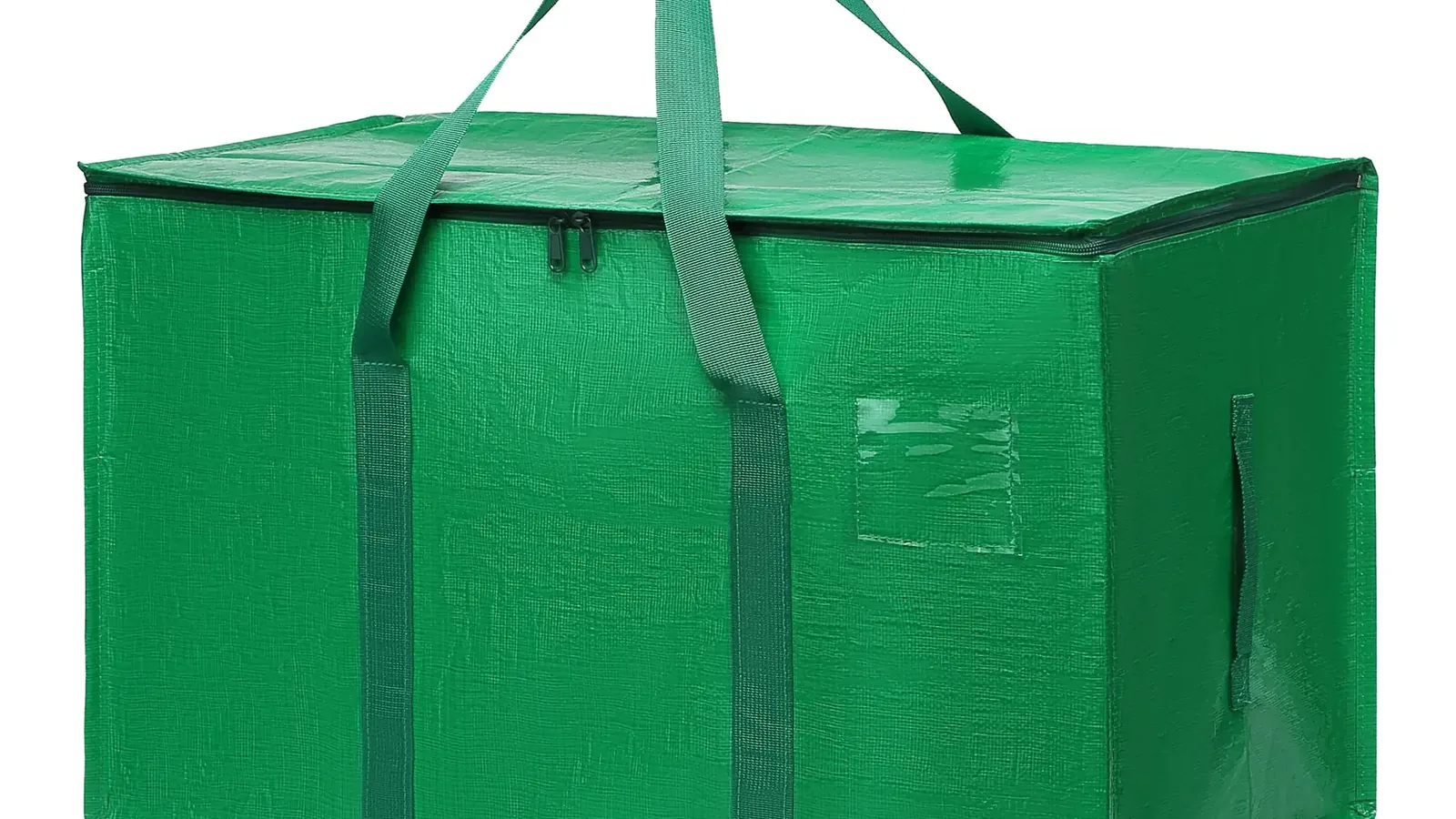
A buyer's pre-audit questions, answered with the checks that catch each moving bag factory red flag before a container is loaded.
Three moving bags sat on the buyer's table in the same size and the same navy shell. The sample from the first factory felt crisp and carried a clean print, while the second felt softer and the third had a handle that pulled slightly when lifted empty. He had already approved the first sample and booked a production slot, and he asked which of the three he should actually trust.
That question turned into an audit request, and the audit request turned into five more questions the buyer sent before anyone booked a flight. Each one pointed at a different part of the bag, and each one had a physical answer that did not need a laboratory. The order of the questions matters less than the fact that all five were asked before the container was sealed.
Why did the sample pass while the container failed?

The buyer’s first question was the one that started the audit. The sample he held had passed every visual box, yet a previous order from another supplier had come back with complaints within weeks of delivery.
Samples are built slowly, often by the most experienced operator on the floor, with materials pulled from a small stock. Production runs on a schedule, with whatever roll stock is staged and whatever machine is free. A polished sample proves that the factory can build one good bag, not that it can build ten thousand identical ones.
The practical answer is to audit the process, not the object. Ask to see the roll stock staged for your order, the machine set up for your seam, and the first five bags off the line. A factory that can only show a finished sample and not the setup behind it is showing a display piece.
Can a seam look fine and still open under load?

A seam can look perfectly straight and still be the weakest line on the bag. The buyer had run a thumb along the side seam of each sample and found nothing wrong, which told him very little.
The check that reveals the difference takes a pencil. Insert the tip between the stitch lines and apply gentle lateral pressure. A seam built for load resists and stays closed, while a lighter construction gaps open along the stitch line. The gap is the signal, not the appearance.
Ask the factory to name the stitch construction used on load-bearing seams and to show it running at the sewing station. A seam rated for heavy contents needs a construction that distributes stress, and a single line of stitching on a bag meant to carry weight is a shortcut that shows up in the field.
Thread matters alongside the stitch. Ask for the thread type and size, and treat a cotton-wrapped thread on a load seam as a warning, because it takes on moisture and weakens with repeated use. Then measure the fabric margin beyond the stitch line. If the allowance is too narrow, the fabric tears out before the thread ever fails, and the stitch becomes irrelevant.
How do you know the fabric weight did not change after the sample?
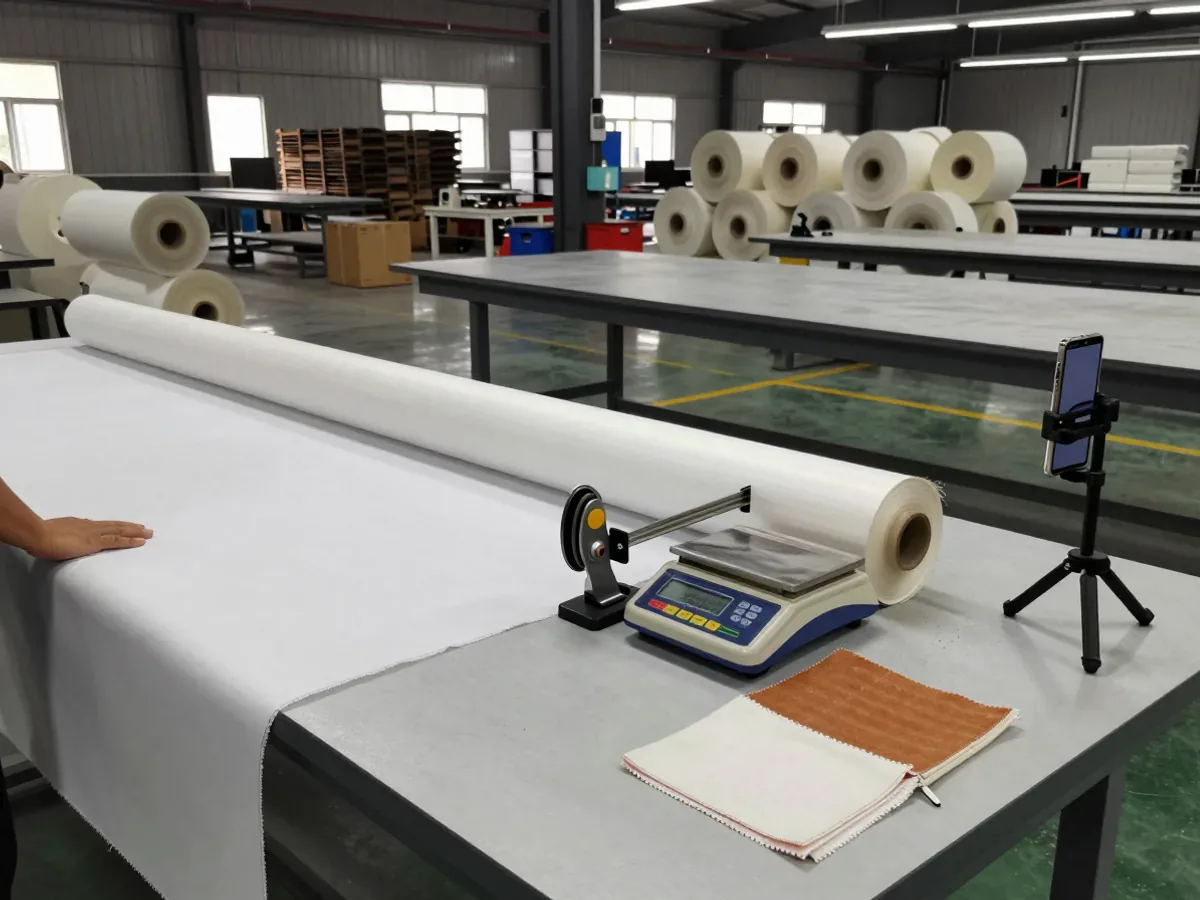
The buyer’s third question came from a story a colleague told him about a batch that felt lighter on arrival than the sample. He wanted to know how to catch that before the container left.
Fabric weight is the most common place for a quiet downgrade, because resin is the largest variable cost in a woven bag. A sample built from a heavier fabric feels substantial in the hand, and a production run built from a lighter one still looks the same under warehouse lighting. The reduction is invisible until the bag is loaded and the seams start to give.
The countermeasure is a live check before production starts. Request the fabric mill certificate with the batch number, composition, and declared weight, then cross-reference it against your purchase order. Schedule a video call and ask the factory to cut fabric from the rolls staged for your order, not from a swatch sitting on a desk.
Record the reading, the roll identification numbers, and the timestamp. A supplier that hesitates, or offers to send a photo later, has already told you something about how it handles material verification. The factories that resist a live check are usually the ones whose margin depends on the drift.
Is a zipper a zipper, or does the grade decide the return rate?

The buyer had assumed all zippers were roughly equivalent until he watched a colleague force a loaded bag closed and heard the teeth separate. That sound reframed the question.
Zipper failure is one of the dominant return drivers in bulk moving bag orders, and the cause is usually grade rather than defect. An apparel-grade coil is rated for a few hundred open and close cycles and can derail or split when the seam is loaded sideways. An industrial-grade coil is rated for thousands of cycles and keeps its teeth engaged under dynamic load.
The difference in cost per unit is small, and the difference in customer experience is not. During an audit, fill a sample bag to its rated load and work the zipper closed and open several times. A zipper that feels too smooth under load, or that separates at the curve, is telling you which grade you are holding.
Ask for the zipper rating in writing and check the pull for the coil size imprint. A bag that fails mid-move leaves the end customer with a floor covered in belongings, and that customer blames the brand on the bag, not the anonymous factory behind it.
What does a handle attachment hide until the first lift?
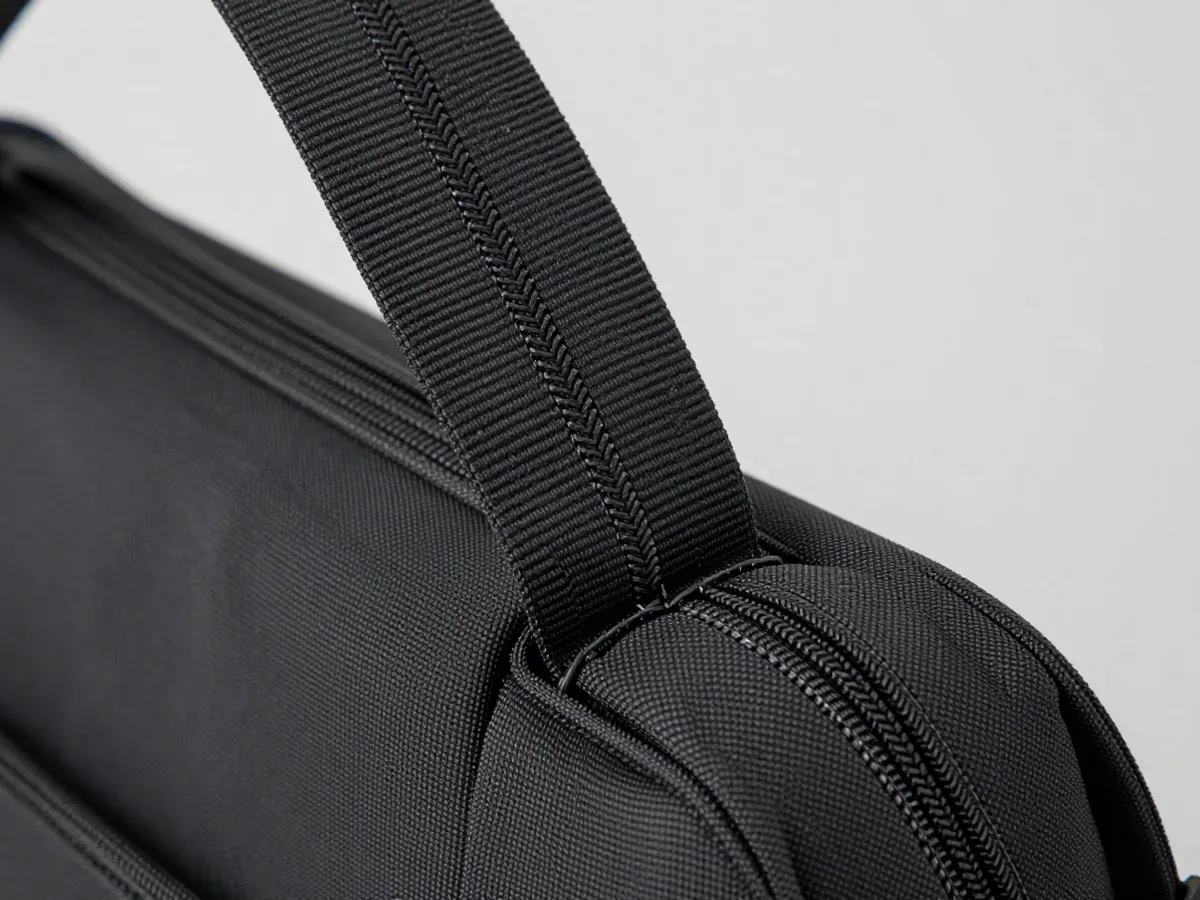
The third sample on the buyer’s table had a handle that pulled slightly when lifted empty. He had noted it and moved on, which is exactly how most handle problems survive an inspection.
Handle tear-out follows a predictable path. When a loaded bag is lifted, the stitch holes at the attachment base become stress concentrators, and a single line of stitching gives way along that path. Reinforcement in the form of a dense zigzag stitch block spreads the load across an area instead of a line.
The visual check is fast. Look at the attachment point for a dense rectangular stitch block rather than a single straight line. Then turn the bag inside out and confirm the reinforcement thread penetrates fully through the handle webbing and the bag body. Surface-only stitching that sits on top without full penetration is a common shortcut.
A field pull test with a pencil or screwdriver through the handle loop will show whether the fabric around the stitch holes starts to elongate. Ask for a photo or short video of the reinforcement width measured on the first samples off the line, and put the minimum width in the purchase order. A factory that refuses that request is telling you where it saves money.
Why does the print survive transit and fail the first wash?
The buyer’s last question came from a returned bag a retailer had sent back with the logo half gone. The print had crossed an ocean intact and come off in a washing machine.
Print failure on woven polypropylene is rarely an ink problem. It is a substrate preparation and curing problem. The raw surface has low energy, and ink needs the surface activated to bond mechanically. That activation decays within a short window, so a factory that treats rolls in advance and stores them before printing is shipping bags with an effectively untreated surface.
Ink chemistry matters next. Solvent-based and two-component systems bond to the treated surface, while cheaper water-based inks need an additive to hold. Cure dwell time is the third variable, and lines running for throughput often cut it short.
The field check is simple. Take a printed sample, turn it inside out so the print faces direct abrasion, and run one wash cycle with non-bleach detergent at a warm setting. Air dry it flat. Any peeling, cracking, or colour loss is a fail, and it will happen in the customer’s hands rather than yours.
The question the buyer had not asked yet
After five rounds of questions, the buyer had a list of checks and a folder of answers. He still had not asked the one that decides the fate of the whole container: whether the factory will let him watch these checks happen on his own order, live, before the run starts.
Every red flag above shares a property. Each one is invisible on a polished sample unless you know where to look, and each one is cheap to fix at the setup stage and expensive to discover after delivery. A factory that welcomes a pre-production video check on fabric weight, seam construction, handle reinforcement, zipper grade, and print cure is showing you its process. A factory that deflects any of those checks is showing you its business model.
The buyer who started with three bags on a table ended with a short audit script he could run in an afternoon with a pencil, a scale, and a phone. The sample on the table was never the question. The question was whether the factory could repeat it.
FAQ
Can these red flags be checked without a lab or a tensile tester?
Yes. A pencil between the stitch lines, a pull on the handle loop, a loaded zipper cycle, and one warm wash on a printed sample cover most of the list. The lab adds documentation, not discovery.
Should the audit happen before or after production starts?
Before. Fabric weight, seam setup, handle reinforcement, and print cure are all decided at setup, and a check after the run only tells you what you already own.
What documents should I request alongside the physical checks?
Ask for the fabric mill certificate with batch number and declared weight, the named stitch construction for load seams, the zipper rating, and the reinforcement width recorded on first-off samples. Match each document to something you saw on the floor.