
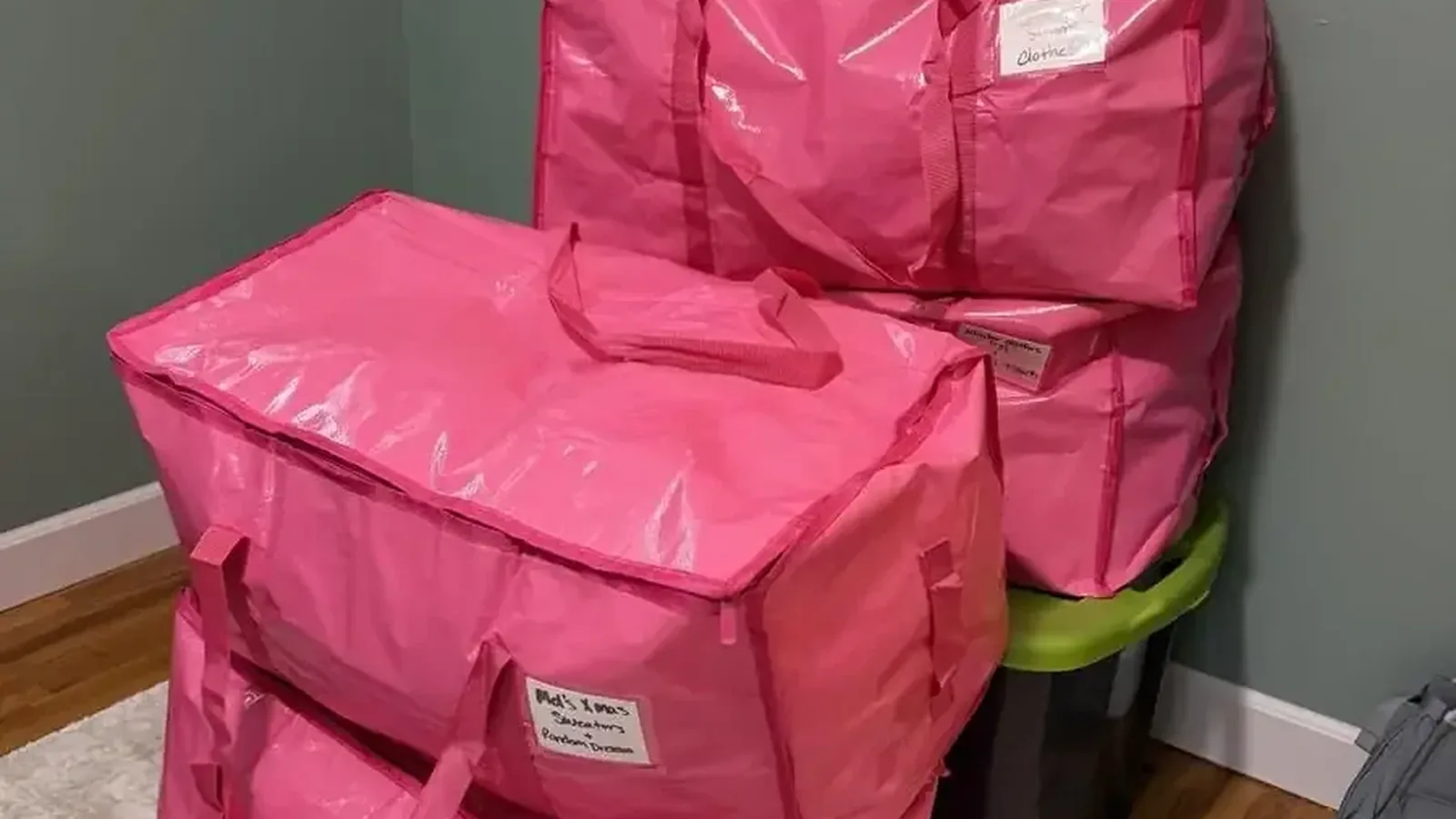
Based on palletization notes and product spec data for folded woven moving bags on standard 1200×1000 mm pallets.
A pallet of collapsed ECT-32 boxes failed a routine warehouse audit last spring, not because the cartons were damaged but because the stack had bowed outward by nearly a hand's width. The buyer had approved the pallet plan on paper three months earlier, and the numbers looked fine. What failed was the gap between a spec sheet and a real 1200×1000 mm pallet under load.
That failure led to a single question the buyer brought to the next planning meeting: how many moving bags actually fit on one pallet, and does that number hold after a month in the rack? The questions that followed are the ones most buyers work through in the same order. Here is how each one resolves when you put folded bags and collapsed boxes side by side.
How many bags on one pallet, and why the answer is a range
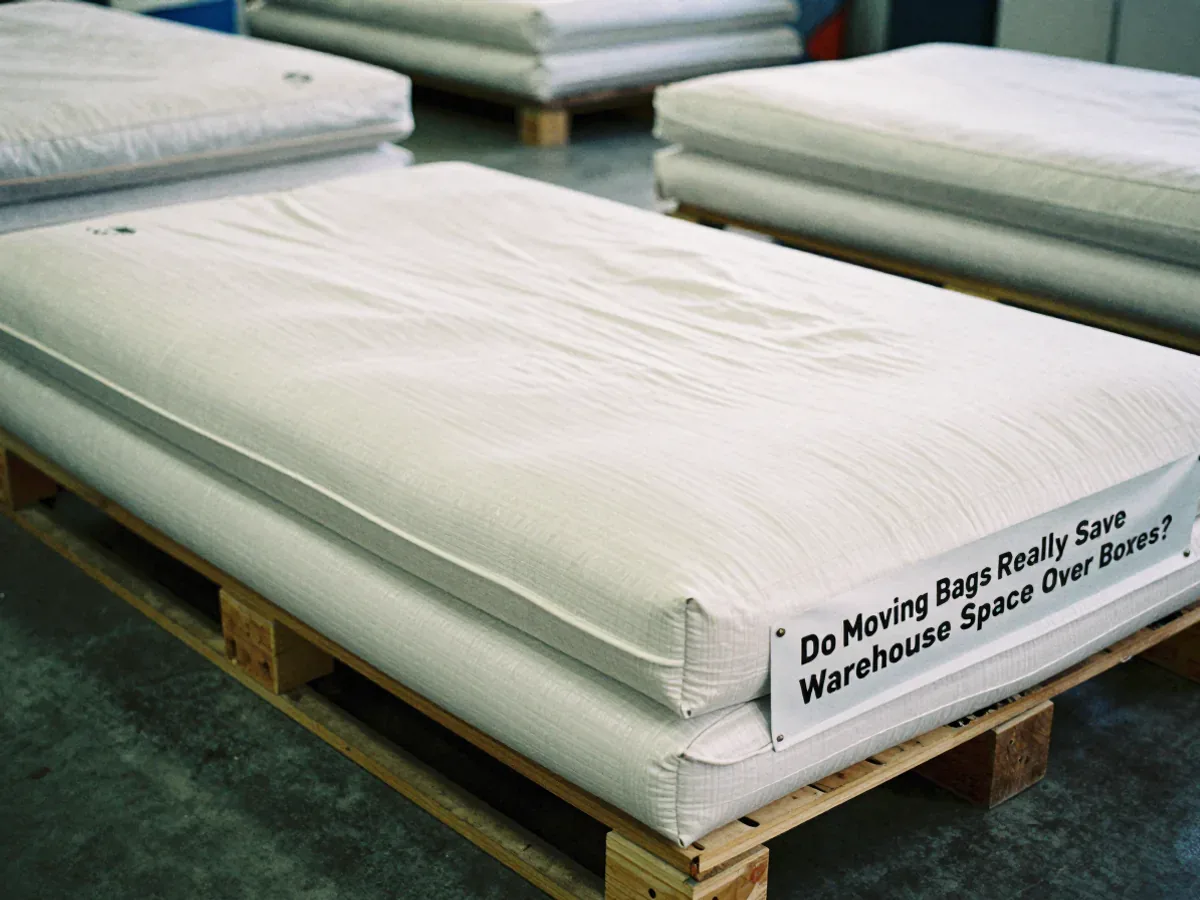
The first answer is not a single number. When folded, standard heavy-duty 120gsm woven polypropylene bags nest uniformly, and a 1200×1000 mm pallet takes a layer of 12 to 15 bags depending on the bag’s specific dimensions. Stack height then sets the total, so a shorter bag builds more layers before you hit your rack ceiling.
That range is the point. A buyer who asks for one fixed figure is really asking whether the supplier has measured anything at all. The bag dimensions drive the layer count, the layer count drives the pallet height, and the pallet height decides whether the load clears the beam.
Collapsed boxes rarely give you a clean range because they do not nest. Inconsistent folds, corner damage, and natural bowing under their own weight create air pockets, and those pockets waste an average of 12% of theoretical storage density. The box pallet looks taller on the drawing and shorter in the aisle.
What the 1200×1000 mm pallet holds when bags are folded
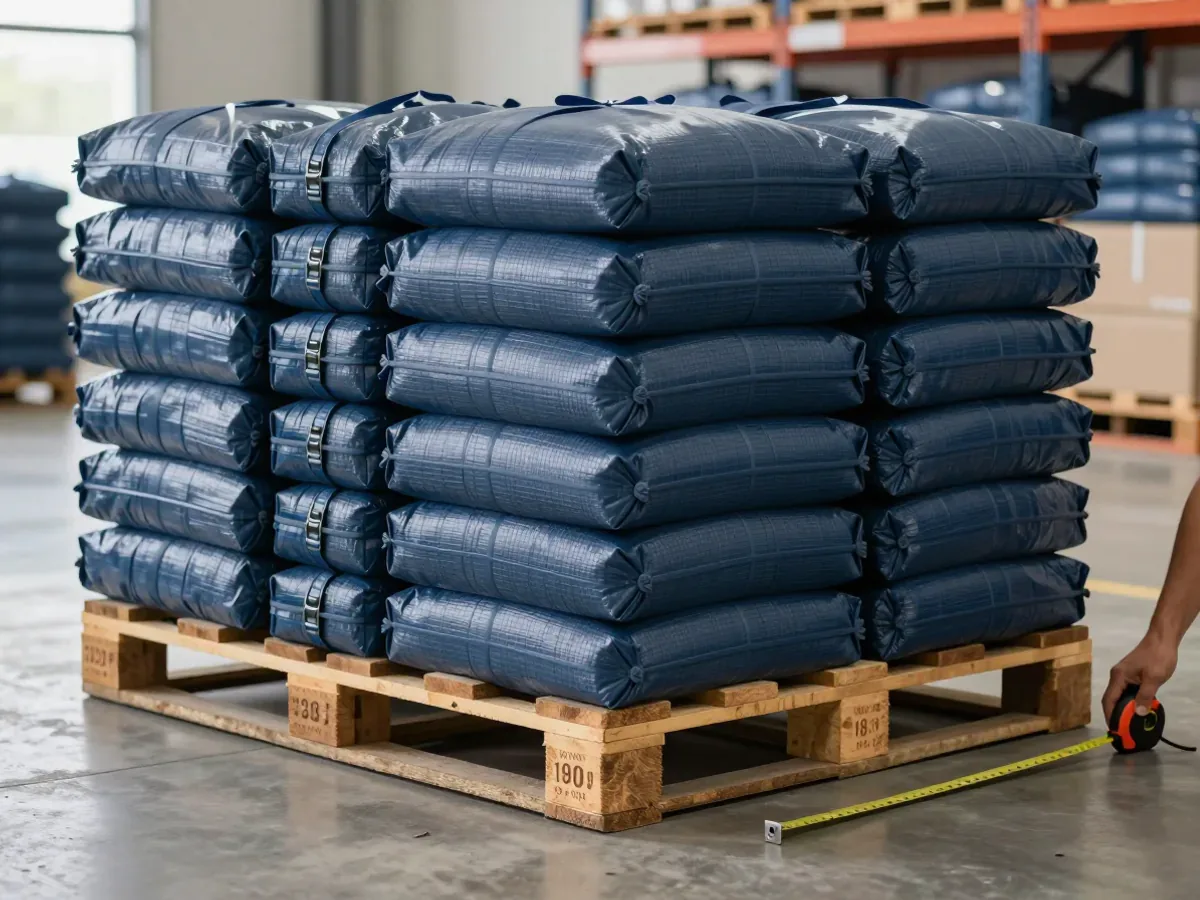
The 1200×1000 mm industrial pallet is the format that moves through most distribution centers, so it is the only format worth testing against. On that footprint, folded bags settle into the tiny gaps that rigid material cannot fill. The fabric compresses and interlocks rather than sitting on its edges.
A practical test takes one afternoon. Fold twenty bags to the same dimensions, stack them, and measure the height with a tape at each corner. Repeat with twenty collapsed boxes of the same nominal size. The bag stack reads the same at all four corners. The box stack usually reads high in the middle and low at the edges before the day is out.
That difference is not cosmetic. Consistent stack height is what lets a warehouse planner trust the location data in the system. When pallet height varies from load to load, putaway locations get flagged, and operators re-stack before the pallet goes up.
Why collapsed boxes lose cube before they ever hold a product
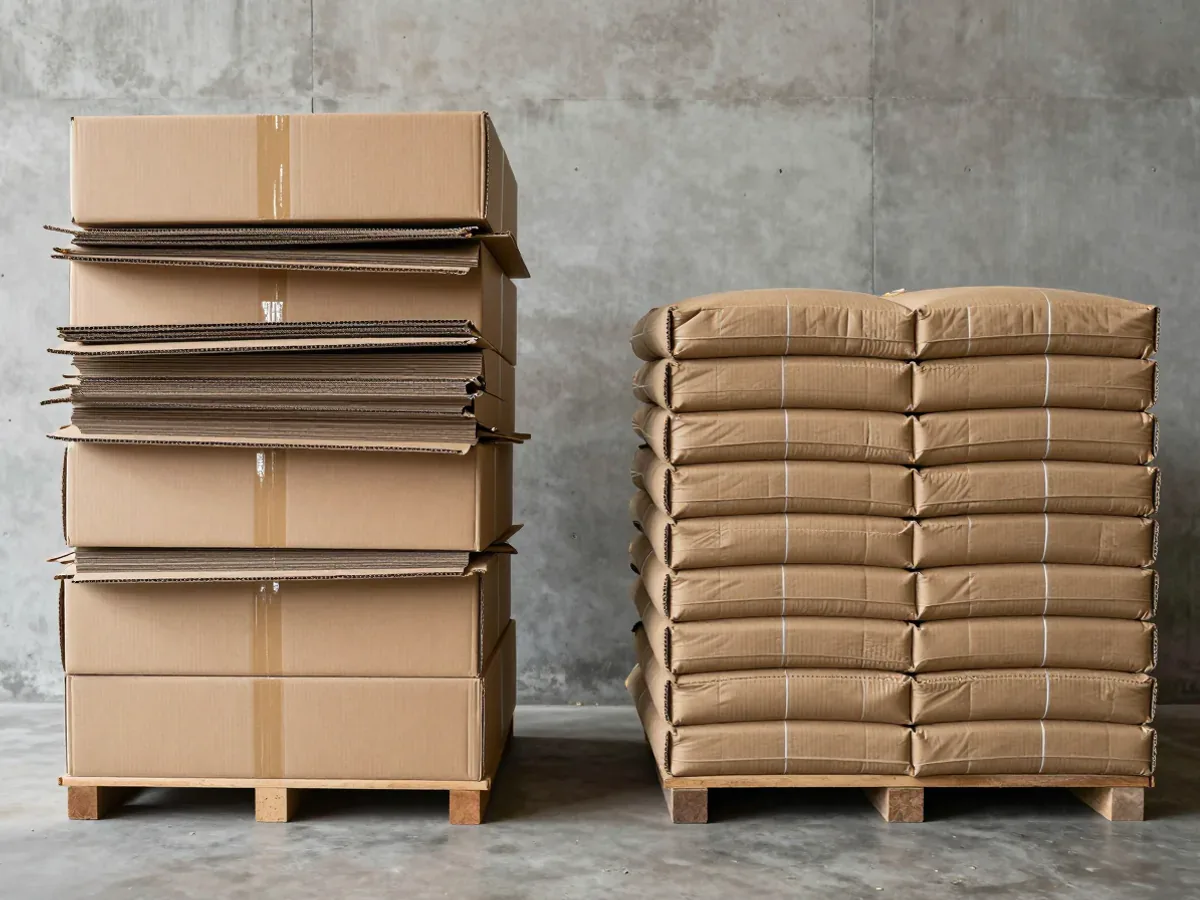
The loss starts with the material itself. Corrugated board has a structural memory from the fold lines, and even a brand new ECT-32 box rarely folds perfectly flat. Those creases hold the panels slightly apart, and every gap between panels becomes dead air on the pallet.
Humidity does the rest. Cardboard absorbs ambient moisture and sags under its own weight, so a stack that measured clean on day one bows by week three. The center of the stack sags first, and the layers above it follow. Warehouse teams call the result stack bow, and it wastes vertical space that the pallet plan had already counted.
Woven polypropylene behaves differently because it has no fold memory and does not absorb moisture the way paper does. Folded bags nest flat, hold a consistent height across inventory cycles, and do not change shape when the humidity rises. The cube you plan is the cube you get.
Does stack stability change the aisle width you can run?
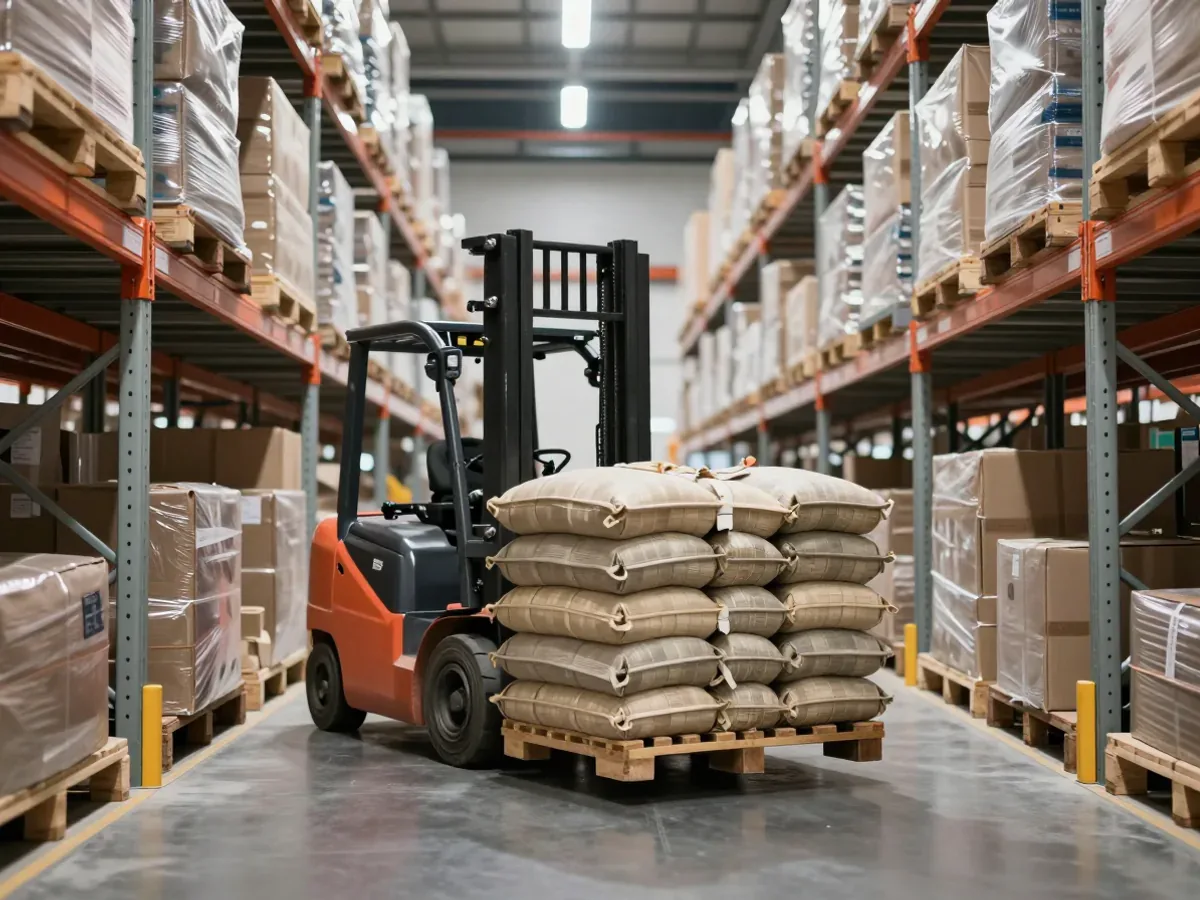
It does, and the effect is larger than most buyers expect. An unstable, bulging pallet cannot be placed tightly against its neighbor. Forklift operators leave a wider safety gap to avoid snagging a leaning stack, and that gap comes straight out of usable aisle space.
A pallet of ECT-32 boxes that bows and mushrooms outward can effectively take up to a quarter of your aisle space once the clearance margin is added. Multiply that across every aisle in a high-bay rack and the cost per square meter climbs without anyone changing the rent.
Nested bag stacks create a solid, self-supporting cube. The load holds its footprint, so operators can run tighter aisle configurations with confidence. The gain is not one dramatic number. It is a small recovery in every aisle, repeated across the building.
What happens to pick speed when a middle bundle comes out
This is the question that separates a storage argument from an operations argument. The moment a picker pulls a bundle from the middle of a box stack, the structure loses its support. The remaining boxes shift and bow, and the pallet becomes a honeycombed liability that slows every pick after it.
Pickers respond by working cautiously around unstable loads, and that caution is unbillable time. They stabilize, re-stack, or route around the pallet entirely. The labor cost per unit handled rises even though nothing on the invoice changed.
Folded bags settle and interlock, so removing a middle bundle disturbs less of the stack. Pickers grab the required units and move to the next order without playing a risky game of balance with the inventory. Fewer pallets to unload per container also means less labor at receiving, which compounds the saving.
The container count question buyers ask second
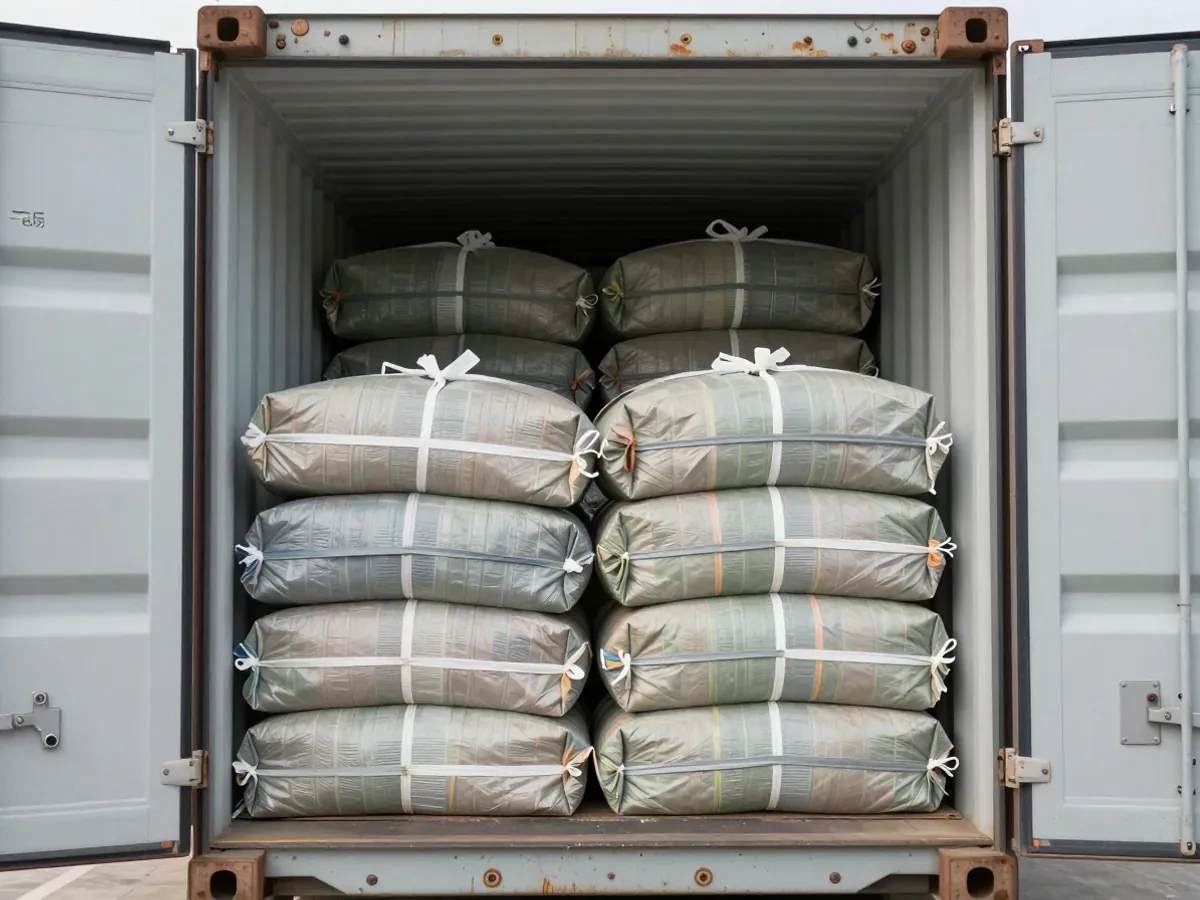
Once the pallet math lands, the next question is about the ocean container. A standard 40-foot container reliably holds 5,100 units of folded 120gsm moving bags. The same container holds around 2,400 units when the product ships as collapsed boxes.
That gap is not only a volume metric. It hits FOB pricing and landed cost directly, because freight is charged per container rather than per unit. Shifting from boxes to bags can cut inbound freight cost per unit by nearly 29%, and that margin stays with the distributor.
The container load plan should be part of the supplier conversation, not an afterthought. Ask for a plan that quantifies per-unit inbound freight savings alongside the unit price. A supplier who cannot produce that plan has not tested their own packing.
The question most buyers have not asked yet
Every question so far has been about space. The one that decides whether the switch holds up is about the product itself: what happens to the bag after fifty handling cycles, and does the fold line survive?
A moving bag that folds flat on day one but creases and frays by season three will not nest cleanly, and the pallet density you planned quietly disappears. The shell needs to wipe clean and fold flat when empty, and the construction needs to survive repeated folding without the seams giving way.
This is where a supplier’s inspection routine matters more than a datasheet. Four checks on every order cover incoming material, seams and zip, the finished bag, and the final count. Cartons are counted and photographed before the container seals, so the load plan has a paper trail.
Ask the supplier to fold a production bag fifty times and show you the result. Ask whether the strap runs the full length of the bag or only at the handles, because a strap that stops at the handle pulls the seam when the bag is loaded. Ask whether the zip has two pulls so the bag opens flat on the floor, which matters when a mover is working alone.
The storage question has a clear answer. Folded bags nest into a denser, more stable pallet than collapsed boxes, and the container count roughly doubles. The question that protects that answer is whether the bag still folds the same way after a year of use, and that one belongs in the supplier qualification, not the warehouse layout.
FAQ
How many moving bags fit on a standard pallet?
On a 1200×1000 mm pallet, folded 120gsm woven bags build a layer of 12 to 15 units depending on bag dimensions. Total units per pallet then depend on the stack height your rack allows.
Do folded bags really take less warehouse space than collapsed boxes?
Yes. Folded bags nest with almost no air gap and hold a consistent stack height. Collapsed boxes bow, absorb moisture, and waste an average of 12% of theoretical density through irregular folds and air pockets.
Can a buyer mix bag sizes on one pallet without changing the stack height?
Only if the folded thickness matches. Five sizes can share the same construction, but a mixed pallet needs the folded dimensions checked per size before the layer count is set.
What should the factory check on its own floor before switching from boxes to bags?
Measure the rack beam height, the current aisle clearance, and the folded thickness of the bag planned for purchase. Then stack twenty folded bags and confirm the height reads the same at all four corners.