Based on legacy TIIOCTI coverage of point-of-sale display bags and the product specs behind our reusable shopper line.
The artwork was approved on a Tuesday, the fabric arrived three weeks later, and the counter boxes missed the store reset by eleven days. By the time the folded totes reached the register, the seasonal planogram had already moved on, and the display sat in the stockroom through the promotion it was designed for.
That delay came from a packing decision, not a print decision. The buyer had specified a flat tote in a counter box, but the box was built around a folded bag that arrived creased, so staff had to unfold and refold every unit before it could go out. The lesson sits in the format choice itself, and it is the same choice two different stores face every season.
Two Formats on the Same Counter

Walk into two shops on the same street and the register tells two different stories. In one, a shallow display carton holds a stack of fold-flat totes, each one folded to the same footprint so the top of the pile looks like a printed brick. In the other, insulated cooler bags hang from a wire rack beside a food counter, waiting for someone buying chilled items to add one at the till.
Both are point of sale display bags, and both sell twice. The bag works as packaging at the register, then travels through a mall, a train station and an office as a takeaway billboard. The difference is what the bag has to survive between those two moments, and how much space the store is willing to give it.
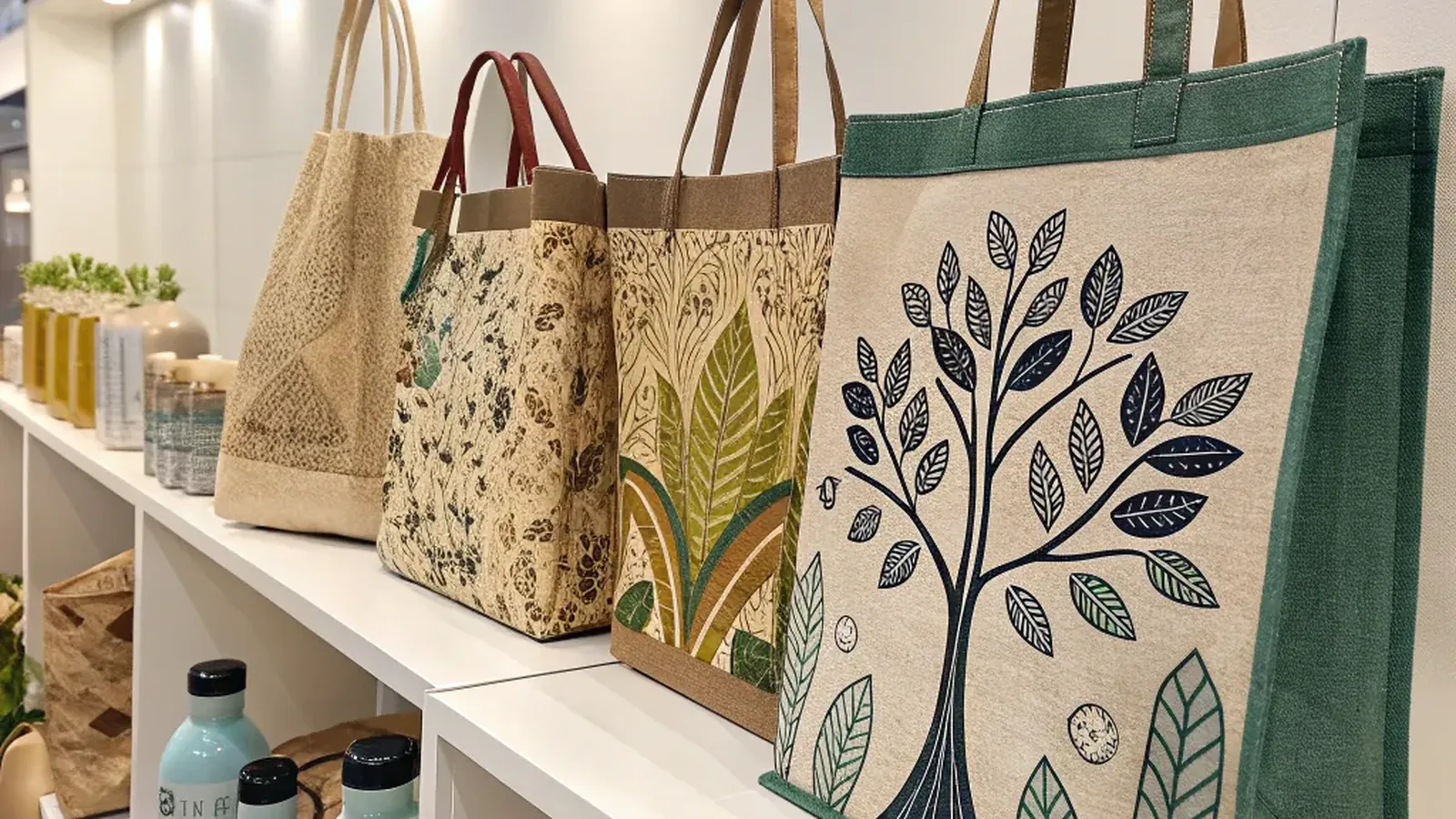
A fold-flat tote in a counter box is the impulse classic. It is cheap per unit, reusable and visible, and it stacks into a footprint a cashier can reach without leaving the till. The cooler bag near a food counter is a seasonal gift-with-purchase or impulse item, and it earns its place by sitting next to the product it protects.
Those two formats do not compete for the same register. They compete for the same decision: which one does this store's counter job, and what does the buyer need to write down so the bag arrives ready to merchandise.
What the Bag Carries Decides the Material
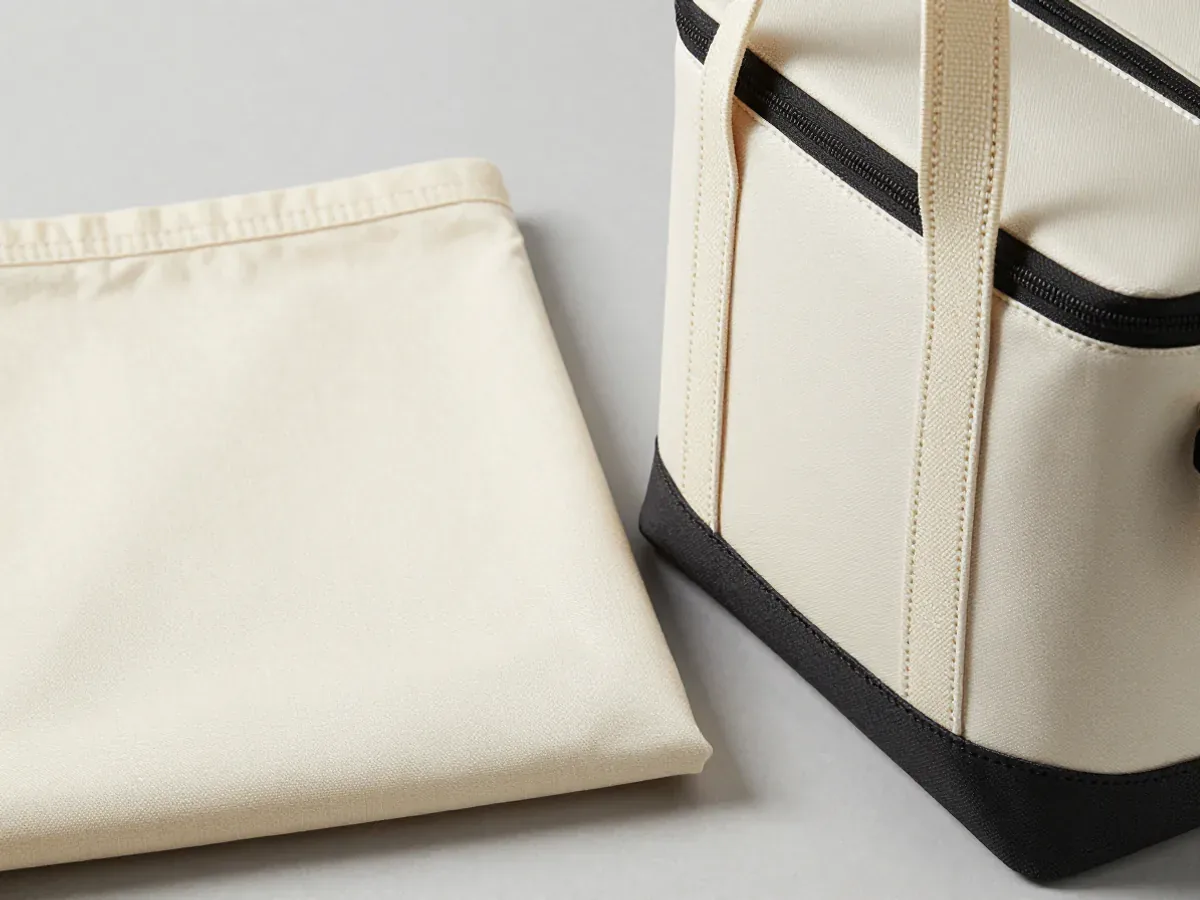
Put a folded tote and a cooler bag side by side and the first visible difference is the shell. The tote is built to fold flat and stay flat, so the body has to hold a crease without cracking the print along the fold line. The cooler bag is built around a load that stays cold, so the shell and the base take weight in a different way.
For the tote, the useful question is what the customer will put inside on the second trip. A reusable bag is judged on that trip: does the handle hold, does the base take a loaded bottle, does the print survive the wash. A flat-folding body makes the counter box work, but the same body has to carry a shop's worth of groceries without the base sagging.
For the cooler bag, the question is where it sits in the store and what it is expected to hold. A bag that hangs near a food counter is bought on impulse, so the handle and the zip get handled by people who are not yet committed. Handles stitched to the body rather than tacked on, and a base reinforced where a bottle sits, are the two construction points that decide whether the bag comes back to the store or goes into a cupboard.
Material weight follows from that, not from a number on a spec sheet. A tote matched to a low price point and a tote matched to a premium register can share a print file and still feel like different products in the hand. The buyer who writes "match the price point" and nothing else leaves the decision to the factory, and the factory will choose the weight that folds most easily.
Print Coverage and Where the Logo Sits
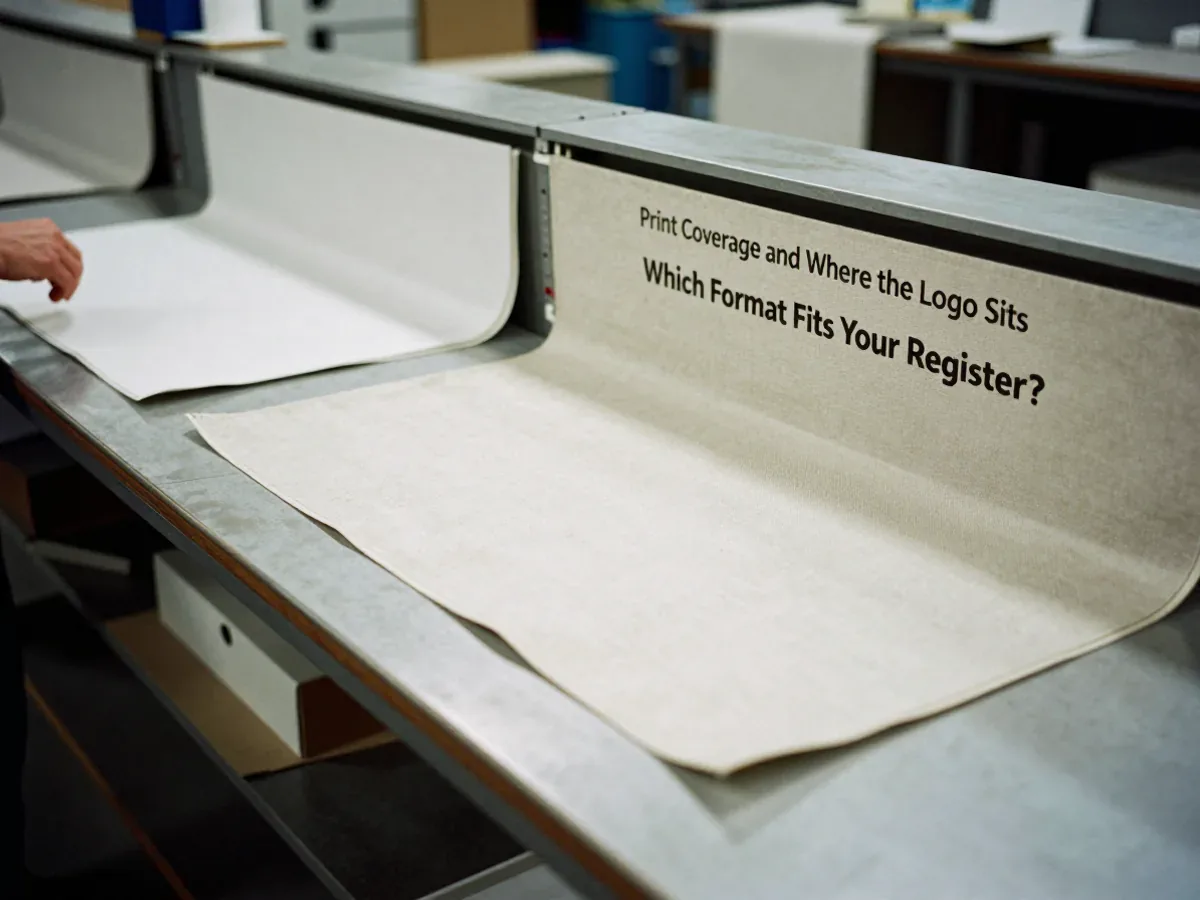
The print file is where the two formats diverge most sharply. A folded tote in a counter box shows one face to the shopper, and that face is usually the whole design. Full-coverage process print moves cost more than one-color placement, so a buyer who wants a photographic print across the full panel is buying a different bag from one who wants a logo in the centre.
The cooler bag has a harder print problem. It hangs, so the shopper sees it from the side and from below, and the logo has to survive being folded into a rack and pulled out again. A logo placed where the bag creases will crack before the season ends, and a logo placed too low disappears behind the neighbouring product.
There is a third position worth writing into the spec: the face that shows when the bag is folded inside the counter box. If the fold hides the logo, the display carton does the branding and the bag does not, which is a legitimate choice but should be a deliberate one. A buyer who assumes the folded bag shows its print at the register may find the box doing all the work.
Print is proofed before the run, and the sample is built to the same spec as bulk. That matters more for a display bag than for a plain carrier, because the sample is the only chance to see the logo in the folded position before a container is committed.
Packing That Store Staff Can Merchandise
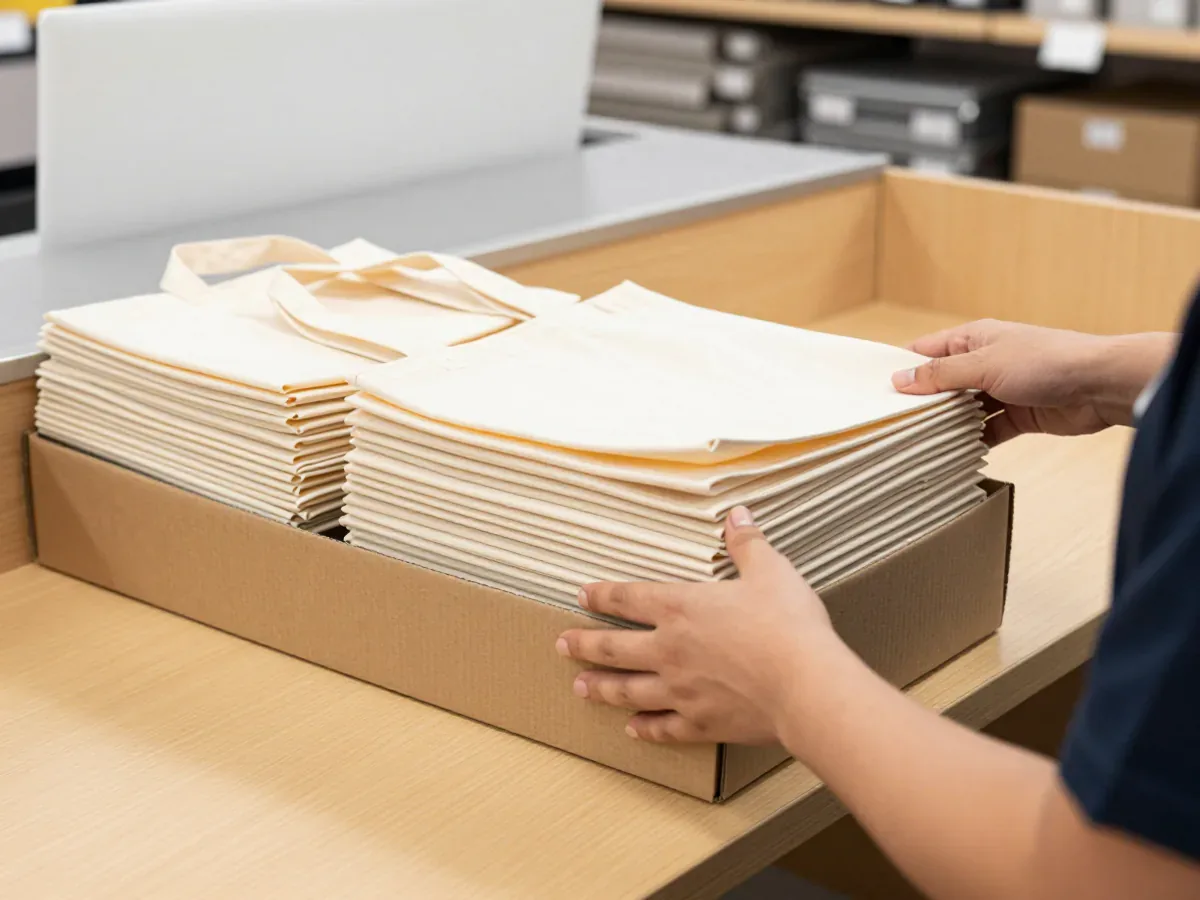
The eleven-day delay at the start of this story came from packing, and packing is the dimension buyers most often leave to the factory. Counter-ready folds and display cartons exist so store staff can merchandise without repacking. If the bag arrives folded to a size the box does not match, someone in the stockroom has to fix it, and that someone is usually the person who was supposed to be on the till.
A flat-folding body is the property a counter box needs. The bag should arrive folded to the box footprint, with the fold set so the print faces out and the stack stays square. When the fold is set at the factory, the box can be opened and placed on the counter in one movement.
The cooler bag has a different packing logic. It hangs, so it usually ships flat or lightly folded with a hanger ready, and the store needs a fixture before the carton is opened. A buyer who specifies the bag but not the fixture can end up with a product that has nowhere to go on delivery day.
Packing is agreed before production: polybag, retail or per-store. That agreement is also where the display carton gets its dimensions, and where the buyer decides whether the box is a shipping container that becomes a display or a display that has to be assembled in store. The two are not the same, and the difference shows up on the first morning of the promotion.
Labeling: Decorative Carrier or Consumer Package
A retail bag sold with product labeling on it is a labeled consumer package in many configurations, and that changes what has to be printed on it. If the bag carries product identity, net quantity or origin claims, US Fair Packaging and Labeling Act rules at 16 CFR part 500 apply. A purely decorative carrier with a logo faces lighter requirements.
The distinction is easy to miss at the counter because both bags look like carriers. A tote given free with a purchase and printed only with a store logo sits on the lighter side. A tote sold as a product in its own right, with a size, a material claim or a country of origin on the label, is closer to a package and carries the labeling obligations that go with it.
The cooler bag raises the same question in a sharper form. If it is a gift-with-purchase near a food counter, the labeling conversation is about the bag. If it is sold as an insulated product with a capacity claim, the buyer needs to decide which claims appear and where, before the print file is finalised.
The practical move is to write the labeling configuration into the spec alongside the print file. A buyer who leaves it until the artwork stage usually discovers the problem when the label has to fit into a space the design did not leave.
Which Format Fits Which Store
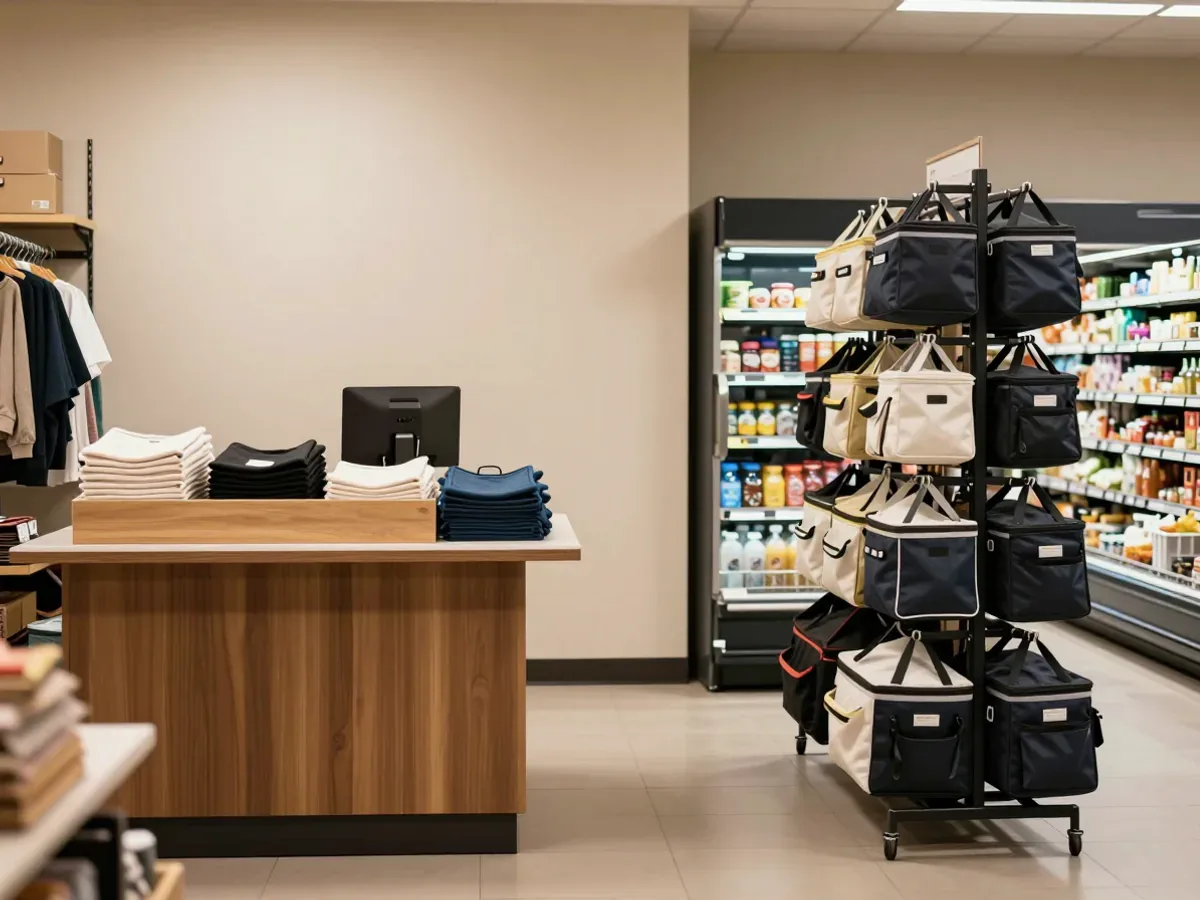
The fold-flat tote in a counter box fits a store with a narrow till area and a shopper who is already carrying a basket. It suits fashion registers, gift shops and any counter where the bag is an add-on rather than the reason for the visit. The box does the display work, the fold does the packing work, and the bag does the second-trip work.
The cooler bag fits a store where food is the anchor and the counter has vertical space. It suits grocery and convenience formats, seasonal gifting near a chilled section, and any register where the shopper is buying something that has to stay cold on the way home. The hanging fixture is part of the format, not an afterthought.
A premium branded carrier at a fashion register is a third case that borrows from both. Handle feel and paper rustle become brand properties at that register, and the bag is judged on how it feels in the hand before it is judged on what it carries. That register rarely wants a counter box, and rarely wants a hanging rack.
The buyer's job is to name the register first, then the format. A store that cannot give up counter depth should not choose a box that needs it, and a store without a hanging fixture should not choose a bag that depends on one.
A Decision Table for the Counter Test
The table below is the one a buyer can fill in before the season order, using the store's own answers rather than the factory's defaults.
| Decision | Fold-flat tote in counter box | Cooler bag on food counter |
|---|---|---|
| Counter space | Needs a shallow box footprint at the till | Needs a hanging fixture with vertical clearance |
| What it carries | Second-trip shopping, judged on handle and base | Chilled items, judged on shell and base reinforcement |
| Print position | One face shows; fold must not hide the logo | Seen from side and below; avoid the crease line |
| Packing | Folded to box footprint, stack stays square | Ships flat or lightly folded, hanger ready |
| Labeling | Lighter if decorative; package rules if product claims appear | Same test, sharper if capacity is claimed |
| Staff effort | Open box, place on counter | Install fixture, hang, restock |
Read the table down the columns rather than across the rows. A store that answers "no" to counter space and "yes" to a hanging fixture is a cooler bag store, whatever the print file says. A store that answers "yes" to counter space and "no" to staff time is a counter box store, because the box removes a handling step.
What to Check Before the Season Starts
The checks that prevent an eleven-day slip are mostly paperwork, and they happen before the first bag is cut. Incoming fabric, webbing, zips and thread are checked against the approved spec before cutting, which is where a substituted shell shows up. Dimensions, handles, logo and packed quantity are checked by hand on the finished bag, which is where a fold that does not match the box shows up.
Every batch is pulled at the seams and bar-tack tested, and that test matters more for a display bag than for a plain carrier because the bag is handled before it is bought. A tote that fails at the handle on the counter never gets a second trip, and a cooler bag that fails at the base never leaves the store.
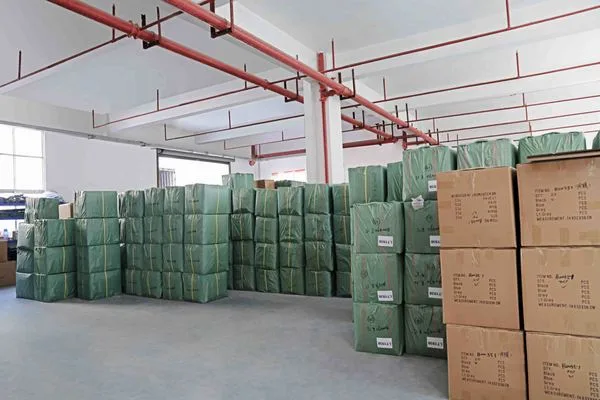
Cartons are counted and photographed before the container seals. For a display program, the photograph should show the folded bag inside the box, because that is the state the store will receive and the state the staff will merchandise. A photograph of the flat bag tells the buyer nothing about the counter.
The season test itself can be small. A counter display can be run before a full season order, and the useful version of that test is a single store, a single fixture and a fixed number of days. What the buyer watches is not the sell-through figure but the state of the display at the end of the test: is the box still square, is the fold still set, is the logo still facing out.
FAQ
Do labeling rules apply to display bags at the register?
They can. A bag that carries product identity, net quantity or origin claims is a labeled consumer package in many configurations, and US Fair Packaging and Labeling Act rules at 16 CFR part 500 apply. A purely decorative carrier with a logo faces lighter requirements, so the buyer should decide which one the bag is before the artwork is finalised.
Can a counter display be tested before a full season order?
Yes. A counter test can run in one store with one fixture before a season order is placed. The test is most useful when the buyer watches the display's condition at the end of the run rather than the sell-through number alone, because the condition tells the buyer whether the fold and the box were specified correctly.
How do you check a display bag before it ships?
Check the finished bag by hand for dimensions, handles, logo and packed quantity, and pull the seams and bar-tack on every batch. Then check the carton: count it, photograph the folded bag inside the box, and confirm the packing matches what was agreed before production.