
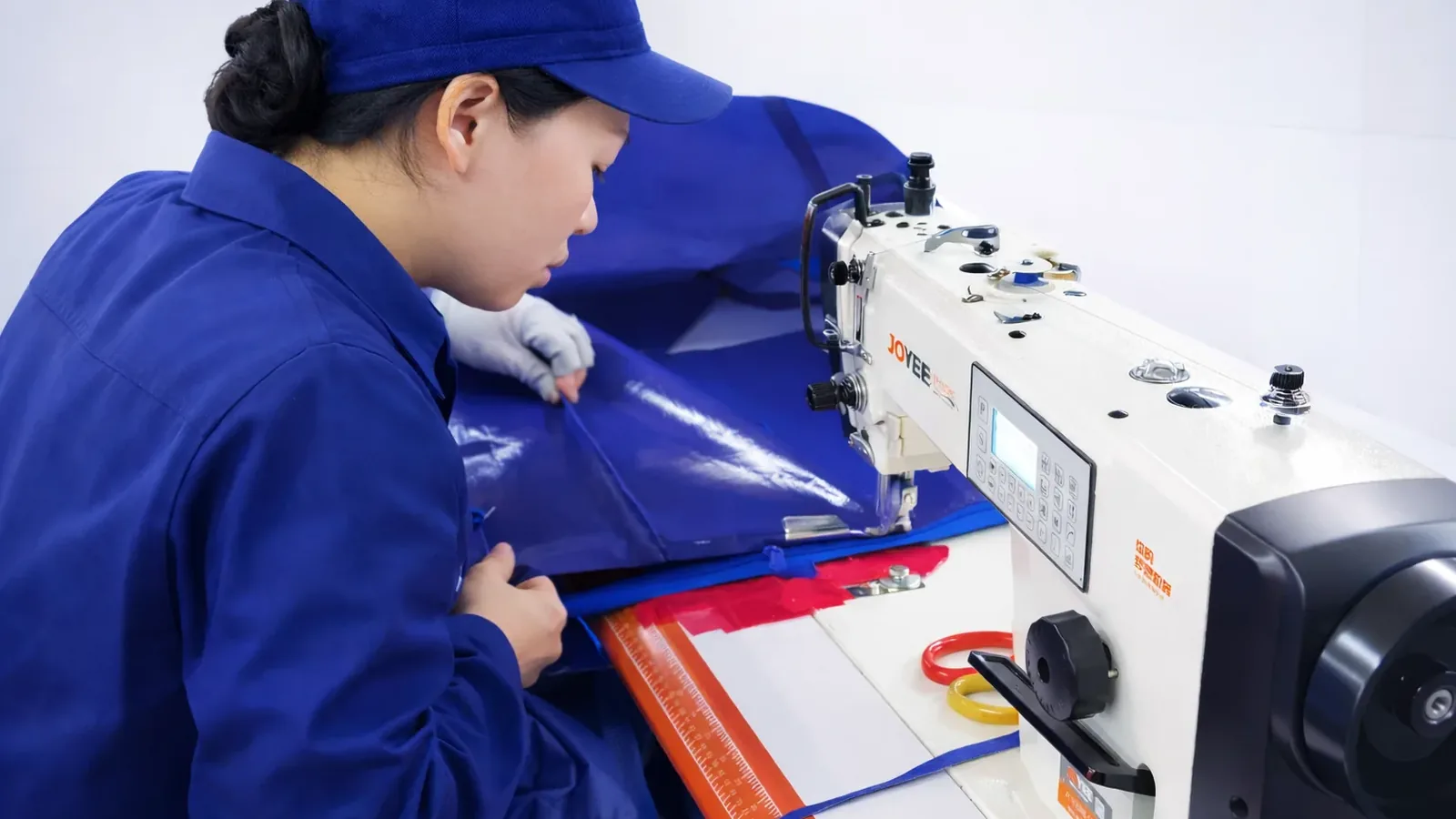
Built from the archived heavy duty bag QC article and our own woven PP line records, reorganised around a real purchase order.
The purchase order line read "Heavy duty moving bag, 120 GSM woven PP, 20 kg rated, QC per supplier standard." A planner at a relocation company flagged it during a routine file review, because "per supplier standard" told her nothing about what would actually be measured. She had already seen one batch arrive with handles that felt different from the approved sample, and the paperwork offered no way to prove or disprove a change.
That single vague line is where most heavy duty bag disputes begin. A spec sheet is not a wish list of good intentions. Each line should name a property, a method, and a pass mark that a factory can be held to. Walking through a real order line by line shows which tests earn their place, and which ones buyers tend to leave blank until a failure forces the question.
The First Line on the Order: Fabric and GSM
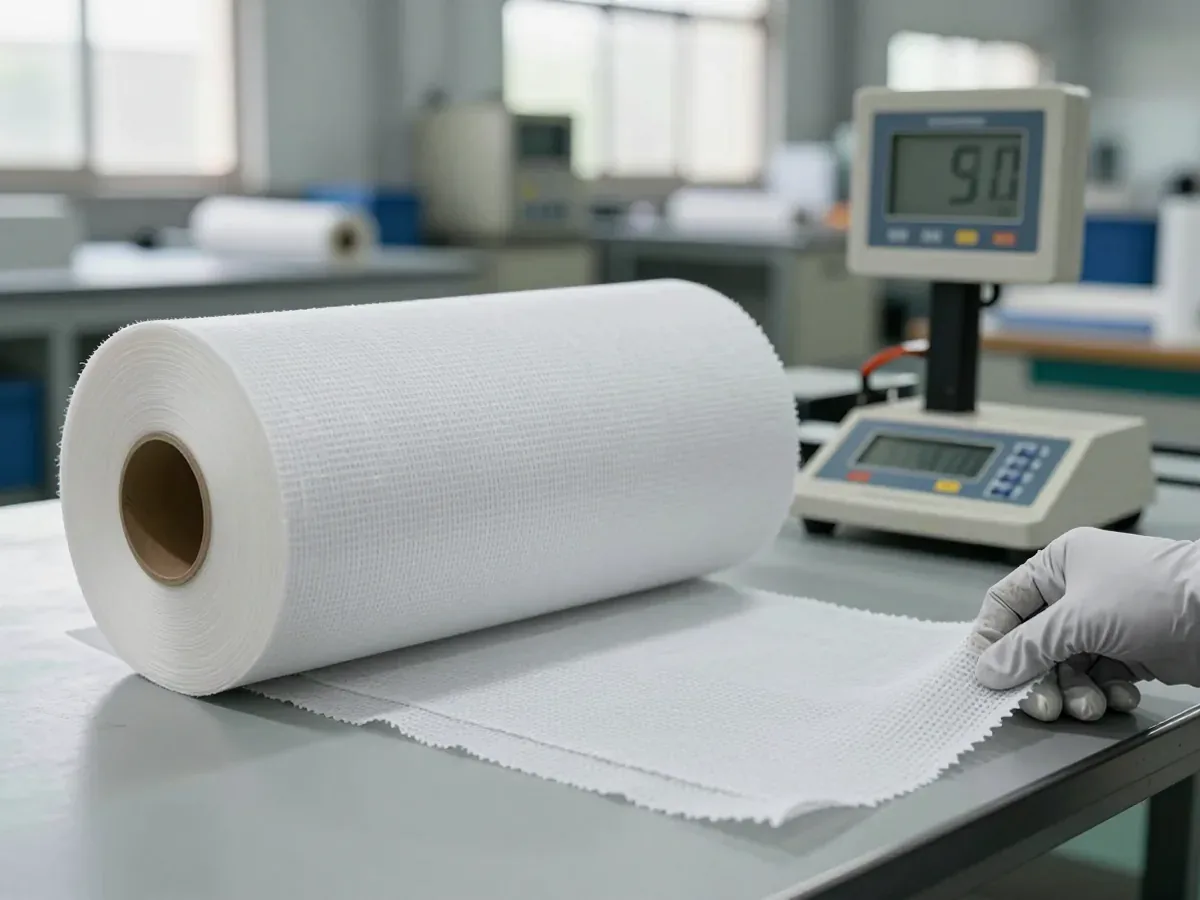
The fabric line is usually written first and checked least. It should state the polymer, the construction, and the weight in GSM. Woven PP for heavy duty work sits in the 120 to 150 GSM range, and that number belongs on the sheet because it drives both load capacity and handle anchorage. A line that says only "strong polypropylene" leaves the factory free to substitute.
Why it matters comes down to how the two common constructions behave. Non-woven PP resists tear propagation well, scoring higher on tear tests once a puncture starts. Woven PP carries far more weight, which is why it dominates moving bag production. Mixing the two up in a spec is a quiet way to receive a bag that looks right and fails under load.
Verification starts before sewing. Incoming fabric, webbing, zips and thread are checked against the approved spec, and the batch material certificate should name the resin type, the GSM, and the origin. Vague wording such as "premium polypropylene" is a warning sign rather than a description. A buyer can also ask for the fabric weight to be confirmed on a cut sample from the actual batch.
The Handle Line: Stitching, Webbing and Pull Force
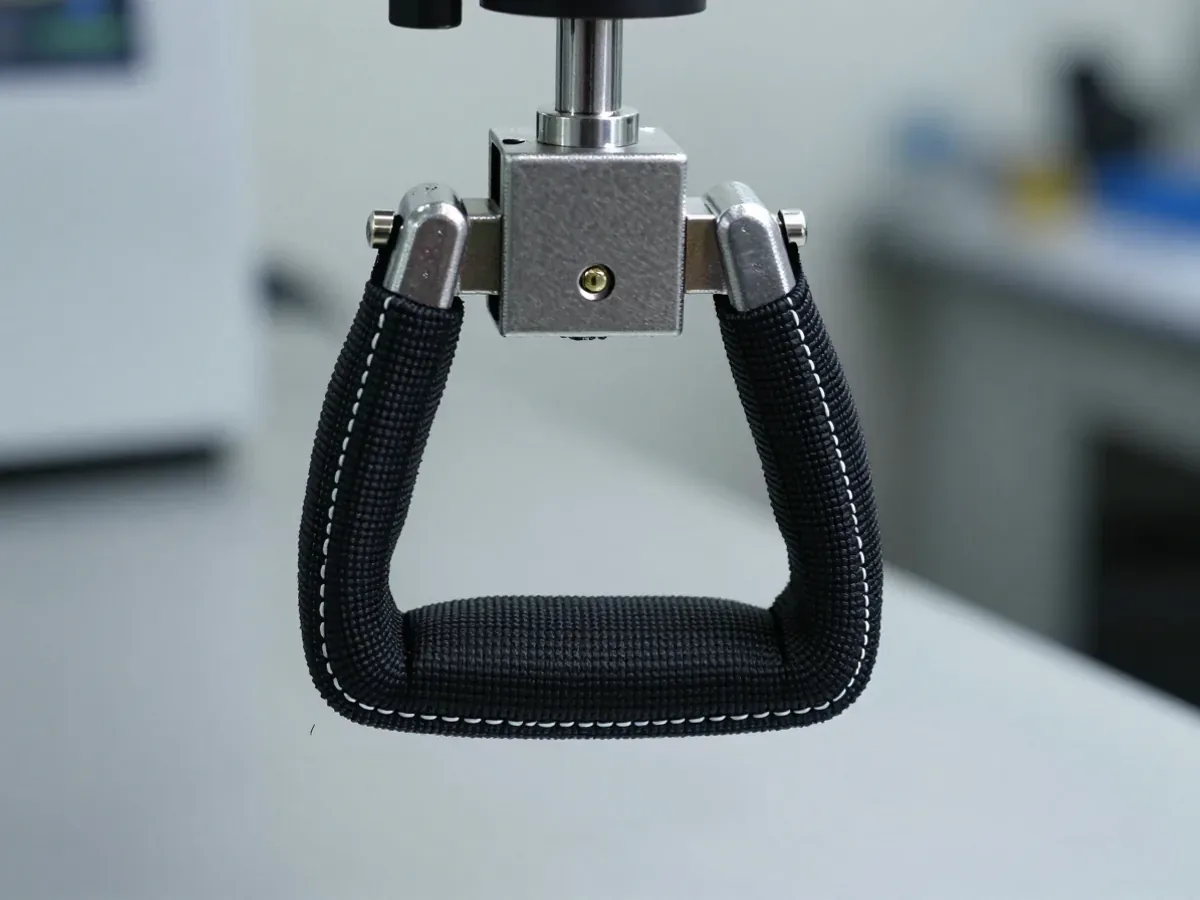
Handles are where heavy duty bags earn or lose their rating. The spec should require wrapped, double stitched webbing, and it should attach a pull-out force to the seam that joins handle to body. ISO 13934-1 is the method most factories recognise for this, and the sheet needs a pass mark written next to it rather than a reference to "good stitching."
The reason is mechanical. A single row of stitching through webbing concentrates stress on a few threads, and repeated lifting works them loose. Double stitching spreads that load, and a wrapped handle edge keeps the webbing from cutting into itself. Pull, seam strength and bar tack testing on every batch turns those construction choices into something measurable.
Verification can happen two ways. The factory can pull handles on a tensometer and record the force at which the seam separates, or a third party lab can run the same method on sampled bags. Either route works if the report names the standard, the sample size, and the result against the pass mark. A certificate that lists the standard without a number is a label, not evidence.
The Load Line: Static Capacity and Dynamic Cycles
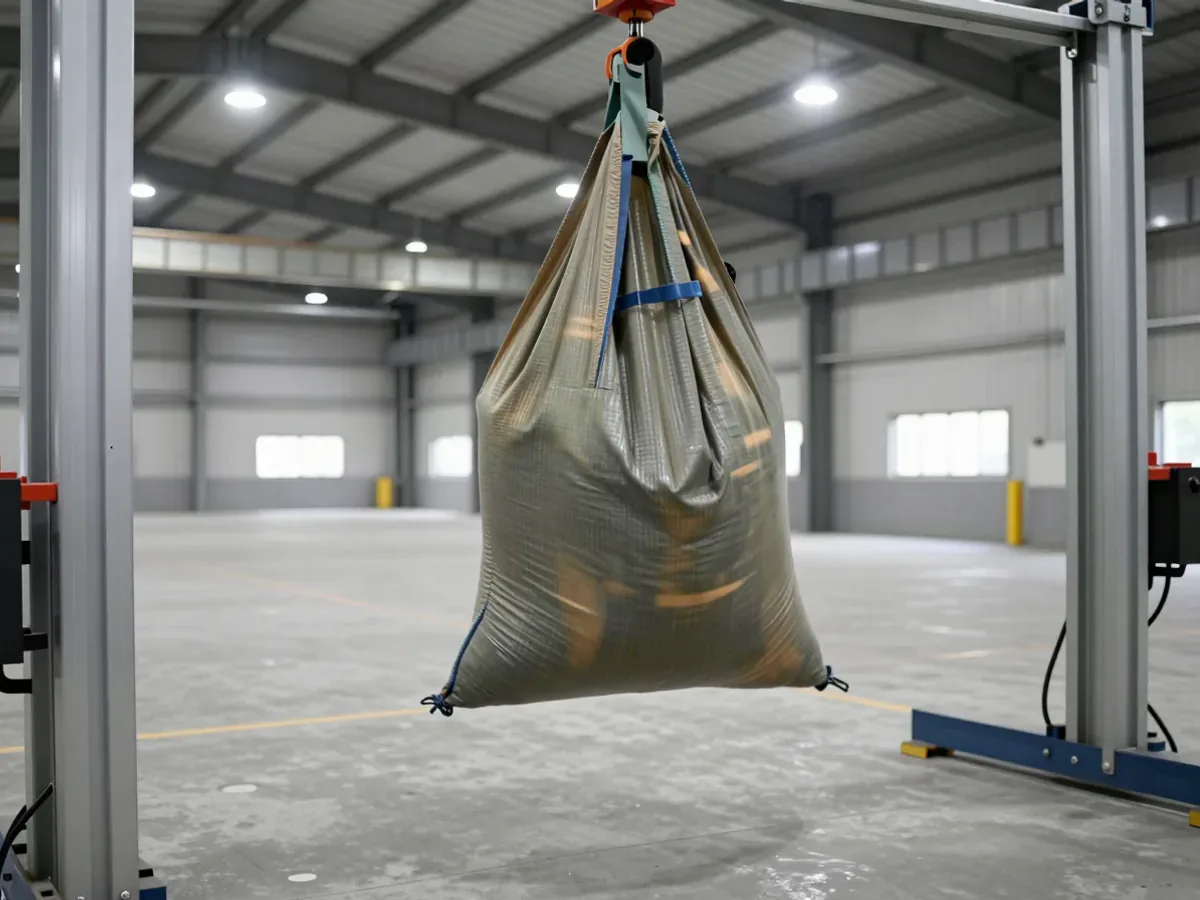
Static load testing and cycle testing answer different questions, and a spec sheet that carries only one of them is half finished. Static capacity, often run to ISO 7765, holds a filled bag for a set time and confirms the fabric and base seams survive a sustained load. It says almost nothing about what happens when a mover lifts the same bag by one handle on a staircase.
Dynamic cycle testing simulates that reality. A bag is filled, lifted, and dropped repeatedly, and the pass mark is survival without seam separation. This is the test that exposes handle tear-out, because each lift loads the handle anchorage in a slightly different direction. A bag can pass a one minute static hold and still fail a short cycle run.
Verification depends on the cycle protocol being written down. The sheet should state the fill weight, the drop height, the number of cycles, and what counts as a failure. Without those four details, two labs can run "a cycle test" and report results that cannot be compared. Buyers who want both static and dynamic evidence should ask for both reports from the same batch.
The Tear and UV Lines Most Buyers Leave Blank

Two lines on a heavy duty bag spec frequently sit empty, and both relate to how a bag ages rather than how it performs on day one. Tear propagation, often tested to ASTM D1922, measures how readily a nick spreads into a split. UV resistance, commonly run to ASTM G154, measures how the fabric holds up under light exposure during storage or outdoor staging.
Tear matters for bags that meet sharp edges. Furniture corners, tool handles, and pallet strapping all create small punctures, and the question is whether that puncture stays small. Non-woven PP scores better here than woven PP, which is one reason material choice and tear testing belong on the same sheet. A buyer specifying woven PP for load should still know the tear number.
UV matters for any bag that spends time in a yard, a truck bed, or an unshaded loading dock. A fabric that loses strength under exposure can pass every mechanical test at the factory and still fail after a season outdoors. Verification is a lab report with the exposure hours stated, plus a note on whether the fabric carries any stabiliser. A blank UV line is not proof of poor quality, but it is proof that nobody asked.
The Batch Certificate Line and What Counts as Proof
A batch material certificate is the document that ties a delivered lot to the material that was specified. It should list the resin type, the GSM, and the origin, and it should carry a batch reference that matches the cartons. Anything vaguer than that cannot be checked against the order, which makes it useless in a dispute.
The six test reports commonly requested for heavy duty woven PP bags cover tensile strength, seam and handle pull-out, static load, dart impact, UV resistance, and cycle fatigue. A supplier who can produce all six for the specific batch is giving a buyer something to compare. A supplier who offers a generic sheet listing raw material inspection and extrusion monitoring, with no pass or fail thresholds, is describing activity rather than results.
What counts as proof is narrower than most buyers expect. The report should name the standard, the method, the sample size, and the measured result. It should be traceable to the batch in the cartons, not to a golden sample from two years ago. If a factory cannot show batch specific reports, the honest reading is that the batch was not tested, not that it passed quietly.
The Line That Gets Skipped: Packed Quantity and Carton Check

The most skipped line on a heavy duty bag spec has nothing to do with strength. It covers packed quantity, carton labelling, and the physical count before the container seals. Buyers spend weeks arguing over seam strength and then accept a shipment where the carton count is short or the labels disagree with the packing list.
This line belongs on the sheet because it is the cheapest check to run and the easiest to omit. Dimensions, handles, logo placement, and packed quantity can be checked by hand at the end of the line. Cartons can be counted and photographed before the seal goes on, which gives both sides a shared record if a discrepancy appears at destination.
Verification is a finished bag inspection at the fourth stage, after the bag is complete rather than during production. That inspection confirms the bag matches the approved sample in size, handle position, and print. The carton check then confirms the count and the labelling. Neither step needs a laboratory, and both catch errors that no tensile test will ever reveal.
How to Read a Test Report Against the Spec Sheet
Reading a report against a spec sheet is a matching exercise, and it fails in predictable places. The first check is whether the standard on the report matches the standard on the sheet. A tensile test on raw film is not a seam test, and a report that answers a different question should not be filed as compliance.
The second check is the pass mark. The sheet should carry a number, and the report should show a measured result against it. A report that states "passed" without a value gives a buyer nothing to compare across batches or across suppliers. The third check is traceability, meaning the batch reference on the report matches the cartons in the warehouse.
The fourth check is scope. A report covering one property does not vouch for the others, and a report from a previous production run does not cover a new one. Buyers who read reports this way stop treating a thick folder as reassurance and start treating it as a set of specific claims. That shift is what turns a spec sheet from paperwork into a working control.
FAQ
Do I need both a static load test and a dynamic cycle test?
Yes, because they measure different failure modes. Static capacity confirms the bag holds a sustained load, while cycle testing exposes handle tear-out under repeated lifting. A bag can pass one and fail the other.
What should a batch material certificate list?
The resin type, the GSM, and the origin, tied to a batch reference that matches the delivered cartons. Vague descriptions such as "premium polypropylene" do not allow the material to be checked against the order.
Can a supplier run these tests in-house, or must a third party do it?
Either is acceptable if the report names the standard, the method, the sample size, and the measured result. What matters is traceability to the batch, not the address of the lab.
How many bags should be pulled from a batch for testing?
The spec sheet should state the sample size rather than leaving it to habit. A written sampling rule lets both sides agree in advance what a passing batch looks like, and it prevents a dispute over whether enough bags were checked.






