
Based on archived TIIOCTI articles on woven PP bag audits and the four-check production records kept for every order.
The first container of moving bags failed at the handle seam during a warehouse pull test, three weeks after the buyer had signed off on the factory audit with a single green checkmark. The report ran to twenty-eight pages, arrived as a clean PDF, and had been approved in under an hour. Nobody had opened the lab section past the photo of the tensile machine.
The failure was not a surprise to the factory's own QC staff. Their internal log showed handle seam readings drifting down over four production runs, and the drift had started before the audit was even booked. The report simply never asked for that log. What the buyer approved was a snapshot of a building on one Tuesday, not a picture of how that building behaves across ten thousand units.
The Report That Passed Every Box and Still Shipped Weak Handles

The audit file arrived with the usual furniture: a business license scan, a floor plan, photos of stitching bays, an AQL 2.5 final inspection summary, and a page of green checkmarks against a standard checklist. The buyer's sourcing manager read the summary page, noted zero major non-conformances, and moved the supplier into the approved column. The order went out at 10,000 units.
Six weeks later, a pallet of bags came back from a distribution centre with torn handle attachments. The failure mode was consistent: the cross-stitch held, but the webbing itself had stretched and pulled through. That pattern points to material and process control, not to a bad operator on a bad day. The audit had nothing to say about either.
A passing grade does not mean a consistent batch. It means the auditor, on the day of the visit, found no requirement breached in the areas the checklist covered. The gap between those two statements is where most batch failures live.
Backtracking Through the Sections Nobody Opened
When the buyer sent the report back for a second read, three sections had been skimmed or skipped entirely. The first was in-house lab capability, which had a single photo of a tensile tester and no supporting detail. The second was raw material lot traceability, which listed supplier names but no chain from a finished bag back to an incoming inspection record. The third was ongoing process capability data, which was absent altogether.
Each of those sections answers a different question. Lab capability asks whether the factory can measure its own output. Traceability asks whether it knows what went into the bag. Process capability asks whether the process stays inside the spec between audits. A report can be perfectly clean on the checklist and still be silent on all three.
The buyer's team had treated the audit as a gate check. A gate check tells you whether to let the supplier through. A diagnostic tells you what will happen after you let them through. The twenty-eight page file had enough raw data to work as a diagnostic, but only if someone read it that way.
The Lab Photo Looked Fine Until the Serial Number Was Checked
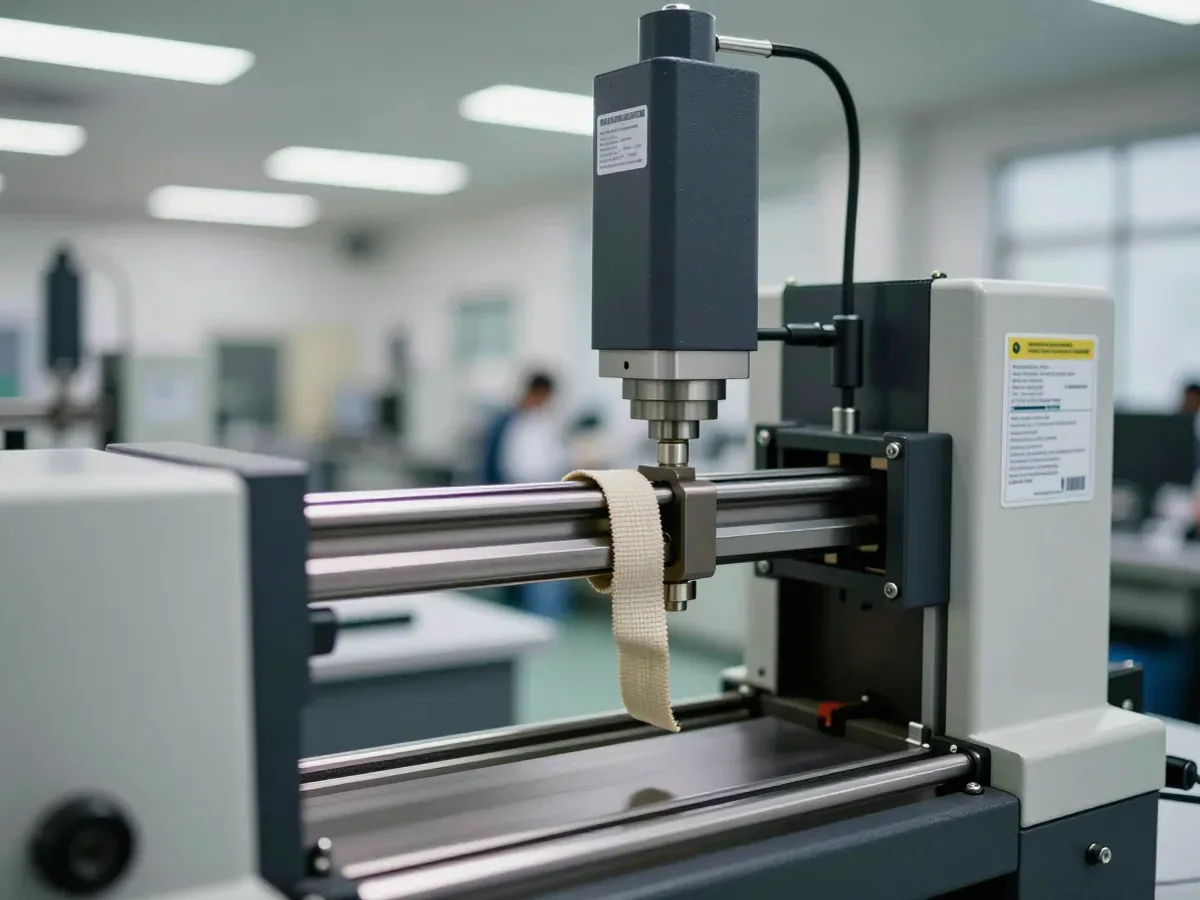
The tensile machine in the photo was real, clean, and switched on. What the photo did not show was whether the auditor had matched the machine's serial number to the factory's fixed-asset register. That single cross-check separates a machine the factory owns from a machine that was wheeled in for the morning.
Equipment rental is not rare. A factory can arrange for a high-speed automatic bag-making machine to sit in bay three on audit day with the rental tag still hanging from the power cable. The same trick works with lab equipment. A real factory owns its machines and can produce a purchase record; a broker leases them for the visit.
There is a second layer to the lab question. A tester sitting in the corner means nothing if its calibration certificate expired fourteen months ago. Check that the certificate covers the jaws and load cell used for fabric grip separation, because a calibration for a compression test on cartons does not validate the tensile mode used on woven PP straps. The certificate should also come from an accredited calibration lab, not a sheet printed by the equipment supplier.
Only a minority of woven polypropylene moving-bag factories keep an in-house tensile tester calibrated to ASTM D5034. The rest outsource testing to a third-party lab once a quarter. That arrangement can be perfectly legitimate, but it makes batch-by-batch statistical control impossible, and the report should say so plainly rather than leaving a photo to imply otherwise.
When the Traceability Chain Stops at the Warehouse Door
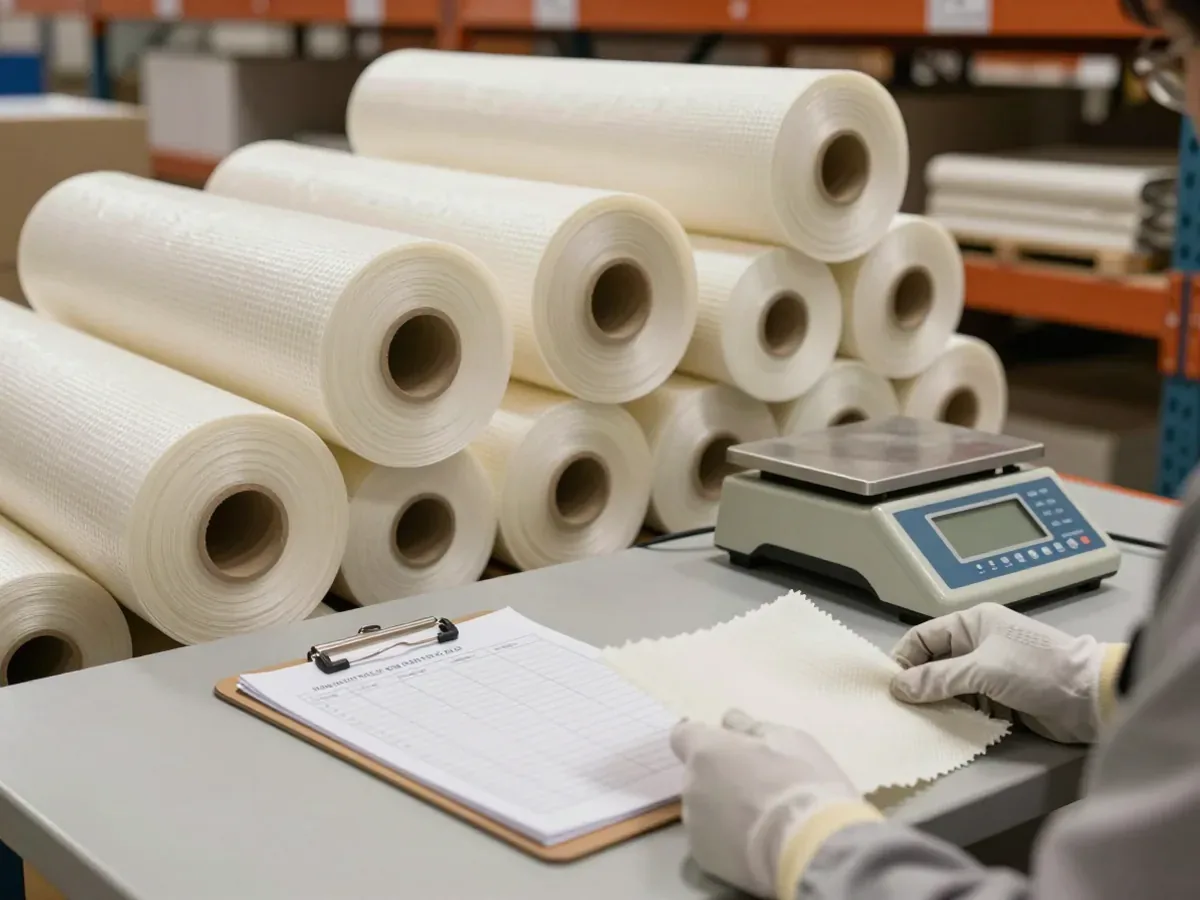
Woven PP tape yarn and handle webbing come from upstream suppliers, and that is where substitution risk enters. A factory can switch from 180 GSM virgin PP weave to a 150 GSM blend and the finished bag still looks correct on a table. The only defence is a record chain that runs from a specific finished bag back to the incoming raw material inspection report.
Ask whether the auditor traced a roll of woven PP or polyester webbing from the incoming warehouse to a supplier invoice, then to the batch number on the QC log. If the chain stops at the warehouse door, the report cannot tell you what the bag is made of. It can only tell you what the factory said the bag is made of.
The same logic applies to the weighing scales used for fabric grammage checks. A scale reading 200 gsm when the actual fabric is 160 gsm produces bags that feel flimsy and tear early, and no amount of visual inspection catches it. Calibration discipline in the lab and material honesty on the floor tend to travel together. A factory that lets one slide is usually letting the other slide too.
What the Cpk Number Would Have Shown Before the Order

AQL 2.5 tells you whether a lot passed or failed on the day it was inspected. It says nothing about whether handle seam strength is drifting toward the lower spec limit. For that, the report needs process capability data on the characteristics that decide whether a bag survives a move.
The critical-to-quality characteristics for a moving bag are handle attachment strength, fabric tear resistance, and stitching density. A Cpk of 1.33 or above across the last three production batches is a reasonable floor. A Cpk below 1.0 means the process is generating defects faster than a stable process should, and the batch that passes today is a coin flip tomorrow.
The first two numbers worth reading in any moving-bag report are burst strength and tensile, and specifically the minimums rather than the averages. A factory can average 220 N on seam strength and still ship a share of bags that rupture below 180 N. For professional moving bags, 200 N per 50 mm is the floor, and anything below that fails under a 30 kg load after a few flex cycles.
When reading a tensile result, check three things. First, the failure mode: if breaks occur at the jaw rather than the fabric or seam, the test is invalid because the technician clamped too tight. Second, the sampling plan: a ten-bag sample from a single shift is not a batch statement. Third, whether burst data separates fabric burst from seam burst, because a 350 kPa fabric rating means little if the seam delaminates at 250 kPa.
Reading the Same Report Again with Three Questions
The buyer's team reopened the file with three questions in hand. Does the factory own a calibrated tensile tester, and did the auditor verify the serial number against the asset register? Is there Cpk data on handle seam strength covering the last three batches? Did the audit find any minor non-conformances at all?
The third question is the one that unsettles suppliers. A clean audit with zero non-conformances is statistically suspicious. A rigorous, properly scoped audit of a textile bag factory almost always turns up something: an outdated calibration sticker, a missing training record, a batch log with a gap. A report that finds nothing usually means the auditor did not look hard enough or the records were sanitised before the visit.
Minor non-conformances are not a reason to walk away. They are evidence that the auditor was actually working. What matters is the corrective action request that follows, and whether the closure evidence addresses the root cause. A factory that closes a CAR in three days with a photo of a new shelf has not fixed anything. A genuine closure shows a changed procedure, a retrained operator, and a follow-up measurement.
Watch the language too. When a report lists "opportunity for improvement" next to lab equipment verification, read it as a soft flag. The factory likely outsources tensile testing and cannot produce batch-level data. When two people at the same factory give the auditor different answers about how often handles are pull-tested, the divergence matters more than a failed test result would.
A Short Checklist for the Next Audit File You Receive

The checklist below is what the buyer's team now runs before any audit file reaches an approver. It takes about twenty minutes and does not require a technical background.
- Confirm the machine serial number in the lab photo matches the factory's fixed-asset register, and that the calibration certificate covers tensile mode, not just compression.
- Ask for the traceability chain from one finished bag to an incoming material inspection record, with batch numbers visible at each step.
- Request Cpk data on handle seam strength and stitching density for the last three production batches, and read the minimums, not the averages.
- Check whether the tensile report states the failure mode and the sampling plan, and reject any result where breaks occurred at the jaw.
- Treat a zero non-conformance report as a prompt for a second, deeper audit rather than a clean bill of health.
- Look at whether the auditor photographed machine brand and model plates, and whether the photo context includes a clock or shift badge.
Our own production runs every order through four checkpoints, each photographed for the buyer's file: incoming material against the approved spec, pull and seam strength on every batch with results recorded, a static pull on each handle logged per batch, and a loaded bag dropped on a corner and inspected. Nothing moves to the next station until the check for that stage is signed by a named person. That structure exists because a report is only as useful as the records behind it.
FAQ
Does a passed AQL inspection mean the factory can hold handle strength across batches?
No. AQL 2.5 tells you whether a specific lot passed on the day it was inspected. It says nothing about whether the process is drifting toward the lower spec limit. Ask for Cpk data on handle seam strength across several batches before you treat an AQL pass as a batch guarantee.
How can I tell whether a tensile test result in an audit report is genuine?
Check the failure mode first. If the breaks occurred at the jaw rather than the fabric or seam, the test is invalid. Then check the calibration certificate for the jaws and load cell, confirm the certifying lab is accredited, and look at the sampling plan. A result without those three details is a number without a foundation.
Why is a report with zero non-conformances a warning sign?
A rigorous audit of a working textile bag factory almost always finds something minor: a lapsed sticker, a missing training record, a gap in a batch log. Zero findings usually means the scope was too narrow, the auditor did not push, or the records were cleaned up before the visit. Treat it as a reason to look deeper, not a reason to relax.
What should I ask the auditor to photograph beyond the machine itself?
Ask for the machine's brand and model plate with the serial number legible, the calibration label with its expiry date, and the surrounding context: a wall clock, a shift badge, production debris on the floor. A clean background in a photo claimed to be taken mid-shift is its own kind of finding.






