

Drawn from an archived guide on AQL tables, reworked around the questions buyers actually ask before an inspection.
A buyer once laid two inspection reports side by side on a meeting table, both for the same 4,000 piece bag order, both stamped by different inspectors, and one said pass while the other said fail. She had the AQL chart in front of her, printed from the buyer's own quality manual, and she could not see where the two readings parted company. The chart itself had not changed between the two visits. What changed was the set of numbers each inspector had written at the top of the page before opening it.
That moment is where most AQL conversations begin, and it is also where most of them go wrong. The table looks like a lookup exercise, a row and a column and two numbers at the intersection. In practice the two numbers are the last step in a chain of decisions that have to be settled first, and the buyer who understands the chain reads the chart in minutes while the buyer who does not spends a week arguing about a shipment.
Why Did Two Inspectors Score the Same Lot Differently?

The two reports in that meeting disagreed on almost nothing at the level of observation. Both inspectors had found loose threads, one had flagged a handle attachment, and both had counted the same cartons at the loading bay. The split came from classification. One inspector logged the handle issue as a major defect because it affected how the bag carried weight. The other logged it as minor because the seam held during a pull test and the bag still functioned.
Neither inspector was careless. They were working from different defect definitions, which is a document problem rather than an inspection problem. When a buyer writes "major: affects function or appearance" and stops there, two reasonable people will read the same bag differently. Appearance is the loose word in that sentence, and it swallows a great deal of argument.
The same split appears in the numbers at the top of the report. If one inspector worked to inspection level II and the other to level I, they drew different sample sizes from the same lot. A smaller sample can produce a lower defect count purely because fewer bags were opened, and a lower count can flip an accept into a pass on a lot that would have failed under the larger sample.
Which Three Numbers Have to Be Agreed Before Anyone Opens the Chart?
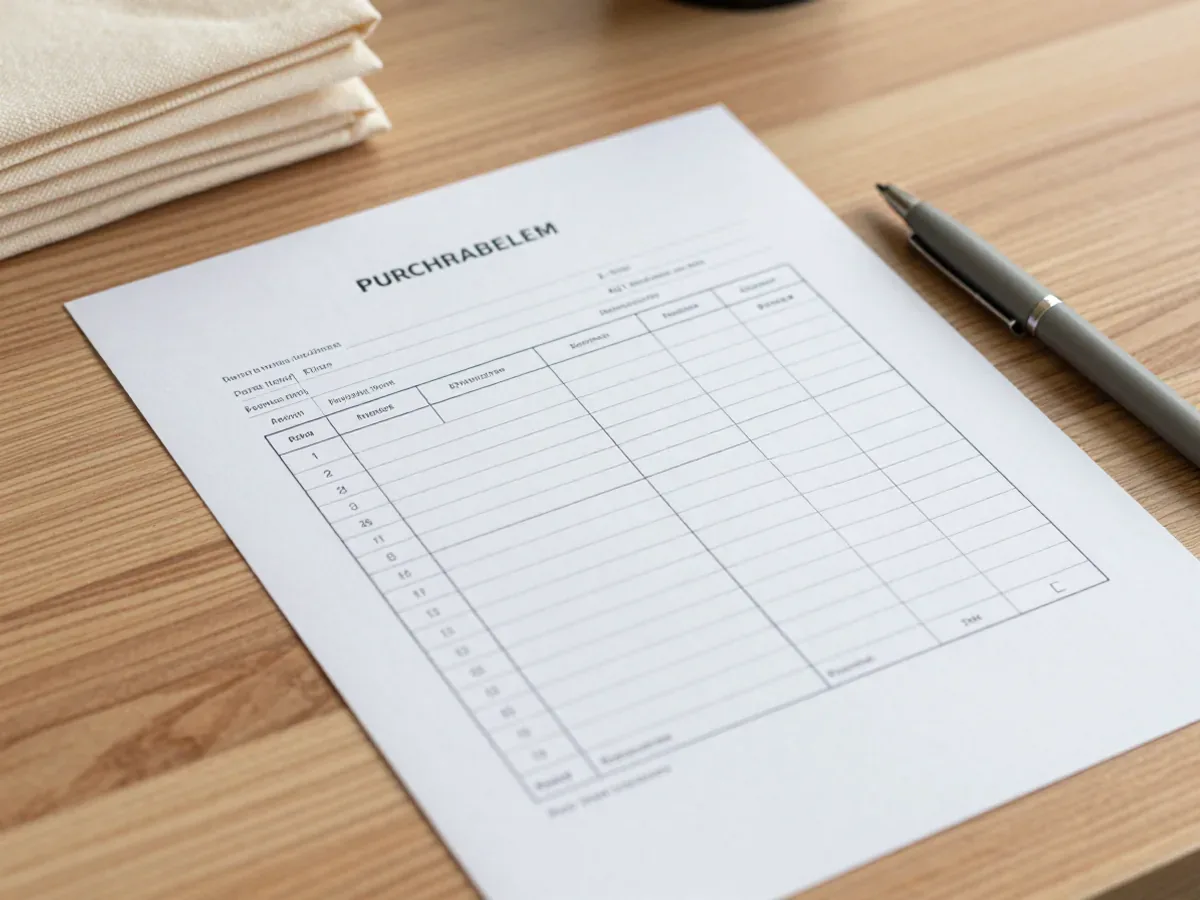
An AQL plan rests on three inputs, and all three belong in the purchase order rather than in a conversation after the goods are packed. The first is the lot size, which decides which row of the table applies. The second is the inspection level, which decides how many units come out of the carton. The third is the AQL value itself, the limit the buyer is willing to accept.
Lot size is the easiest of the three and still gets copied wrong. A 4,000 piece order split across two colours and shipped as two lots is not the same inspection as a single 4,000 piece lot, and the table row changes with it. Buyers who write "4,000 pcs" on the order and let the factory decide how to present the shipment for inspection are handing over a decision they should keep.
Inspection level is the quiet one. Most programs run at the general level that the standard sets as normal, and most buyers never name it because they assume it is fixed. It is not fixed. It is a choice, and it changes the sample size, and the sample size changes the accept and reject counts. A factory that runs a lighter level than the buyer expects will produce reports that look clean and are simply smaller.
The AQL value is the number buyers do discuss, usually in the form of a pair. A common plan is AQL 2.5 for major defects and 4.0 for minor ones, and those figures appear on a great many bag orders. They are a description of common practice, not a rule that suits every program. A bag that carries a laptop and a bag that carries gym clothes do not deserve the same tolerance, and the buyer who sets one value across a whole range is choosing convenience over risk.
How Do You Decide Whether a Fault Is Critical, Major or Minor?
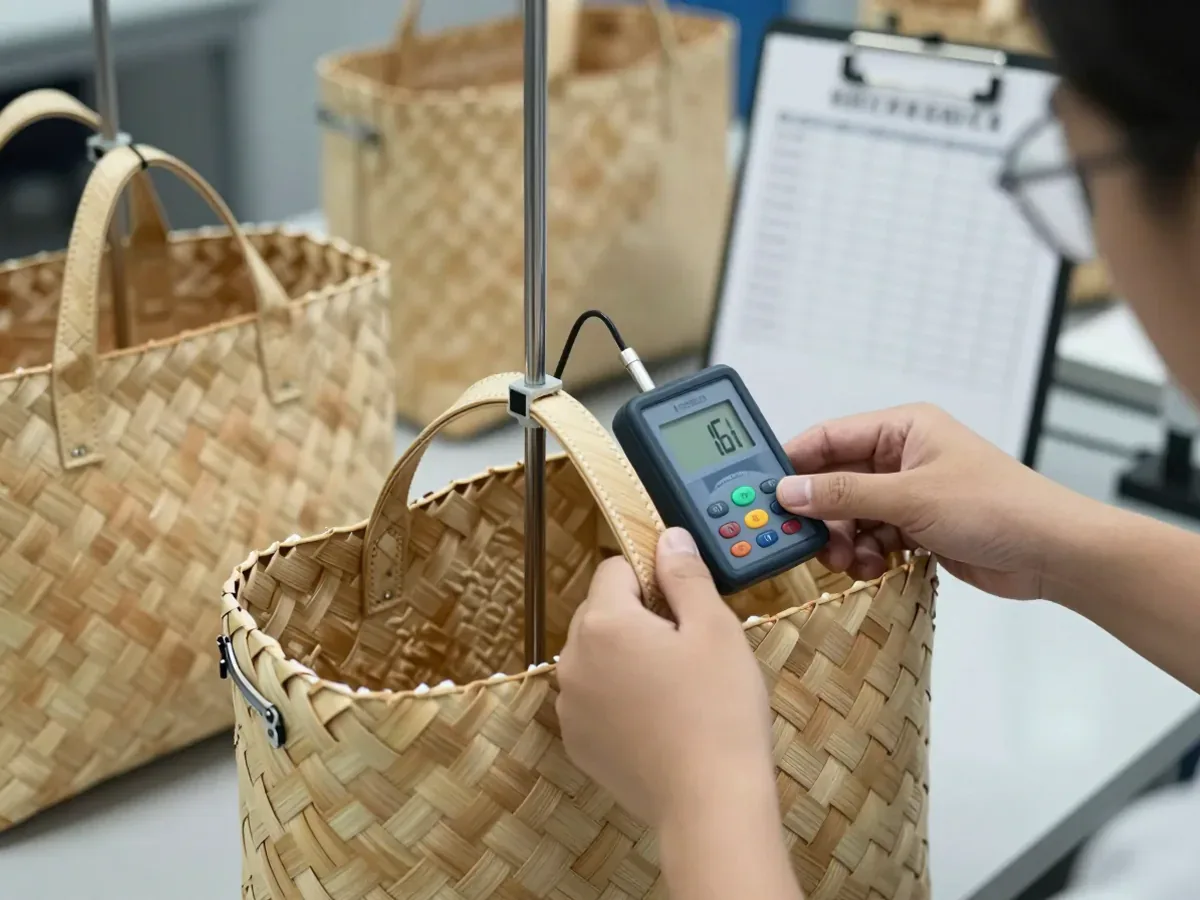
Sort the defect before reading the table, because the table has no opinion about what a defect is. A critical defect is a safety issue or a total failure of the product, the kind of fault that makes the bag unusable or unsafe in the hands of the end user. A major defect affects function or appearance, such as a broken handle or a seam that gives way under load. A minor defect is a small cosmetic fault, a loose thread, a light mark on a panel that does not change how the bag performs.
The classification work is where a bag order needs its own vocabulary. Handle attachment is the clearest example. A handle that separates under a static pull is major by any reading. A handle that holds but sits two millimetres off centre is a different question, and the answer depends on whether the buyer wrote a tolerance for handle position or left it to judgement.
Zip performance deserves the same treatment. A zip that jams on a loaded bag is a functional fault. A zip pull that sits slightly proud of the tape is cosmetic until someone decides it catches on clothing. Writing both cases into the defect list before production removes the argument later, and it costs a buyer twenty minutes at the order stage.
Where on the Table Do You Actually Read the Accept and Reject Counts?

Once the sample size and the defect class are settled, the reading itself is short. Find the row for the lot size and inspection level, move across to the column for the AQL value, and read the two numbers at that intersection. The left number is the accept count and the right number is the reject count, and they are not the same as a pass mark and a fail mark on a school paper.
The accept number is the count at or below which the lot passes. The reject number is the count at which the lot fails. Between them sits a gap, and that gap is where most of the confusion in that meeting table came from. A buyer who reads the accept number as "the maximum allowed" and stops there will misjudge every result that lands in the space above it.
Each defect class runs its own row of numbers on the same report. A shipment can pass on major defects and fail on minor ones in the same inspection, because the two classes carry separate AQL values and separate accept and reject counts. The report is not one verdict. It is two or three verdicts printed on one page, and the buyer has to read each one.
What Happens When the Defect Count Lands Between the Two Numbers?
The gap between accept and reject is real and it is not a rounding error. On many table rows the accept count and the reject count are consecutive, so a count of three accepts and a count of four rejects, and there is no space between them at all. On other rows the two numbers are further apart, and a count that falls in the middle is not covered by the plan as written.
When a count lands in that space, the inspection has produced a result the plan does not resolve. The practical response is to go back to the sample and look at what the defects actually are, because a count of borderline cosmetic faults is a different commercial situation from a count of borderline functional ones. Re-inspecting a larger sample is one route. Accepting the lot with a concession on price is another. Neither is written into the table.
The worse response is to treat the gap as a pass because the count did not reach the reject number. That reading turns a plan the buyer agreed into a plan the factory can rely on, and it is how a shipment that should have been discussed arrives at a warehouse without anyone having made a decision.
Why Do Factory and Buyer Sometimes Read Different Tables for the Same Order?

Most AQL disputes come from a factory and a buyer using different levels or values, and the disagreement surfaces only when a report is challenged. The factory may be working from its own standard inspection sheet, built up over years of serving different customers, while the buyer is working from a retail program manual that specifies its own level and its own defect definitions. Both are legitimate documents. They are not the same document.
The fix is procedural and it belongs in the order. Confirm the inspection level and the AQL value in the purchase order, and confirm the defect definitions before the inspection rather than after the report. A factory that runs its own sheet without checking the buyer's manual is not being dishonest. It is answering a question the buyer never asked precisely.
Bag production gives this problem plenty of places to hide. Incoming fabric, webbing, zips and thread are checked against the approved spec, pull and seam strength and bar tack are tested on every batch, and finished dimensions, handles, logo and packed quantity are checked by hand. Each of those checks can be scored under a different class depending on who wrote the definition, and a report that mixes them without saying which class applies is hard to defend.
The Question Buyers Rarely Ask: Who Wrote the Defect Definitions?
The question that almost never comes up in the meeting is the one that decides the outcome. Who wrote the list of defects, and when, and against which product? A defect definition copied from a garment program and pasted onto a bag order will carry assumptions about seams and trims that do not fit a woven handle or a zip channel. The table will still produce numbers. The numbers will just be answering the wrong question.
A workable definition list is short and specific to the product. It names the fault, says which class it belongs to, and gives the inspector something observable to check. Handle attachment tested by a static pull recorded per batch is observable. Seam strength tested where the handles meet the body is observable. A loaded bag dropped on a corner and inspected is observable. Loose thread is observable. "Poor appearance" is not.
The definitions also need an owner on the buyer's side, because the inspector cannot settle a classification the buyer has left open. When a fault sits between major and minor, someone has to make the call, and that someone should be named before the container is packed rather than after the report lands.
FAQ
What AQL value should a bag order use?
A common plan is AQL 2.5 for major defects and 4.0 for minor ones, and it appears on many bag orders. Confirm the level and the defect definition in the order so the factory and the buyer work from the same plan. The right value depends on what the bag carries and how visible the fault would be to the end user.
Can major and minor defects be judged on the same shipment?
Yes. Each class falls under its own AQL value and can run on the same shipment, which means one inspection can pass on major defects and fail on minor ones. The report carries separate accept and reject counts for each class, and each has to be read on its own.
What is the difference between a critical defect and a major defect?
A critical defect is a safety issue or a total failure of the product. A major defect affects function or appearance, such as a broken handle or a seam that gives way under load. The distinction matters because critical defects are usually handled outside the normal accept and reject counts.
Does a passed AQL inspection mean every bag in the lot is good?
No. AQL inspection works from a sample drawn according to the lot size and inspection level, and it produces a statistical judgement about the lot rather than a guarantee about each unit. A pass means the sample fell at or below the accept count for the classes inspected, and bags outside the sample were not examined.






