
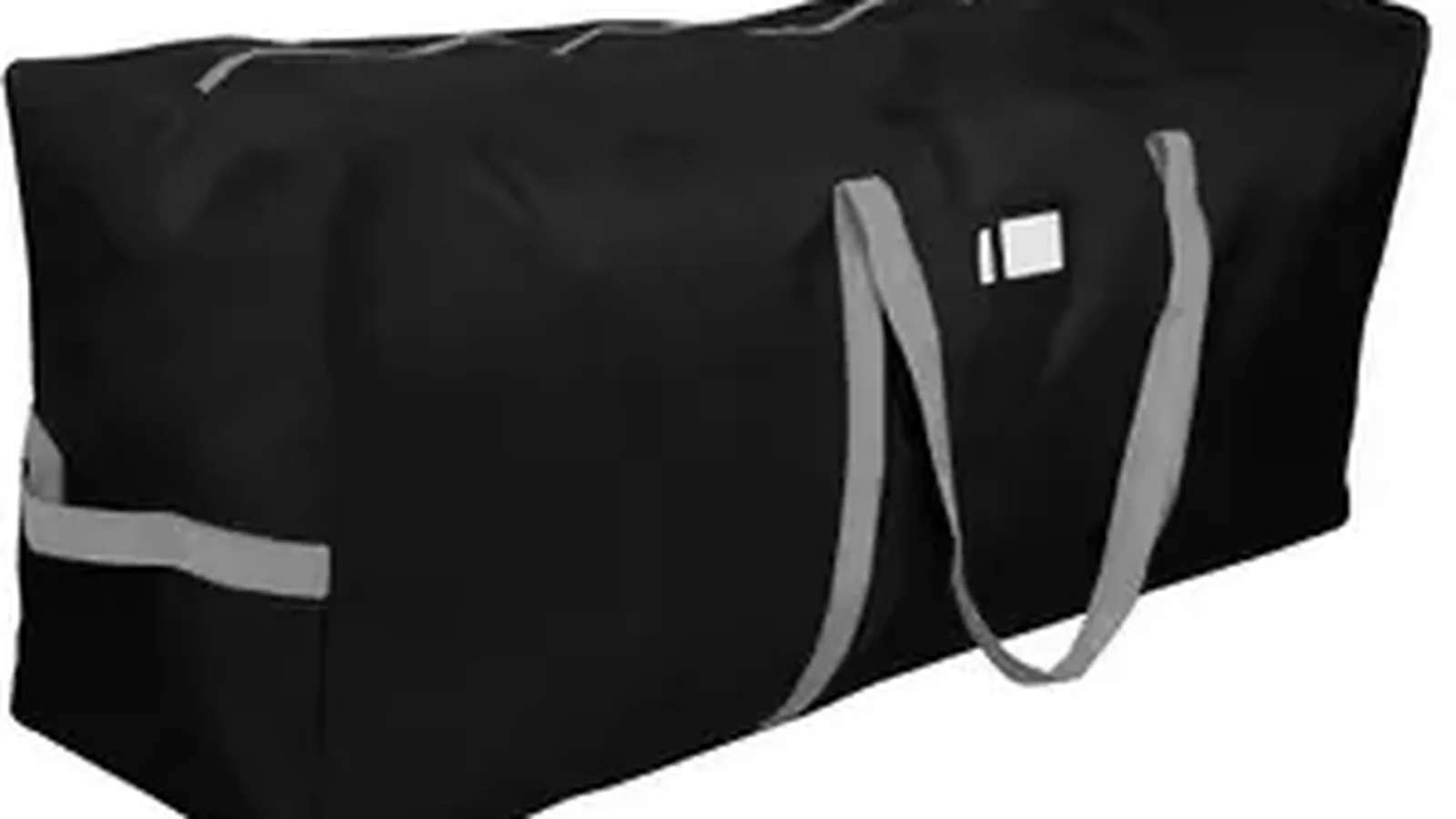
Based on a legacy case study and TIIOCTI product specifications for heavy duty moving bags.
A buyer forwarded a competitor's quote last spring with one line highlighted: 180gsm fabric, the heaviest shell on the table. Her crews had already split four bags from that supplier in a single month, all at the handle. The quote promised more material; the failures happened somewhere the material number never reached.
That mismatch is worth pulling apart, because the heavy-fabric reflex is one of the most common purchasing moves in the moving supplies category. It feels like insurance. It usually is not.
The common move: buy the heaviest fabric on the quote

When a procurement manager compares moving bag quotes, the spec line that gets read first is fabric weight. 90gsm, 140gsm, 180gsm: the numbers sort themselves, and the heaviest one looks like the safe pick. The logic is simple enough that it rarely gets questioned in a bid review.
The trouble is that fabric weight answers a question about the shell, and most field failures are not shell failures. A bag that tears at the weave intersection is one problem. A bag whose handle rips off mid-lift is a different problem with a different cause, and a heavier shell does not automatically solve it.
Why a thicker shell looks like the safe answer
Heavier fabric does resist puncture and abrasion better than thin material, and that part of the intuition holds. A 150gsm coated Oxford shell outperforms a 90gsm uncoated PP shell on tear resistance, and the coating keeps moisture from saturating the weave and adding dead weight. Those are real gains.
The mistake is treating shell weight as a proxy for the whole bag. A bag is a system: shell, seam, handle attachment, stitch geometry, and the load path that connects them. Upgrading one component while leaving the others unspecified moves the failure point rather than removing it. Sometimes the heavier shell simply shifts stress onto a stitch line that was never designed for it.
Where the real risk hides: the handle seam under a sudden load

Watch a crew carry a loaded bag up a staircase and the load is never steady. The bag swings, the carrier shifts grip, one handle takes more weight than the other, and then the bag gets set down hard or dropped the last few centimeters. That sequence is what a handle seam actually experiences, and it looks nothing like a slow pull in a lab.
A single-needle lockstitch through the handle attachment creates a line of perforations across the fabric. Under a sudden load shift, that perforation line behaves like a tear-off coupon: the stitches hold, the fabric between them gives way, and the handle separates from the body in one motion. A 50 kg load released from shoulder height is not just a damaged bag. It is a crush hazard for feet and a violent twist for the carrier’s lower back, and incident logs in this category show back strains following handle blowouts.
The fix is structural, not just heavier. Double-bar tack reinforcement spreads the load across a wider anchor instead of concentrating it on one stitch point. Reinforced webbing that runs the full length of the opening, rather than stopping at each handle, gives the load a continuous path into the bag body. Double-stitched handles attached to the body rather than tacked on change how force enters the seam.
What a static tensile number does not tell you

A supplier’s certificate of analysis typically reports a tensile break strength from one lab sample, measured by clamping the fabric and pulling slowly until it fails. That number can be accurate and still tell a buyer almost nothing about field life. Slow clamping does not replicate jerking, swinging, or a sudden drop while the bag is gripped by one handle.
Static pull tests on a reinforced seam can show a meaningful improvement over a straight stitch, and that result is worth having. It is not the same as dynamic load testing, where the bag is dropped or shock-loaded while held by one handle. A design that survives 50 kg of dynamic weight without stitch elongation is answering the question crews actually ask in the field.
Batch consistency is the second blind spot. One passing lab sample says nothing about the range across production runs. A supplier shipping on visual inspection alone can deliver a lot with weak coating adhesion or off-spec stitch density and never know it. Random batch tensile testing at the factory gate turns a single data point into a distribution, and that distribution is what predicts whether next month’s shipment behaves like last month’s.
The fix that actually changes failure rates

The changes that move field failure rates are specific and verifiable. A 150gsm coated Oxford shell with a UV absorber in the coating holds its strength through outdoor exposure far better than untreated PP, and the coating prevents the moisture saturation that drives mold-related returns. Double-bar tack reinforcement at the handle attachment replaces the perforation line with a distributed anchor. Batch-level QC holds and random tensile testing catch the lot that drifts before it ships.
Traceability is the piece buyers skip until a quality crisis arrives. A unique batch code and sequential number on each bag lets a supervisor who notices coating delamination on a handful of units isolate the affected production lot in hours instead of recalling an entire season of shipments. In one documented rollout, that numbering limited a bad lot to 200 replacement units rather than the full order.
None of this is free. A reinforced handle attachment adds cost per bag, and the unit price on a properly specified bag runs above the cheapest quote on the table. The comparison that matters is total cost of ownership: replacement purchasing, crew downtime, damage claims, and safety incidents all sit on the other side of the ledger. A bag that survives 12 heavy-duty cycles instead of 5 changes the annual math far more than a few cents of unit price.
A first-lot checklist for buyers who cannot test everything

Most buyers cannot run a dynamic load lab, and they do not need to. They need a supplier who can document what was tested and a first lot that can be checked against that documentation.
- Specify stitch geometry, not just “reinforced handles.” Ask for the attachment method, the number of bartacks, and whether webbing runs the full opening length or stops at the handles.
- Ask for dynamic load data, not only static tensile. A bag dropped while gripped by one handle at the rated load is the test that matches field use.
- Require batch-level QC evidence. Random tensile testing across production runs, with results per lot, beats a single certificate of analysis.
- Confirm traceability before the first shipment. Batch codes and sequential numbers on each bag, so a suspect lot can be isolated without a full recall.
- Run the four checkpoint checks on the first lot. Incoming material, seams and zip, finished bag dimensions, and final carton count, with cartons photographed before loading.
- Set the load limit and the lift protocol in writing. A 50 kg dynamic maximum verified with a portable scale during crew training, and a rule that both handles get used equally. Overloading by even 5 kg cuts seam life roughly in half in repeated use.
- Train crews on drag damage. Coated Oxford resists puncture better than standard PP, but sustained friction across abrasive surfaces erodes the coating and exposes base fiber, which starts a tear.
What the case does not prove about your own fleet
A supplier’s case history describes one fleet, one load profile, and one set of routes. It does not transfer automatically to a operation moving pianos up narrow staircases or running crews across long carries on uneven ground. The design principles transfer; the specific cycle counts do not.
The gain also depends on crews staying inside the design limits. A reinforced bag used past its rated load, lifted by one handle, or dragged across concrete will fail on a schedule that has nothing to do with the spec sheet. The specification sets the ceiling, and daily behavior decides where the bag actually operates.
For a buyer weighing a switch, the useful question is not whether heavier fabric helps. It is whether the quote in front of you specifies the handle attachment, the dynamic test, and the batch controls that determine whether the bags in month six match the sample in month one. A spec sheet missing those three items is a wish list, and the handle seam is where the wish gets tested.
FAQ
What is the difference between static and dynamic load testing for moving bags?
Static testing clamps the fabric or seam and pulls slowly until failure, producing a tensile number. Dynamic testing replicates jerking, swinging, and sudden drops, including a bag dropped while gripped by one handle, which is the load case that causes most handle seam ruptures.
Does custom logo printing weaken moving bag handles or fabric?
Not when heat and pressure are calibrated to the fabric’s tolerance. A logo applied by screen print, heat transfer, or a woven or embroidered label should be specified alongside the fabric and stitch requirements so the decoration step is checked against the same tolerance.
How long do reinforced moving bags last in daily use?
Properly reinforced bags with a coated Oxford shell and double-bar tack handles have reached 12 or more heavy-duty cycles in documented rollouts, compared with roughly 5 for thin uncoated PP bags. Actual life depends on load discipline and how crews handle the bags between jobs.
Can batch-level QC really catch a bad lot before it reaches crews?
It can when the protocol includes random tensile testing per batch and each bag carries a batch code. A lot with weak coating adhesion or off-spec stitching shows up in the test data and can be isolated by code, limiting replacements to the affected units instead of the full shipment.