Based on archived TIIOCTI articles on heavy duty moving bags and the current product structure notes for reinforced woven PP bags.
A new hire in the fleet procurement office held up a purchase order and asked why the moving bag line listed only fabric weight and dimensions. The order had been copied from an earlier one, and nobody in the room could say what the bag was supposed to survive. That question sits at the center of every damage claim a fleet files.
Most moving bag specs are written like a shopping list: denier, size, colour, print. The lines that decide whether a bag survives a hundred lifts are often missing or vague. Walking through a real fleet order line by line shows where the risk hides and what to write instead.
The First Line a Fleet Buyer Writes: Handle Webbing and Denier
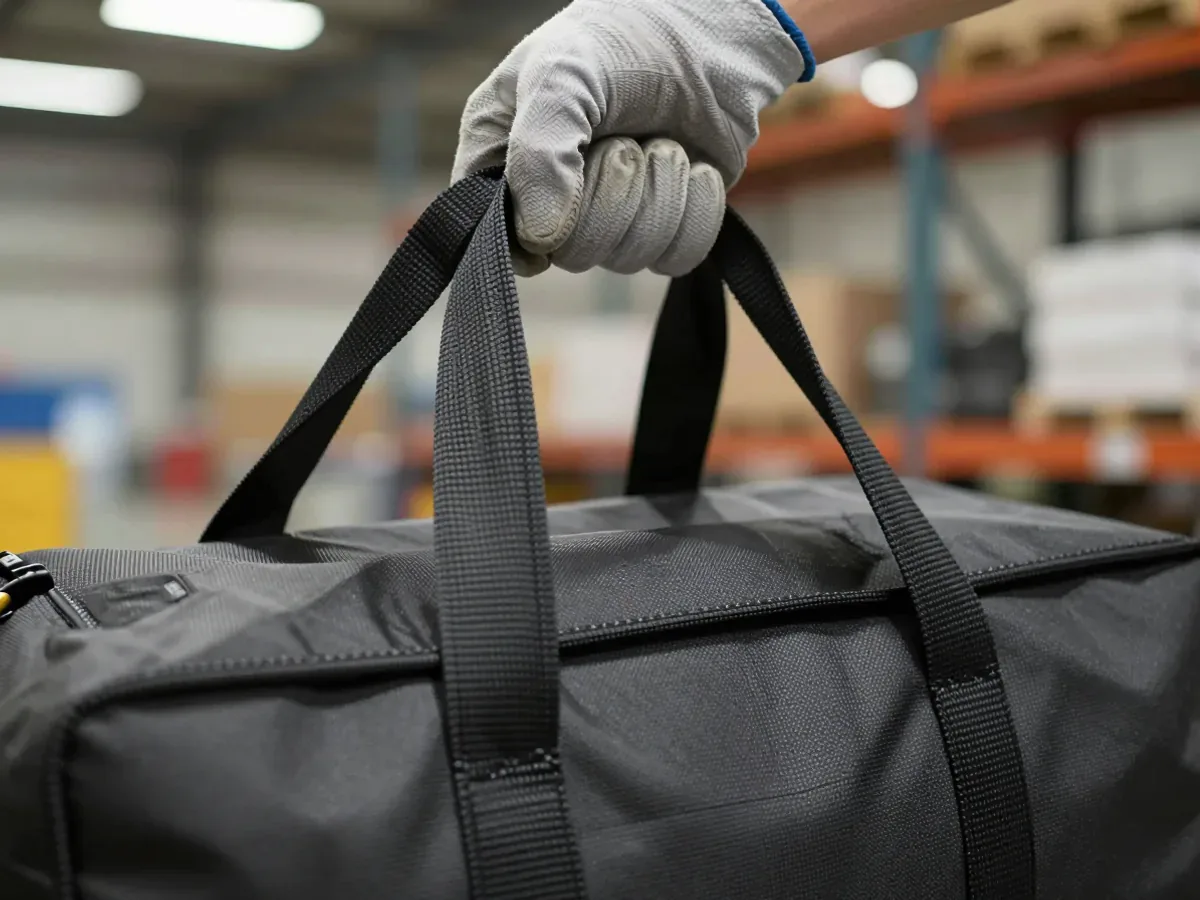
The first line on the order read "300D handle." That is a start, not a specification. Denier describes the yarn weight, and a buyer who stops there leaves the mill free to choose the thread construction and the attachment method.
A handle carries the entire load at two points, so the webbing and the stitching matter more than the number alone. A 300-denier bonded nylon webbing, double stitched to the bag body with a reinforcement patch at the stress point, spreads that load across a wider area. Budget handles are often 100-denier polyester sewn directly into the fabric, and they are the first thing to go when a mover grabs a corner.
Write the line as three parts: webbing denier and yarn type, attachment method, and reinforcement. Then verify it on the pre-production sample by pulling the handle by hand and checking that the stitching runs through the body rather than sitting on the surface.
Why Stitch Type Belongs Next to Fabric Weight
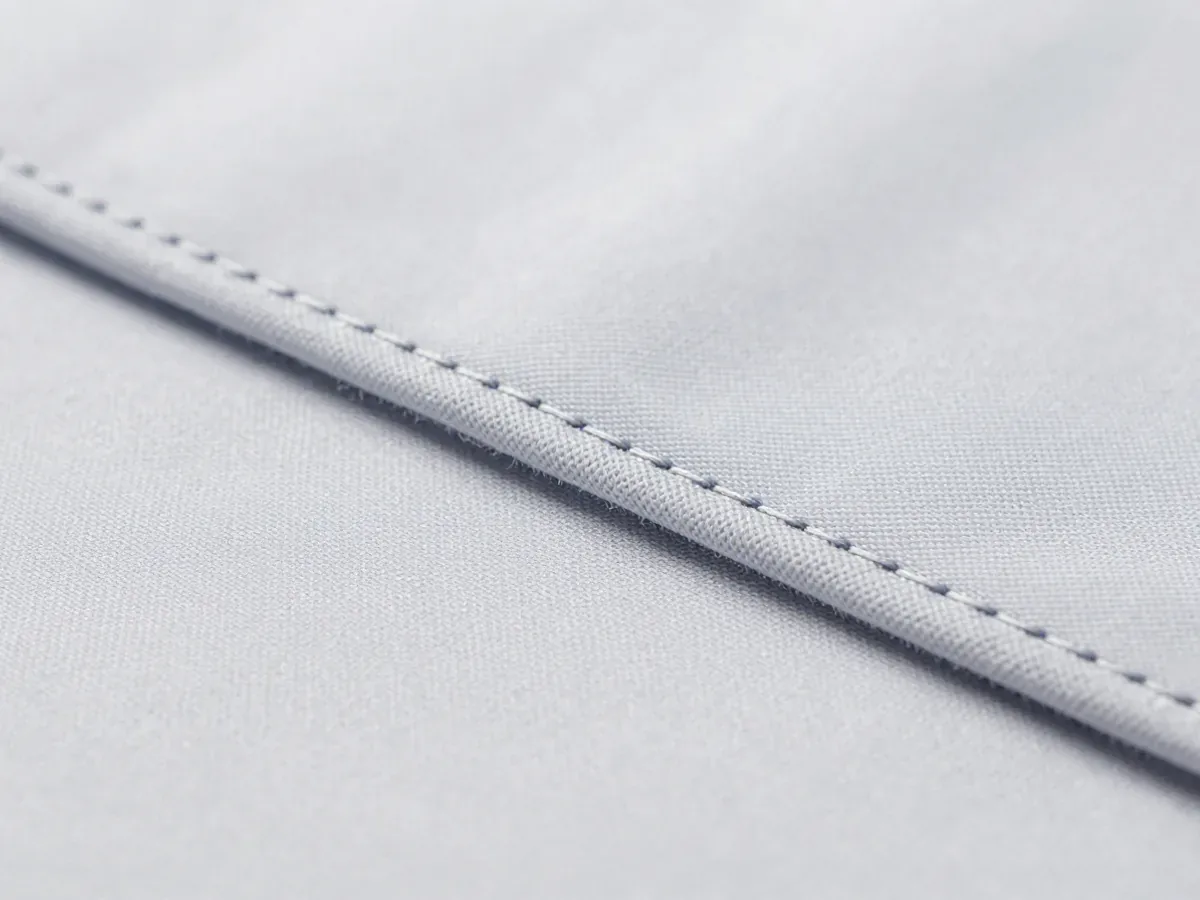
Fabric weight gets a line of its own on nearly every order. Stitch type usually gets nothing, even though the seam is where a loaded bag actually fails. A heavy fabric joined with a weak seam behaves like a light bag once the lift begins.
In a pilot fleet test, four moving bag brands went through a standardized 100 kg lift-and-drop protocol. Within 50 cycles, two budget alternatives showed seam creep along the bottom fold, and the chain-stitch seams had pulled apart by 15 to 20 mm. Both used 100-denier polyester thread. The reinforced bag used 300-denier bonded nylon with a lock-stitch, and after 18 months and 10,000 bags in the field, no seam failures were recorded.
That result belongs on the spec sheet as a written requirement, not a hope. The line should name the thread denier, the yarn type, and the stitch class. A triple-stitched lock-stitch resists unraveling under repeated load, while a single-fold chain-stitch creeps open when weight shifts unevenly inside the bag.
The Base and Corner Line That Gets Copied From an Old PO

The base line on the old order said "flat bottom." It had been copied forward for years without anyone asking what happens when the bag lands on a truck bed corner. A flat bottom with no reinforcement is a single layer of fabric between the load and the floor.
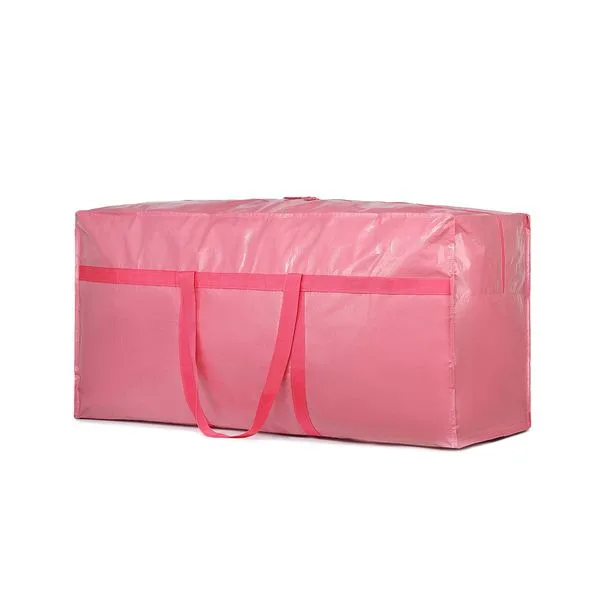
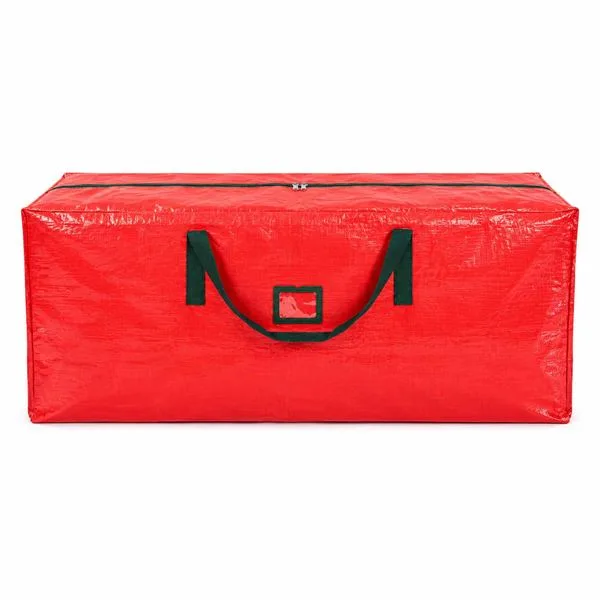
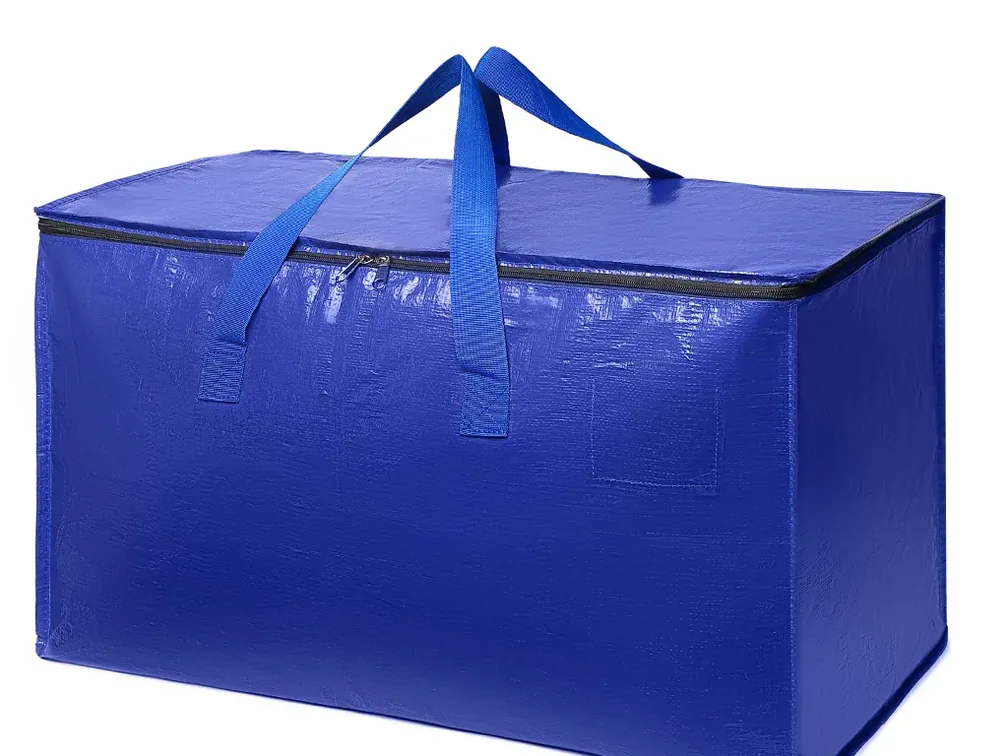
The structure that holds up is a reinforced base with handles stitched through and a flat-folding body. Corner patches with a heat-sealed backing on the gusseted bottom stop the fabric from tearing where it meets the floor or the truck wall. Standard bags carry no extra reinforcement there, and that edge is exactly where a heavy load concentrates.
Write the base line as construction, not shape. Name the reinforcement, the corner treatment, and the fold. A buyer who writes "reinforced base, heat-sealed corner patches, flat-folding body" gives the mill something to build against and the inspector something to check.
How to Verify Each Line Before the Bulk Run
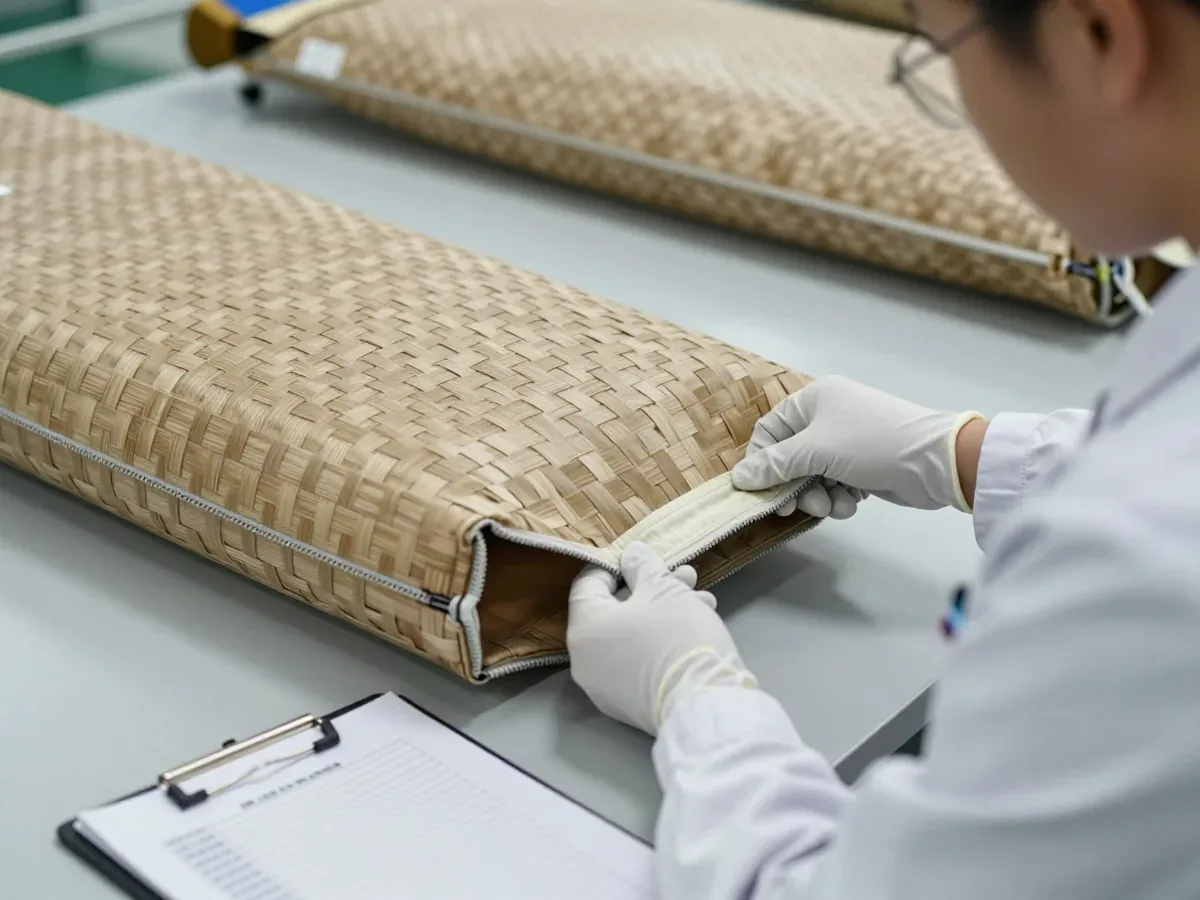
A spec sheet only prevents damage if someone confirms the bag matches it before the bulk run starts. The verification sequence follows the order of the lines above, and each step has a physical check.
Start with the handle: pull it hard, look for stitching that passes through the body, and confirm the reinforcement patch sits at the stress point. Move to the seam: open the bag flat, inspect the bottom fold, and check the stitch class against the written line. Then the base and corners: bend the bag at the corner and look for a heat-sealed backing rather than a raw edge.
Fabric strength can be checked against a written burst test report. Bags under 2,000 N fail early under load, and a reinforced bag tested at 2,800 N on ASTM D5034. A 500-cycle sealed-seam test simulates real lifting and stacking, and most budget bags fail by cycle 50. Ask for the report and a pre-production sample together, then hold the batch with photos before the run is released.
What the Spec Sheet Still Cannot Tell You About Loading
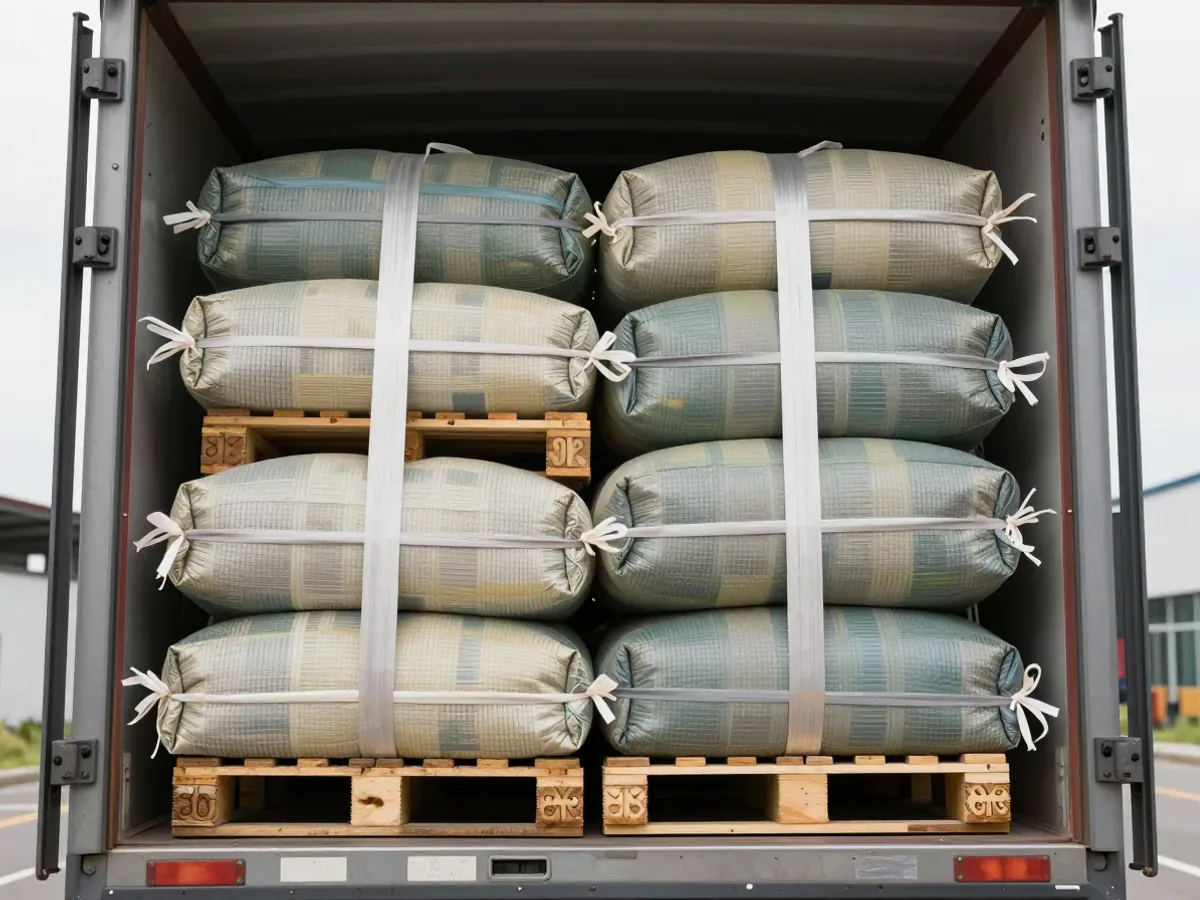
A perfect bag still fails if it is loaded badly. Poor loading is the number one cause of damage in transit, and no fabric line on an order can compensate for a truck that shifts on the first turn.
Palletized shipping with corner boards and stretch wrap keeps loads from moving against each other. Void fill or compressed air dunnage immobilizes the load inside the truck. A pre-load inspection checklist, paired with reinforced bags, brought one fleet's damage ratio from 0.6% to 0.35% of cargo value.
The spec sheet can require a bag that survives handling. It cannot require a loader to stack it well. That gap belongs in the buyer's own process, written as a loading standard and checked at dispatch rather than assumed.
The One Line Buyers Leave Blank: Seam Construction at the Bottom Fold
The blank line is almost always the same one: seam construction at the bottom fold. Buyers write fabric, handles, and dimensions, then leave the seam to the mill's default. The default is usually a single-fold chain-stitch, and it is the line that decides the damage rate.
A stitched seam is not a sealed seam, so a woven bag is not waterproof, and humidity will find any gap in the fold. The bottom fold takes the full weight of the load every time the bag is lifted, set down, or stacked. Chain-stitch creeps under that repeated stress, and the creep shows up as a gap before it shows up as a spill.
Write the line explicitly: triple-stitched lock-stitch, 300-denier bonded nylon thread, reinforced bottom fold. Then verify it on the sample and again at the QC hold. Four checkpoints across an order give the buyer a place to catch a substitution before the containers leave.
FAQ
Does a higher denier number alone guarantee a stronger moving bag?
No. Denier describes yarn weight, not seam strength or attachment method. A 300-denier handle sewn on with a weak stitch can fail before a 100-denier handle that is properly reinforced.
Can I test seam strength without a full lab report?
A hand pull on the pre-production sample shows whether the stitching passes through the body and whether the seam holds under load. A full lab report gives a number, but the physical check catches most attachment problems early.
Is a stitched woven bag waterproof enough for humid warehouse storage?
A stitched seam is not a sealed seam, so the bag is not waterproof. Woven PP retains most of its tensile strength in humidity, but standing water and prolonged damp storage will still find the stitch line.
How many checkpoints should a moving bag order pass before shipment?
Four QC checkpoints cover the order from pre-production sample to dispatch. Each one should check the handle attachment, the bottom seam, and the base reinforcement against the written spec.