
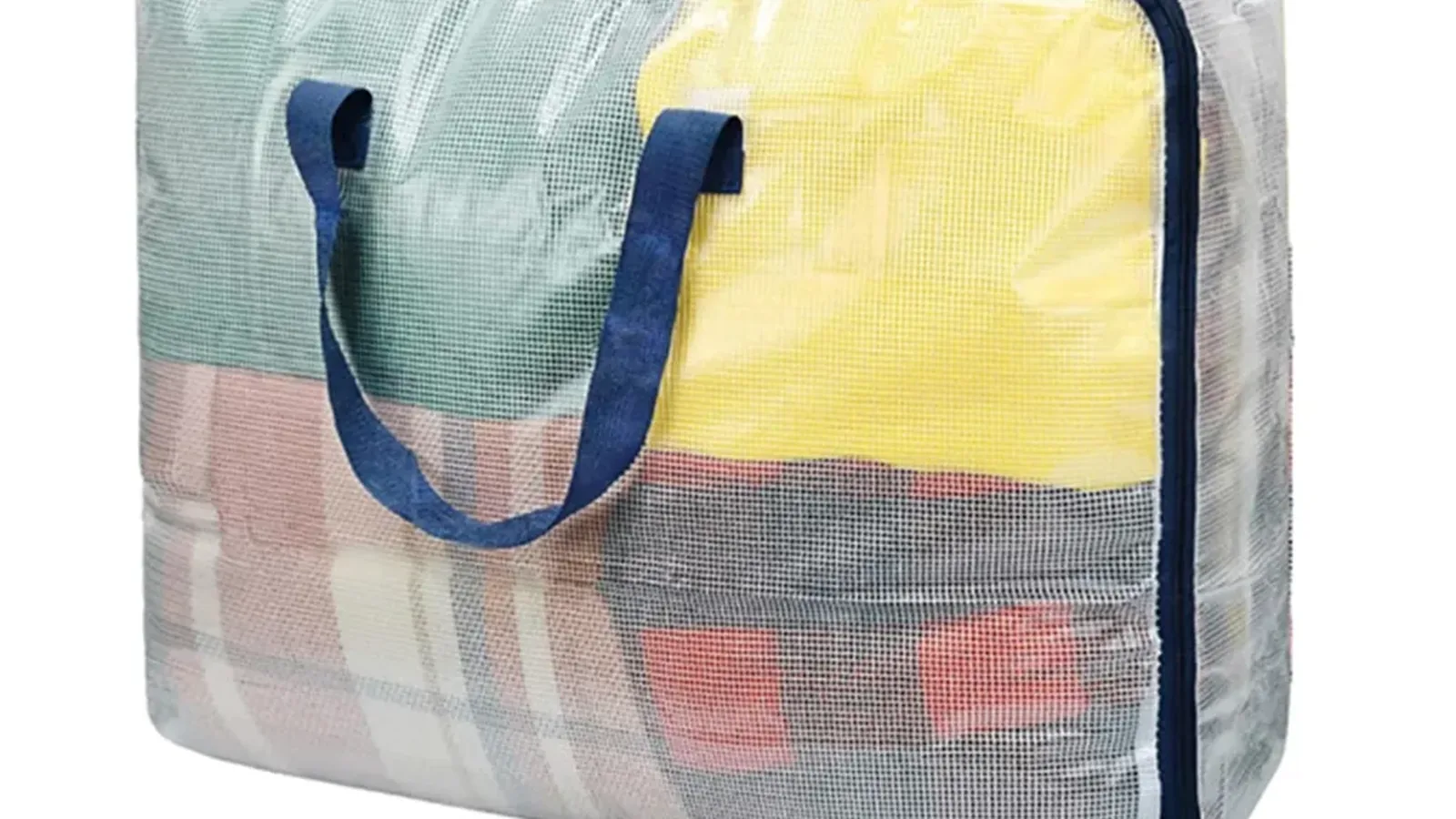
Based on legacy procurement notes, product specifications and QC benchmarking records for self-locking zipper bags.
Three self-locking zipper bags sat on the buyer's desk, all approved, all from the same supplier, and only one of them would still close after a month of warehouse handling. The other two looked identical under the sample-room light. What separated them was not visible in a photo, and it was not visible in the spec sheet either, because the spec sheet had never named the slider housing, the tape reinforcement, or the cycle count.
That gap is where most failures begin. A self-locking zipper bag passes through six stations between purchase order and container, and each station can quietly remove a little of the reliability the buyer thought they had bought. Following one batch through those stations shows where the risk actually sits.
The PO Lands and the Spec Sheet Already Has Gaps
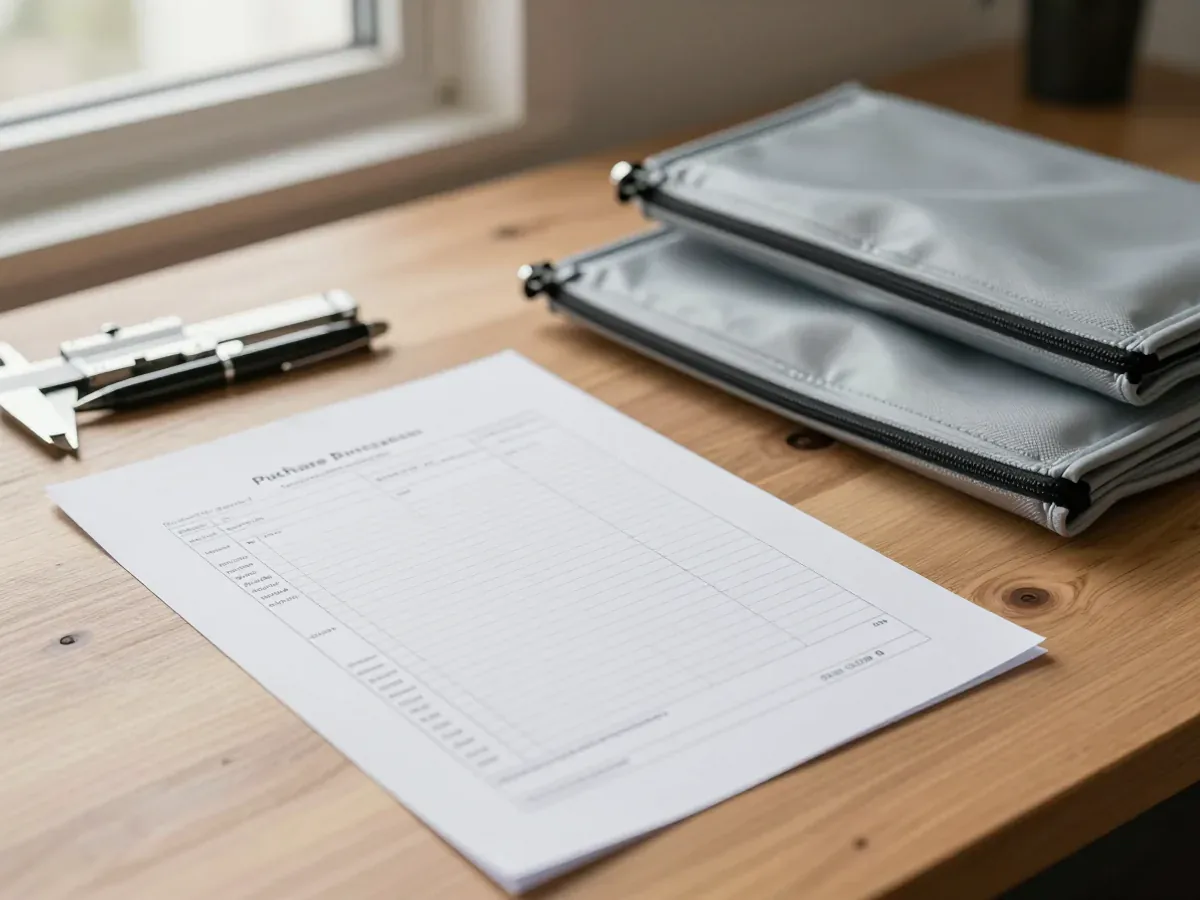
The purchase order arrives with dimensions, fabric weight, print artwork and a delivery date. What it usually does not carry is the lock type, the cycle durability target, the burst strength figure, or the pull force the zipper tape must hold. Those four lines decide whether the bag survives a year in a warehouse or jams on the third use.
Most procurement teams review material thickness and dimensions and stop there. That review misses the variables that kill performance in real logistics: material tension consistency, slider clearance tolerances, and lock mechanism wear over repeated cycles. None of them appear on a standard PO.
A buyer who wants a reliable batch should fix the lock mechanism before the PO is signed. Auto-lock sliders engage a spring-loaded cam that bites into the tape when tension is released, and the lock is passive, so it cannot be overridden without visible slider damage. Push-button sliders release on a button press, which suits repeated access but adds a mechanism that can fail. Friction lock sliders use a molded tab pressing against the tape, cost the least, and typically fail under 200 cycles.
The spec sheet also needs a number for cycle durability, a number for load rating in kilograms, and a burst strength figure per ASTM D5034. Without those three, the factory has nothing to aim at and the buyer has nothing to reject against.
Incoming Material: Tape, Slider and Fabric on the Rack
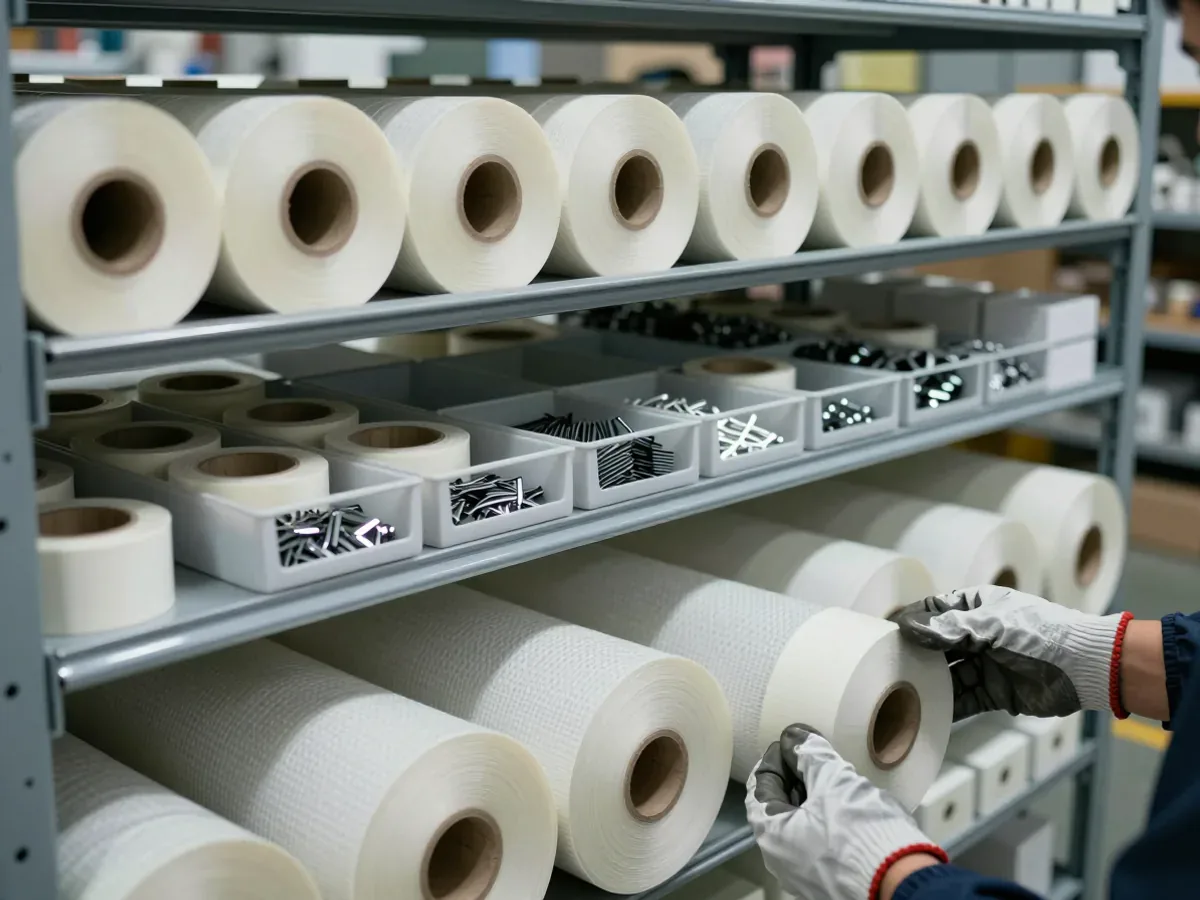
On the material rack, three things get checked against the approved spec: fabric, webbing, zips and thread. The fabric is usually the easy part. Woven PP at 180 to 220 gsm resists tearing and handles repeated folding without cracking, and the weight is simple to verify with a scale and a cutter.
The zipper tape is harder. Tape tension consistency decides whether the slider runs smoothly along the full length or snags near the ends, and a roll that was wound unevenly at the tape supplier will show up later as a jam that looks like a slider fault. A buyer walking the rack should ask to see the tape roll ends and confirm the tape width matches what the slider was designed for.
The slider itself deserves a close look at this station. A metal-reinforced housing with an anti-snag guard is what keeps the slider aligned when bags are tossed onto conveyor belts or truck beds. A plain plastic housing without a guard is cheaper and will misalign under side loading during palletizing.
This is also the moment to confirm traceability. Every batch should carry a unique lot number, and if the number is printed on the bag rather than applied as a sticker, it survives the warehouse. A lot number that falls off in transit traces nothing.
Cutting and Zipper Insertion: Where Alignment Is Decided
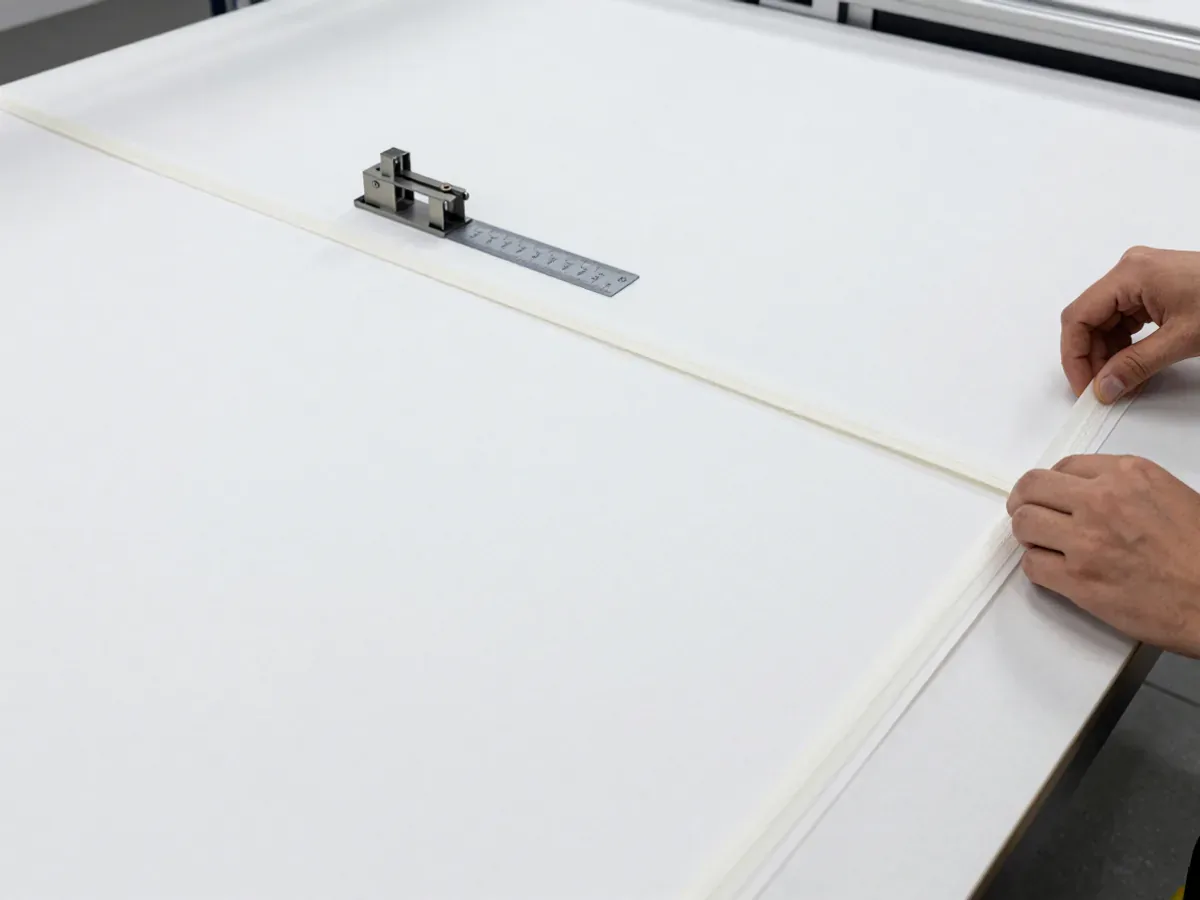
At the cutting table, the fabric is cut to the bag's finished dimensions plus seam allowance, and the zipper opening is marked along the top edge. The top zip opens the full length of the bag, so the cut line for the opening has to match the tape length exactly. A few millimeters of drift here shows up as a zipper that will not close at one end.
Zipper insertion is where alignment is settled. The tape is positioned along the opening, and the distance between the two tape edges determines whether the slider can engage cleanly. If the gap is too wide, the cam cannot bite. If it is too narrow, the slider binds. Neither fault appears in a visual sample check, because both bags look fine when the slider is moved by hand at the sample stage.
A buyer reviewing this station should ask how the insertion jig is set and whether the same jig runs every size. A factory that resets the jig for each size and checks the first piece against a gauge is controlling the variable. A factory that eyeballs the tape position is not.
Custom size is available on request, and that is exactly when insertion alignment gets risky. A new size means a new jig setting, and the first batch of a custom size is where tape misalignment most often appears.
Sewing Floor: Bar Tacks, Seams and the Slider Housing

On the sewing floor, handles, zips and seams run on the same line as the stock production, which means the zipper station competes for attention with everything else. The zipper tape is stitched into the bag seam, and the quality of that stitch decides whether the tape separates under load.
Reinforced zippers with bar-tacked tape are the difference between a bag that holds and one that peels. A bar tack at each end of the zipper opening locks the tape to the seam and stops the stitch line from running. Without it, the tape edge can lift after a few dozen cycles and the slider loses its track.
The slider housing gets its final check here too. Side loads during palletizing or truck transport cause lockout jams, and the housing has to withstand that stress without deforming. A housing that flexes lets the cam lose contact with the tape, and the bag stops locking even though nothing looks broken.
Pull, seam strength and bar tack are tested on every batch on this floor, which is the right place for the test. A bar tack that fails at the machine can be corrected before the bag is packed. A bar tack that fails in the warehouse cannot.
Final Inspection: Pull Force, Cycle Checks and the Loaded Drop
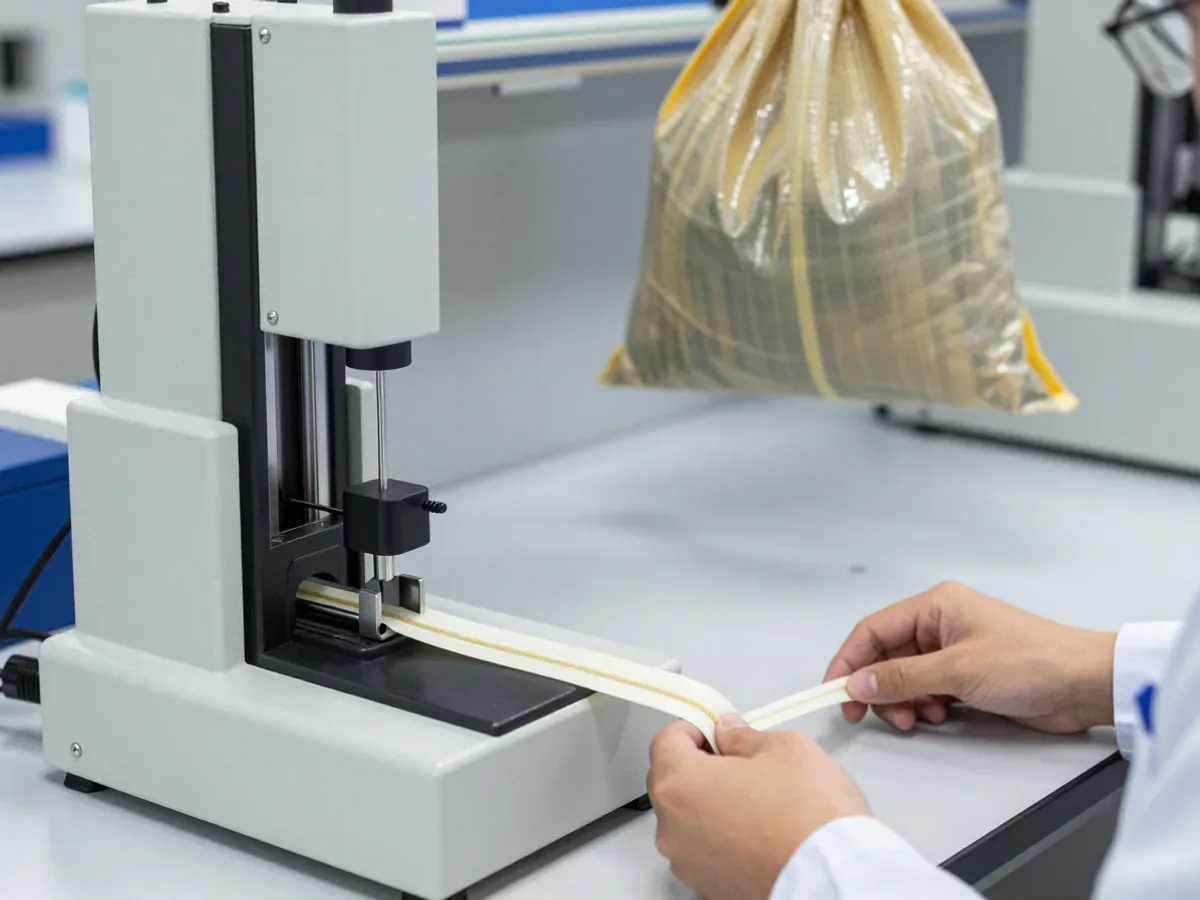
Final inspection is where the batch either earns its release or goes back. Three lab checks carry most of the weight: pull force on the zipper track, lock reliability over repeated cycles, and salt spray corrosion resistance on metal components.
Pull force testing tells the buyer whether the zipper tape will separate from the bag material under load. For heavy-duty self-locking zipper bags, a minimum of 150 N is the figure to demand. A tape that releases below that number will fail when the bag is lifted by the zip or dragged across a loading bay.
Lock reliability means the slider stays locked under side-loading stress, not just when pulled straight. A slider that holds against a direct pull but releases when the bag is pushed sideways will open in a pallet stack. The test has to reproduce the side load, not just the easy direction.
Cycle durability is the number that separates suppliers. Generic self-locking sliders fail before 200 open-close cycles on average, and zipper failure before 200 cycles is the industry's dirty secret. A buyer who specifies a minimum of 500 cycles and asks for third-party data is filtering out most of the market.
Seams, handles, zips and a loaded drop are checked on every batch, and the loaded drop is the check that most resembles real handling. A bag dropped from waist height with its rated load inside tells the inspector more about seam and tape integrity than any visual pass.
Packing and Container Loading: The Last Chance to Catch a Bad Batch
Packing is the last station where a bad bag can still be pulled. Once the cartons are sealed and stacked, the batch is committed. A 5 percent random batch hold for third-party burst testing before shipment is the clause that turns final inspection into a real gate rather than a formality.
The hold matters because defect rates on imported self-locking zipper bags climb when the hold is skipped. A batch that was not sampled for burst strength leaves the factory with its weakest bags inside, and the buyer discovers them at the warehouse, not at the loading bay.
Container loading adds its own stress. Cartons are stacked, compressed and shifted, and the bags inside take side loads through the whole voyage. An anti-snag guard on the slider housing earns its cost here, because a guard that keeps the slider aligned through loading also keeps it aligned through unloading.
Custom fleet branding and batch traceability belong at this station too. Branding via hot stamping or woven labels is applied before packing, and the lot number goes on the bag so the batch can be traced back to the tape roll and the slider lot. A supplier that offers both is treating traceability as part of the product, not an afterthought.
What the Six Stations Tell a Buyer Before the PO
The three bags on the buyer's desk differed in exactly the places the six stations check. One had bar-tacked tape and a guarded housing. One had a friction lock slider. One had tape that was inserted a few millimeters off. Only the first survived a month of handling, and the spec sheet had described all three the same way.
A buyer who wants to avoid that outcome can fix four lines before signing: lock type, cycle durability, burst strength and pull force. Then the same four lines become the inspection points at material, insertion, sewing and final check. The container is the last place to catch a bad batch, and the PO is the first place to prevent one.
FAQ
How many open-close cycles should a self-locking zipper bag survive?
A minimum of 500 cycles without failure is the figure to specify, and third-party test data should confirm it. Generic sliders fail before 200 cycles on average, so a 500-cycle requirement filters out the weakest hardware before the order is placed.
What is the difference between auto-lock, push-button and friction lock sliders?
Auto-lock uses a spring-loaded cam that bites into the tape when tension is released, and the lock is passive. Push-button sliders release on a button press, which suits repeated access but adds a failure point. Friction lock sliders press a molded tab against the tape, cost the least, and typically fail under 200 cycles.
Can I get batch traceability and custom branding on self-locking zipper bags?
Most industrial zipper bag suppliers offer custom fleet branding through hot stamping or woven labels, and batch traceability through serialized lot numbers or QR codes. A unique lot number printed on the bag is what makes the trace work after the carton is opened.






