

Based on TIIOCTI product specifications and a review of current US state carryout bag rules as summarized in the source archive.
The final inspection report came back with a failed line item, and it was not the seam or the print. A woven tote bound for three states had been measured against a single reusable spec, and the spec had been copied from a catalogue page rather than from any state's actual legal definition. The bag passed the factory's own checklist and would have failed a store audit in two of its three destinations.
That mismatch rarely shows up in a warehouse. It shows up at a checkout counter months later, when a district manager cannot explain why one store’s bags are legal and another’s are not. Walking a multi-state tote order from purchase order to container loading shows where compliance is actually decided, and where it is only assumed.
The PO Arrives With Three State Destinations on It
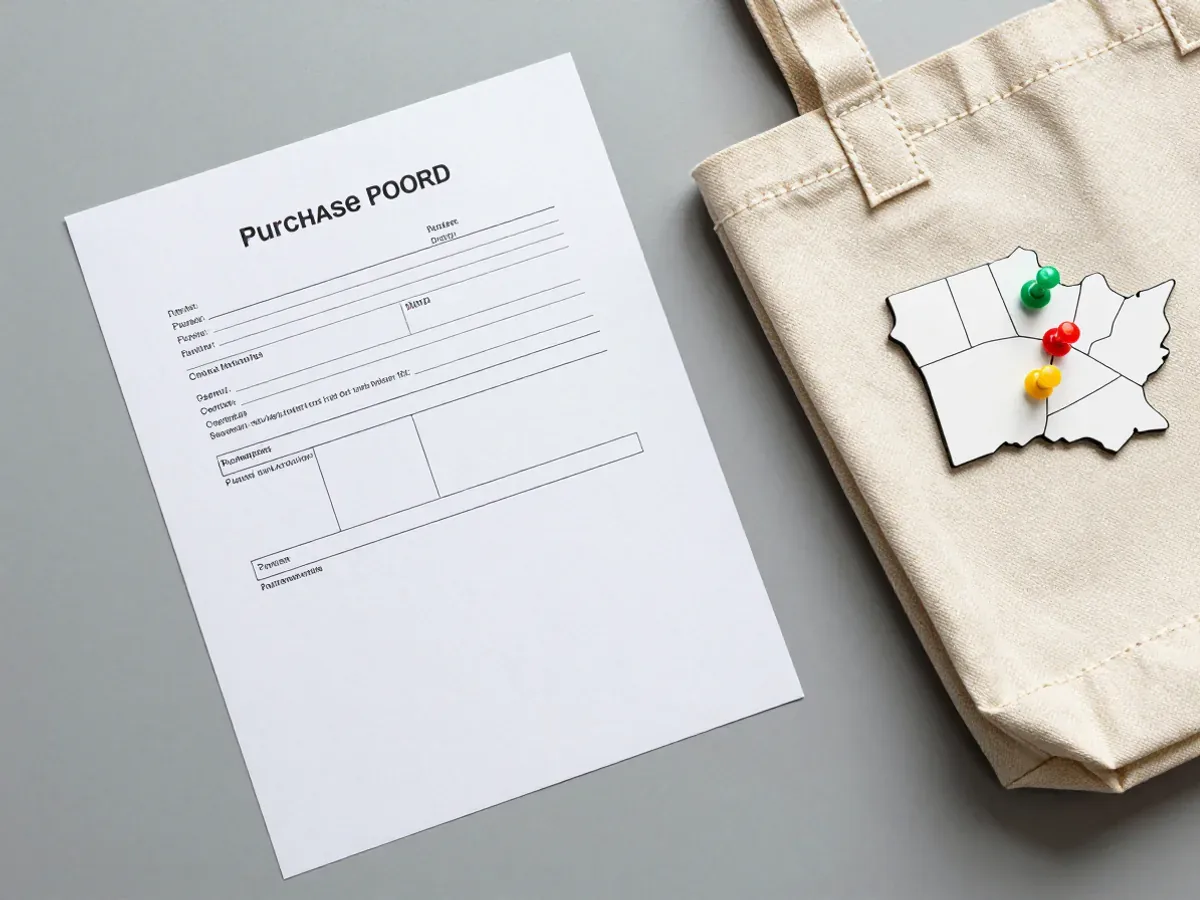
The purchase order lists one tote design, one print, and a ship-to list that crosses three regulatory zones. One destination bans thin plastic carryout bags. A second bans all plastic film at checkout, including thick film sold as reusable. A third sits in a preemption state where no local ordinance can restrict bags at all.
Those three zones do not ask the same question of the same bag. In the ban zone, the tote has to clear a thickness threshold, usually 2.25 mil or 4 mil depending on the state. In the film ban zone, no plastic film qualifies no matter how thick it is. In the preemption zone, the tote is a marketing choice rather than a legal necessity.
The first compliance decision happens here, before any material is cut. A buyer who classifies each ship-to state as ban, fee-only, or preemption turns a vague worry into a short written requirement. That one page travels with the order and becomes the reference every later station checks against.
At Material Intake, the Spec Sheet Meets the Roll
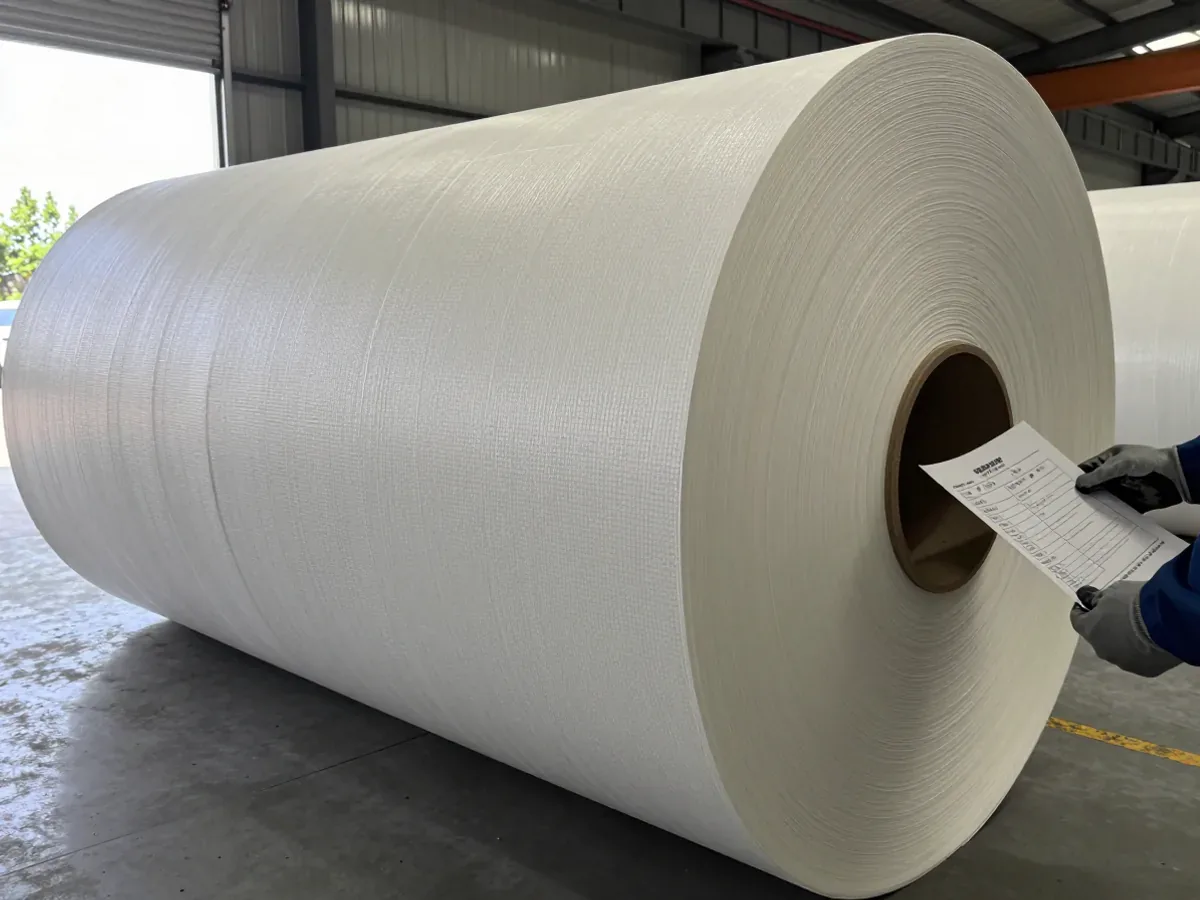
The roll arrives at the intake bay with a material certificate, and the first useful check is whether the certificate describes the same material the PO asked for. GSM, thickness, and construction need to match line by line. A laminated PP woven roll and a non-woven roll can both be called reusable, but they behave differently under a state definition that names fabric or woven construction.
Several states define a reusable bag by stitched handles, a minimum volume, and a fabric or woven build. Film fails that test on construction alone, which is why a 3 mil film bag labeled reusable fails both the thickness check and the definition check at once. Intake is where that risk is cheapest to catch.
The documents a factory should hand over with the quote make this station fast. A material spec with GSM and thickness, a recycled content certificate where the order claims recycled content, and a test report covering the batch. None of these cost much to produce at an established factory, and together they turn a compliance question into a supply chain answer.
At Cutting, Thickness and GSM Stop Being Paperwork

The cutting table is where a spec sheet becomes a measurable object. A caliper reading on the first cut panel tells the operator whether the roll matches the declared thickness. GSM checks on a cut sample confirm the weight the buyer paid for. Both numbers appear in state ban language, and both are easy to drift during a long run.
This is also where volume minimums get settled. A state that sets a minimum capacity for a reusable bag is describing a finished bag, not a flat panel, so the cutting plan has to leave enough material for the final dimensions. A tote trimmed slightly small to save material can miss the volume floor without anyone noticing until a store audit.
The factory’s own line runs PE, PP woven, non-woven, polyester, nylon, canvas, jute, and rPET. Each has a different thickness story, and a buyer comparing quotes across materials needs the caliper and GSM numbers side by side rather than a single “reusable” label on the sample tag.
At Sewing, the Reusable Definition Is Literally Stitched

Stitched handles are not a style preference in several state definitions. They are part of what makes a bag reusable in the eyes of the law. A handle that is tacked on rather than sewn into the body can fail that construction test even when the material is correct.
On the sewing floor, the handle attachment is the station to watch. Handles stitched to the body rather than tacked on give the bag its second-trip durability, and that durability is the practical meaning behind the legal wording. A bag judged on its second trip is a bag whose handle survived the first.
Pull, seam strength, and bar tack checks belong on every batch, not on a single golden sample. A buyer walking the line can ask to see the bar tack on a finished handle and the seam allowance inside the channel. Those two looks tell more about the reusable claim than any certificate on the office wall.
At Final Inspection, the Bag Is Judged on Its Second Trip

The inspection table is where the bag meets the definition it will be judged by. A reusable bag is judged on its second trip, so the inspector loads it, carries it, and checks the handle, the base seam, and the print after handling. A bag that looks correct flat on the table can still fail that simple test.
Print and label artwork should already be approved before the run, whether the decoration is screen print, heat transfer, or a woven label. At inspection, the question is whether the approved artwork landed where the proof placed it. A label that carries a recycled content claim needs the certificate behind it, and a label that carries a state specific claim needs the state’s rule behind that.
Two items cause most audit failures downstream. Fee signage is required even when the fee is a pass-through, and reusable bags must meet the construction definition rather than just the name. Inspection can catch the second. The first belongs to the store, which is why the buyer’s checklist has to travel past the factory gate.
At Packing, Labels and Cartons Carry the Compliance Story
Packing is where a compliant bag becomes a compliant shipment. Retail packing can run to polybag, hang tag, retail carton, or per store packing lists, and the choice matters when one order feeds three states. A carton labeled for the wrong destination puts a legal bag in an illegal store.
The label on the bag and the label on the carton should tell the same story. If the polybag says one size and the carton says another, the buyer catches it before shipping or the store catches it after. Per store packing lists make the three zone split visible at the loading bay instead of at the returns desk.
This is also the last cheap moment to fix documentation. A missing recycled content certificate or a test report that covers a different batch is easier to resolve with the cartons still open. Once the container seals, the paperwork travels alone.
At the Loading Bay, One Design Has to Fit Three Zones
The loading bay is where the three zone plan either holds or collapses. A chain consolidating bags for a multi-state rollout can ship one reusable tote design to all stores and keep paper or film only in fee zones and preemption states. That single design approach works only if the tote clears the strictest zone on the list.
California’s January 1, 2026 change made the West Coast as strict as New Jersey. SB 1053 closed the loophole that let grocers sell thick plastic film bags as reusable, so every plastic carryout bag is gone from checkout there. What remains legal is narrow: paper bags with recycled content at a minimum 10 cent charge, and true reusable bags made of fabric or other durable materials.
A dozen states now carry statewide rules restricting plastic carryout bags at the register, and roughly thirteen preempt local ordinances entirely. Hawaii has no statewide ban, but county ordinances cover every county in the state. A loading plan built on one national policy will misroute bags somewhere in that map.
What the Walk Leaves You Holding
The walk ends with a container and a short stack of documents. The documents are the part that survives. A material spec with GSM and thickness, a recycled content certificate where applicable, and a test report for the batch turn a compliance question into something a store manager can file and a district manager can check.
The map itself is not static. Several preemption states see annual repeal bills, and fee-only cities periodically raise rates. A calendar review twice a year, in January and July, routed through the state attorney general or compliance counsel, keeps the one page current. Enforcement follows the store rather than the supplier, and fines attach to the retailer that distributes the illegal bag, which is why the review belongs to the buyer and not only to the factory.
Woven or non-woven fabric totes with stitched handles, such as laminated PP woven bags, satisfy the durable material definition in every current state bag law. That makes one design a workable default across zones, provided the thickness, construction, and documentation checks happen at the stations above rather than at the checkout counter.
FAQ
Which bag material clears the reusable definition in every state?
Woven or non-woven fabric totes with stitched handles, including laminated PP woven bags, satisfy the durable material definition in every current state bag law. Film fails on construction regardless of thickness.
Do produce and pharmacy bags fall under the same bans?
No. Nearly every state exempts produce bags, newspaper bags, dry cleaning bags, and pharmacy bags for prescription items. The bans target carryout bags at the point of sale.
How often should a retailer recheck state bag rules?
Twice a year, in January and July, through the state attorney general or compliance counsel. Fee rates and preemption bills change regularly.
Who gets fined if a noncompliant bag is handed out at checkout?
Enforcement follows the store, not the supplier. Fines attach to the retailer that distributes the illegal bag, and some states hold the store manager personally responsible on first offense.