

Notes from the order file and the sample room on how handle webbing is specified, stitched and checked before a moving bag order ships.
A 30 by 15.7 in moving bag sounds simple on a purchase order until the buyer converts it to inches and the handle drop changes with the conversion. That was the first small surprise on one recent heavy duty moving bag order, and it set the tone for the rest of the run. The handle webbing looked fine in every photo. Between the PO and the container, though, it passed through six stations, and each one had something to say about where a handle actually fails.
This is the route that order took, station by station, and what a buyer can physically check at each stop.
The PO Line That Starts the Handle Conversation
The order began with a single line: heavy duty moving bag, webbing handles, load figure to be agreed. That last phrase is where the handle conversation starts. Load figures on this range are agreed per order rather than fixed across the range, so the handle spec travels with the load. A buyer who writes "strong handles" and moves on has left the most important variable blank.
The line should carry three numbers: webbing width, breaking strength and the stitch specification. Width is a rough guide to strength because a wider webbing spreads the load and has more material, so it holds more than a narrow one on the same fiber. Breaking strength is the load at which the webbing fails, set by the fiber and the construction. The stitch spec covers how the webbing meets the bag.
A buyer does not need to invent these numbers. They need to see them written down before the first roll is cut, because after that the order is committed.
At Goods-In: Reading the Webbing Roll Before It Is Cut
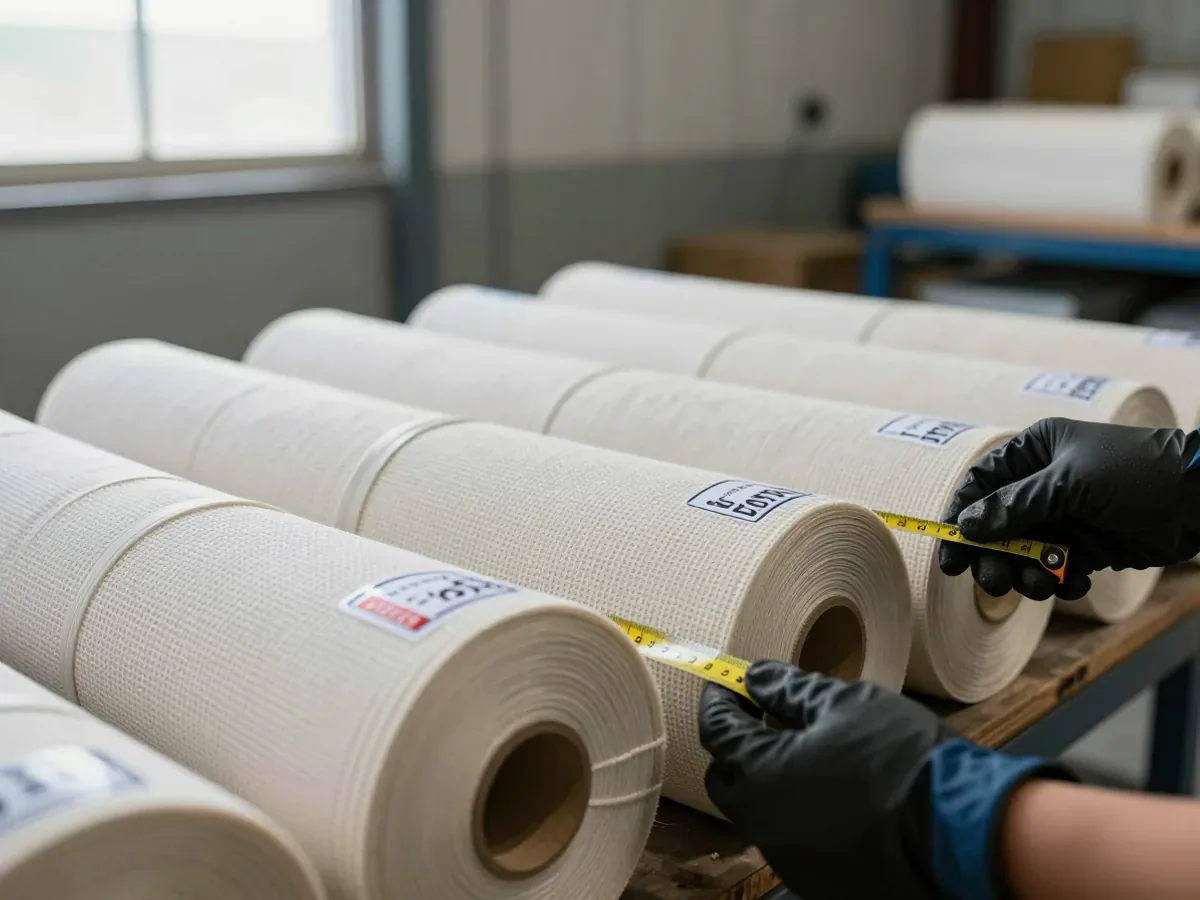
The webbing arrived as rolls, and the goods-in check is the cheapest place to catch a wrong material. The roll label should state the fiber and the width. Polypropylene, nylon and cotton webbing do not share the same strength, and a woven webbing does not behave like a non-woven one. If the label is missing or the width does not match the PO, the roll should not reach the cutting table.
This is also the moment to confirm the webbing is the load path the buyer expects. When a bag is lifted, the force runs through the webbing into the bag, so the webbing is where a bag is most likely to fail under a heavy load. A roll that is narrower than specified has already reduced that path before a single stitch is sewn.
A simple tape measure and the PO line settle the question in minutes. The check is boring, which is why it gets skipped.
At the Cutting Table: Width, Roll Direction and Waste
The cutter works to a width and a length, and both matter. Width decides how the load spreads across the hand and the bag edge. Length decides whether the webbing stops at the handle or runs further along the bag. On this order the webbing runs the full length of the opening, so the load spreads along the bag edge rather than concentrating at two anchor points.
Roll direction is the quiet variable. Webbing has a weave direction, and a piece cut across the roll can behave differently from one cut along it. The cutter should keep the direction consistent across the batch so every handle on every bag shares the same construction.
Waste shows up here too. A narrow roll cut for a wide handle produces offcuts and a patched handle, and a patched handle is a weak point waiting to be found at inspection. The cutting table is where a buyer's width choice becomes a physical strip of webbing.
At the Sewing Station: Where the Webbing Meets the Bag
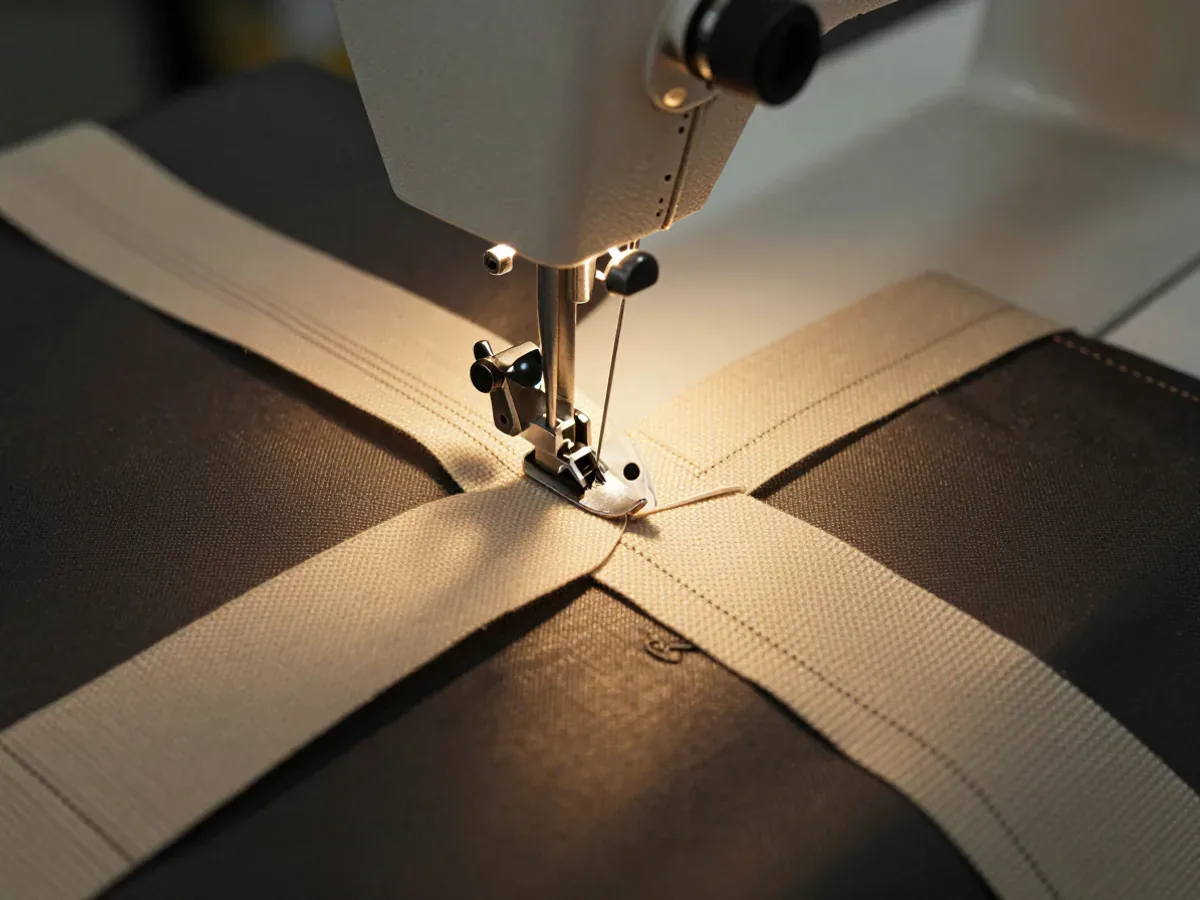
The attachment is the joint between the webbing and the bag, and it is a failure point in its own right. A handle can have good webbing and still fail if the stitch is wrong. A box-X or a reinforced stitch holds more than a straight line of stitches, and the stitch has to sit away from the edge, because a stitch too close to the edge can pull out.
On the stock moving bag range the handles are wrapped and double-stitched, and dense stitching at the attachment is the detail built for high weight loads. A reinforced cross-stitched attachment is the anchor used on the blue tarp bag. These are build choices a buyer can ask about by name rather than describing as "good stitching."
The sewing station is also where the webbing and the zipper are read together on the finished bag. A handle that looks right in isolation can still sit badly against the opening once the bag is closed and lifted.
At Final Inspection: Pull, Seam and Bar Tack
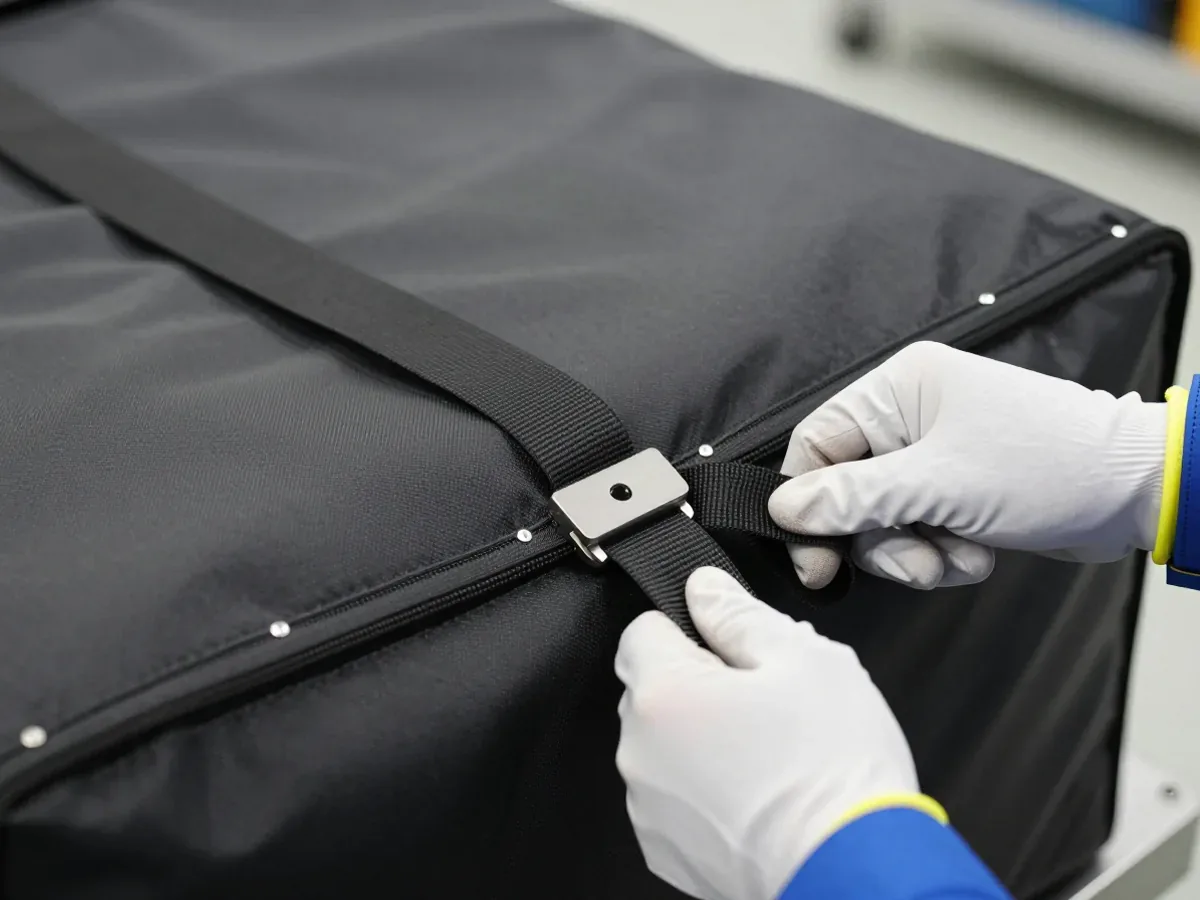
Final inspection is where the handle stops being a drawing and becomes a test. Pull, seam strength and bar tack are tested on every batch, so the inspector is not guessing. A pull test loads the handle the way a full bag would. A seam check looks at the stitch line itself. A bar tack check confirms the reinforcement at the stress point is present and dense.
The inspector should also look at the webbing where it enters the stitch. Fraying at the cut end, a stitch that wanders toward the edge, or a handle that sits unevenly on the bag are all visible before the carton is sealed. None of them require a lab.
A buyer reviewing inspection photos should ask for the attachment close up, not the full bag. The full bag hides the joint, and the joint is where the load concentrates.
At the Loading Bay: What the Carton Label Should Say
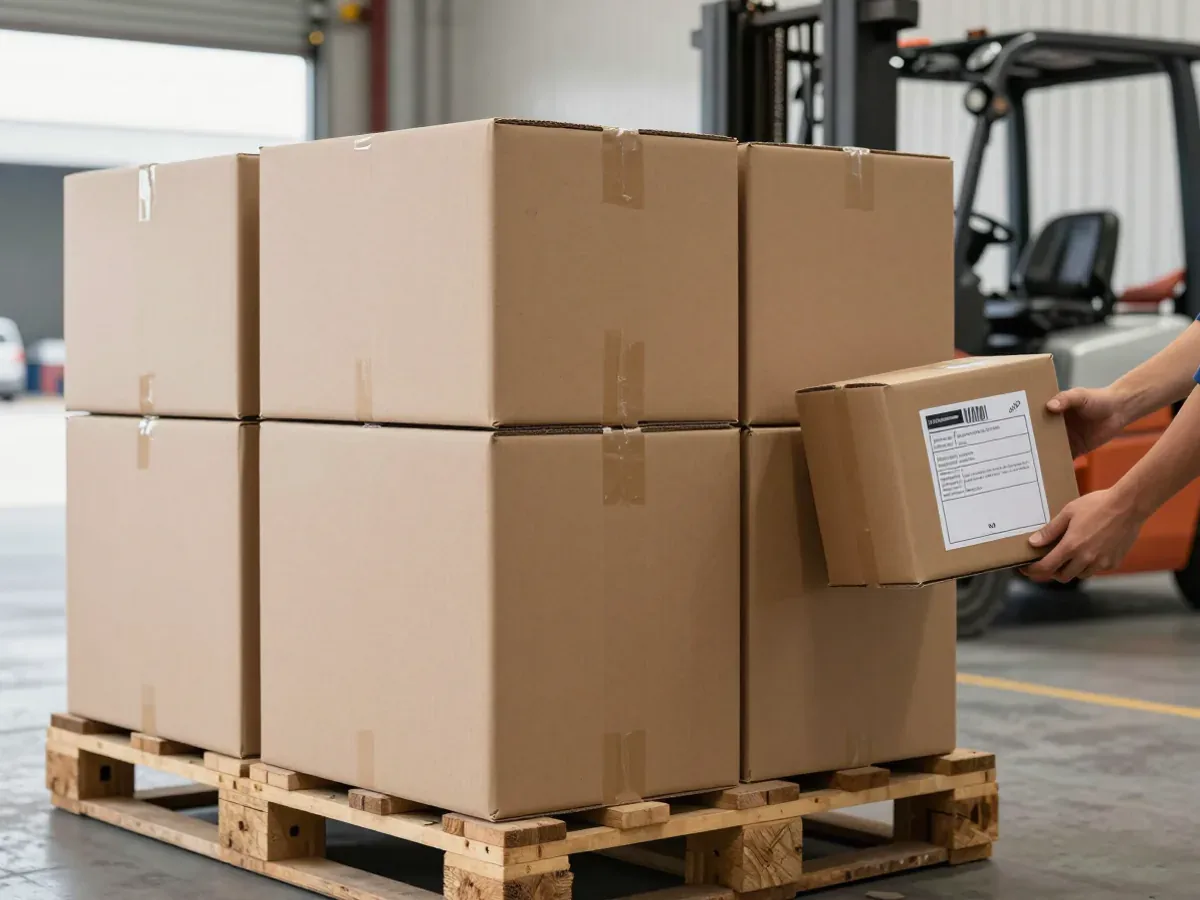
The carton label closes the loop on the PO line. It should carry the size, the load figure agreed for the order, and the handle specification in enough detail that a warehouse worker can match the carton to the order without opening it. A label that says only "moving bag" has thrown away everything the six stations established.
This is also where the inch conversion returns. A carton marked in centimeters and a buyer's system in inches will disagree at some point, and the disagreement usually surfaces at the loading bay. The label should state the unit, and the PO should state the same unit, so the handle drop and the bag size travel together.
Two webbing straps on a backpack version of the bag let it ride on the back when both hands are full. That variant needs its own label line, because the strap layout is a different construction from the standard handle.
What the Six Stops Add Up To
The handle does not fail in one dramatic moment. It fails where a decision was left blank at the PO, where a roll was accepted without a width check, where a stitch drifted toward an edge, or where a label stopped describing the bag. Each station is a chance to catch one of those, and each is cheap to check.
A buyer who wants a handle that matches the use should specify a width that fits the load, a breaking strength above the rated load, and an attachment stitch that is reinforced. Then they should follow the order to the stations where those three numbers become physical. The webbing is the load path of the handle, and the load path is only as good as the last person who looked at it.
FAQ
Does a wider webbing always mean a stronger handle?
No. Width is a rough guide because a wider webbing spreads the load and has more material on the same fiber. But the fiber, the construction and the attachment stitch all set the real strength, and a wide webbing with a weak stitch still fails at the joint.
What is the breaking strength of handle webbing, and how is it set?
Breaking strength is the load at which the webbing fails, and it is set by the fiber and the construction. It should be matched to the load the bag carries, with a safety margin, and the figure belongs on the PO rather than in a general claim.
Why does a box-X stitch hold more than a straight line of stitches?
A box-X or reinforced stitch distributes the load across more stitch points and resists pull from more than one direction. A straight line of stitches concentrates the load along one seam, and a stitch placed too close to the edge can pull out under load.
Should the webbing stop at the handle or run the full length of the bag?
It depends on the load path the buyer wants. On this heavy duty range the webbing runs the full length of the opening, so the load spreads along the bag edge instead of concentrating at two anchors. A handle-only construction is lighter but puts more stress on the joint.






