Built from a legacy production write-up and the current tote spec data, reorganised around the lines a buyer actually signs off.
Every August the same order shape lands on the desk: a retail brand wants 50,000 canvas totes before the holiday floor set, and the spec sheet arrives as a two page email. One line near the top reads "280 gsm canvas, natural, reinforced handles." Nine words carry the whole order, and nobody has asked what the bag will hold.
The line is not wrong. It is thin. A spec sheet for a run this size has to survive four months of production, three factories, and a receiving dock that will not open cartons twice. What follows is the sheet read line by line, the way a buyer and a factory should read it together before the first metre of canvas is cut.
The Line That Starts the Whole Order: Shell Weight and Load

The shell line reads something like "cotton canvas, 280 gsm, natural or dyed." That is a material statement, not a performance statement. A 50,000 piece order needs the line to say what the bag carries: a folded sweater and a pair of shoes, or a laptop and a water bottle. Canvas weight follows the load, and the quote should follow the weight that holds it.
Most buyers write the weight they used last season and move on. The better version of the line names the load, the shell weight chosen for it, and the colour direction, natural or dyed, in one place. When the factory quotes, that line is the first thing it prices, because shell weight moves cost more than any other decision on the sheet.
Verification starts before sewing. Incoming canvas is checked against the approved spec, and the weight on the roll should match the weight on the sheet. If the sheet says 280 and the roll reads 240, the order is already off spec, and no amount of stitching will fix it.
Handle Style, Stitching and the Pull Test Behind It

Handles are woven, webbing or rope, and the sheet usually names one and stops. The line that matters adds the attachment: reinforced handle stitching, and a bar tack at each end where the handle meets the shell. A 50,000 run will produce handles sewn by several operators over several weeks, and the bar tack is what keeps that variation from reaching the customer.
The pull test is the reason the line exists. Every batch should be pulled, seam strength checked, and bar tacks tested, not sampled once at the start. A handle that holds at the first batch and fails at the fortieth is the classic large order failure, and it never shows up in a photo.
On the sheet, write the handle material, the attachment method, and the test that proves it. On the floor, pull a finished bag from each batch and record the result. The sheet line and the test line should name the same thing, or the factory will test what it always tests.
Print Method and Colour: What Gets Proofed Before Cutting

The print line says screen print or heat transfer, and for a brand order it usually adds a woven label. That is the method. The line still needs the artwork reference, the colour standard, and the position, because a print approved on screen and a print approved on canvas are two different approvals.
Printing is proofed before the run, and the sample is made to the same spec as bulk. That sequence protects the 50,000 units behind it. If the proof happens after cutting, a colour that reads wrong on the actual shell has already been committed to tens of thousands of bags.
Ask what gets proofed: the artwork file, a strike off on the chosen canvas, or a full pre-production sample. The sheet should say the sample is made to bulk spec, same shell, same print method, same handle. A sample built from a different canvas proves the artwork and nothing else.
Size, Logo Placement and the Hand Check at Packing

Size and logo placement are the two lines most often left as a number and a sketch. A 30 by 15.7 in bag with a logo 3.1 in from the top edge sounds exact until two factories read the sketch differently. The sheet should carry the dimensions, the logo position measured from a named edge, and the tolerance allowed.
The check for these lines is by hand. Dimensions, handles, logo and packed quantity are checked by hand at packing, bag by bag against the sheet. This is slow, and it is the only way to catch a logo that drifted two centimetres on the last thousand units.
Put the measurement reference on the sheet, not in an email thread. If the logo position is measured from the top edge, say so, and say what happens when it lands outside tolerance. The packing station needs that answer before the first carton closes.
Packing Instructions: Polybag, Hang Tag, Retail Carton

Packing can be polybag, hang tag, retail carton or per-store packing lists, and a 50,000 order often uses more than one. A brand shipping to its own stores and to e-commerce customers may want retail cartons for the stores and plain polybags for the warehouse. The sheet has to say which, and in what ratio.
This line decides labour more than material. A hang tag applied by hand across 50,000 bags is a different production plan from a polybag drop, and the factory prices it differently. Per-store packing lists add another layer, because each carton has to be built for a named store rather than for the order as a whole.
Write the packing line as an instruction, not a preference: bag, tag, carton, quantity per carton, and any store split. Then check the first cartons against it before the run continues. A packing error found at carton fifty is a correction. The same error found at carton five hundred is a rework.
Incoming Material: The Check That Happens Before Anything Is Sewn
Fabric, webbing, zips and thread are checked against the approved spec before production starts. This is the quietest line on the sheet and the one that decides whether the other lines mean anything. A handle spec is only as good as the webbing that arrives, and a shell weight is only real if the roll matches it.
The check is a comparison, not an inspection. Approved swatch on one side, incoming roll on the other, same light, same person. Webbing is pulled and measured. Thread is matched to the approved colour. Anything that does not match is held before it reaches a sewing station.
Buyers rarely see this line, because it happens before the first bag exists. It belongs on the sheet anyway, with the approved references attached, so the factory and the buyer are comparing against the same standard rather than against memory.
The Line Buyers Leave Blank: Carton Count Before the Container Seals
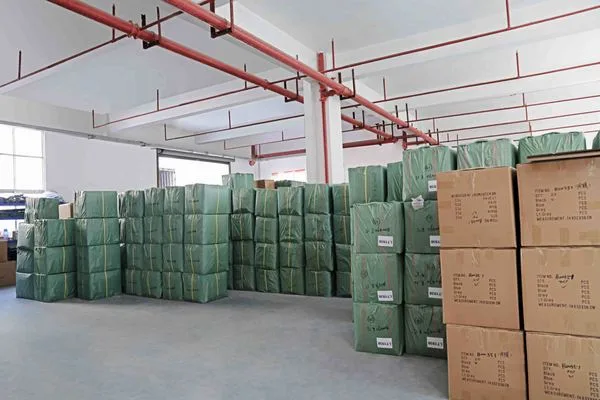
The last line on most sheets is blank, and it is the one that decides whether 50,000 bags arrive as 50,000. Cartons are counted and photographed before the container seals. That count is the only record of what left the factory, and it is the number the receiving dock will check against.
A large order ships across many pallets and often several containers. A carton count taken at the end, with photos of the sealed pallets and the count written on the shipping file, closes the gap between what was produced and what was shipped. Without it, a short shipment is discovered weeks later with no way to trace where it went.
Write the line as a step: count cartons, photograph the count, record it against the packing list, then seal. The buyer who insists on this line is not being difficult. They are making sure the other eight lines on the sheet actually reach the store.
FAQ
How much detail should a bulk tote spec sheet carry?
Enough that a factory can produce and a receiving dock can check without calling anyone. Shell weight tied to load, handle material and attachment, print method and proof, size and logo position, packing instructions, incoming material references, and the carton count step. Each line should name what is checked and when.
Can a sample be approved before the print is proofed?
A sample approved before the print is proofed approves the bag, not the artwork. Printing is proofed before the run, and the sample should be made to the same spec as bulk. If the proof comes after sample approval, the colour on the actual shell is still unconfirmed.
Who checks the carton count on a large tote order?
The factory counts and photographs before the container seals, and the receiving team checks the count against the packing list on arrival. Both records should match. The buyer's job is to make sure the count step is written on the sheet, because a blank line is a step nobody owns.