Reorganised from the original TIIOCTI article on tote handle drops, with the spec logic and stitch details kept in view.
Three fabric swatches sat on the buyer's desk for a week before she noticed the weight difference between them. By the time she called, her question was not about fabric at all: "Why does the same tote feel easy to carry in one colourway and awkward in another?" The answer was sitting in a line of the tech pack she had copied from last season, where the handle drop was written as "standard."
That single word hides most of the decisions that determine whether a tote gets used twice or two hundred times. Handle drop is the distance from the top edge of the bag to the top of the handle at its natural resting position. It is the measurement that decides where the bag sits against the body, how the wrist angles under load, and whether the strap stays on the shoulder during a commute. Below are the questions buyers actually raise in that conversation, answered in the order they tend to arrive.
What Does a Buyer Mean When She Asks for a Longer Handle?
The request usually comes as a comparison, not a number. A buyer holds up a competitor's tote and says the handle feels "longer" or "more generous," and wants the same. What she is describing is rarely the total length of the webbing cut; it is the drop, the visible clearance between the bag mouth and the handle apex.
Two totes can use the same length of strap and produce different drops, because attachment height and the way the handle is folded at the join change the finished geometry. A handle sewn lower on the bag body eats into the drop. A handle folded over a grommet or snap hook sits differently again, and hardware options such as grommets, snap hooks and woven straps each shift the resting position.
The practical translation is to ask the buyer for a reference bag and a tape measure, not an adjective. Measure the drop on the reference at the centre of the handle, with the bag hanging empty. That number, not the word "longer," is what belongs in the discussion.
How Is Drop Actually Measured on a Finished Tote?
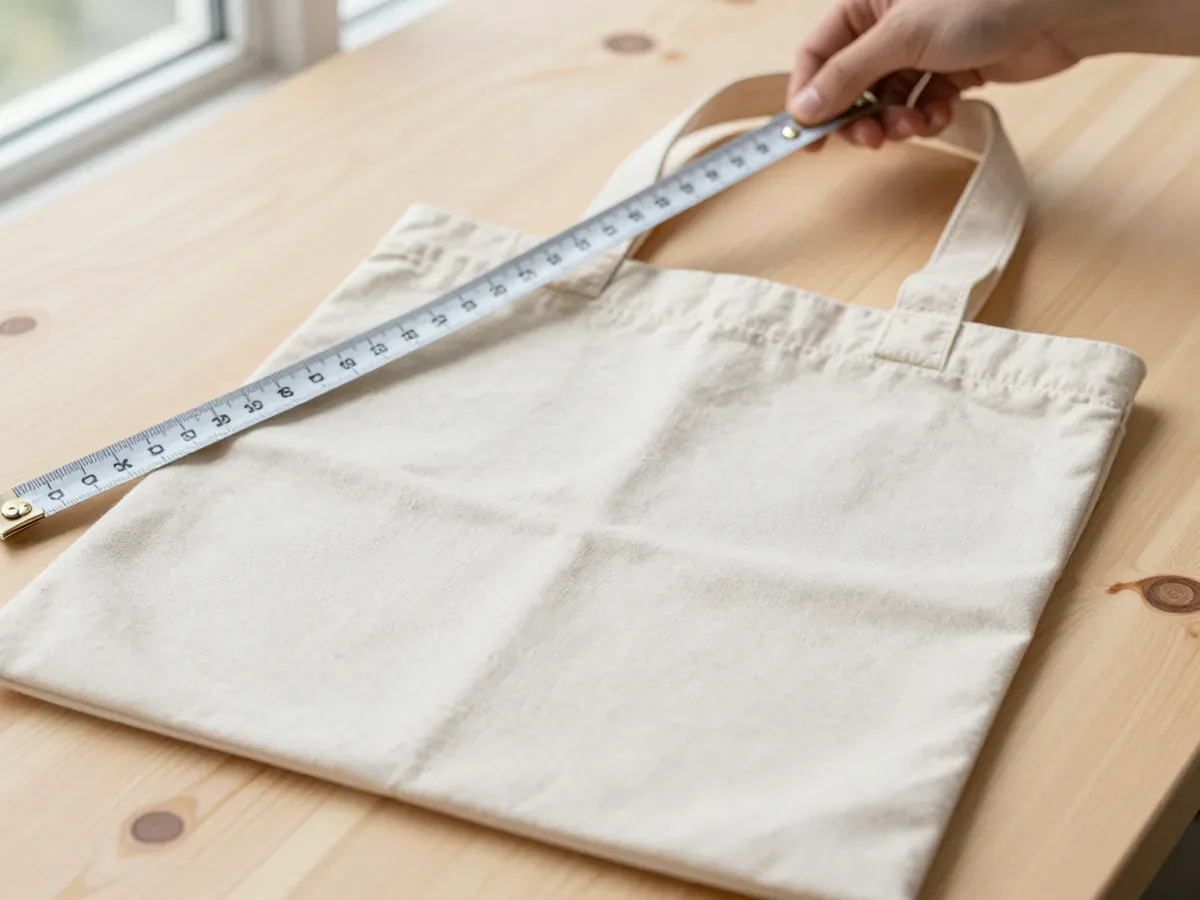
Drop is measured on the flat, empty bag, from the top edge of the bag body to the highest point of the handle where it rests naturally. The bag should be lying flat, handle relaxed, not pulled taut. Pulling the handle up before measuring adds length that disappears the moment the bag is picked up.
Two habits cause most disputes. The first is measuring to the inside of the handle rather than the top of the material. The second is measuring one side only, when a slightly asymmetric attachment can leave the two sides a few millimetres apart. Measure both sides at the centre of each handle and record both numbers.
On a filled bag the drop changes, because the bag body sags and the handle spreads under load. That is why the specification number is always the flat measurement, and why a buyer who measures a packed sample at home will get a different figure. Both numbers are correct; they answer different questions.
Which Drop Fits Hand Carry, Crook of Arm, and Shoulder?
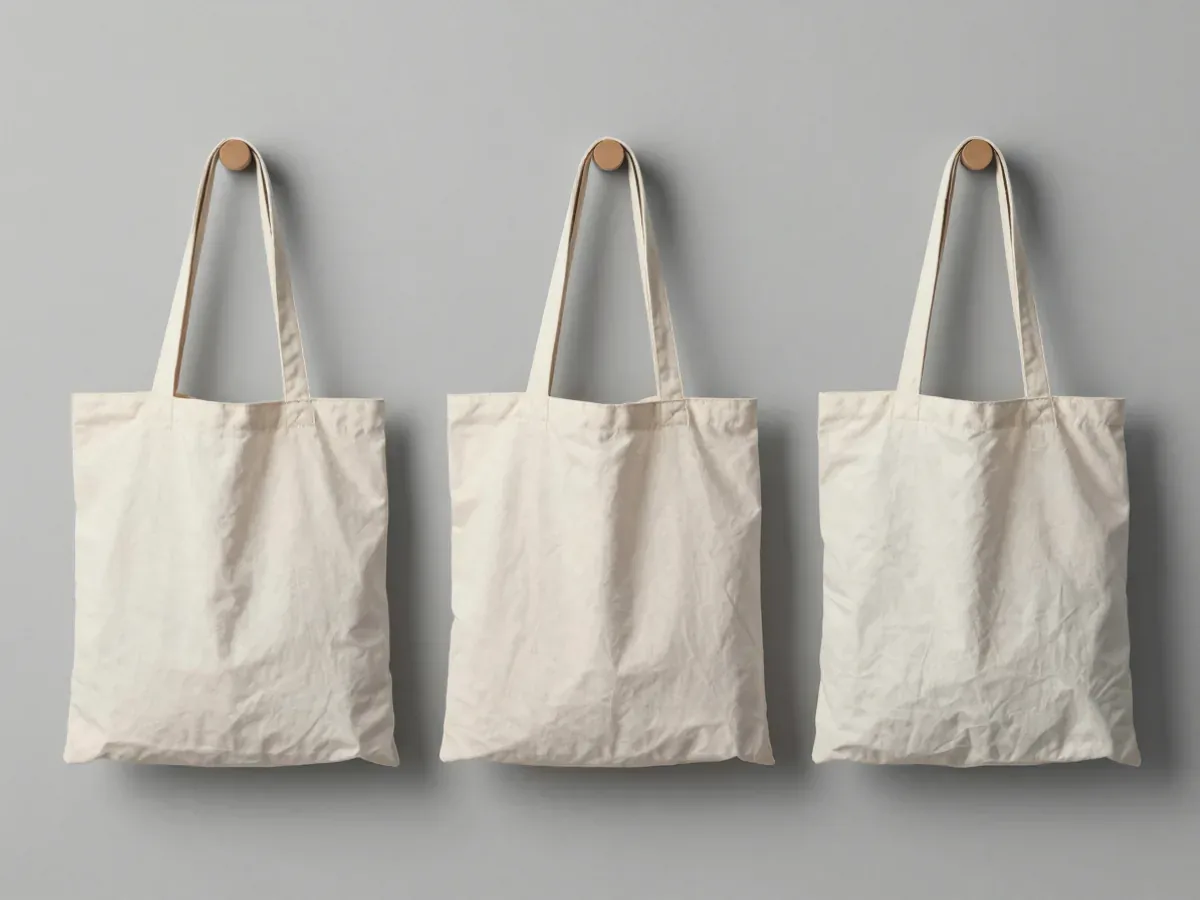
The three carrying modes map onto three drop bands, and the bands are wide enough that most totes land in one of them cleanly.
A short drop of roughly 10 to 12 inches suits hand carry, with the bag hanging beside the leg. Retail shopping bags and gift bags live here, where the bag is carried briefly and the look matters more than the load. A medium drop of about 12 to 14 inches covers both hand carry and the crook of the arm, which is why branded and promotional totes cluster in this band. A long drop of 14 to 18 inches lets the bag sit on the shoulder with the body at hip height, the pattern for everyday and commuter totes.
The choice is not purely ergonomic. Handle length signals brand positioning, and luxury lines often favour shorter, stiffer handles in leather or rigid-core webbing that read as structured and formal, while everyday and eco brands lean toward longer, softer handles. A buyer specifying a drop is choosing a posture for the brand as much as a carrying method.
Why Does a Short Handle Hurt More as the Load Grows?
A short handle forces the wrist into ulnar deviation when the bag is carried by hand, and that angle becomes uncomfortable faster as weight increases. The effect is small with a light bag and obvious with a heavy one, which is why the same handle can feel fine in a showroom and tiring on a walk home.
Load bands give the specification a floor. For totes expected to carry above roughly 3 kg, a medium or long handle is the safer choice; below about 2 kg, a short handle is acceptable and gives a neater silhouette. The bands are not a rule about strength but about wrist angle and shoulder strain over time.
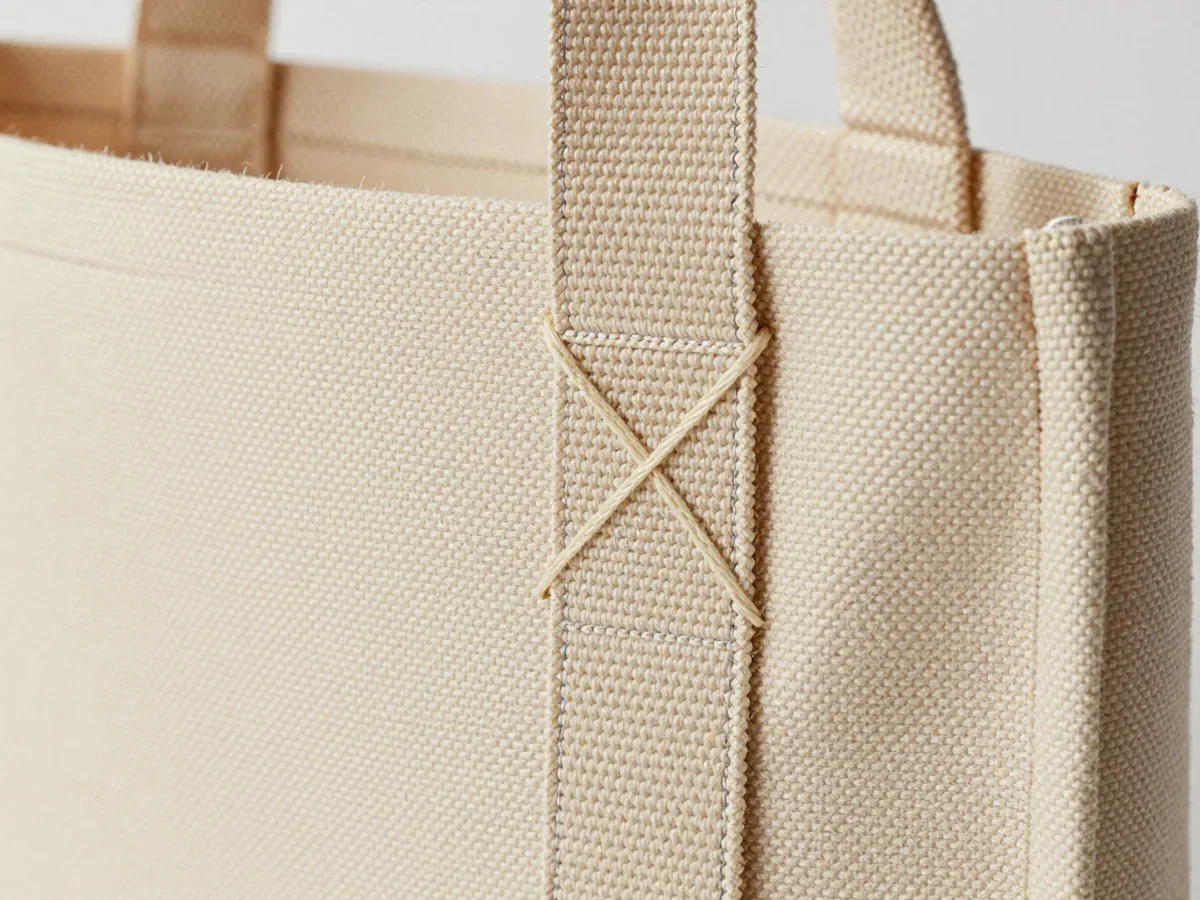
Strength at the join is a separate question, and it is where reinforcement earns its place. A reinforced cross-stitch at the handle join, a dense stitch block at the attachment, or an X stitch at the handle ends all spread the load across more material than a single row of stitching. Handle reinforcement is an ergonomics decision as much as a strength one, because a join that creeps or twists under load changes the angle the hand has to hold.
What Happens When Drop and Bag Height Disagree?
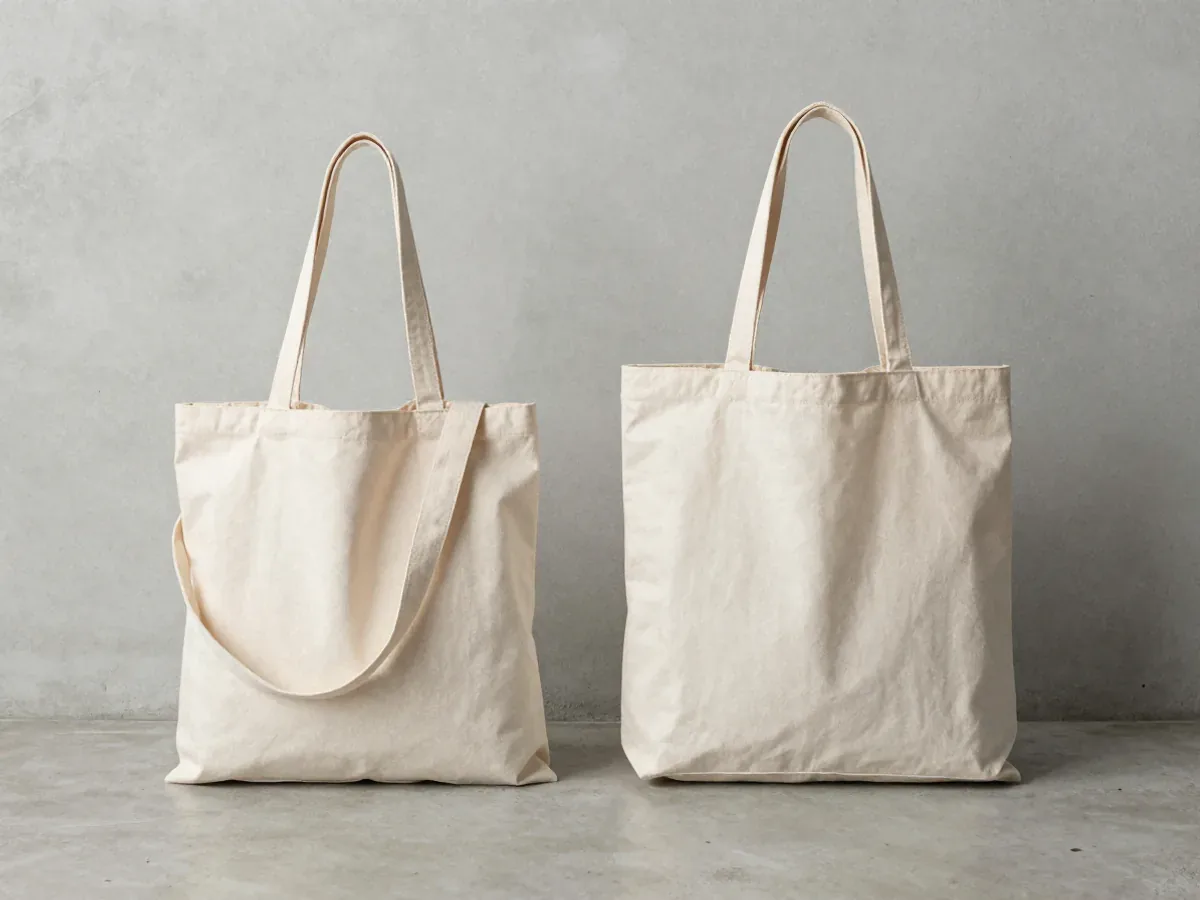
Handle drop has to stay proportional to bag height, and the mismatch is visible from across a room. A long shoulder drop on a short bag turns the tote into a pouch swinging from a strap, which reads as cheap and unbalanced.
The working ranges keep the proportions sane. A bag 200 to 300 mm tall pairs with a drop of 250 to 320 mm; a bag 300 to 400 mm tall pairs with 300 to 380 mm; a bag 400 mm and taller pairs with 350 to 450 mm. These are starting bands, not law, but a specification that falls well outside them should carry a reason.
The reverse mismatch is just as common. A tall, deep tote with a short handle looks sturdy but cannot go over the shoulder, and the buyer discovers this only when the sample arrives and she tries to carry it on a train. Bag height and drop are one decision, written on two lines.
How Should Drop Be Written in the Tech Pack?
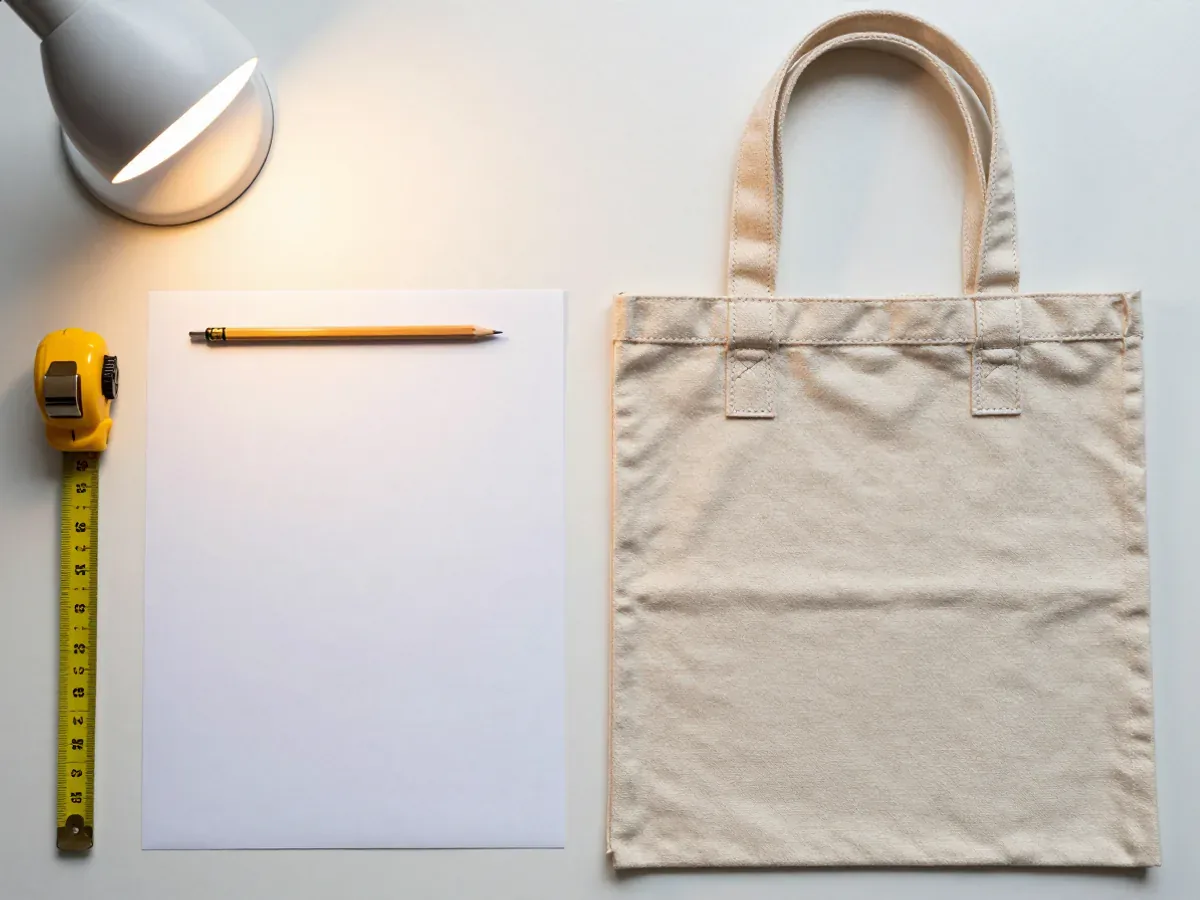
Write the drop as a finished measurement with a tolerance of plus or minus 5 mm, not as a cut length for the webbing. The cut length depends on attachment method and fold allowance, and leaving that calculation to the sample room invites drift between rounds.
The line should carry the handle width, the material, the reinforcement type, and the exact attachment point from which the drop is measured. Reinforcement type matters here: bar-tack, cross-stitch and X stitch behave differently at the join, and the cross-stitch used on a durable canvas tote is not interchangeable with a plain double row. A beige canvas tote with reinforced stitching at the handle shows what the finished join should look like, and a jute tote handle reinforced with a stitched join shows the same logic in a different fibre.
A drawing helps more than a sentence. Mark the measurement start and end points on the flat pattern, note that the bag is measured empty, and state which side is measured if the design is asymmetric.
What Is the Question Buyers Ask After the Sample Arrives?
The sample lands, the buyer fills it with a laptop and a water bottle, puts it on her shoulder, and asks whether the drop is right for a real load. That is a different question from the one on the tech pack, and it is the one that decides reuse.
The test is simple and worth doing before approval. Load the sample to the intended working weight, put it on the shoulder and walk a few steps, then carry it in the crook of the arm, then by hand. If the bag slides off the shoulder, the drop is short for that body and that load. If the bag body bounces against the hip, the drop is long for the height. If the wrist bends sideways to keep the bag clear of the leg, the handle is short for the load.
Record what changed and by how much. A 10 mm adjustment at the sample stage is a pattern edit; the same adjustment after production is a rework decision.
The Question That Arrives Too Late
Most buyers ask about drop, tolerance, and reinforcement before the sample, and those questions get answered. The one that arrives after approval, usually in the first production run, is about consistency: whether the drop measured on unit one matches unit five hundred.
Drop drifts when the attachment point moves between operators or when the webbing is cut in batches without a check gauge. A finished measurement with a tolerance only works if someone measures the finished bag at the end of the line, not just the first sample. Adding that check to the inspection plan costs a tape measure and a minute per carton, and it is the difference between a tote that feels the same in every colourway and one that does not.
FAQ
Is handle drop measured on the flat bag or on the filled bag?
On the flat, empty bag, with the handle at its natural resting position. A filled bag will show a different number because the body sags and the handle spreads under load.
Can a short handle be reinforced to carry heavy loads comfortably?
Reinforcement improves the join, not the wrist angle. A dense stitch block or cross-stitch helps the attachment hold, but a short drop still forces ulnar deviation under load, so the ergonomic limit stays.
Does a longer drop always mean a weaker handle attachment?
No. Attachment strength comes from the stitch type and the material at the join, not from the drop length. A long handle with a reinforced cross-stitch can be stronger than a short handle with a single row.
What tolerance should a buyer allow on a finished drop measurement?
Plus or minus 5 mm on the finished measurement is a workable standard for most totes. Tighter tolerances are possible but should be agreed with the sample room before production, since they affect cutting and attachment checks.