

Based on archived TIIOCTI articles on tote bag reuse, plus product spec notes for woven PP and cotton carry bags.
A new merchandising assistant held up a custom cotton tote last month and asked the room a simple question: if the bag says reusable on the hangtag, does that count as a reuse? The room went quiet, because the honest answer is no, and most order sheets never record the difference.
The label is a promise about intent, not a record of behavior. A bag can be built to survive a hundred grocery runs and still end up in a drawer after the first one. That gap between what a bag is called and what a bag actually does is where most reusable programs quietly lose their environmental math.
The label says reusable, so the math is done

The common move is to treat the word reusable as a unit of measurement. A brand orders ten thousand totes, prints reusable on the side, and the sustainability slide counts ten thousand reusable bags delivered. The number looks clean because it comes from the purchase order, not from a field study.
That habit spreads because it is easy to defend in a meeting. Nobody has to estimate how often a shopper brings the bag back. The bag exists, the word is printed, and the count is finished before the first carton leaves the warehouse.
The trouble starts when the same number is used to claim displaced single-use bags. The environmental math of any reusable bag compares its production footprint against the single-use bags it displaces, and displacement only happens when the bag comes back. A delivered bag that never returns displaces nothing.
Why the claim feels safe on a spec sheet
A spec sheet rewards things that can be written down. Fabric weight, stitch count, handle length and print position all fit in a cell, and a buyer can compare two suppliers line by line. Reuse behavior does not fit in a cell, so it drops off the sheet and out of the conversation.
The word reusable also carries a legal and cultural weight that makes it feel settled. It appears on grocery bags, clothing tags and coffee cups, and shoppers read it as a category rather than a claim. A buyer who has seen the word a thousand times stops treating it as something to verify.
Suppliers reinforce the comfort because the request is easy to fill. Print reusable on a non-woven bag and the order ships. Nobody in the chain is lying, and nobody is measuring either.
The trips that never happen after handout
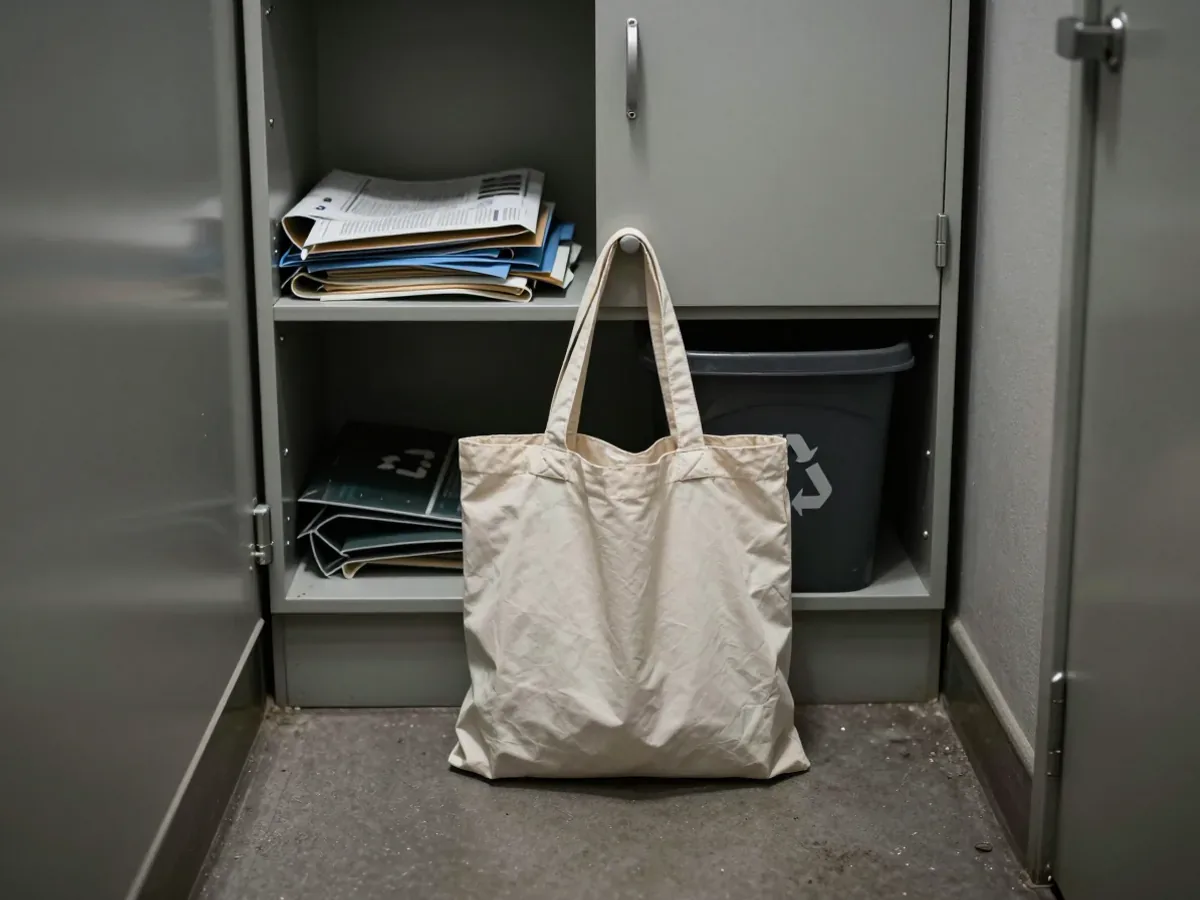
A bag handed out at a trade show or a checkout counter faces a different life than a bag sold at a register. Giveaway bags often go home once, hold something for a week, and then migrate to a cupboard or a recycling bin. The first trip is real, and the second trip is where the program either works or evaporates.
Distribution decides more of the reuse count than most spec sheets admit. A bag that lives in a car boot for grocery runs gets used weekly. A bag that arrives inside a product shipment gets used once and then stored with the packaging.
Durability sets the ceiling, and behavior sets the floor. A bag that survives fifty uses gets fifty chances, but only if the owner keeps it within reach. Stitch density, handle attachment and fabric weight are the reuse ceiling, which is why a heavy-duty bag reuse guide spends its pages on construction rather than on slogans.
What actually sets the reuse ceiling

Four drivers show up again and again when a program is examined honestly. The first is durability, because a torn handle ends the count at the moment of failure. The second is carry comfort, because a bag that cuts into a hand gets left at home. The third is capacity, because a tote that cannot hold a full grocery run gets replaced by a plastic one at the till. The fourth is storage, because a bag that will not fold flat does not travel.
Construction details map onto those drivers in a direct way. A wrap-around webbing strap spreads load across the shell instead of pulling on two stitch points. A two-pull top zip keeps contents in and rain out during a walk from the car. A clear label pocket takes a room card or a barcode, which matters for hotel and event programs where the bag doubles as an access pass.
Material choice sets the maintenance burden. A woven PP shell wipes clean and folds flat when empty, so it survives a spill and stores in a glovebox. PP resists splashes, and the seams are stitched rather than sealed, so the bag handles a wet kerb but not a submerged trip. A cotton tote feels better in the hand and needs a wash cycle to stay presentable, which is a different kind of reuse cost.
None of these details guarantee a trip count. They raise the ceiling, and the program still has to place the bag where it will be carried.
Reading a sample for trips, not for looks
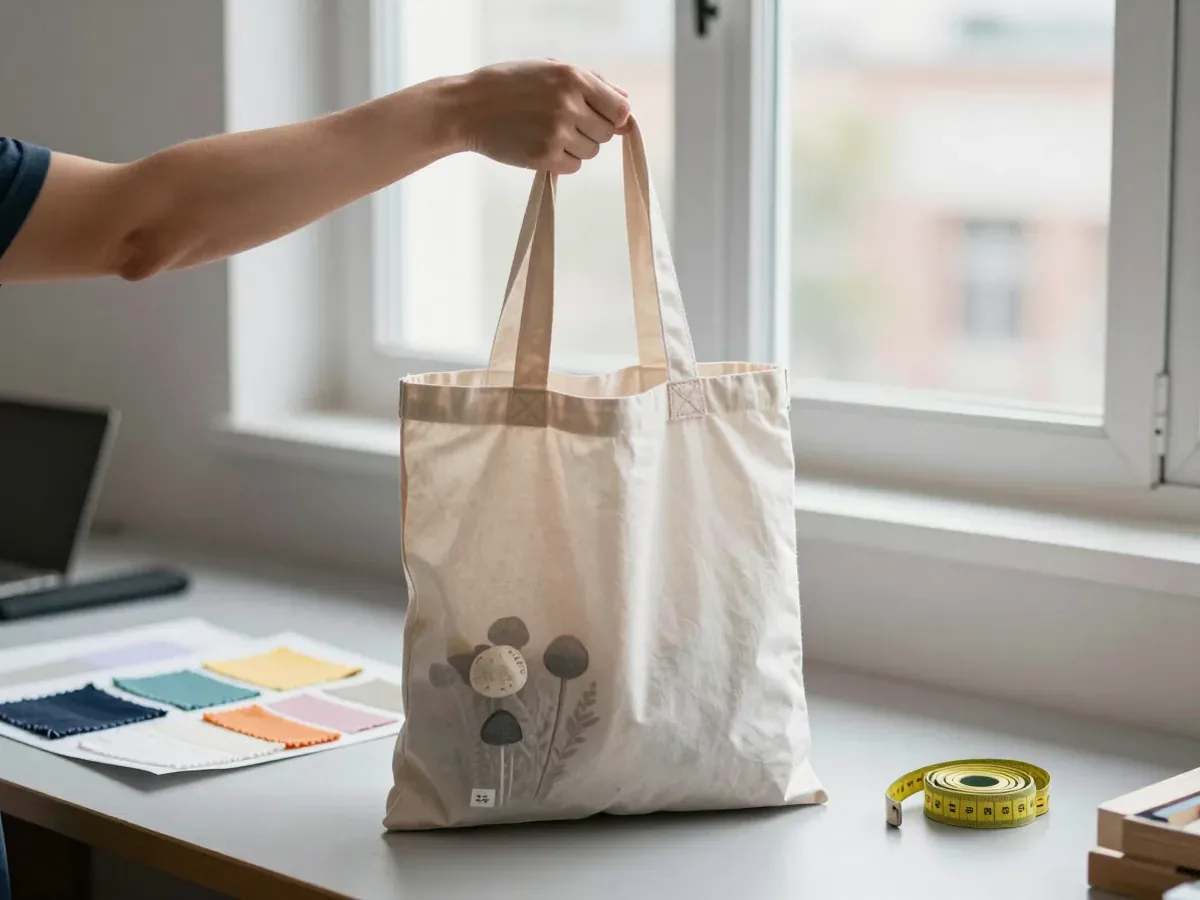
A sample review usually starts with print registration and colour match, because those are the things a buyer can see in a photo. A reuse review starts somewhere else, with the parts that fail first.
Pick up the sample by one handle and let it hang with a few kilos inside. Watch where the strap meets the shell. A wrap-around webbing strap should distribute that load across a wide band, and a narrow stitched tab will pucker under the same weight. Squeeze the handle where a hand would hold it and check whether the edge is folded or raw.
Open and close the zip twenty times. A two-pull top zip should run without catching at the curve, because a zip that sticks becomes a reason to leave the bag at home. Fold the bag flat and see whether it returns to shape, since a shell that stays creased will not live in a car door pocket.
Ask how the run is checked before it ships. Quality control runs four checkpoints, and a durability test on a sample from the run tells a buyer more than a photo of a finished bag on a table. The inspection should happen on the construction that carries the load, not only on the print.
A short check before the purchase order goes out

The first check is where the bag will live. A grocery program, a hotel check-in and a conference handout each produce a different reuse pattern, and the construction should match the one that applies. A bag with a clear pocket for a room card solves a hotel problem that a grocery tote never faces.
The second check is the failure point. Decide in advance which part is most likely to end the bag’s life in the intended use, then confirm that part is specified and inspected. For a grocery tote that is usually the handle attachment. For an event bag it is often the zip or the print.
The third check is the count itself. Write down how many trips the program assumes, where that assumption comes from, and who will look at it after launch. A reuse count is a program metric, not a trivia answer, and a number with no owner will not survive the first budget review.
The fourth check is the comparison. Fewer, better bags beat many cheap ones, because a run of durable totes that genuinely reach high reuse counts outscores a larger run of giveaway-grade bags on both environmental math and cost per impression. Impressions scale with reuses, so a bag that comes back ten times earns ten times the exposure of a bag that comes back once.
FAQ
Does a reusable tote bag need a minimum number of trips to be worth ordering?
There is no universal threshold, and any supplier who prints one without a study behind it is guessing. The useful approach is to estimate the displacement your program needs, then spec construction that can survive that many trips in the place the bag will be used.
Which construction details matter most for tote bag reuse?
Handle attachment, stitch density and fabric weight set the ceiling, because they decide when the bag fails. Carry comfort and capacity decide whether the owner brings it back at all. A wrap-around webbing strap and a shell that folds flat support both sides of that equation.
Can a supplier guarantee a reuse count for a custom cotton tote bag?
A supplier can guarantee construction and inspection, not shopper behavior. What a factory can do is build to a stated trip target, run durability checks on the production sample, and document the four QC checkpoints so the buyer knows what was verified.
How should a brand compare a cheap giveaway bag with a durable tote?
Compare cost per impression rather than cost per unit. A giveaway bag that gets one trip spreads its cost across one impression, while a durable tote that reaches many trips divides the same cost across every reuse. The durable option usually wins once the trip assumption is honest.