

Based on jute fabric rolls, printed tote panels, reinforced handle tabs and four QC checkpoints recorded on our production lines.
A buyer forwarded a competitor's quote last spring: same tote size, same print area, same handle colour, and a unit price about a fifth below what her current supplier had given her. She asked for a second opinion before moving the order. The cartons that arrived four months later told a different story than the spreadsheet had, and the gap showed up in three places the quote never mentioned.
That story is worth walking through line by line, because a jute bag quote is not one number. It is a stack of decisions about fibre, cutting, stitching, printing and checking, and every one of them can be trimmed. The question is which trims a buyer actually agreed to.
The Quote That Looked Cheaper Until the Cartons Opened

The competitor's sheet listed a unit price, a MOQ, a lead time and a print method. It did not list fabric weight, roll width, handle construction, stitch count or inspection scope. The buyer assumed those were standard.
When the shipment landed, the bags were lighter in the hand than her previous order. The handles had been attached with a single row of stitching rather than the reinforced tab she was used to. Roughly one carton in six had print that sat slightly off centre on the woven panel, which is hard to catch before the bag is sewn.
None of this was fraud. Each choice was legal, common and cheaper. The quote was accurate for the bag that was actually made. What it did not do was describe that bag in enough detail for the buyer to compare it against anything.
Line One: Jute Rolls and the Width You Pay For
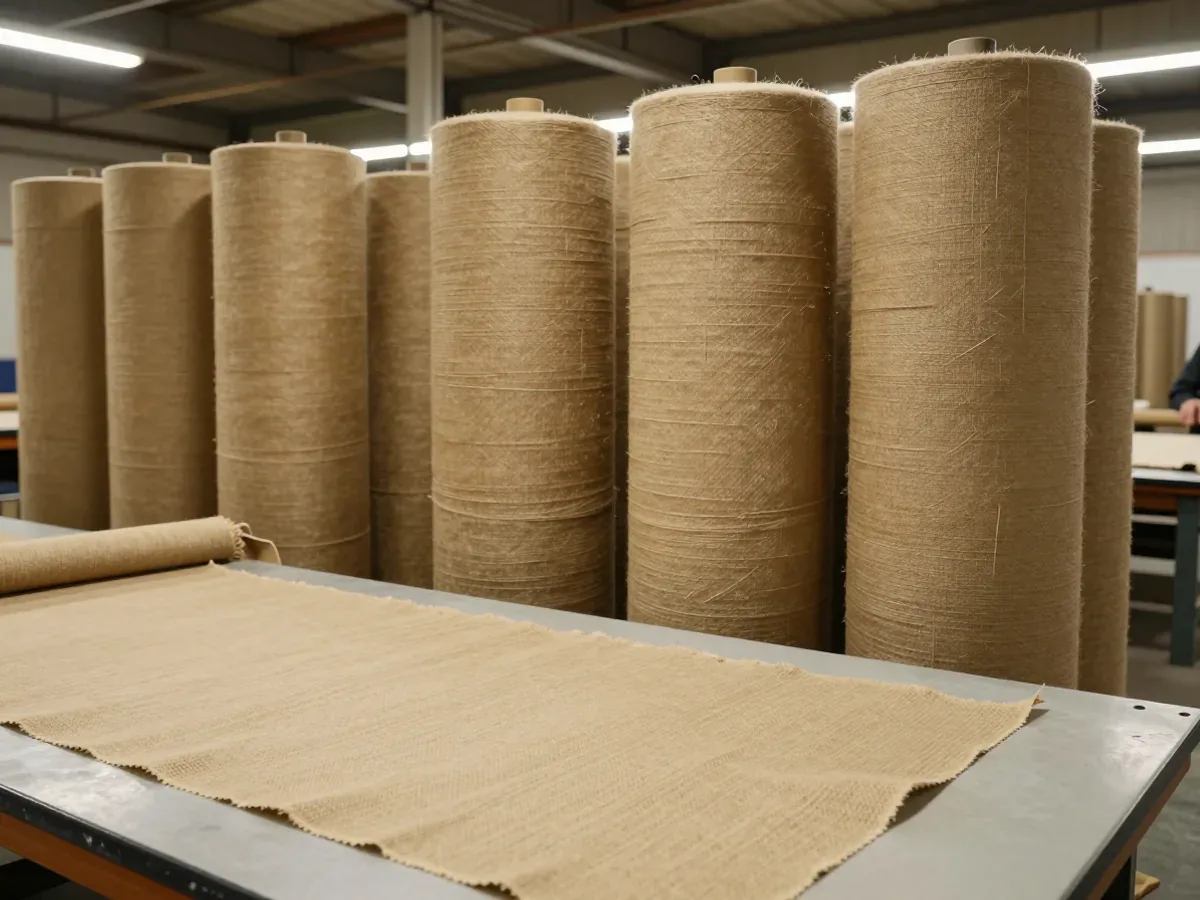
Jute arrives at the factory as mill rolls in different widths, and the roll width decides how much waste lands on the cutting table. A bag panel that fits neatly into the roll width wastes almost nothing. A panel that is a few centimetres too wide for the standard roll leaves a strip behind on every cut.
That strip is paid for twice. The buyer pays for the fibre in the roll, and then pays again because the offcut cannot be used for the same order. On a large run the difference is not dramatic per bag, but it is real, and it is invisible on a quote sheet that only lists a finished size.
Fabric weight works the same way. A heavier weave holds shape better and carries more before the handles complain, but it also costs more per metre and cuts differently. Two suppliers quoting the same dimensions can be quoting two different cloths.
The buying move here is simple: ask for the fabric weight and the roll width in writing, not just the finished bag size. A supplier who cannot answer quickly is quoting a shape, not a material.
Line Two: Cutting, Stitching and the Handle Tab
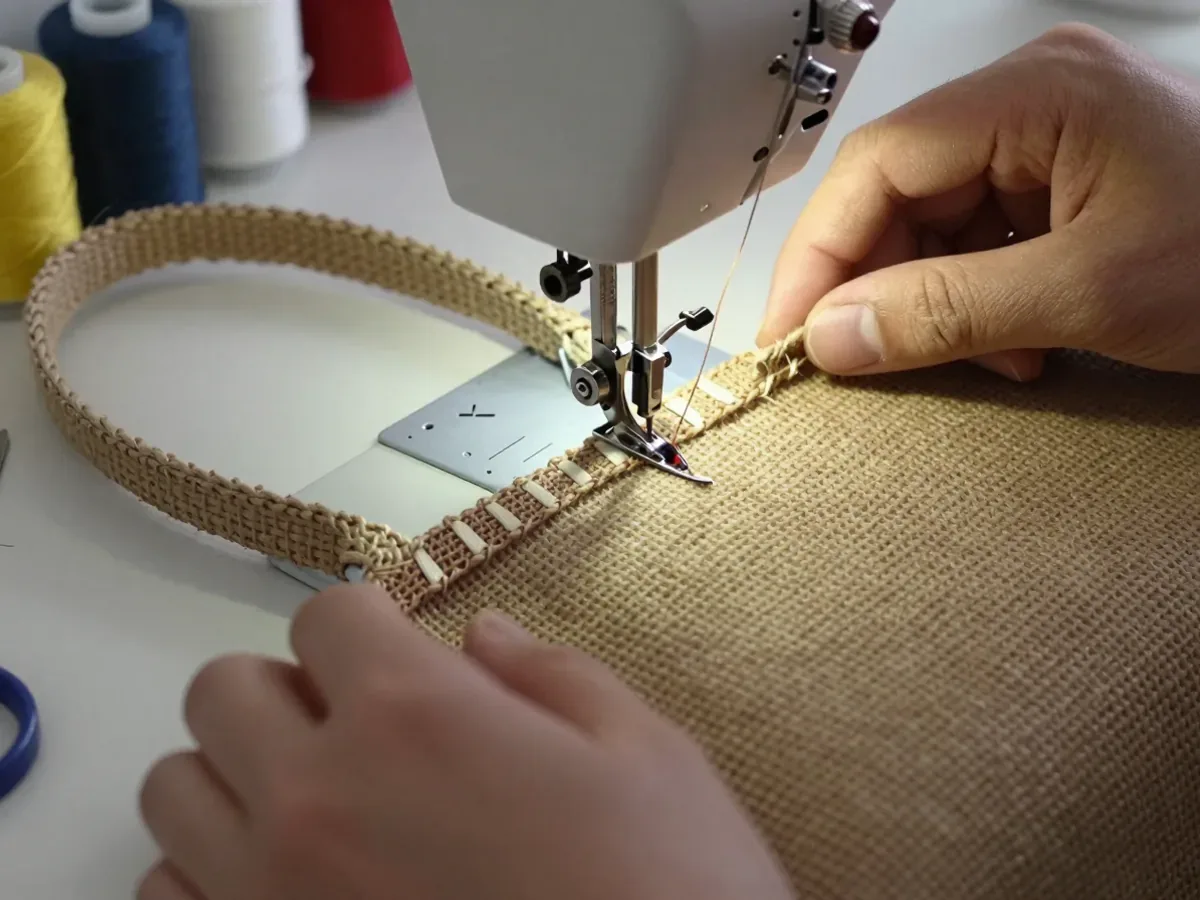
Cutting is fast and cheap. Stitching is where labour concentrates, and the handle is where stitching concentrates hardest. The handle webbing is stitched into a reinforced tab on the bag body, and that tab is the difference between a tote that survives a year of groceries and one that tears at the seam in month three.
A reinforced tab takes more stitches, more handling time and a slightly higher reject rate at the sewing station. A single-row attachment takes less of all three. Both look identical in a product photo.
There is a second cost hiding in the same station. Jute is a coarse, grippy weave, and needle and thread choices affect how cleanly the seam closes. A factory that runs the same stitch settings across every fabric will produce acceptable bags on some cloths and weak ones on others. The quote rarely captures this because it is a process decision, not a material line.
Finished totes stack flat with reinforced handle tabs, and that stack is easy to inspect. Ask for a photo of the handle attachment from the inside of the bag. The outside tells you almost nothing.
Line Three: Printing on a Woven Surface

A printed panel sits directly on the natural jute weave, and the weave is not flat. Ink behaves differently on a raised, fibrous surface than on a smooth one. Fine detail softens. Thin lines break up. Registration drifts more easily because the surface under the screen is not consistent.
This is why printing on jute costs more than buyers expect, and why cheap print on jute looks cheap. A supplier can reduce cost by using a coarser screen, less ink or a faster pass. The result is a print that reads fine at arm's length and muddy up close.
One jute tote body can take different prints and handle colours within the same order, which is useful for campaigns and gift sets. That flexibility has a setup cost per variant, and setup cost is where a low unit price often quietly assumes a single design.
Ask two questions before comparing print prices. How many colours, and how many distinct designs in the run? A quote built for one design and applied to six will not hold.
Line Four: The Checkpoints Nobody Prices In

Every order passes four QC checkpoints in a well-run line, and each one costs time. Inline checks during cutting, stitching and printing catch problems while they are still cheap to fix. Final inspection catches what slipped through. Bundle counting before the cartons close catches short shipments.
A quote that excludes inspection is not cheaper. It moves the cost to the buyer's warehouse, where a rejected carton is far more expensive than a rejected panel on the sewing floor. Rework after export means freight, duty, storage and a launch date that moves.
The buyer in the story above paid for this in a quiet way. Her team spent two days sorting cartons, pulling the worst print and renegotiating with her own customer. Nobody invoiced her for those two days, and they were the largest single cost in the order.
What the Cheap Quote Leaves Out
Put the two sheets side by side and the omissions cluster. Fabric weight and roll width are missing, so material cannot be compared. Handle construction is described as "reinforced" without saying how. Print is priced per colour but not per design. Inspection is either absent or described as "standard."
None of these gaps is unusual. Most quotes are written to be short and to look competitive, and the buyer is expected to ask. The supplier who volunteers the detail is often the one who is not the cheapest, which is exactly why the detail matters.
There is also a comparison problem that has nothing to do with jute. A jute bag and a cotton bag are not the same purchase. Jute is more rigid and holds its shape better, while cotton is softer and suits fashion and cosmetic contexts where touch matters more. Comparing their unit prices without comparing their use case produces a number that means little.
How to Compare Two Jute Bag Quotes Line by Line
Set both quotes against the same five rows and fill in what each one actually states.
| Row | What to look for | Why it changes the price |
|---|---|---|
| Fibre | Fabric weight, roll width, any blend | Heavier weave and awkward roll widths raise material cost |
| Cut and sew | Handle attachment method, stitch spec | Reinforced tabs add labour and reduce rejects |
| Colours, number of designs, print area | Each variant carries its own setup | |
| Inspection | Which checkpoints, who performs them | Excluded checks become your warehouse cost |
| Packing | Bundle count, carton spec, labelling | Short counts and mislabels surface at the worst moment |
Where a row is blank on one sheet and filled on the other, the blank is not a saving. It is an assumption, and the buyer is the one holding it.
The Buying Move Before You Sign
Before signing, send the supplier a one page spec that states fabric weight, roll width, handle construction, stitch requirement, print colours and design count, inspection checkpoints and packing format. Ask them to confirm each line or correct it. A supplier who edits the sheet is engaged. A supplier who ignores it is telling you something.
Then ask for one physical sample made to that spec, and keep it. When production arrives, the sample is the reference, not the quote. Disputes about "what we agreed" end quickly when there is a bag on the table.
The money in a jute bag order goes to fibre, to the sewing floor, to the print station and to the checkpoints between them. A quote that names all four is comparable. A quote that names one is a starting point for a conversation, and the buyer should treat it that way.
FAQ
Is a jute bag cheaper than a cotton bag at wholesale?
Jute is generally cheaper to produce and more rigid, while cotton is softer and better suited to fashion and cosmetic uses. The comparison only holds when both bags are specified to the same size, weight and construction.
Why does the same jute tote cost different amounts from two suppliers?
Usually because the two quotes describe different bags. Fabric weight, roll width, handle attachment, print setup and inspection scope all move the number, and short quotes leave those rows blank.
How much weight can a jute bag carry?
Capacity depends on the weave and the handle construction rather than the fibre alone. Double stitched handles and a reinforced tab raise what a bag can take, so ask for the construction spec rather than a single figure.
Do printed jute bags cost more than plain ones?
Yes, because printing on a woven surface needs its own setup and each additional colour or design adds cost. A plain bag removes the print line entirely, which is why the two are rarely quoted at the same unit price.






