

Based on legacy TIIOCTI articles about recyclable bags, recycled PET, HDPE and LDPE, plus our own product spec notes on woven and cotton totes.
A new colleague in the sample room held up a returned tote and asked a simple question: if the fabric is recycled, why did the sorting line turn it away? The pallet had come back from a municipal recovery facility with a rejection tag, and the bag looked fine to everyone who picked it up.
The tag listed three reasons in cramped handwriting: handle, print, and contamination. None of them mentioned the word recycled. That detail is what made the question worth answering properly.
The morning a pallet of 'recyclable' bags came back
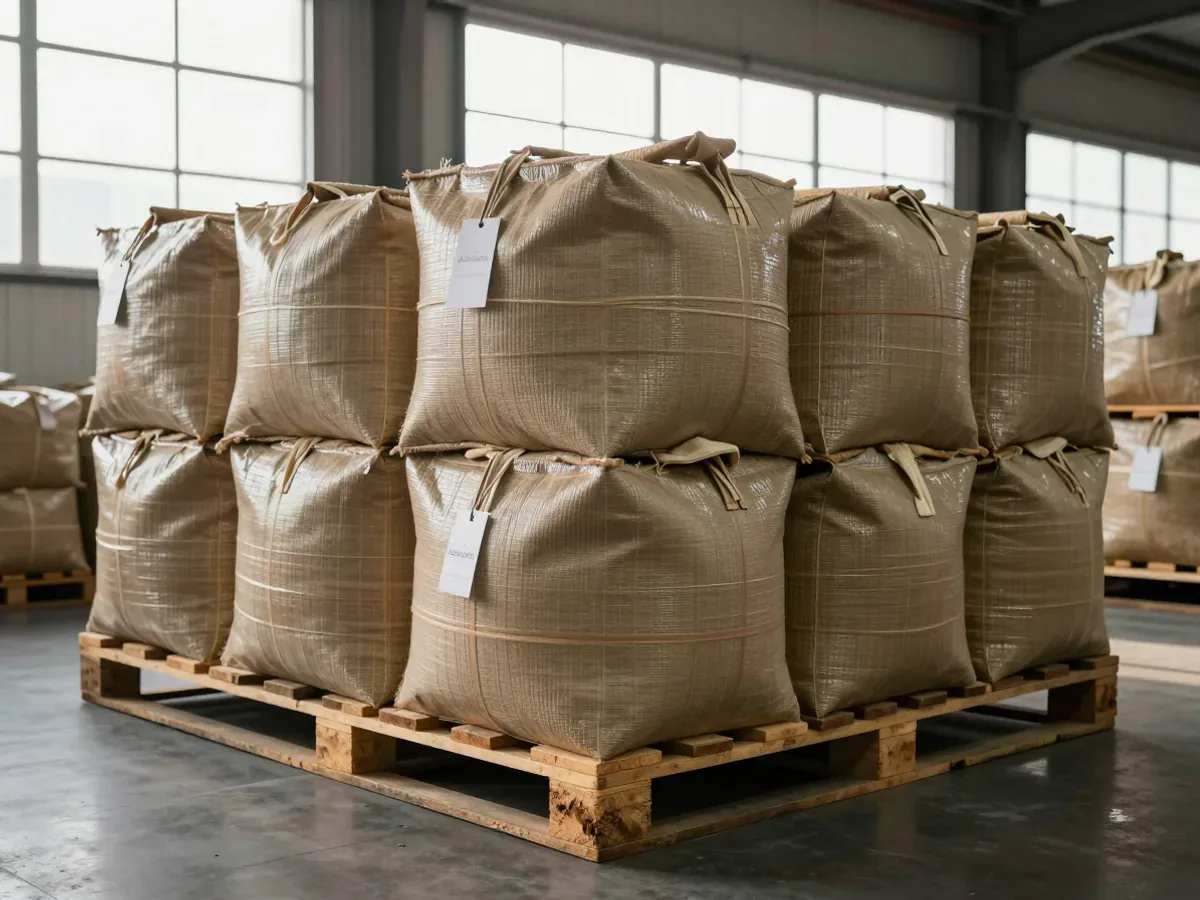
The bags had been sold as recyclable after use, and the buyer had repeated that claim on the shelf talker. The recovery facility saw something different. A bale of them had been pulled from the conveyor and sent to residue, which is the polite word for material that ends up buried or burned.
The buyer's first assumption was that the fabric must have been mislabelled. It was not. The woven body of the bag was a single resin, and a single resin is the easiest thing a sorting line can handle. The problem sat at the edges of the bag, in the parts nobody photographs.
By the time the pallet arrived back at the warehouse, the launch had already shipped. The rejection did not stop a sale. It stopped a claim, which is more expensive to repair.
Tracing the rejection to a handle and a print
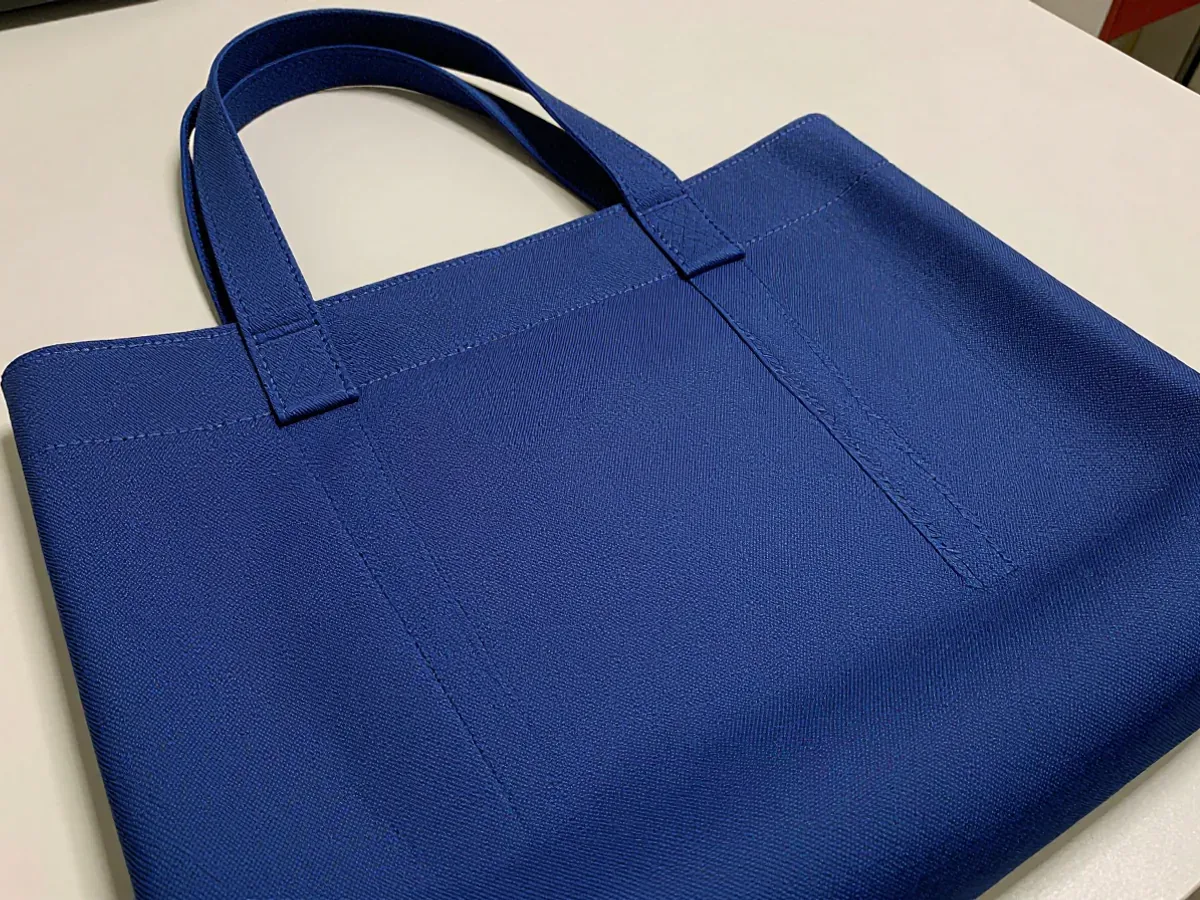
A bag is not one material. It is a body, two handles, a label, a print layer, and often a closure or a binding tape. Each of those parts has its own resin or fibre, and the sorting line meets them all at once.
On this bag, the handles were a different polymer from the body. That alone is not fatal, because many facilities can separate a bale by density and behaviour. The print was the harder problem. A heavy plastisol layer over most of one panel changes how the film or fabric responds to heat and to the near infrared sensors that identify resin type.
The third strike was residue. A few dozen bags in the bale had been used to carry produce and had not been emptied properly. A single greasy bag can drag a whole bale toward residue, and the facility has no reason to argue.
What the sorting line can and cannot see
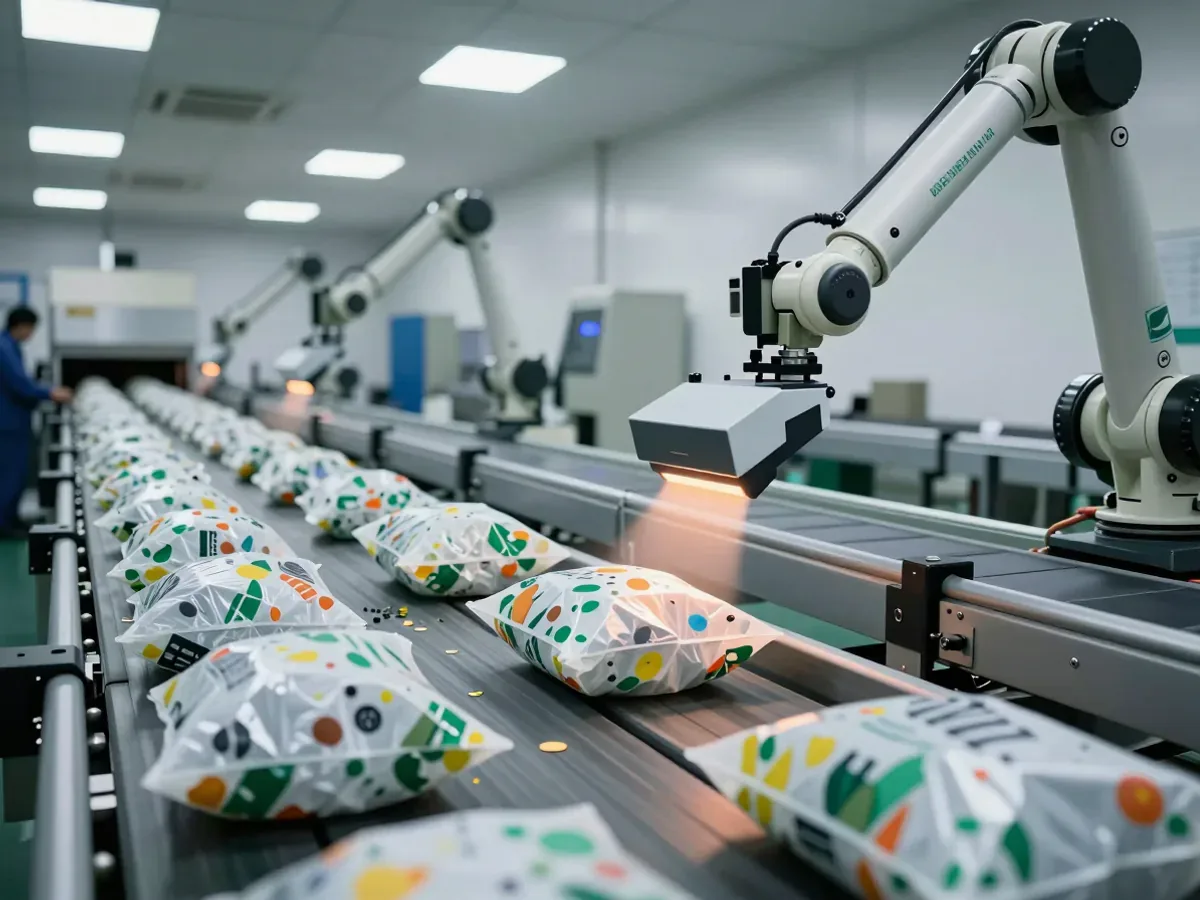
Most curbside programs sort with machines, and those machines read surface and shape rather than intention. A near infrared sensor identifies resin by how it reflects light. A plastisol print, a foil stamp, or a laminated label can block that reading or return a false one.
A bag that is bundled inside another bag is invisible to the same equipment. The line cannot open it, so the whole bundle travels to residue. That is why loose bags in a curbside bin are a problem even when the bag itself is technically recyclable.
What the line cannot see is the story a buyer tells on the shelf. It cannot read the word recyclable, and it cannot check whether the ink was water based. It sees a shape, a surface, and a weight, and it makes a decision in under a second.
The four parts of a bag that decide its fate
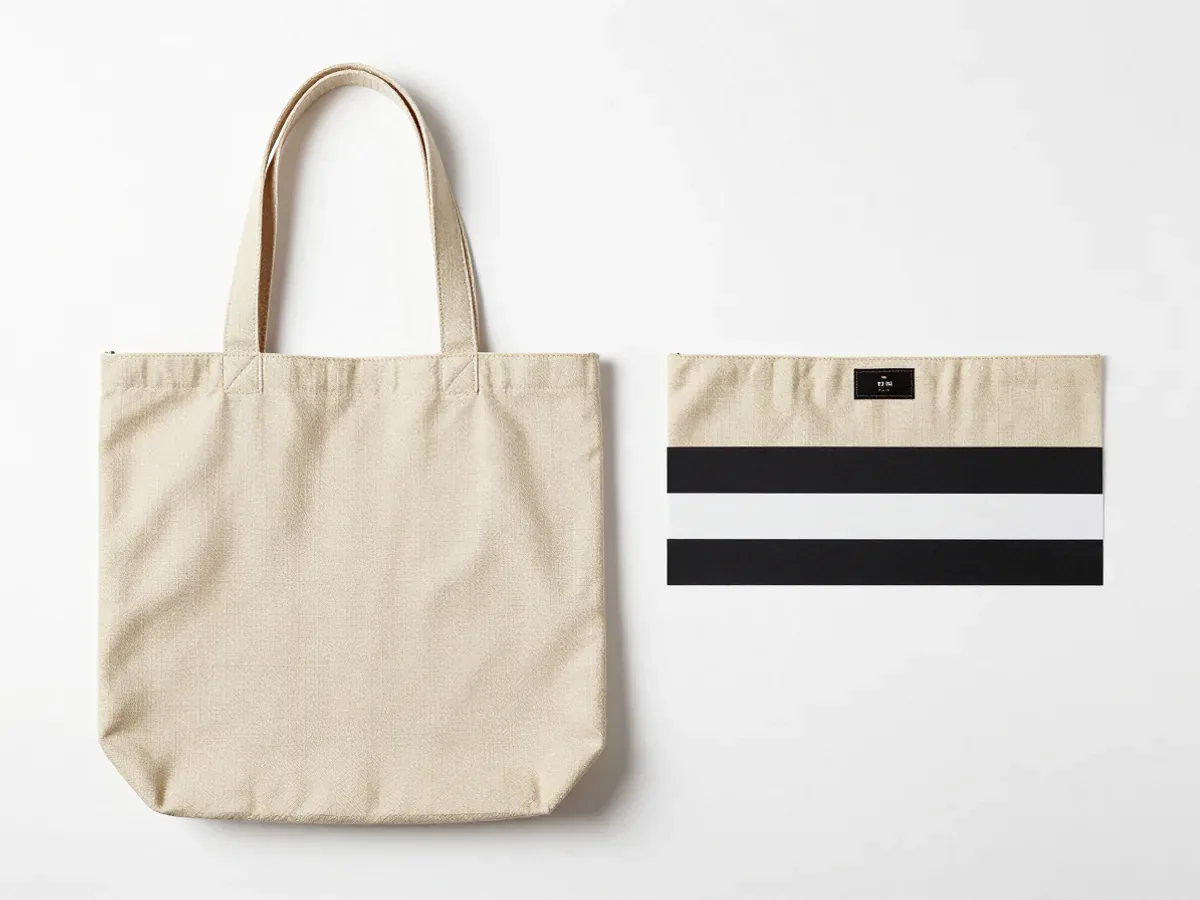
The first part is the body. A mono-material bag, one resin throughout, gives the line the cleanest signal. Our woven totes start from rolls of woven polypropylene, one resin, which is why the body itself never caused this rejection.
The second part is the handle and any binding. A handle in the same resin as the body keeps the bag in one category. A handle in a different polymer, or a cotton webbing handle on a plastic body, splits the item into two materials that a mechanical line must separate.
The third part is the print and the label. A small water based print is easy to live with. A full panel plastisol print or a laminated paper label is not, because it masks the surface the sensor needs. A stitched label in the same resin as the body is the safer choice.
The fourth part is what the bag carried. Cleanliness is a design decision as much as a user habit. A bag sold for produce will meet wet leaves and soil, and the spec sheet should assume that rather than hope for a careful customer.
When a take-back channel changes the answer
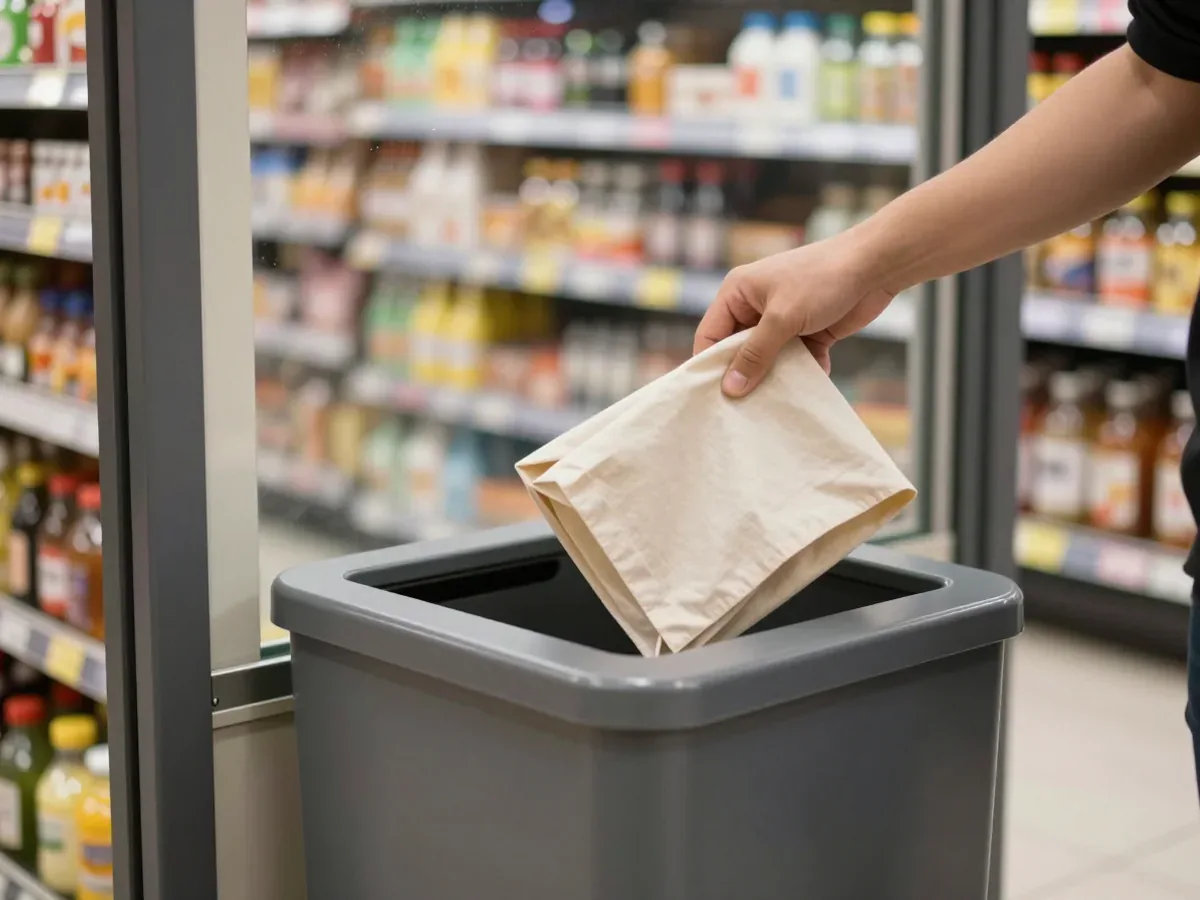
The same bag can pass or fail depending on where it goes. Many cities and recycling organisations run take back programs where used bags are returned to a designated point and handled as a separate stream. A grocery store bin is a different channel from a curbside cart, and it accepts things the cart will reject.
In a take back stream, a mixed handle matters less because the material is collected in bulk and processed by a facility that expects bags. The print still matters, and residue still matters, but the tolerance is wider.
This is why a single yes or no answer about recyclability is misleading. The honest answer is a sentence with a place in it: recyclable through this channel, under these conditions, with these parts kept to one resin.
What to write on the spec sheet before the next order
A spec sheet that says recyclable and stops there hands the problem to the sorting line. The sheet should name the resin of the body, the resin of the handle, and the resin of any binding or label. If two of those differ, the sheet should say so and name the channel that can handle the mix.
It should also state the print method and the coverage. A buyer who knows the print covers most of one panel can ask whether a smaller print or a different ink would keep the sensor reading clean. That conversation costs nothing before production and a great deal after a rejection.
The last line should describe the intended disposal route in plain words. Curbside cart, store drop off, or municipal take back are three different answers, and the bag should be designed for the one the buyer can actually name.
FAQ
Is a bag made from recycled PET automatically recyclable again?
No. Recycled content describes where the resin came from, not what happens after use. A recycled PET bag still has to pass the same sorting test as a virgin PET bag, and a mixed handle or a heavy print can fail it either way.
Do curbside programs accept LDPE shopping bags?
Most do not. Low density polyethylene bags are usually excluded from curbside collection because they tangle sorting equipment, and they are handled through store drop off or take back programs instead.
Does a recycling symbol on the bag guarantee it will be processed?
No. The symbol and the resin number describe the material, not the local program. Acceptance depends on the facility, the channel, and whether the bag arrives clean and loose rather than bundled inside another bag.
Can a cotton tote be recycled with textiles?
A cotton tote belongs in a textile stream rather than a plastic one, and it needs a channel that accepts fabric. Our organic cotton produce bag follows that route, and it should never be mixed into a plastic bale.






