
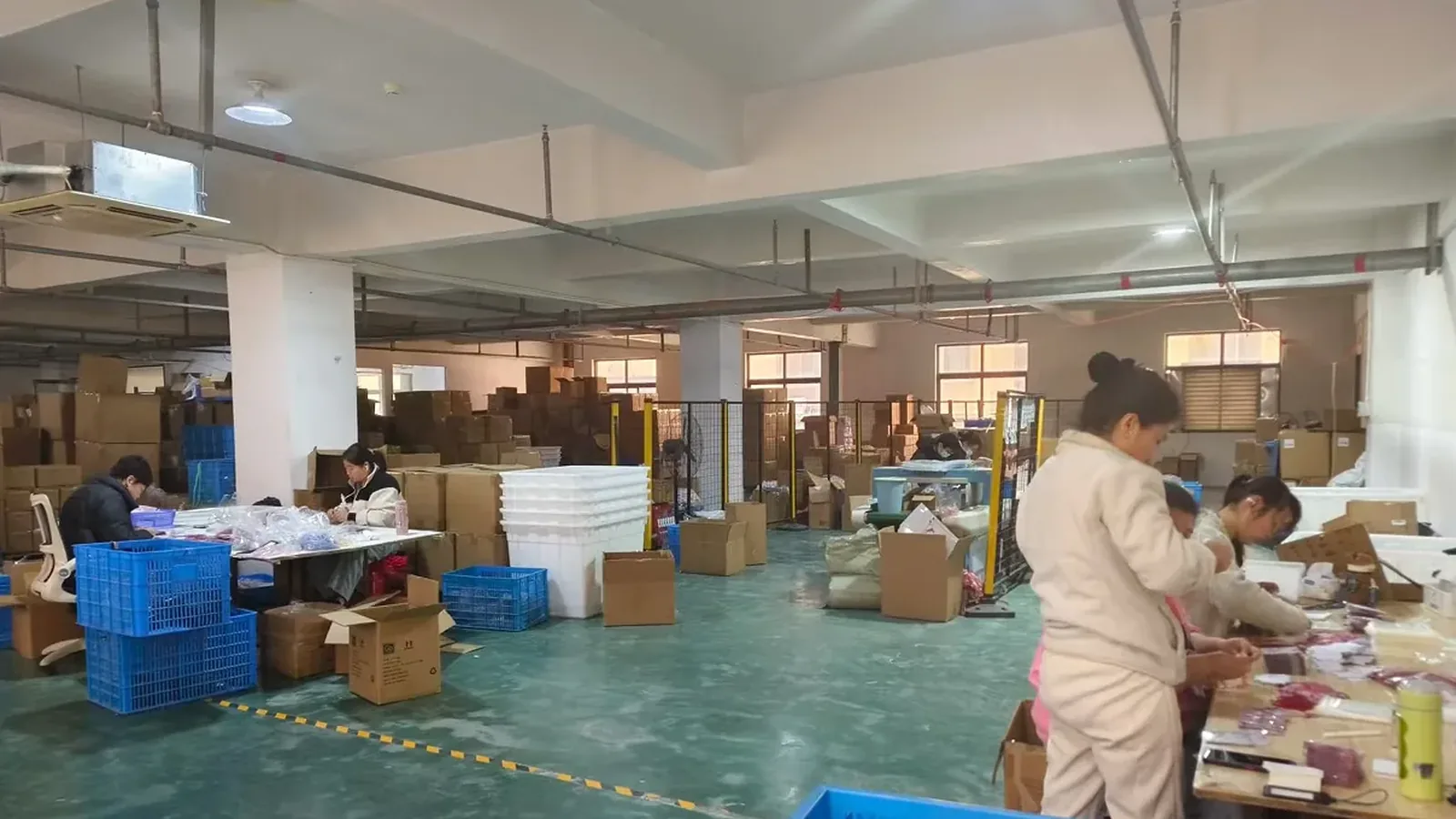
Built from the old usage guide plus product spec and QC records for custom drawstring bags.
Three years after a school district took delivery of 4,000 printed drawstring bags, the returns log still showed the same line: cord pulled out of the channel. The bags had passed final inspection. The cartons had been sealed on time. What the log recorded was not a defect anyone caught at the factory. It was a decision made at the cutting table, months before the first stitch.
That order is worth walking through station by station, because the question of where drawstring bags get used most is answered on the factory floor, not in a trend report. Gyms, schools, promotions, and travel absorb most of the volume, and each of those end uses writes different requirements into the same simple pattern. A buyer who understands which station serves which use can check a run without opening every carton.
The purchase order that starts the walk

The order form is the first inspection point, and it is usually the least examined. A promotional run and a school run can share a spec sheet line for line and still need different bags. The promo bag lives or dies on print position and cord colour. The school bag lives or dies on how the channel holds up to daily loading.
Read the end use back into the order before anything is cut. A gym bag carries shoes, a towel, and a water bottle, so the fabric and the strap anchors take load. A travel pouch holds documents and small items, so the closure matters more than the strap. A giveaway bag is handled once at an event and judged on how it looks in a photo.
The order should also name the closure hardware. Plastic stoppers and wooden toggles are both standard on custom drawstring bags, and the choice changes the cord length, the knot position, and the cost line. If the order is silent on this, the sample room will pick something, and the pick may not match the end use.
One more line deserves a second look: quantity per size. A single size line copied across a mixed order is where wrong-size cartons begin. The size is written once at order entry and then repeated at cutting, at sewing, and at packing, and each repetition is a chance for the line to drift.
Incoming fabric and cord: what the end use already decided

The fabric roll arrives before the order does, in the sense that the material choice was locked weeks earlier. Cotton, polyester, nylon, and rope all appear in drawstring production, and the end use sorts them quickly. Nylon suits gyms because it takes abrasion and sheds a little water. Cotton suits eco-friendly promotions because the hand feel and the story both work.
At the incoming table, the check is not whether the fabric is good in the abstract. It is whether this fabric matches the use written on the order. A lightweight promo bag and a gym bag can look identical in a swatch photo and behave nothing alike after a month of use.
Cord gets less attention than fabric and causes more failures. The cord diameter has to match the channel width, and the channel width has to match the cord. A cord that is too thin slides and knots. A cord that is too thick will not run through a narrow channel without distortion, and the seamstress will widen the channel to compensate.
That compensation is invisible in the finished bag until the cord is pulled hard. Then the channel gapes, the cord escapes, and the return lands in a log three years later. Incoming inspection should measure cord diameter against the spec and pull a length through a stitched channel sample before the roll is released.
Bulk jute and canvas runs sit in the warehouse in wholesale quantities, and storage conditions matter for natural fibres. Damp storage shows up as a smell and a stiffness that no amount of printing hides.
Cutting and printing: where the promo bag lives or dies

The cutting table sets the geometry that every later station inherits. Panel size, channel allowance, eyelet position, and print area all get fixed here. A promo bag is judged almost entirely on the print, so the print area has to be marked before the blade moves.
Print position is the most common promo complaint and the easiest to prevent. The artwork sits on a panel that will later be folded and sewn, and a placement that looks centred on the flat panel can sit visibly off centre on the finished bag. The cutting station should carry a marked template showing where the print lands after assembly, not just where it lands on the flat.
Screen printing on a drawstring panel has its own constraint. The mesh and the ink decide whether the logo survives a fold line, and the first bag off the press tells you more than the approved proof did. A logo that crosses a seam or a channel will break up, and no proof shows that.
For school and gym runs, the cutting check shifts to the strap anchors. The eyelets are set into the pocket face, and the position of those eyelets decides how the bag hangs. Move them a centimetre and the bag swings differently on the back.
Cutting waste is also a cost signal. A layout that produces more offcuts than expected usually means the panel was rotated to fit the fabric width, and a rotated panel can flip the print orientation. The cutter should confirm orientation on the first ply, not the last.
Sewing the channel and anchoring the straps

The sewing floor is where the end use becomes physical. The channel is the slowest station on a drawstring line, and the reason is structural. The seamstress is building a tunnel that a cord has to travel through under load, and the tolerance is tight.
Channel width is the first thing to check at this station. Too narrow and the cord binds. Too wide and the bag will not stay closed under weight. The correct width is a function of cord diameter plus a small allowance, and it should be written on the station card rather than left to habit.
Stitch density along the channel matters more than on the body panels. A loose run of stitches creates a gap that the cord finds under tension. The check is a firm pull on a finished channel with the cord in place, done on the line rather than at final inspection.
Strap anchoring is the second checkpoint. On a cinch backpack, the straps cross the pocket face and meet the eyelets at the base, and that junction carries the whole load. A bar tack that misses the eyelet ring by a few millimetres will hold in the sample and fail in the field.
Gym bags load heavier than promo bags, so the anchor check should scale with the end use. A promo bag can pass with a lighter tack. A gym bag cannot. The station card should say which one is being sewn.
Cord ends get finished here too, and the finish is where the closure hardware enters. A plastic stopper is fitted by threading and crimping. A wooden toggle is knotted or sewn. Both need the cord end to be clean, or the hardware will not sit flat.
Final inspection: four checkpoints and the child safety question

Every order passes four QC checkpoints before it is packed, and the drawstring bag has a specific set for each. The first is the channel pull, done on a sample from each sewing line rather than a single bag. The second is the strap anchor, checked by loading the bag with a weight that matches its end use.
The third is print registration and position against the marked template, checked on the assembled bag. The fourth is closure function: the cord runs freely, the stopper or toggle holds, and the bag closes and opens without catching.
The child safety question sits outside those four and should be settled before the order is placed. Drawstrings can pose strangulation or entanglement risks to children, especially in hoodies and bags, and strings are not ideal for kids due to risks of choking, strangulation, and tripping during play. Many brands now replace drawstrings with safer closures to comply with child safety regulations.
If the end use is a school bag for young children, the buyer has a design decision to make, not an inspection decision. A drawstring bag built for teenagers and a drawstring bag built for six year olds should not share a spec. The safer route is a closure that removes the free cord end, and that change has to happen at the order stage.
For adult gym, travel, and promo use, the cord is the function. The inspection then focuses on cord end finish, because a frayed end is both a durability failure and a handling complaint.
Packing and loading: the last place a wrong size line hides
Packing is where the size line gets its final chance to go wrong. The polybag label and the carton label are printed from different files in many factories, and a mismatch between them is caught only if someone reads both against the order.
The check at this station is a physical one. Pull a bag from the top, middle, and bottom of a carton and measure it flat. Then read the polybag label and the carton label against the order line. A carton that says one size and holds another will pass every earlier station and fail at the retailer's receiving dock.
Carton count and assortment come next. A mixed order with several sizes needs the ratio confirmed against the packing list, not against memory. The loading bay is the wrong place to discover that the ratio was reversed.
Loading itself is a handling check. Bags packed under heavy cartons take creases that never come out, and a promo bag with a crease across the print is a rejected giveaway. Carton stacking should follow the print orientation, not just the box dimensions.
The last thing to confirm before the container doors close is the seal and the count. A signed loading tally against the packing list closes the walk. Everything upstream has already been decided, and the tally is the only record that the decisions matched the order.
FAQ
Are drawstring bags still widely used, or is demand fading?
They remain widely used in fitness, travel, and brand marketing because they are convenient and affordable. The form has stayed simple while materials and printing have expanded, which keeps the category current rather than dated.
Which fabric suits a gym bag versus a promotional giveaway?
Nylon suits gyms because it handles abrasion and light moisture. Cotton suits eco-friendly promotions because the hand feel and the material story both support the message. Polyester sits between the two on cost and durability.
Why do some drawstring bags use plastic stoppers and others wooden toggles?
Both are standard closure options. Plastic stoppers are crimped onto the cord and suit high-volume promo runs. Wooden toggles are knotted or sewn and suit a more natural or premium look. The choice changes cord length and knot position, so it belongs on the order.
Are drawstring bags safe for children?
Cord ends create strangulation and entanglement risks for young children. Many brands replace the drawstring with a safer closure for kids' products. If the bag is intended for young children, settle the closure at the order stage rather than at inspection.






