Three routes cover most branded runs, and the choice is set by the artwork rather than by.
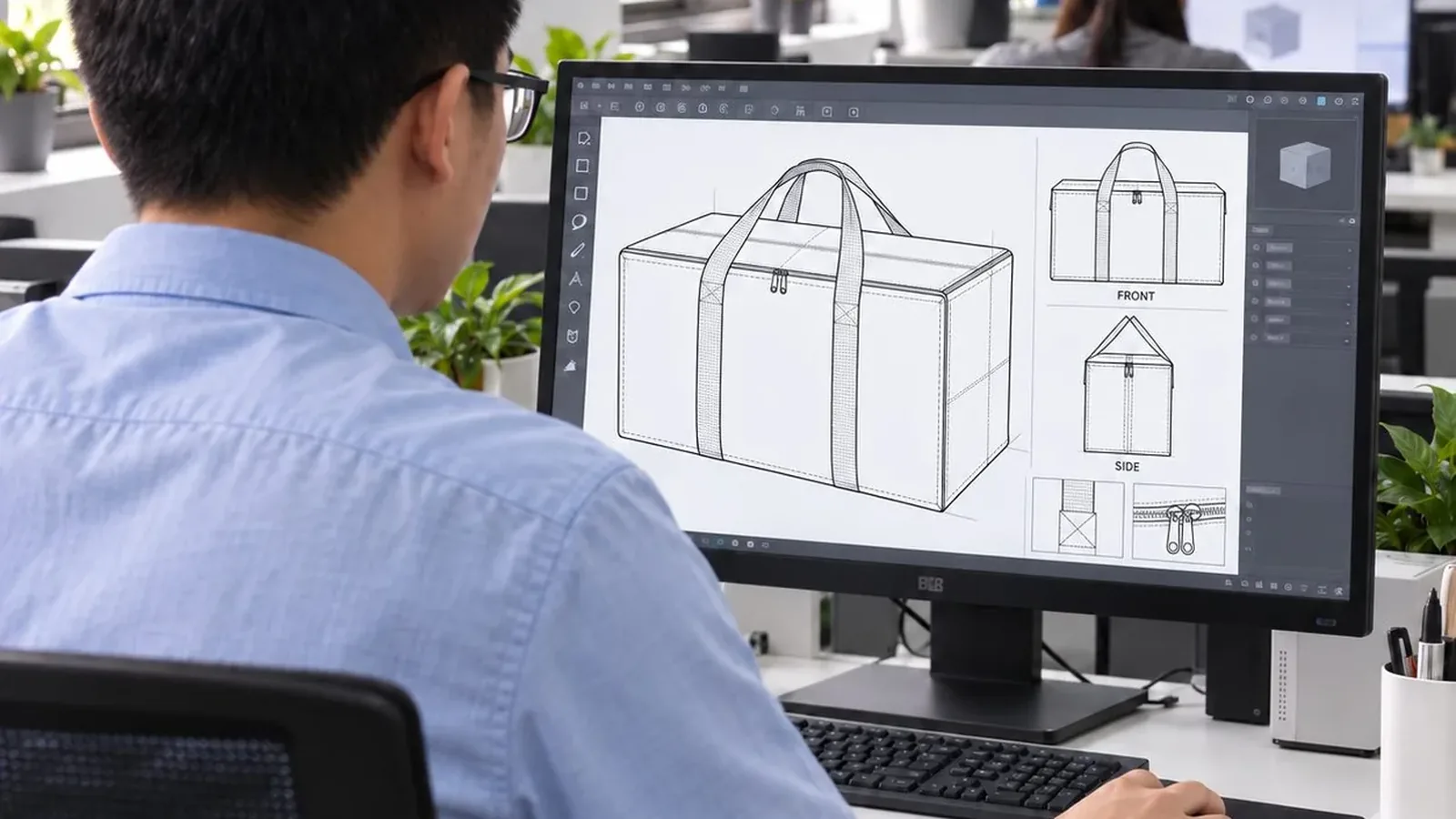
Buyers ask wholesale branded moving bags: the seam, the handle join and the label are read on a sample before the batch. Buyers bring us wholesale branded moving bags again this season with a logo file and no bag spec, so the useful order is to settle the bag first and the print second.
The shell under the print matters as much as the ink on it, and a bag that tears at the gusset takes the logo with it.
A logo on a shell that fails is worse than no logo, because it puts the brand on the failure.
What A Branded Order Settles First
Buyers ask wholesale branded moving bags: the seam, the handle join and the label are read on a sample before the batch. Three decisions come before the artwork: the shell, the print route and the placement. The colour sample for a run sits in a drawer on our bench, and the printed bag is laid beside it before the run is agreed.
| Decision | What we need from the buyer | What it changes on the bag |
|---|---|---|
| Shell | What the bag carries and how far it travels | Whether the print sits on a laminated face or a raw weave |
| Print route | How many colours, and how fine the smallest line | Whether a small logo holds its edge or needs a solid block |
| Placement | Where the logo reads on a loaded bag | Whether the print crosses the handle line and folds there |
| Label | Whether the brand needs a woven tag as well | How the bag reads on a shelf or in a van |
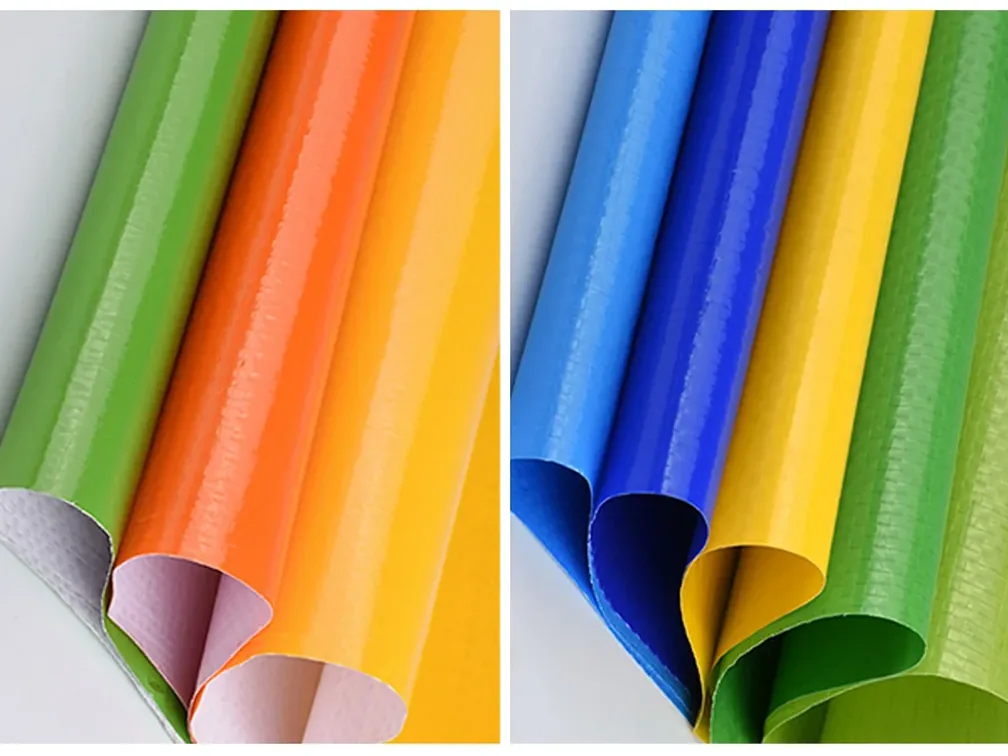
The shell line is the one buyers skip, and it decides the other three. A woven PP body with a laminated inner layer holds its shape and keeps a print on the face, while a lighter shell tears at the gusset under a full load and takes the print with it. Our mid size body is 27.2 × 13.8 × 15.0 in, and the long bag runs to 45.3 × 15.7 × 21.7 in with the heaviest shell we make because a full bag that length needs it.
The Print Routes On A Woven Shell
Three routes cover most branded runs, and the choice is set by the artwork rather than by preference.
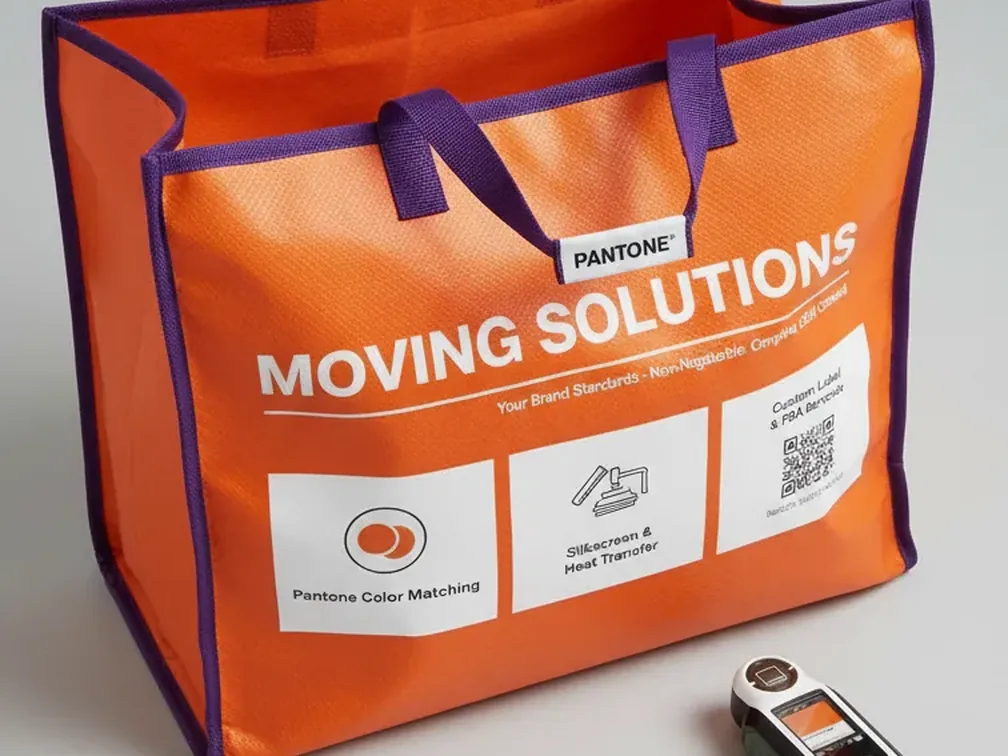
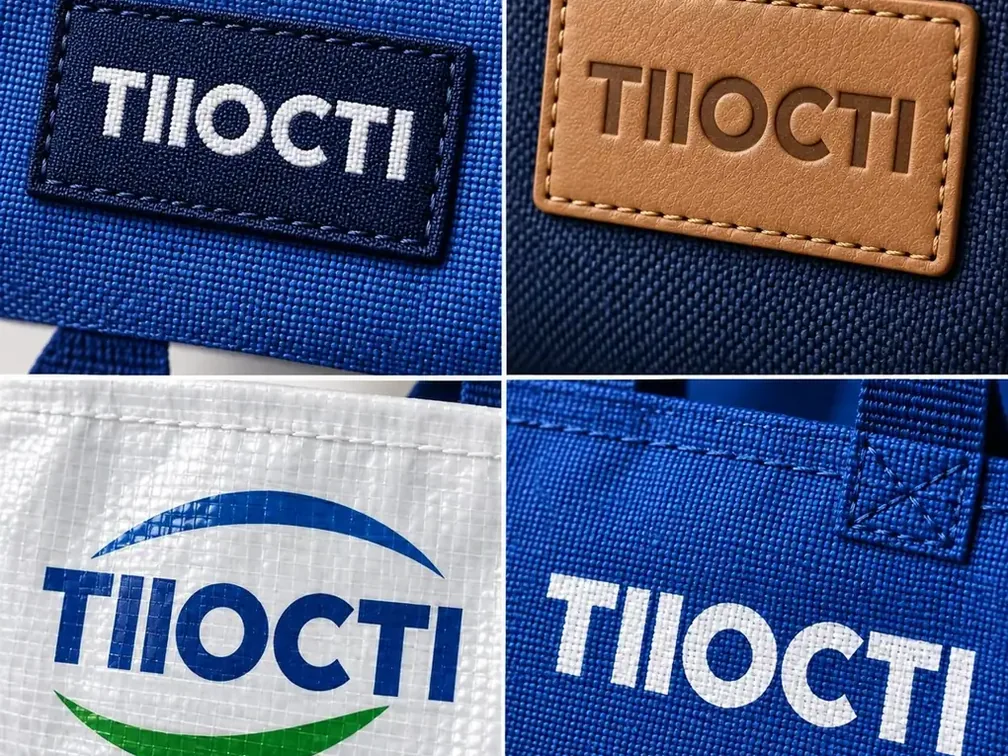
- Screen print in a matched colour is the route for a solid logo, and it is the one that survives folding because the ink sits on the face rather than in a film on top of it. A colour matched print also keeps a fleet consistent, since two bags from different lots should read as one colour on a van.
- Heat transfer carries finer detail than a screen, so it suits a small wordmark or a line drawing that would fill in on a coarse weave.
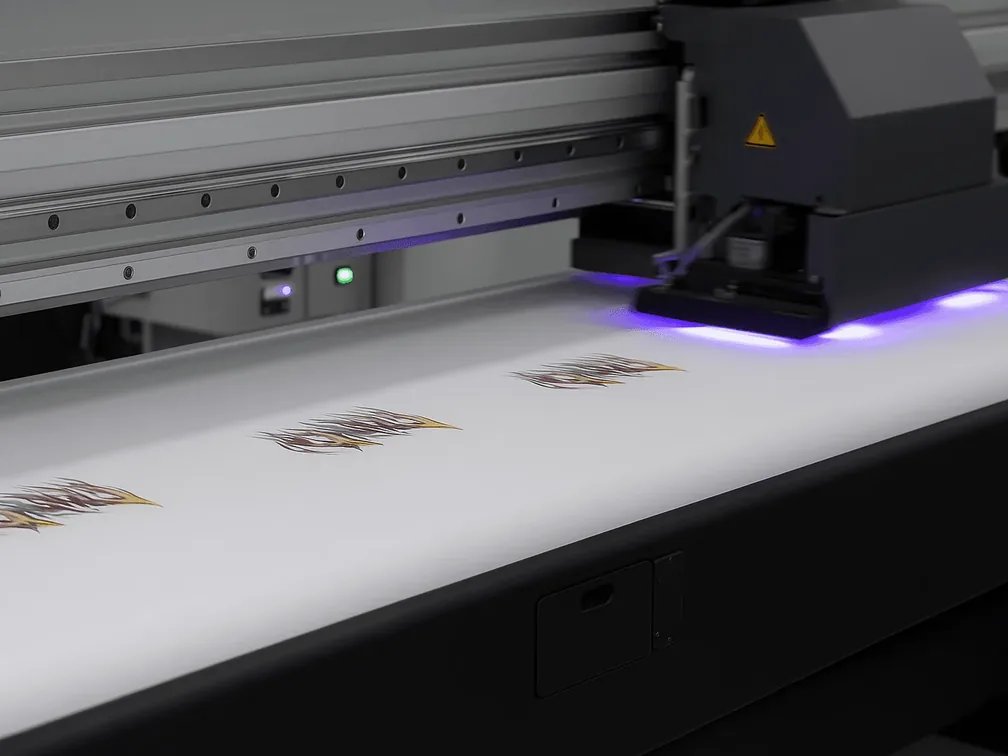
- A UV printer lays a logo on the material without a screen, which is how a short branded run or a sample set is printed before a larger run is committed.
Whichever route is used, the placement is decided on a loaded bag rather than on a flat one. A logo that sits well on a folded bag can fold through the handle line when the bag is full, and the crease then runs across the middle of the brand. The webbing is a placement constraint too, because our strap on moving bags with handles runs the full length of the bag rather than stopping at the handles.
What Fades, Cracks And Peels
Ink fails in three ways, and all of them are visible on a sample before a run.
The first is cracking at a fold, which starts where the bag is creased for storage and spreads along the print until the colour breaks into lines. The second is a print that sits on a raw face without a laminated layer under it, so the ink moves with moisture rather than bonding to the shell. The third is a print that is thin at the edge of a solid block, which reads as a faded logo on the first bag a customer keeps.
A branded bag has a hardware failure mode as well, and it sits right beside the print. A narrow zip tape with a moulded tooth jams once grit reaches the track, and a jammed bag gets dragged by the handle, which is where the shell takes the load. Our answer is a size 5 nylon coil on a 1.2 in tape, with two pulls so a full bag opens from either end without being unloaded.
Questions Buyers Ask About Branded Bags
How many shoe boxes fit in one moving bag?
4 to 6 standard shoe boxes, depending on how they are turned inside the bag. Check the internal size rather than the load rating, because a box that fits the footprint can still stand too tall for the zip.
Are branded moving bags just boxes with handles?
No, they are a fabric container built for many trips, which is why a fleet replaces them far less often than a box. A box suits a single light load, while a bag is bought for the second and third move as well.
Does a logo change what the bag can carry?
Not by itself, but the print route can: a heavy ink film on a light shell stiffens the face and can crack at the fold, so the load rating has to be set on the shell before the print is chosen. A bag built for repeated loads of 132 lb is specified by its shell and stitch, not by its artwork.
What does logistics mean for a branded fleet?
It means the bags, the trucks and the crews are planned together so a bag is where the next job needs it, and the print is only useful if the bag is on the job. A fleet that tracks its bags by room and by vehicle loses fewer of them than one that does not.
What to Would Sign Off Before A Run
Four lines go on the sheet before the artwork is approved: shell, stitch, zip and print.
The shell line names the woven PP and the laminated inner layer, because that layer is what keeps a print stable and a load dry. The stitch line names a double stitched nylon thread at the handle anchor with a minimum density of 4 stitches per inch, since a single row separates under load within a season. The zip line names the size, the coil and the tape width, because a narrow tape is the part that jams first. The print line names the route and the matched colour, and it carries a rub result on the face.
The load figure is the buyer’s to set, and no regulation will do it for them, as the HSE guidance on manual handling says:
The weight of a load is important, though the law does not set specific weight limits.
Health and Safety Executive, Manual handling at work
A branded bag that is specified this way is also the one that gets reused, which is the only environmental claim a logo can make honestly: the EU waste hierarchy puts prevention first and landfill last.
How To Check A Branded Sample
Four checks on one sample tell a buyer more than a page of artwork notes.
- Fold the bag along the line the logo crosses and press the crease, then open it and look for a crack in the ink.
- Rub the printed face with a damp white cloth and look at the cloth rather than the bag.
- Fill the bag to its rated load, carry it across the floor and set it down, then look at the handle base and the print around it.
- Zip it shut and open it from both ends with the load inside, which is the test the two pulls exist for.
Our line runs 4 checkpoints on every order, and the print is checked on a bag that has been folded rather than on a flat sheet. The empty bag folds flat, which makes a reference sample easy to keep beside the artwork for the next run.
For the build behind the print, the custom logo moving bags page covers the branding side of a run, the OEM moving bags guide covers how a buyer’s own design is set up, and the heavy duty moving bags page goes through the shell and the handle.