

Built from an old jute bag explainer and our own jute tote product records, rewritten around the lines buyers actually write on a purchase order.
The inspection sheet came back with one line circled: the handle tab had pulled away from the top band on three of the twenty totes pulled from the carton. The buyer had ordered a plain jute tote in three sizes, natural body, white webbing handles, and had signed off the sample six weeks earlier. Nothing in the paperwork said how the handle was attached, so nothing in the inspection could fail it.
That missing line is the difference between a popular material and a workable order. Jute totes are in demand for reasons that hold up: the fibre is strong, breathable and biodegradable, and it comes from a crop grown in abundance in India and Bangladesh, which keeps it cost effective. None of that decides whether your carton arrives clean. The spec sheet does.
The first line on the order: 30 by 40 cm and what it hides
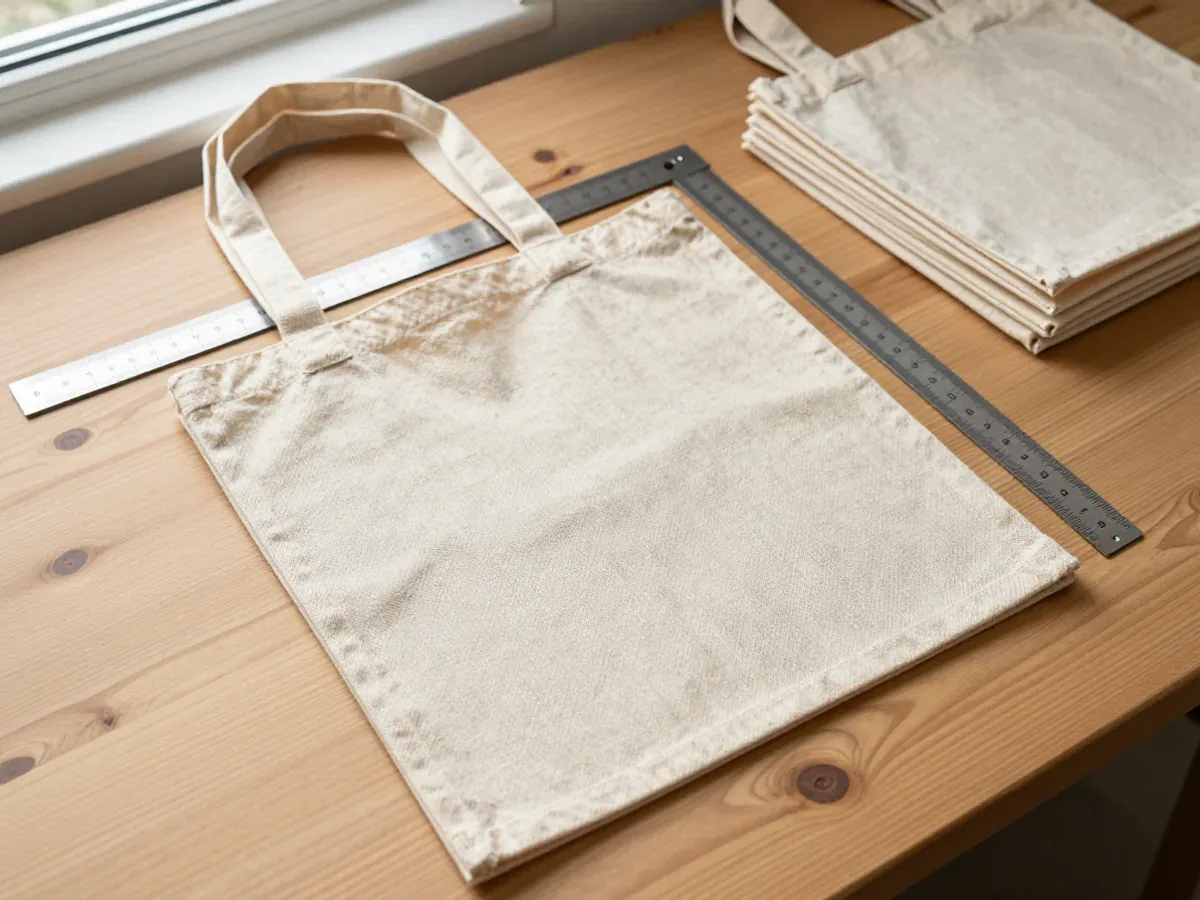
Most purchase orders open with a size, and the size looks finished. A buyer writes 30 by 15.7 in, adds a gusset depth, and moves on to the print. On a jute tote that single line carries three hidden decisions: whether the measurement is the cut panel or the sewn bag, whether the gusset is included in the width, and how much the bag will shrink or relax once the weave is washed and pressed.
Write the size as a flat measurement of the finished bag, outside edge to outside edge, with the gusset listed separately. State the tolerance in centimetres, not as “approximately.” A tote that finishes a centimetre narrow will still hold groceries, but it will not sit square in a retail display, and the buyer who ordered shelf-ready packaging will notice before the shopper does.
Verification is a flat bag on a table with a steel rule, taken from a bundle in the middle of the carton rather than the top layer. Measure five pieces, not one. The spread between the smallest and largest tells you more about the factory’s cutting than the average does.
Fabric weight and roll width: why the mill roll decides the cut

Jute arrives as mill rolls in different widths, and the roll width sets how many bag panels come out of one pass. A spec that names only “natural jute fabric” leaves the mill free to supply whatever width is on the floor that week. The bag may still look right, but the cutting plan changes, and with it the wastage built into your price.
Ask for the fabric weight in grams per square metre and the roll width in centimetres, both written on the sheet. Weight is the honest proxy for how the bag will feel in the hand and how it will carry a load. Two totes can share a size and a print and still feel like different products because one was cut from a lighter roll.
The check happens before cutting, not after. A sample of the roll, a measured square weighed on a scale, and a note of the roll width on the production record. If the mill substitutes a narrower roll mid order, the panels still fit the pattern, but the yield drops and someone absorbs the difference.
Handle webbing: the line that carries the load
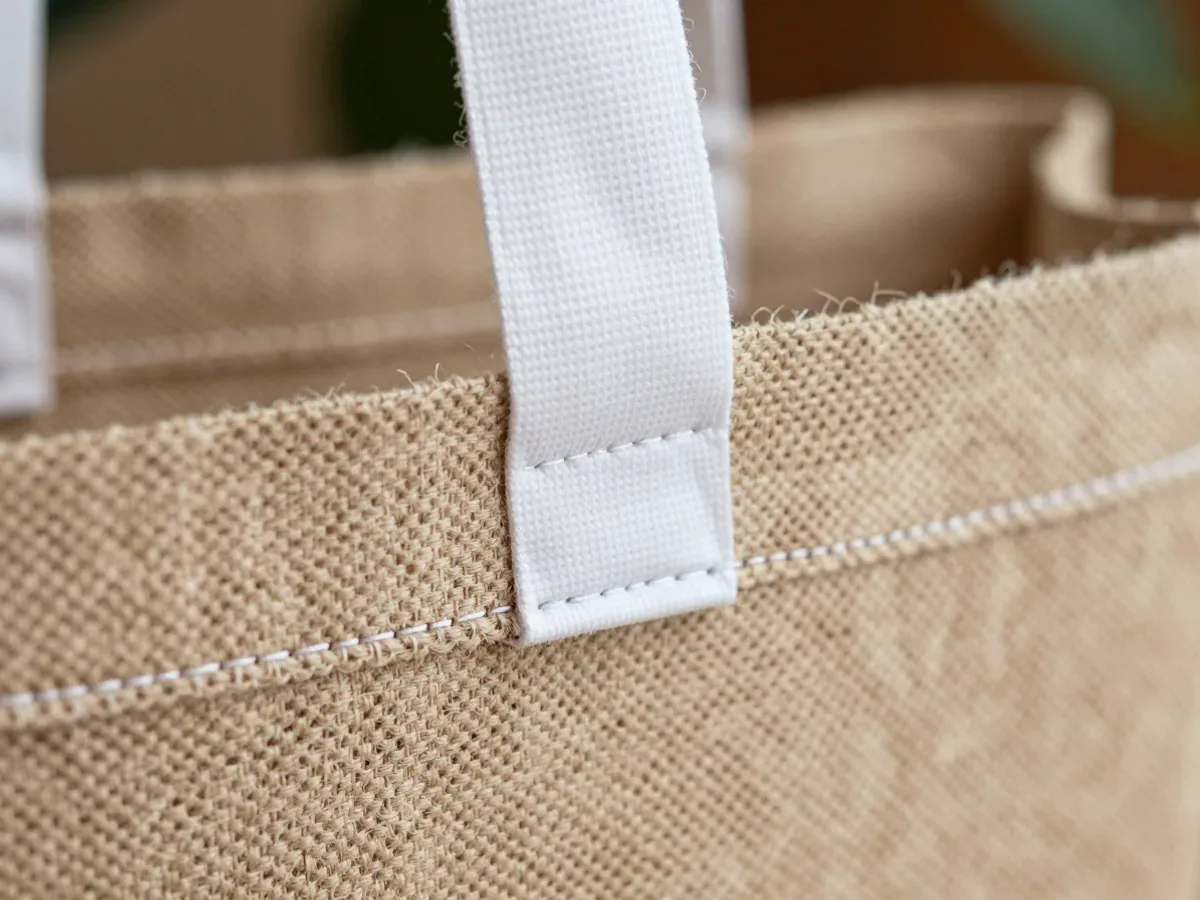
The handle is where a jute tote earns or loses its reputation. Our plain tote set uses white webbing handles, and the attachment matters more than the webbing itself. The webbing is folded into a tab and bar tacked through a doubled top band. That stitch, not the handle length, is what carries the load.
Write the webbing width, the handle drop length, the colour reference, and the attachment method in one block. Naming the attachment is unusual on a purchase order and it is the line most likely to prevent a failure. A handle sewn once through a single layer of jute will hold a light shop purchase and let go under a bag of potatoes.
Verification is a pull test by hand on a finished bag, with the bag loaded to the weight you expect it to carry. Look at the tab, not the handle. The stitch should pass through the doubled band, and the bar tack should be visible on both faces of the tab. A close up photo of that stitch from the production line belongs in the approval file.
Print placement on a coarse weave: what the spec can promise
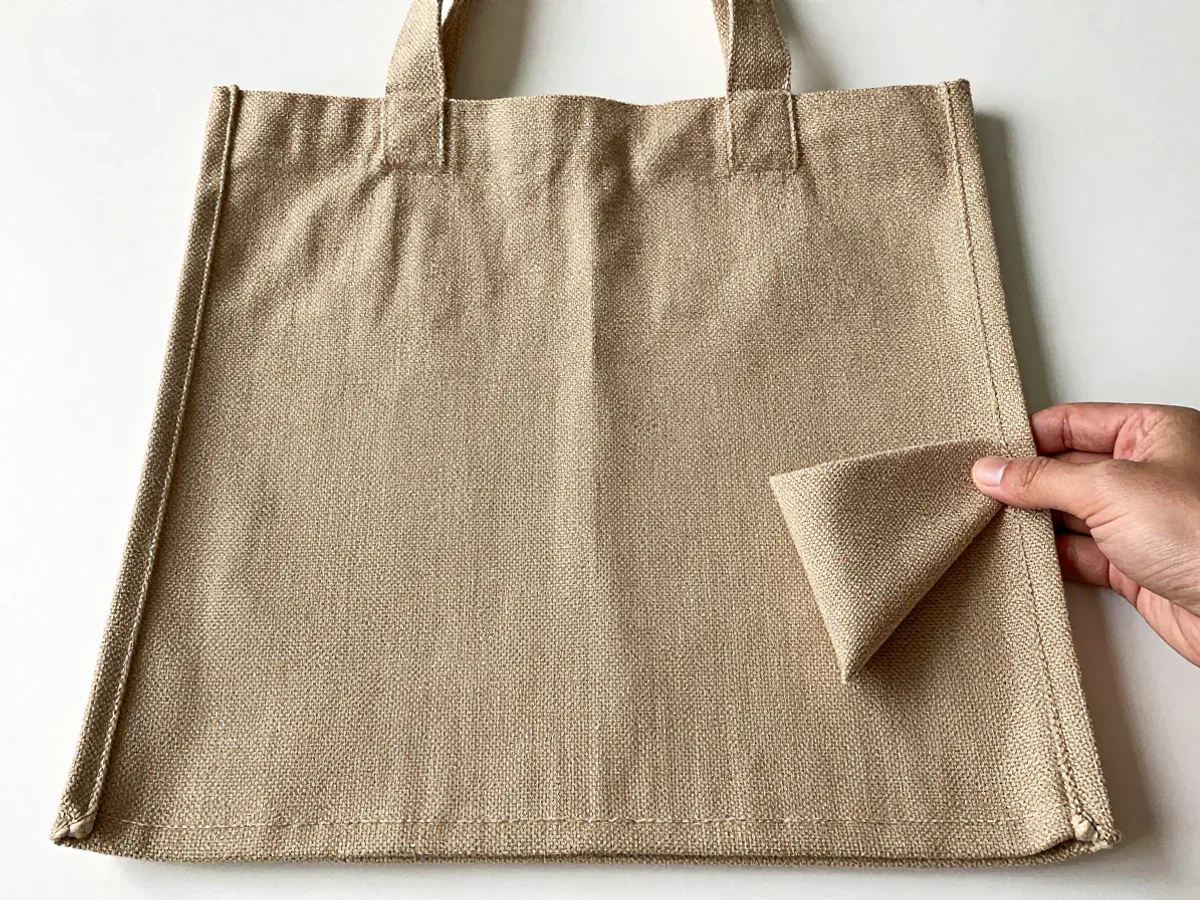
A printed front panel sits directly on the natural weave, and the weave is not paper. Jute’s coarse texture limits intricate printing and fine detail, so a logo with a hairline rule or small reversed type will close up in the mesh. The spec can promise position, size and ink colour. It cannot promise the crispness of a cotton canvas print.
Write the print area as a box measured from the top edge and the side seam, with the artwork size inside it. Add the ink colours by reference and state whether the print is one pass or several. If the design depends on fine detail, the sheet should say so, because that is the point where the artwork gets simplified rather than the print getting sharper.
Check the print on a flat bag under daylight, aligned to the box, and compare the ink against the approved reference. Then fold the bag along the print and open it. Cracking at the fold line is normal on a coarse weave and worth knowing before the carton ships, not after.
Moisture and wear: the line buyers forget to write
Jute absorbs water easily, and damp fibre weakens. That single property explains most of the complaints that arrive after a jute order lands: a musty smell in the carton, a bag that feels clammy, a handle that seems softer than the sample. None of it is a defect in the weave. It is a packing and storage condition that the spec never addressed.
Write a moisture limit for the finished bag and a packing instruction that keeps it. State that the goods are packed dry, that cartons are lined or that bundles are wrapped, and that the container is not loaded in rain. Ask for the carton to carry a desiccant where the route is long or the season is humid.
The same section should carry the wear expectation. Jute is reusable but wears faster than synthetic alternatives, so the sheet should name the load the bag is designed for and the number of uses the buyer expects. That number shapes the fabric weight and the handle attachment, and it gives an inspector something to test against.
How a jute tote sample gets checked against the sheet
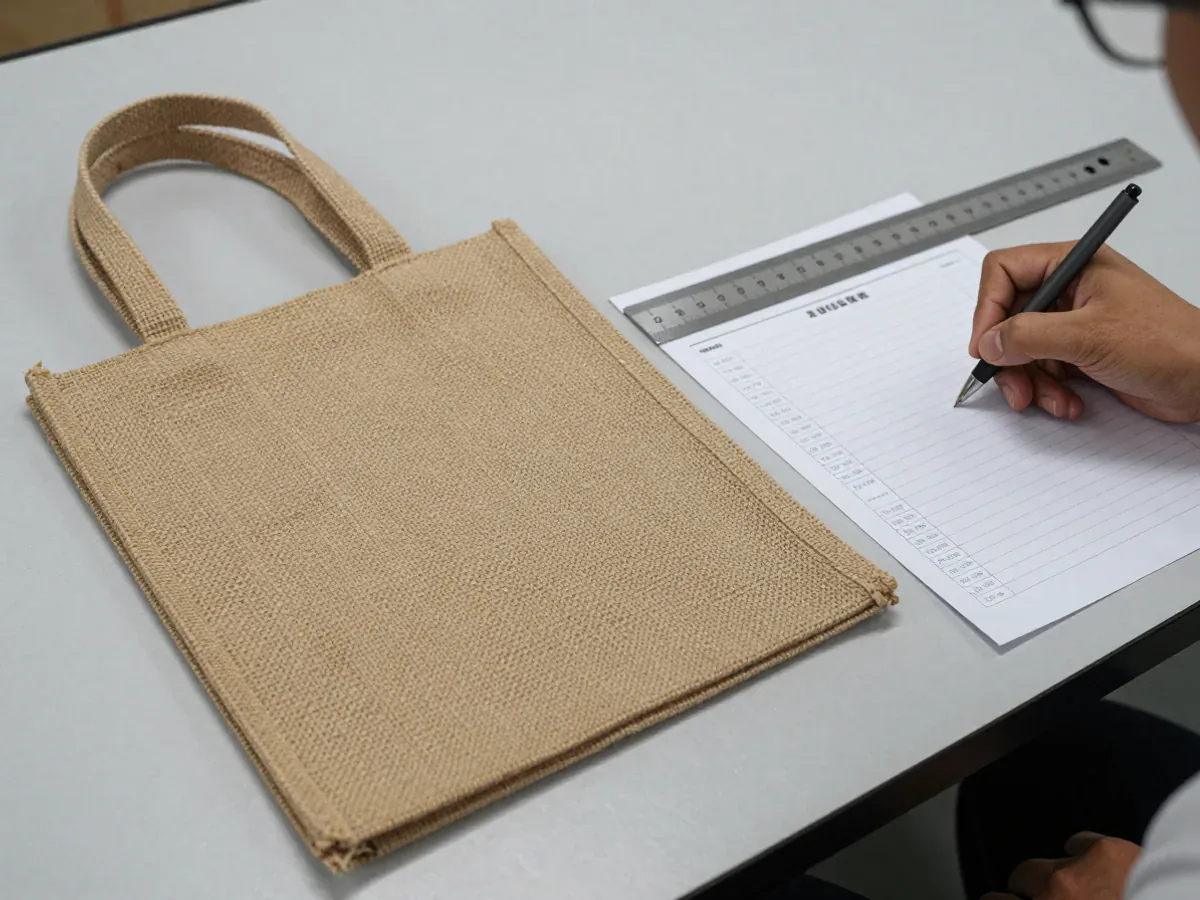
A sample is only useful if it is checked line by line against the document that will govern production. The common failure is a sample approved by eye, with the sheet signed later, so the two never meet. Every order passes four QC checkpoints, and the sample review is where those checkpoints get their reference values.
Lay the sample on the table with the spec sheet beside it and work down the page. Size against the rule. Fabric weight against the roll record. Handle drop and webbing width against the block. Print box against the artwork. Moisture against the limit. Mark each line pass or query, and send the marked sheet back with the sample rather than a comment that the bag “looks good.”
The sample that survives this is the one that can be reproduced. A bag approved on appearance alone gives the production floor nothing to aim at, and gives the inspector nothing to fail.
Where the popularity story meets the packing list
The reasons jute totes sell are real. The fibre is strong and breathable, it breaks down naturally, and it carries a premium look that suits branding. Businesses use jute bags for advertising because the material reads as considered rather than cheap, and the same body shape takes different handle colours and prints, so one order can mix designs without a new pattern.
That flexibility is also where bulk orders go wrong. Mixed prints on one tote shape mean mixed print setups, and the sheet has to say how many variants sit inside the order and how they are separated on the floor. Finished totes stack flat into bundles, and the bundles are counted before they go into cartons. A bundle count that does not match the variant breakdown is the first sign that two designs were mixed in one carton.
The popularity of jute is not a reason to order loosely. It is a reason to write the sheet tightly, because the material’s natural variation is exactly what a good spec is designed to hold steady.
FAQ
Are jute bags strong enough for heavy groceries?
The fibre is highly tensile and carries weight well when the handle attachment is right. The load limit belongs on the spec sheet, along with the attachment method, so the bag is built for the weight it will actually see.
Can a jute tote be printed with a detailed logo?
Position, size and ink colour can be specified. Fine detail and hairline rules close up on the coarse weave, so artwork usually needs simplifying before it goes to print.
Why do jute bags smell or feel damp on arrival?
Jute absorbs water easily, and damp fibre weakens. A moisture limit and a dry packing instruction on the sheet prevent most of it.
Can one order mix several prints on the same tote shape?
Yes. One body takes different handle colours and prints, provided the sheet lists the variants and the bundle count keeps them separate through packing.