
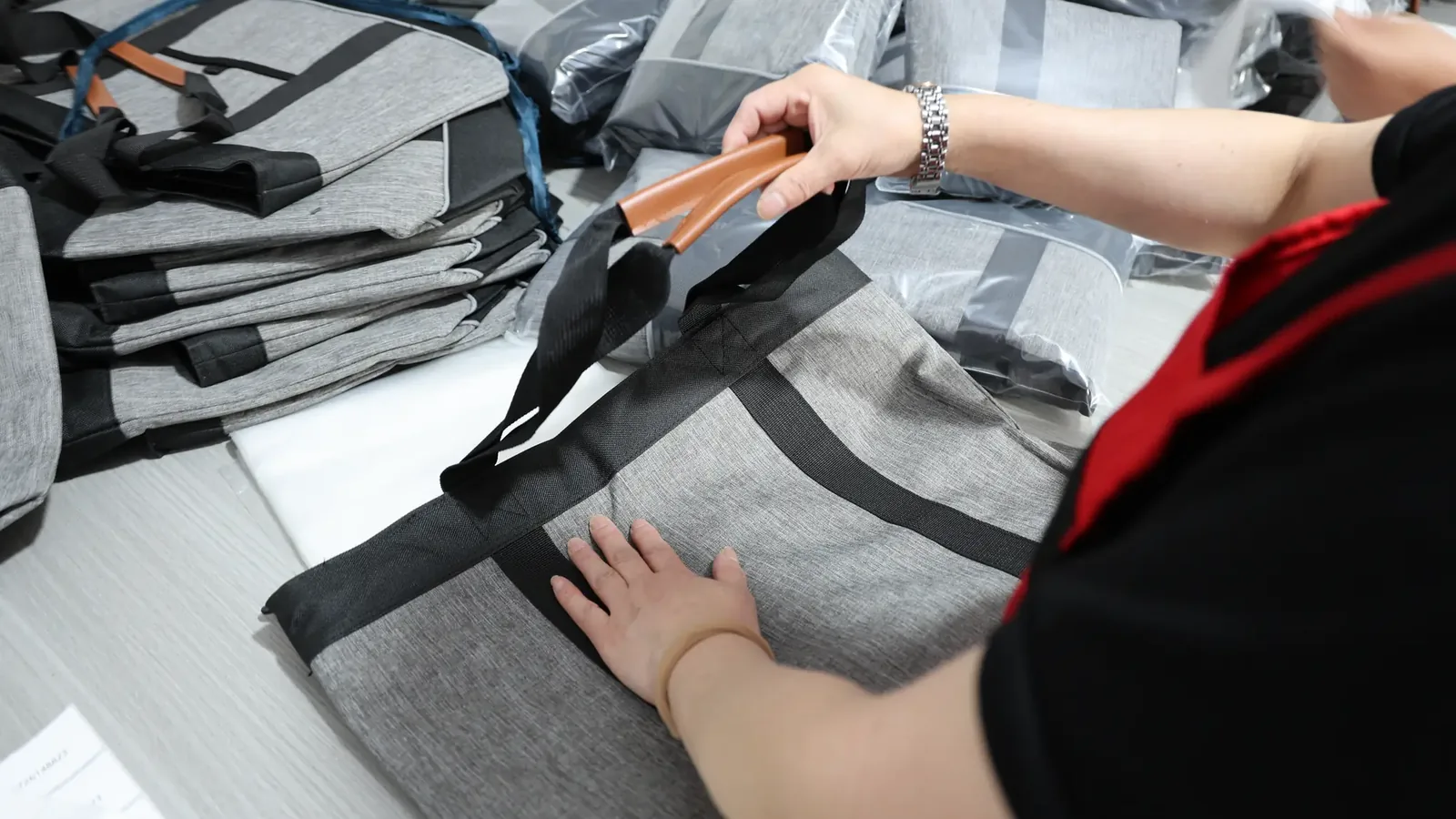
Based on our canvas line records and the four QC checkpoints every bulk order passes through.
A complaint landed on a buyer's desk in March: the totes "felt cheap." The bag was the right size, the logo was the right colour, and the price matched the quote. What failed was the document behind the order, a two page sheet listing quantity, unit price and a delivery date, and nothing else. The same buyer had a second file in her drawer, a spec sheet from an earlier project that ran to six pages and named the fabric, the handle, the print method and four inspection points.
Two sheets, one product, two very different orders. That gap is what this article is about. A bulk canvas tote order is not decided at the price line. It is decided by how much of the bag the spec sheet is willing to describe before production starts.
Two Spec Sheets on the Same Table

The thin sheet reads like a purchase order. It carries the quantity, the unit price, the colour of the bag and the position of the logo. It assumes the factory knows what a canvas tote is and will build a reasonable one. On a first order of a few hundred pieces, that assumption sometimes holds, because the buyer can still catch problems at the sample stage.
The thick sheet reads like a build document. It names the shell fabric and its weight, states whether the canvas is natural or dyed, separates the handle from the body, names the logo method, and lists the checkpoints where someone will stop and look at the goods. It is longer, slower to write, and it removes most of the room for a factory to substitute a cheaper input halfway through the run.
Put them side by side and the difference is not detail for its own sake. Each line on the thick sheet closes a decision that would otherwise be made on the production floor, by someone the buyer never meets. On a large run, those small decisions repeat thousands of times.
Dimension One: What the Fabric Line Actually Locks

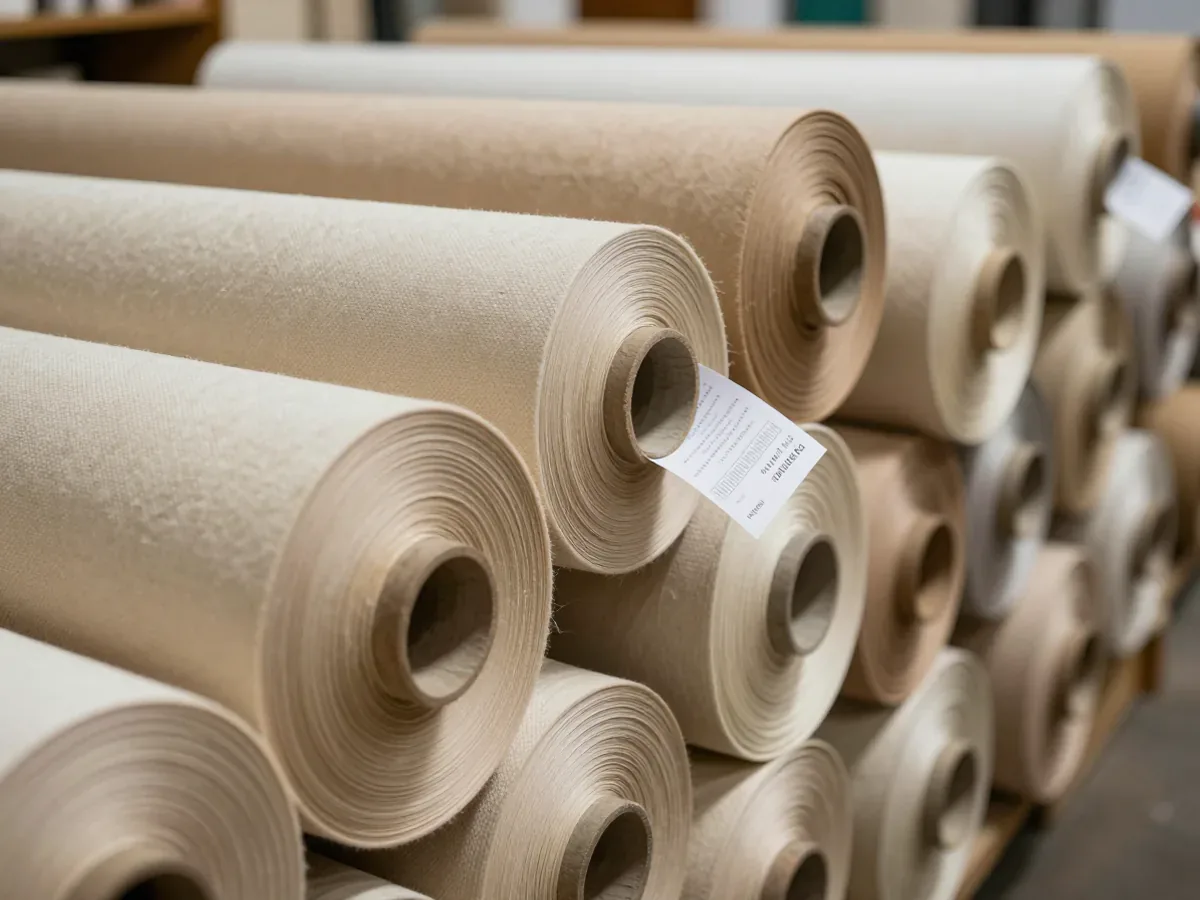
A fabric line does more than name a material. On the canvas line, the body is cotton canvas, supplied natural or dyed, and that single sentence already sets two variables: the fibre and the finish. A thin sheet that says only “canvas” leaves both open, and a factory sourcing rolls in a busy month may answer that opening with whatever is closest to hand.
The shell range in a full bag programme runs wider than canvas: PE, PP woven, non-woven, polyester, nylon, canvas, jute and rPET. That matters because a buyer comparing quotes across suppliers may be comparing different shells without knowing it. One quote says canvas, another says poly canvas, and the unit prices look comparable until the bags arrive at different weights.
Weight belongs on the same line. A heavier canvas holds a printed logo with less show through and stands up better to repeated carrying, while a lighter one folds smaller and ships cheaper. Neither is wrong. What fails is leaving the choice to the factory after the price is agreed, because the cheapest way to protect a quoted price is to move down in weight.
The dye lot is the third piece. Canvas supplied natural and canvas supplied dyed behave differently under print, and a second production run can arrive a shade away from the first. The roll ticket that travels with the fabric carries that information. A spec sheet that asks for it in writing gives the buyer something to check against the delivered goods.
Dimension Two: Handles Are a Separate Choice, Not a Detail

Most thin spec sheets treat the handle as part of the bag. It is not. Handles are woven, webbing or rope, and each one changes how the tote carries, how it wears and how it prints. A woven handle in the same canvas as the body looks continuous and suits a retail bag. Webbing is flatter, stronger at the seam and common on promotional totes. Rope gives a softer grip and a more casual look.
There is also a construction question hiding inside the handle line. On our bags the webbing runs the full length of the body, not only at the handles, so the load travels down the bag instead of pulling on four stitch points. A buyer who writes “canvas handles” on the sheet has not decided whether the strap stops at the top edge or continues to the base. Those two bags look similar on a sample table and behave very differently after a year of use.
Handle length is worth a number on the sheet. A tote meant to hang from a shoulder and a tote meant to be carried in the hand need different drops, and the difference is obvious to the end user within a minute of picking the bag up. Leaving it to the sample room means the first bulk run sets the standard by accident.
Colour is the last handle decision. Natural canvas with a natural handle reads as one object. A dyed body with a natural handle reads as a design choice. Both work, but only if the sheet says which one the buyer ordered.
Dimension Three: The Logo Method Follows the Artwork, Not the Budget
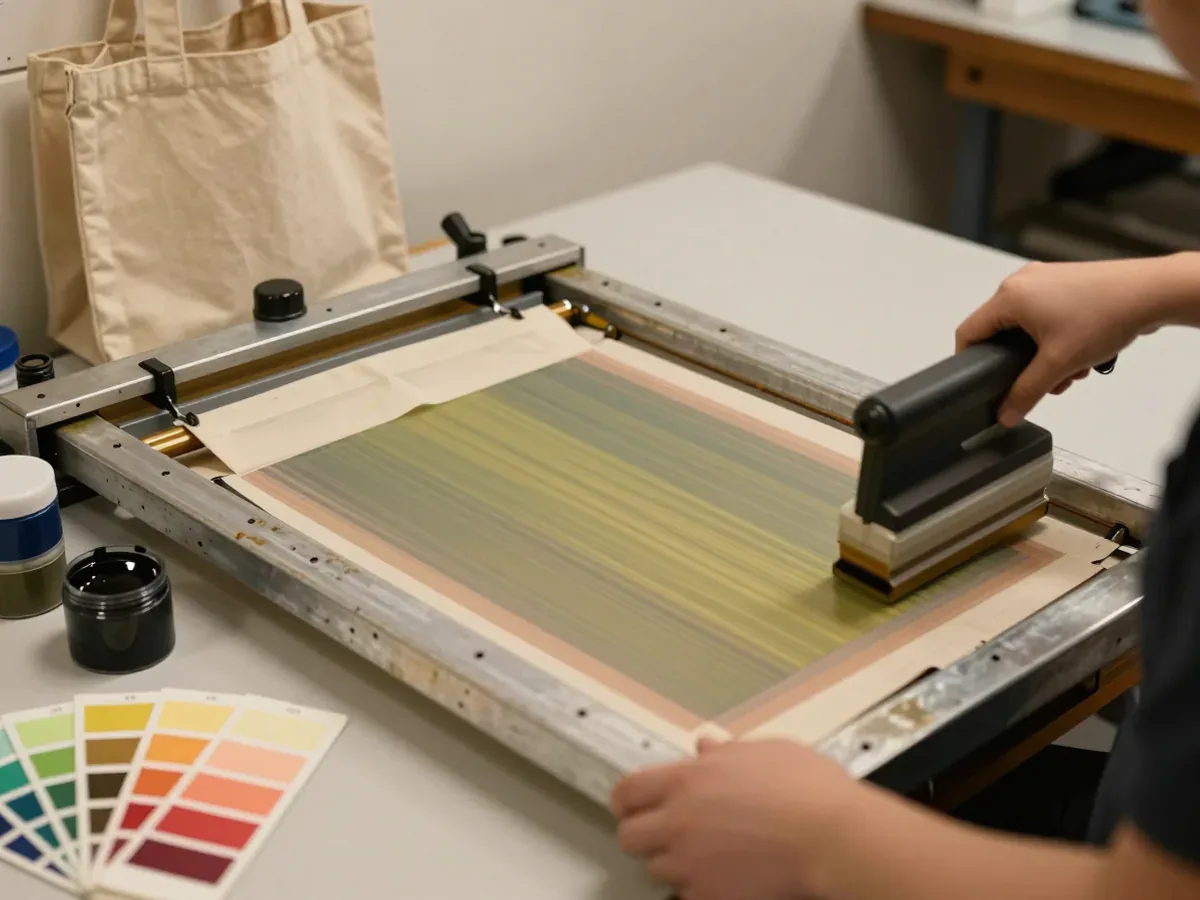
A logo goes on by screen print, heat transfer, or a woven or embroidered label. The choice is usually made in a meeting about cost, and that is the wrong room for it. The artwork decides first. Screen print suits one to three colours, holds up well and is cost effective at volume. Digital and DTF handle full colour and fine detail but cost more per unit. Embroidery gives a premium surface but is limited by thread colour and density.
Colour behaviour sits on top of the method. Bright ink stands out on natural canvas, and dark ink on light fabric reads cleanly. A dark canvas body often needs a white underlayer or a switch to embroidery to keep the logo visible. None of this is exotic, but each point is a line the thin sheet does not have, so the decision drifts to whoever runs the print station.
Placement needs the same treatment. Front centre, top corner and a repeated side logo are the common positions, and each one changes how the bag reads in a photograph and on a shelf. A mockup approved by the buyer before production removes the argument later.
Files belong on the sheet as a requirement, not a hope. Print ready vector files with outlined fonts, and a colour reference checked against a Pantone or a print test sample, give the factory something objective to match. Without that line, “match the logo” means match a screen image, and the first carton becomes the test.
Dimension Four: Where the Four QC Checkpoints Sit on Paper
Every order passes four checks: incoming material, seams and zip, finished bag, and final count. The thin sheet does not mention them, which does not mean they do not happen. It means the buyer has no agreed point at which to stand next to the goods and no shared language for what counts as a pass.
Writing the checkpoints into the sheet turns them into appointments. Incoming material is where the fabric weight and the dye lot get confirmed against the roll ticket. Seams and zip is where the handle attachment and the full length webbing get pulled and inspected. Finished bag is where the logo position, the print colour and the overall shape get compared with the approved sample. Final count is where the carton quantity and the packing list get checked before the container closes.
The value of putting these on paper is not that a factory lacks inspection. It is that a large run has too many units for the buyer to inspect by eye at the end. Four named checkpoints spread the looking across the run, so a drifting print colour is caught on the first thousand rather than discovered on the last.
A sample batch system belongs in the same section. Pre-production samples approved for fabric, stitching and printing give every later checkpoint a reference object. Without that approved sample, each inspector is judging against memory.
Who Each Sheet Suits
The thin sheet suits a repeat order with a supplier who has already built the same bag, where the fabric, handle and print are settled and only the quantity changes. It also suits a small first run where the buyer plans to attend the sample approval in person and accepts that the bulk may vary in small ways.
The thick sheet suits a first bulk order, a run split across several delivery dates, and any order where more than one person inside the buyer’s company will judge the result. It also suits a buyer working through a trading company, because the sheet travels with the order and describes the bag to people who never saw the sample.
Most large canvas tote orders land in the second group. The bag is simple enough that everyone assumes it needs no description, and that assumption is exactly where the gap opens.
The Decision Table a Buyer Can Carry Into the Meeting
| Decision | Thin sheet says | Thick sheet says | Choose the thick line when |
|---|---|---|---|
| Shell fabric | Canvas | Cotton canvas, natural or dyed, with weight and roll ticket | The order runs past one production batch |
| Handle | Canvas handles | Woven, webbing or rope, with drop length and full length webbing | The bag will be carried loaded |
| Logo method | Printed logo | Screen print, heat transfer, or woven or embroidered label, chosen against the artwork | The artwork has more than three colours or fine detail |
| Colour reference | Match logo | Pantone or print test sample approved before bulk | More than one person will approve the result |
| QC points | Not stated | Incoming material, seams and zip, finished bag, final count | The run is too large to inspect at the end |
| Sample | One photo | Pre-production sample approved for fabric, stitching and printing | The supplier has not built this bag before |
The table is not a scoring system. It is a way to see which lines the thin sheet leaves blank, and whether any of those blanks sit on a decision the buyer actually cares about.
What to Do With the First Carton
Open the first carton before the rest of the run ships, and open it against the sheet rather than against memory. Weigh one bag and compare it with the fabric line. Pull the handle seam and check whether the webbing stops at the top edge or runs the full length of the body. Hold the logo at arm’s length and then close up, checking position and colour against the approved sample. Count the carton and match it to the packing list.
Then write down what the carton proved and what it did not. A first carton check confirms the fabric, the handle construction and the print. It does not confirm the behaviour of the bag after a season of use, and it does not confirm that later cartons will match the first. Those two questions belong to the checkpoints written into the sheet, which is the reason to put them there before the order starts rather than after the complaint arrives.
FAQ
Does a larger canvas tote order change the fabric choice?
It can. A large run may be split across more than one roll or batch, so the dye lot and the weight need to be written down and checked at incoming material. The fibre choice itself usually stays the same.
Can the handle material be decided after the sample is approved?
It can be changed, but not without cost. Woven, webbing and rope handles attach differently and change the seam construction, so a late switch usually means a new sample and a new approval.
How many logo methods can one bulk canvas order carry?
More than one is possible, for example a screen printed front and a woven label at the side. Each method adds its own approval step, so the sheet should name every method and where each one sits.
What should the first carton check cover on a large canvas run?
Fabric weight against the sheet, handle attachment and webbing length, logo position and colour against the approved sample, and the carton count against the packing list.