Drawn from legacy TIIOCTI bag-structure notes and the tote and moving-bag spec sheets, reorganised around what a buyer can check on a sample.
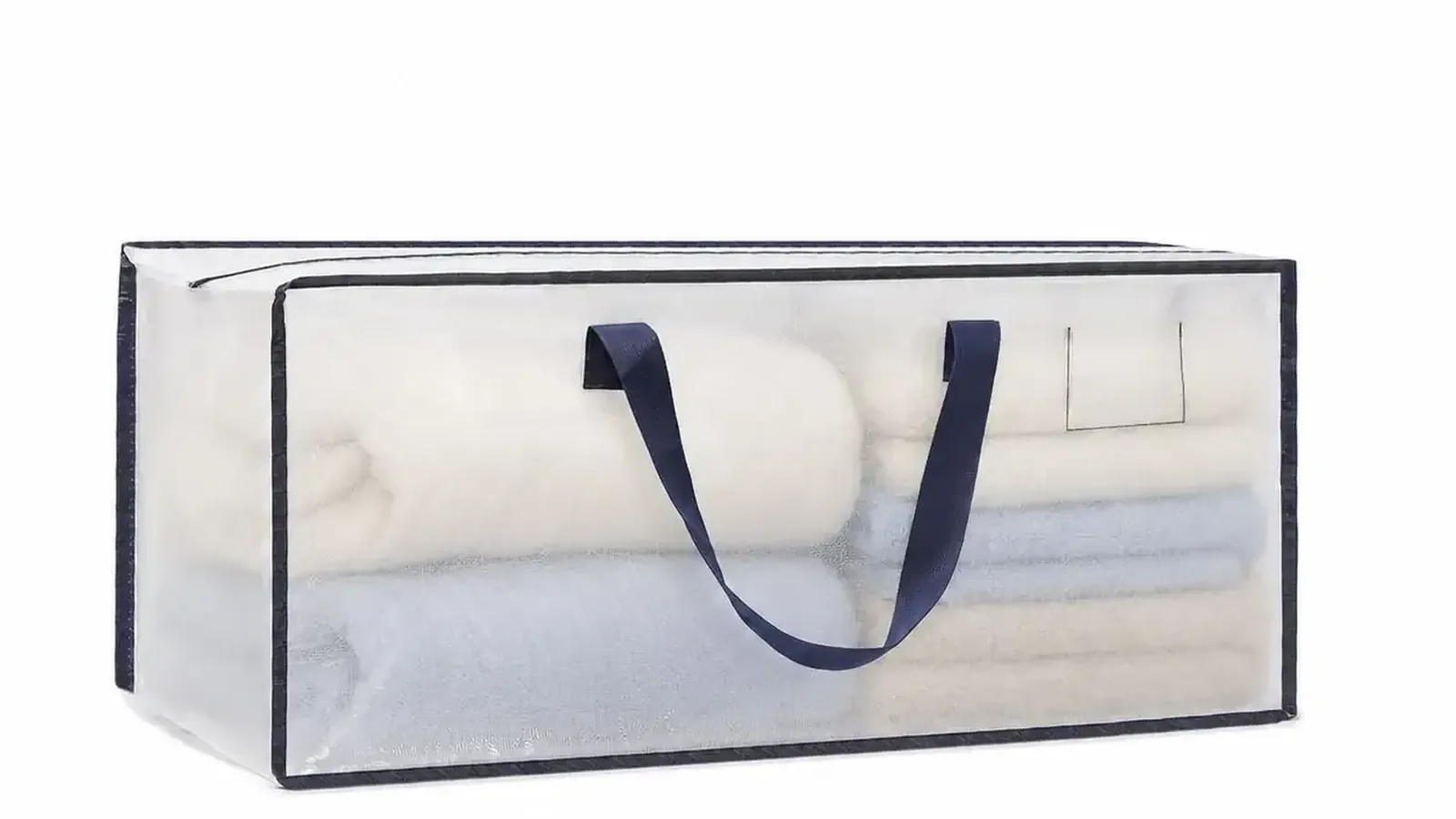
A buyer sent a flat drawing to three suppliers last spring and asked each one to quote a 15 by 16 inch tote. All three quotes came back on the same panel size. When the samples arrived, one bag swallowed a folded hoodie and a water bottle, one took the hoodie only, and one refused to close over both. The drawing had not lied. It had simply left out the part of the bag that holds anything at all.
The habit behind that surprise is common: treat height and width as the whole specification, and let the factory decide the rest. It looks efficient on a purchase order and it keeps the quote comparison simple. It also hides a third of the capacity, most of the load path and a good share of the sewing labor inside a dimension nobody wrote down.
The flat drawing that makes every bag look equal
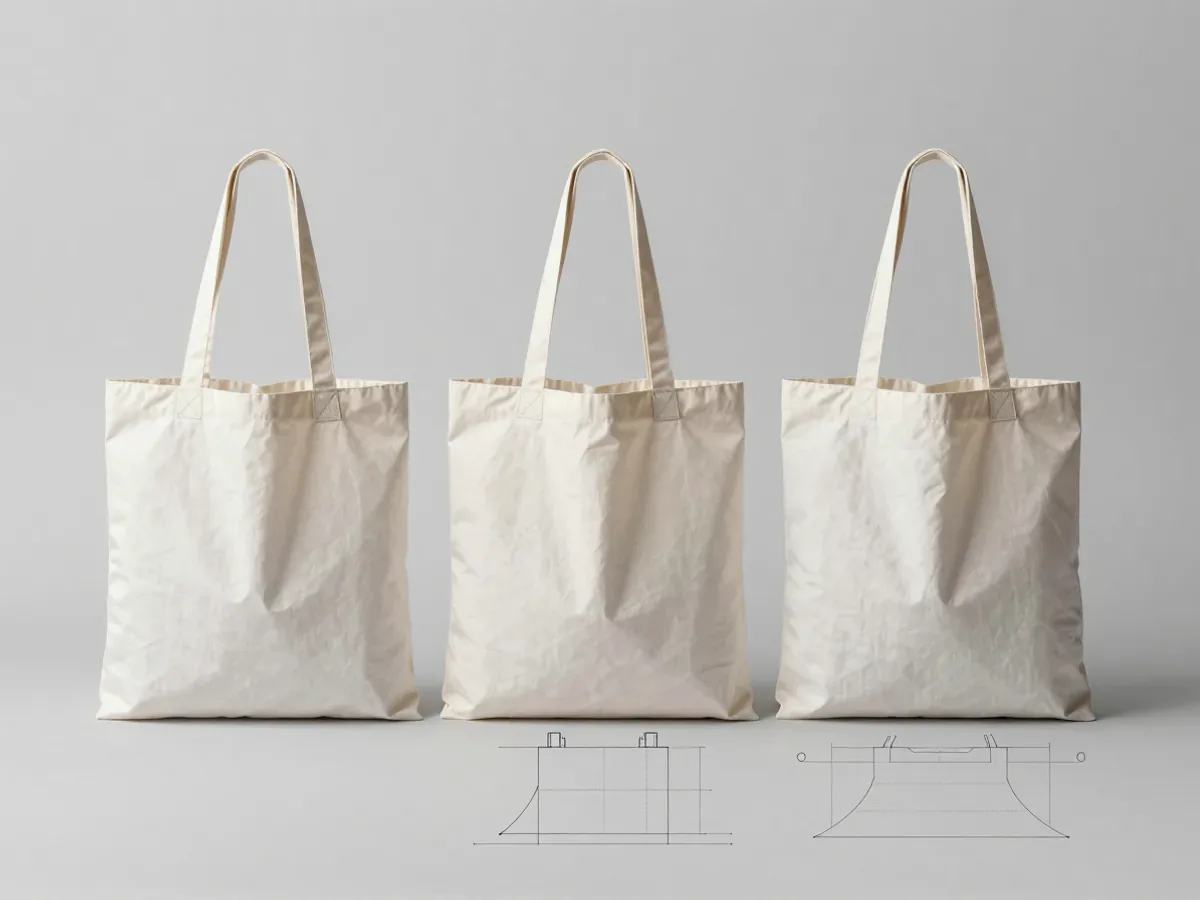
A flat bag is two panels joined on three sides. It holds its contents in a single plane and lies flat when empty, which is why it ships by the thousand in compact cartons and prints cleanly on both faces. Nothing about that outline shows depth, because there is none to show.
Set a side gusset bag and a bottom gusset bag next to it on the same drawing and the outline barely changes. The side gusset appears as two narrow strips at the left and right edges. The bottom gusset appears as a band along the base. At small scale both read as trim, not as structure.
That is how three different bags end up sharing one drawing. The buyer compares panel size, the suppliers quote panel size, and the expansion that decides what the bag can carry never enters the conversation until a sample is in someone's hands.
Why the same panel size feels like a fair comparison
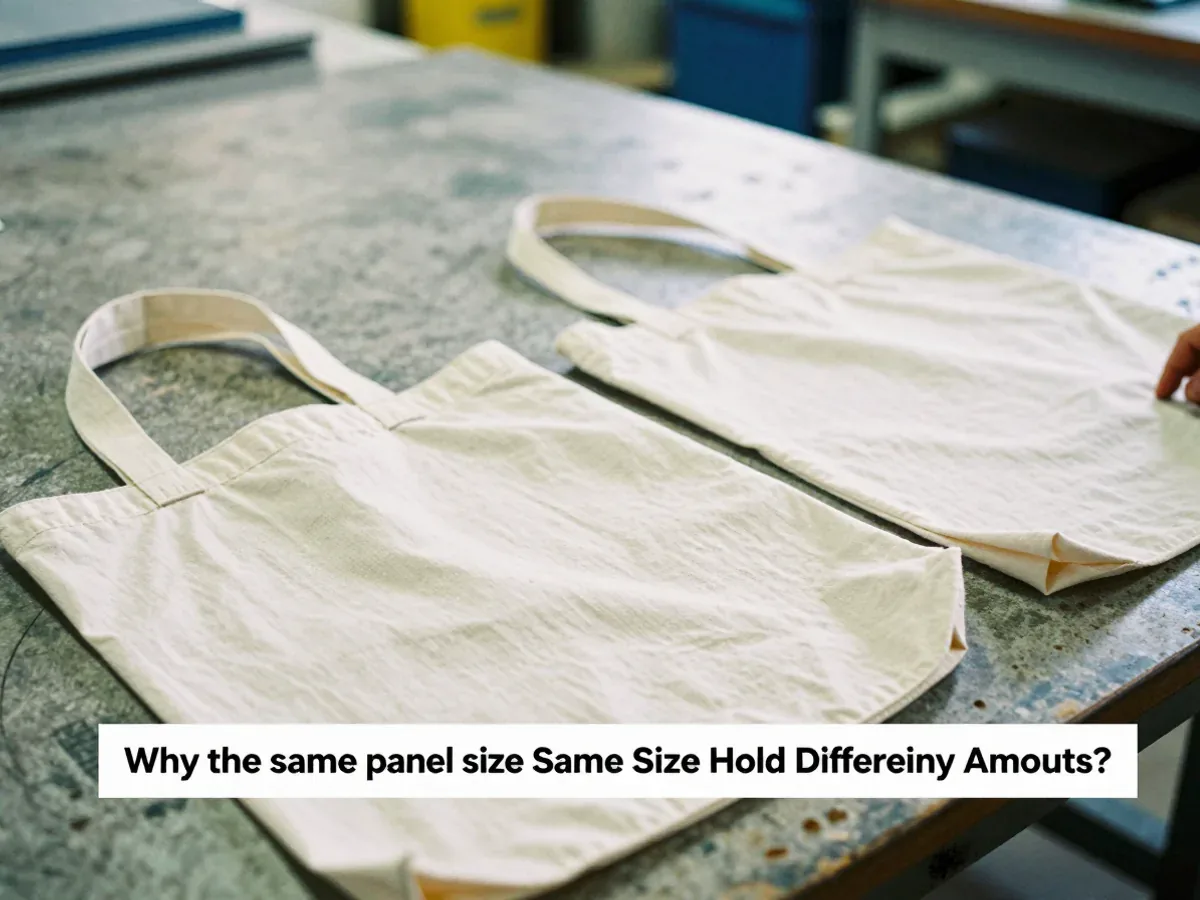
Height and width are the numbers a buyer can measure with a tape and check against a shelf or a shipping carton. They are also the numbers that appear on every stock bag listing, so comparing two quotes on those figures feels neutral and verifiable.
Depth behaves differently. A four inch gusset is not a fourth side of the bag in the way height and width are sides. It is a fold, and folds are described in language that varies by supplier: gusset depth, expansion, bellows, base width. Two quotes can carry the same depth figure and still describe different constructions.
The comparison stays fair only while the bags are flat. Once contents go in, the panel size stops predicting the result. A tote with identical height and width can differ in capacity by a third depending on what happens at the edges and the base.
Where the missing third of capacity actually goes

The arithmetic is simple once the depth is on the table. Adding a four inch bottom gusset to a 15 by 16 inch tote adds roughly 60 cubic inches of volume per bag at the same panel size. The panel did not grow. The base opened downward and gave the contents somewhere to sit.
A side gusset of the same depth adds more, because both sides expand. The bag gains a rectangular cross section, so the volume grows along two axes instead of one. That is why a grocery carry program can move from a flat sleeve to a side gusset bag without changing the printed face.
Capacity is only half of what the depth decides. A bottom gusset creates a wide, stable base that lets the bag stand upright on a table or shelf and present its printed face even when empty. A side gusset bag stands after filling but tends to slump before it. A flat bag lies down and stays down.
The seam that carries the load nobody specified
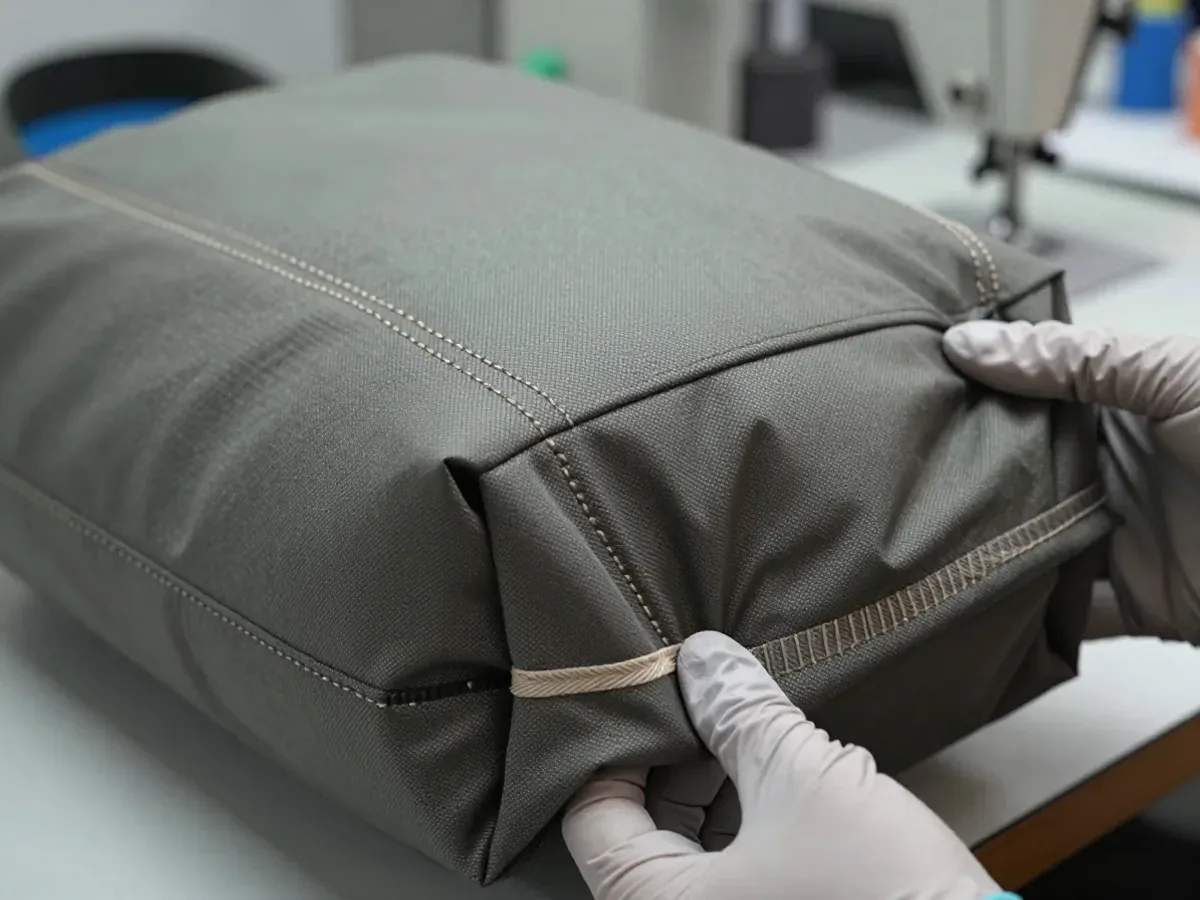
Every gusset is built from seams, and seams are where bags fail. A flat bag tears at the corner seams under a square load. A side gusset stresses at the gusset fold, where the fabric turns through a tight radius. A bottom gusset concentrates load on the base seam, which takes the full weight of the contents every time the bag is lifted.
A gusset specified by depth alone can be built in weights that fail the program's real loads. The depth number says how far the bag opens. It says nothing about thread, stitch density, fold construction or base reinforcement, and those are what decide whether the seam survives a full bag.
Heavy duty programs solve this in different ways. One common approach pairs the bottom gusset with a removable board that spreads load across the base and keeps the seam from taking a point load. The board adds a component and a packing step, and it changes how the bag folds for shipping.
Construction method matters as much as depth. Folded and stitched gussets behave differently from glued or welded ones, and non-woven materials usually call for welding rather than stitching. A quote that lists a depth but not a method has not specified the bag yet.
What to write on the order instead of a depth alone
A gusset specification needs three numbers and a statement. The first number is the gusset depth in inches or centimeters. The second is the construction method: folded and stitched, glued, or welded for non-wovens. The third is the base reinforcement, if any, including whether a board is inserted and at what thickness.
The statement is the load the bag must carry at the gusset. Write it as a working weight with contents described, not as a vague durability claim. A gusset built to hold a folded shirt and a gusset built to hold two bottles of wine use the same depth figure and different everything else.
Print layout belongs in the same conversation. Gussets move the printable panels and change how a logo reads across the structure, so the artwork is re-approved together with the structure sample rather than before it. A proofed print file approved against a flat bag will not sit the same way on a bag with a four inch base.
Packing and carton marks also shift with structure. A bottom gusset bag folds differently from a flat bag, so the polybag and carton configuration is agreed before production, with carton marks set per store, per listing or per pallet as the program requires.
How to read a gusset sample before the run
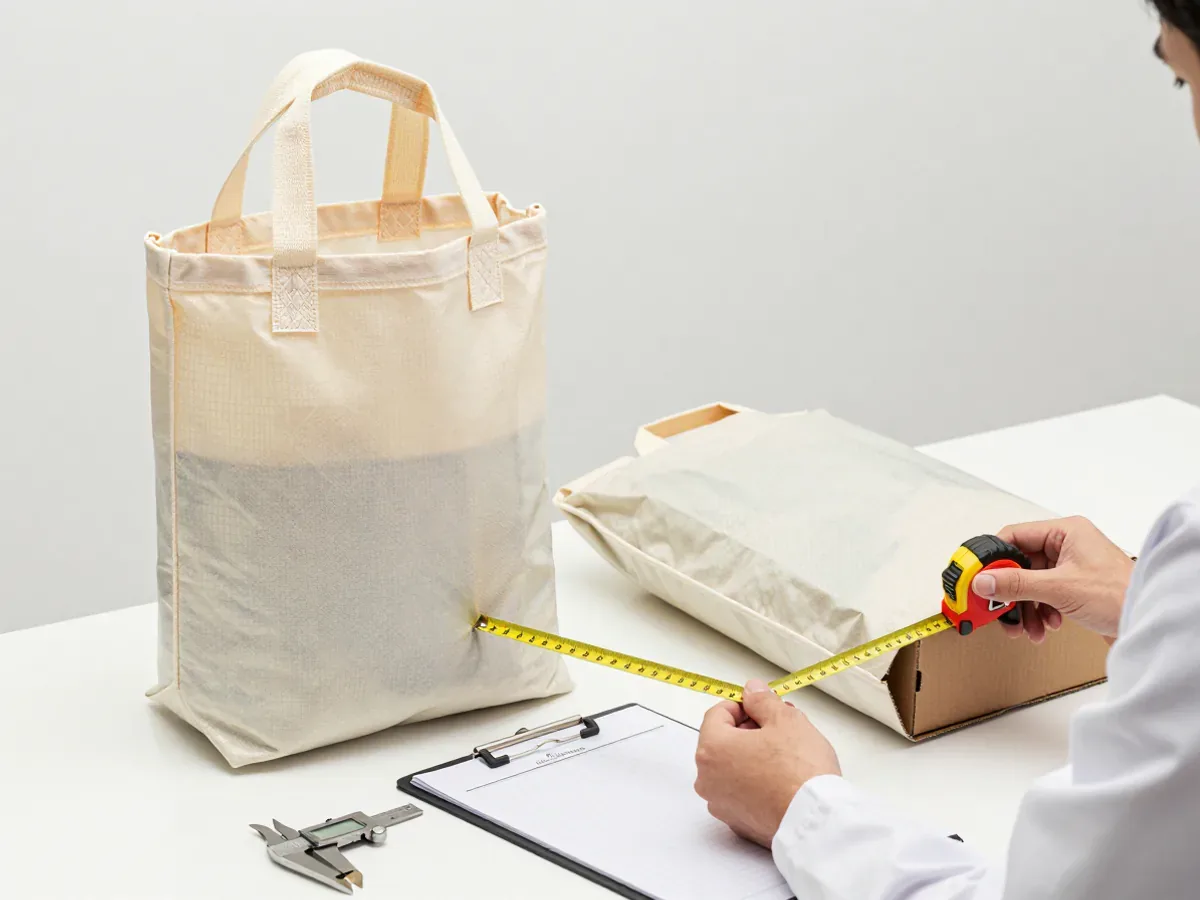
The sample round is where the specification gets tested, and one round is normally enough for a new size if the sample is read properly. Open the bag fully and measure the depth at the base and at both sides. A gusset that measures short when open will measure shorter under load.
Fill the bag to the stated working weight and lift it by the handles several times. Watch the base seam and the gusset fold rather than the handle attachment. Then set the filled bag down on a flat surface and check whether it stands. A bottom gusset bag that leans has a base seam or board problem, not a design problem.
Fold the empty bag back to its shipping state and compare the folded thickness against the carton plan. A deeper gusset adds bulk even when the panel size is unchanged, and a carton sized for a flat bag will not close on a gusseted one.
Check the print against the approved artwork on the actual structure, including how the logo crosses the gusset fold. Then confirm the batch test routine covers seam strength, pull and bar tack, since those are the checks that catch a gusset built too light for its load.
FAQ
Does adding a gusset mean the artwork has to be approved again?
Yes. Gussets move the printable panels and change how the logo reads across the structure, so the print layout is re-approved with the structure sample. The proofed artwork file stays the same; the placement on the bag does not.
Which structure stands upright on a shelf when the bag is empty?
Bottom gusset bags. The wide base lets them stand and present the printed face even when empty, which is why gift and boutique retail prefer them. Side gusset bags generally need contents before they hold their shape.
Can a bottom gusset be added to an existing flat bag without changing the panel size?
The panel size can stay the same, and the bag gains roughly 60 cubic inches on a 15 by 16 inch tote with a four inch gusset. The construction changes, though: new seams, a different fold, a new sample round and a fresh print check on the revised structure.