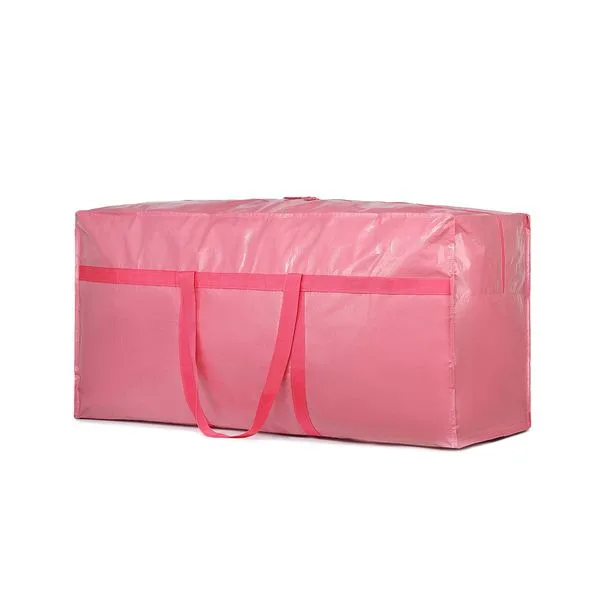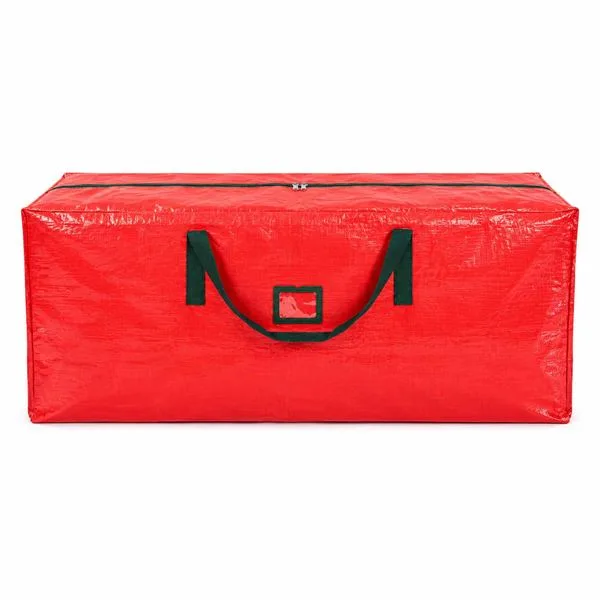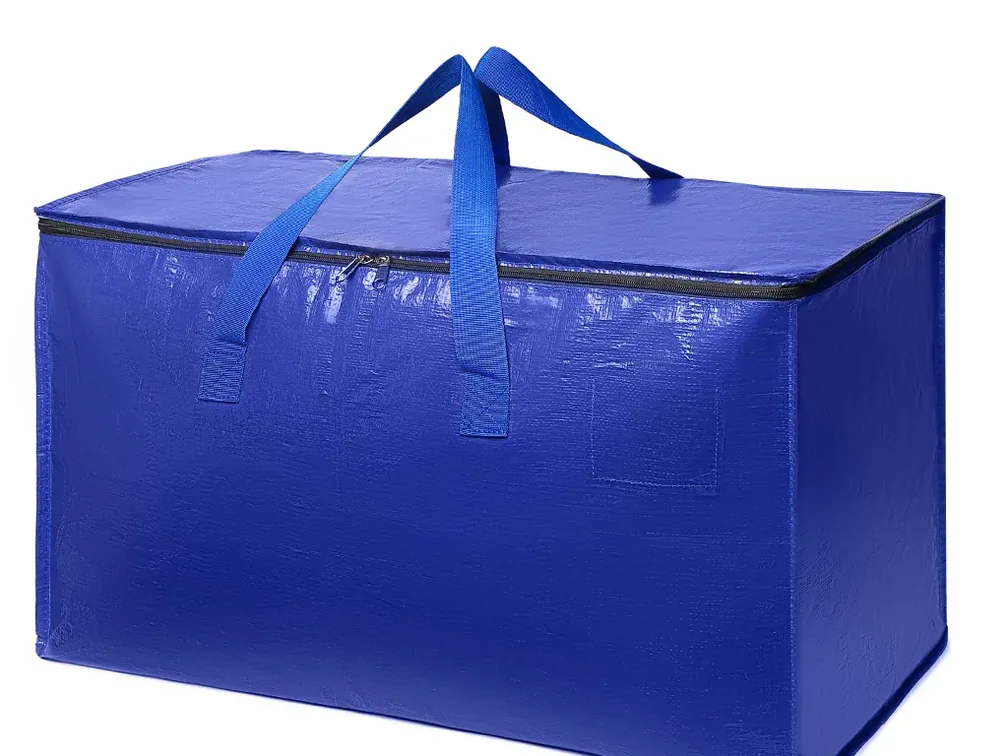
Built from a fleet tote purchase order and the factory checks behind each line.
A carton label on the loading bay read "90 gsm woven PP, side print, 120 mesh" while the purchase order stapled to the same pallet said only "custom logo tote bags, blue, 5,000 pcs." The gap between those two documents is where fleet logos go to die, and it showed up on a Tuesday morning before anyone had signed the shipping release.
That buyer had approved a logo, a bag, and a price. What she had not approved was a set of numbers that would survive contact with a sorting line, a stack of pallets, and a year of weekly reuse. The spec sheet is the only place those numbers can live. Here is how the lines should read, and why each one decides whether the logo is still legible at year three.
The Line That Starts Every Fleet Order: Fabric and Weight
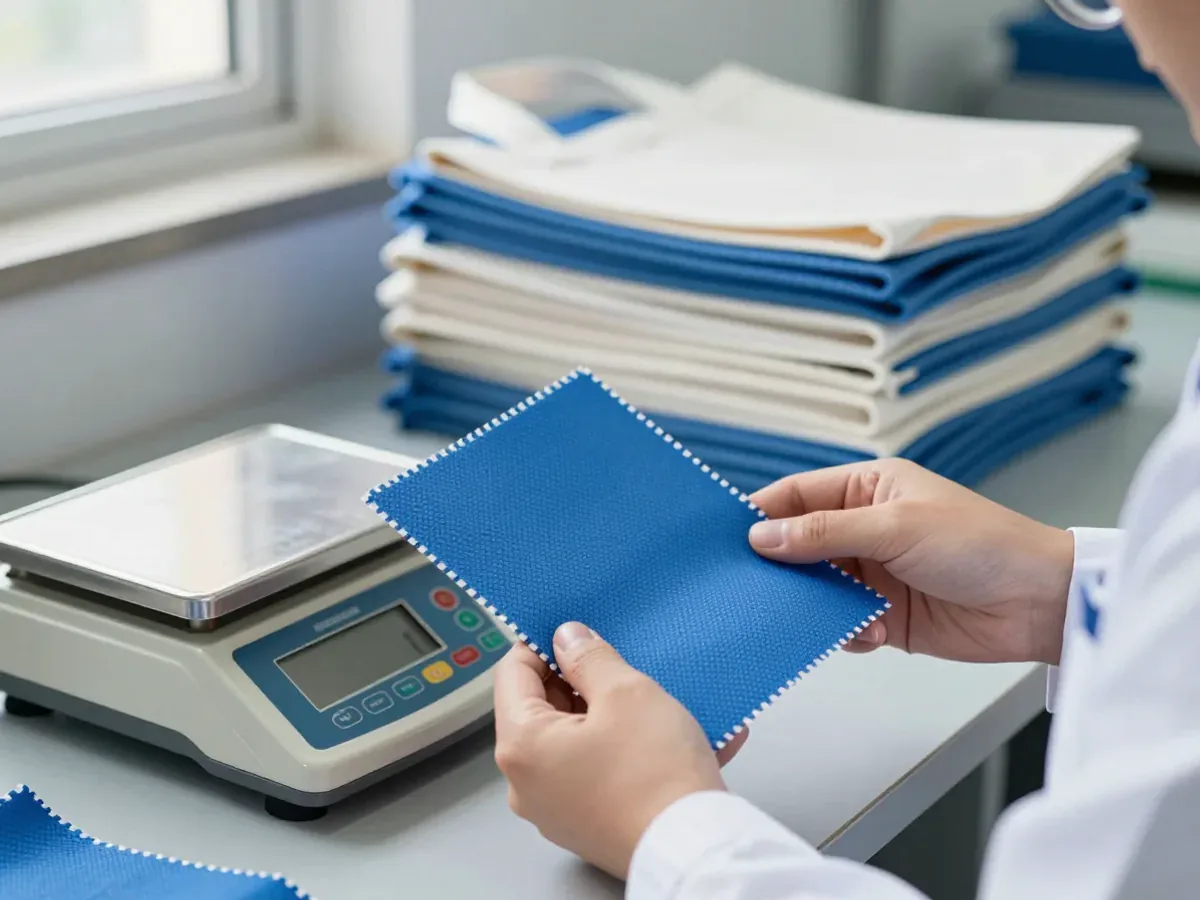
The first line on any fleet tote order should name the substrate and its weight in the same breath. "Woven PP, 80 to 100 gsm" is a spec. "Woven PP" alone is a wish. Weight and weave density control how much ink the surface holds, and they do it more reliably than the ink brand does.
Below 80 gsm, the material flexes too much under load and ink cracks within roughly 200 cycles. That number is fine for a giveaway bag that lives in a drawer. It is not fine for a bag that gets dragged across concrete every week. Non-woven above 100 gsm reduces wicking but still fades faster than woven PP at the same weight, which makes it acceptable only when each bag sees fewer than about 50 reuse cycles.
Woven PP in the 80 to 100 gsm band is the cost and longevity sweet spot, provided the print sits on side panels and stays off the base. In controlled environments, legible logos hold past 500 cycles at that weight. Oxford changes the arithmetic. Above 400D, heavy denier resists abrasion, but coating matters more than thickness. Uncoated Oxford absorbs UV heat and accelerates binder breakdown in screen inks, so the line should read PU coated, not just 600D.
Verification is a scale and a swatch card. Ask for the measured gsm on the lot, not the nominal figure on the quote. A 90 gsm bag that arrives at 78 gsm was never the bag in the spec.
Print Method and Ink Curing: What the Spec Must Pin Down
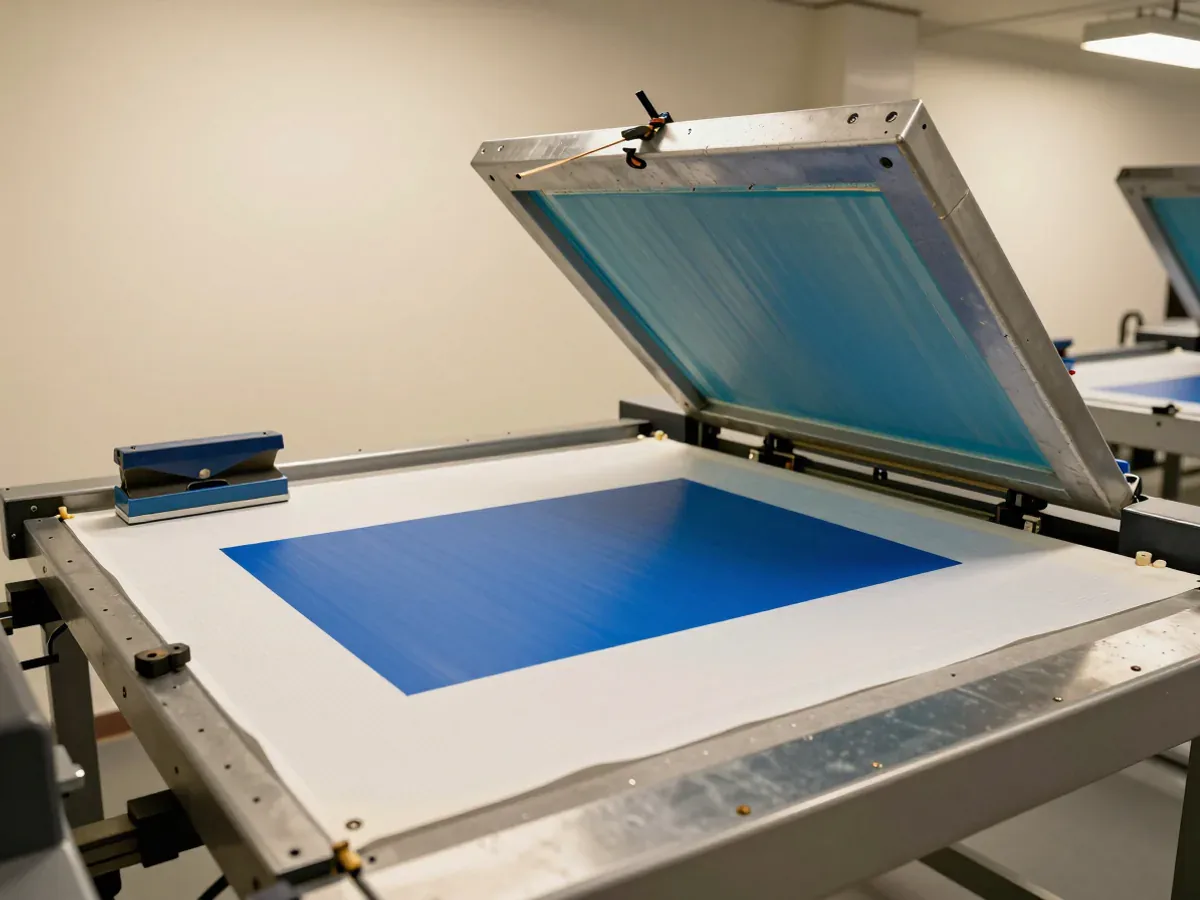
The method line should name the process, the mesh count, the ink type, and the cure schedule. Screen printing on woven PP with a 120 mesh screen deposits an ink layer roughly 0.3 to 0.5 mm thick, and that layer bonds into the fiber matrix rather than sitting on top of it. Heat transfer film presses at 160 to 180°C and works well on smooth surfaces, but it has no mechanical bond. In scuff tests, screen printing outlasts heat transfer by about three times.
Curing is the line most quotes omit. A solvent based ink cured at 150°C for five minutes with a minimum ink thickness of 0.4 mm is a schedule a factory can be held to. Without it, the same ink can pass a fingernail test on Monday and peel after three sort cycles in a humid cross dock.
Verification happens at two points. Ask for the cure parameters in writing before the run starts, and ask for a peel check on the first article. A 90 degree peel on a cured sample tells you more about the next 500 cycles than any brochure.
Placement: The Line Most Buyers Leave Blank
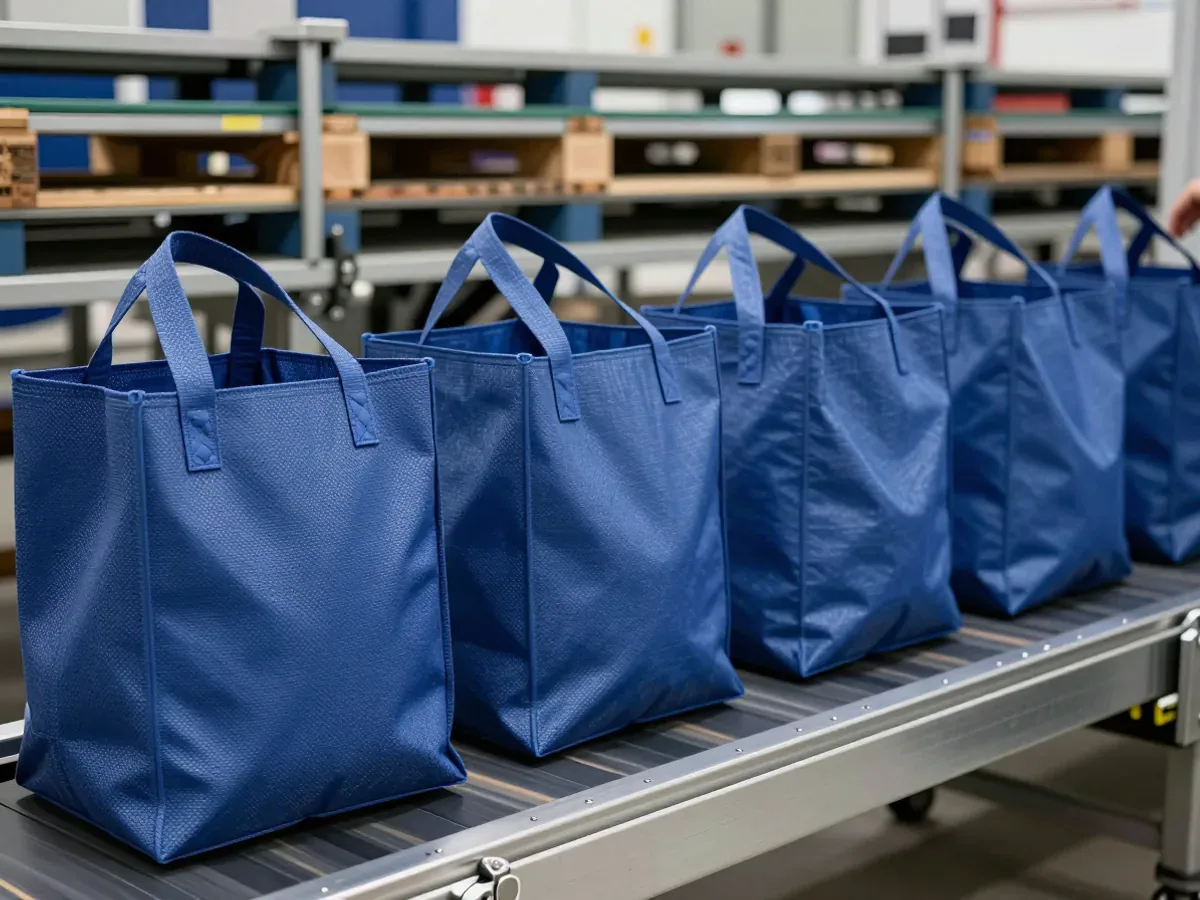
Placement is the spec line that decides whether the other lines matter. Logos on side panels last roughly three times longer than base or top edge prints in automated sorting lines where totes are stacked and slid. Side panels see minimal contact with conveyor belts, rack edges, or adjacent bags, and the flat face stays exposed even when totes are nested.
Base prints look logical because the base is the biggest continuous surface. In stack loading, though, the base of each bag carries the weight of the bag above, and that contact pressure grinds ink into the fabric. Top edge prints catch on shelving, sorting flaps, and other bags' handles, and heat sealed seams can lift printed ink entirely.
The spec line should read "side panel, centered, maximum 5 mm placement shift" and nothing vaguer. Verification is a pre-production photo with a ruler in frame, taken square to the panel. If the print drifts past 5 mm, the logo reads as crooked on every bag in the pallet, and no color match saves it.
Handles and Bar-Tack: Where Print Distortion Begins
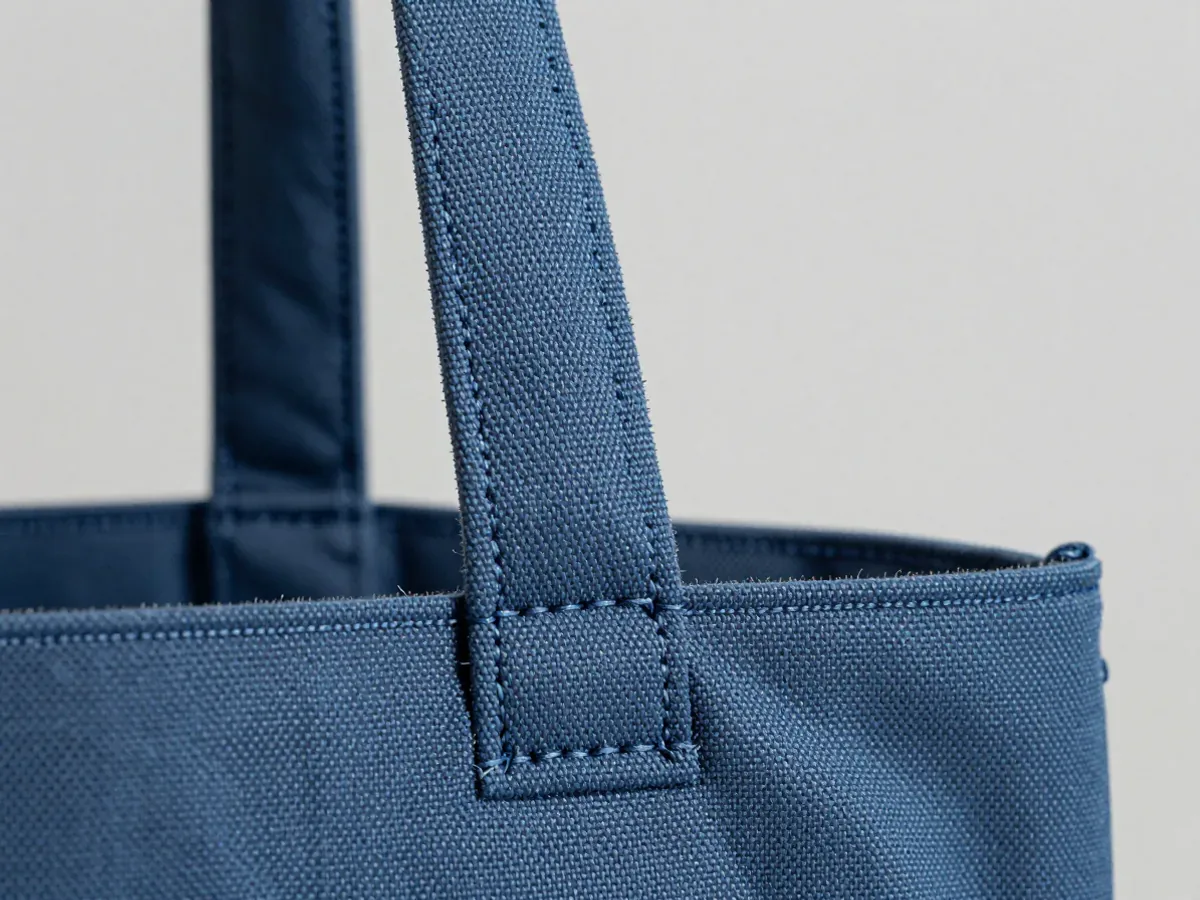
Handle construction sits two lines below placement on most spec sheets, and it should sit closer. Handles are woven or webbing and stitched through the body, wrapped and double stitched at the join. Bar-tack reinforcement at the handle root cuts print distortion and blowout risk by about 40 percent compared with single needle sewing.
The reason is mechanical. A single needle join flexes under load, and that flex travels into the panel beside it. Any logo printed near the handle gusset distorts as the stitching stretches. Handle gusset prints show measurably more cracking than side panel prints over the same cycle count.
The spec line should name bar-tack explicitly and place the logo at least a handle width away from the gusset. Verification is a pull test on the handle root and a visual check that the bar-tack sits under the webbing, not beside it. Every batch should be tested for seam strength and bar-tack rather than inspected by eye, and the spec sheet is what gives that test a pass mark.
Color Tolerance and Overrun: Numbers That Prevent Arguments
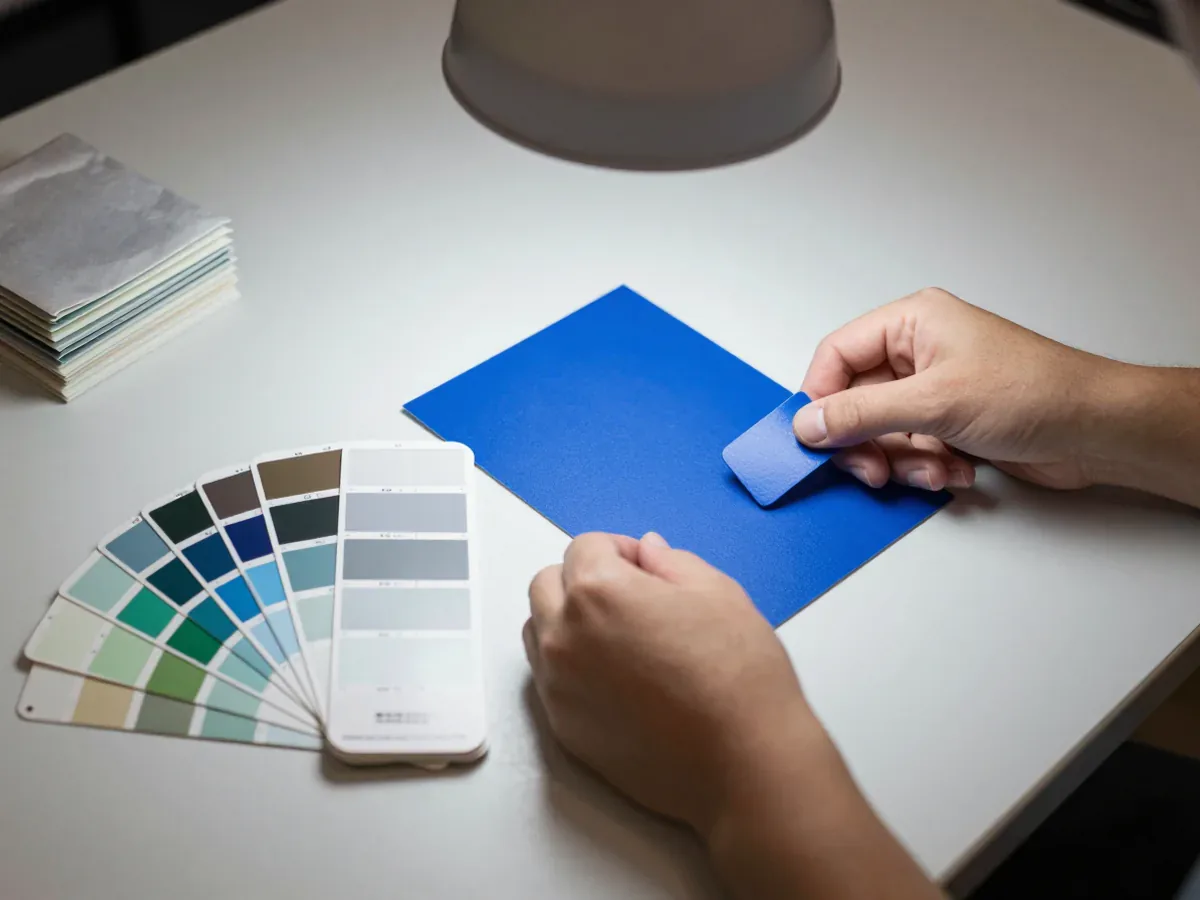
Two numbers belong on every fleet order, and both get left off because they feel like details. The first is color variance. A line reading "Delta E ≤ 3 against the approved PMS chip" turns a subjective argument into a measurement. On 80 to 120 gsm woven PP, direct factory orders can match PMS numbers without downgrading the material to hit a print spec, which keeps a fleet's blue consistent across a 500D Oxford and a 90 gsm woven bag in the same program.
The second number is overrun. A 2 percent overrun at no charge is standard factory policy on many runs, and it protects the buyer when a few bags fail the finished check. Without that line, short counts get resolved by negotiation after the fact.
Verification is a color chip comparison under the same light source the buyer will use, plus a count at packing. Both checks take minutes and settle disputes that otherwise run for weeks.
The Line That Slips Through: Pre-Production Proof Approval
The last line on the sheet is the one that gates everything above it. Screen print, heat transfer, and woven labels should all be proofed before production, and the proof should be a pre-production photograph delivered within three working days rather than a physical sample shipped by courier. A photo is enough for color check and placement check, and a factory that cannot produce one inside three days is either understaffed or sourcing from a subcontractor.
The proof line should state what the photo must show: the full panel, a ruler for scale, the PMS chip in frame, and the handle root. Approval in writing closes the loop. Everything after that is execution against a document instead of a memory of a conversation.
What the Finished Check Should Confirm
The finished bag check reads dimensions, handles, logo, and stitch density by hand, and every order runs four QC checkpoints before it ships. Those checkpoints only mean something if the spec sheet gave them targets. A checker who has "blue logo, side panel" has nothing to compare against. A checker who has "PMS 294C, Delta E ≤ 3, side panel centered, 5 mm shift max, bar-tack at handle root" has a decision to make on every bag.
The structure line belongs here too. A reinforced base, handles stitched through the body, and a flat folding body are what let a fleet tote stack and fold without stressing the print zone. PP and PE shells resist splashes, but the seams are stitched rather than sealed, so no spec line should promise waterproofing the construction cannot deliver.
FAQ
Is 80 to 100 gsm woven PP enough for a fleet tote, or do we need Oxford?
It depends on abuse. Woven PP at 80 to 100 gsm holds legible logos past 500 cycles in controlled environments when the print sits on side panels. For bags dragged across concrete or stacked under heavy loads, 600D or 900D Oxford polyester gives better tear and surface durability, with PU coating specified for UV protection.
Can the logo go on the base if the bags are stacked on pallets?
Base prints carry the highest failure rate in stack loading. The base of each bag bears the weight of the bag above, and that pressure grinds ink into the fabric within a few hundred cycles. Side panels stay exposed even when totes are nested, which is why they last roughly three times longer in sorting lines.
What color tolerance should be written into the spec?
Delta E ≤ 3 against the approved PMS chip is a workable starting point for most fleet programs. Pair it with a defined light source for comparison so the buyer and the factory are judging under the same conditions.
Is a physical sample needed, or is a pre-production photo enough?
A pre-production photo within three working days covers color and placement checks for most fleet orders. Ask for the full panel, a ruler for scale, and the PMS chip in frame. Reserve physical samples for new constructions or logos with fine detail that a photo cannot resolve.