Drawn from the archived artwork setup article and the current canvas tote specification, reorganised around the two proofing routes buyers actually choose between.
A sample came back from a retail buyer last spring with a note clipped to the handle: the logo sat two millimetres too close to the side seam, and the red had drifted toward orange under the shop lights. The factory had already cut fabric. The note arrived after the screens were burned, which meant the correction cost a second round of everything.
Two folders sit on the merchandiser's desk that same week. One holds a digital proof, a layered PDF with Pantone callouts and a bleed line marked at three millimetres beyond the trim. The other holds a sewn tote bag made to the bulk spec, handle stitching reinforced, label attached. Only one of them can release the line, and the order of approval decides how much the second one costs.
Two folders land on the desk, and only one of them can go to the line
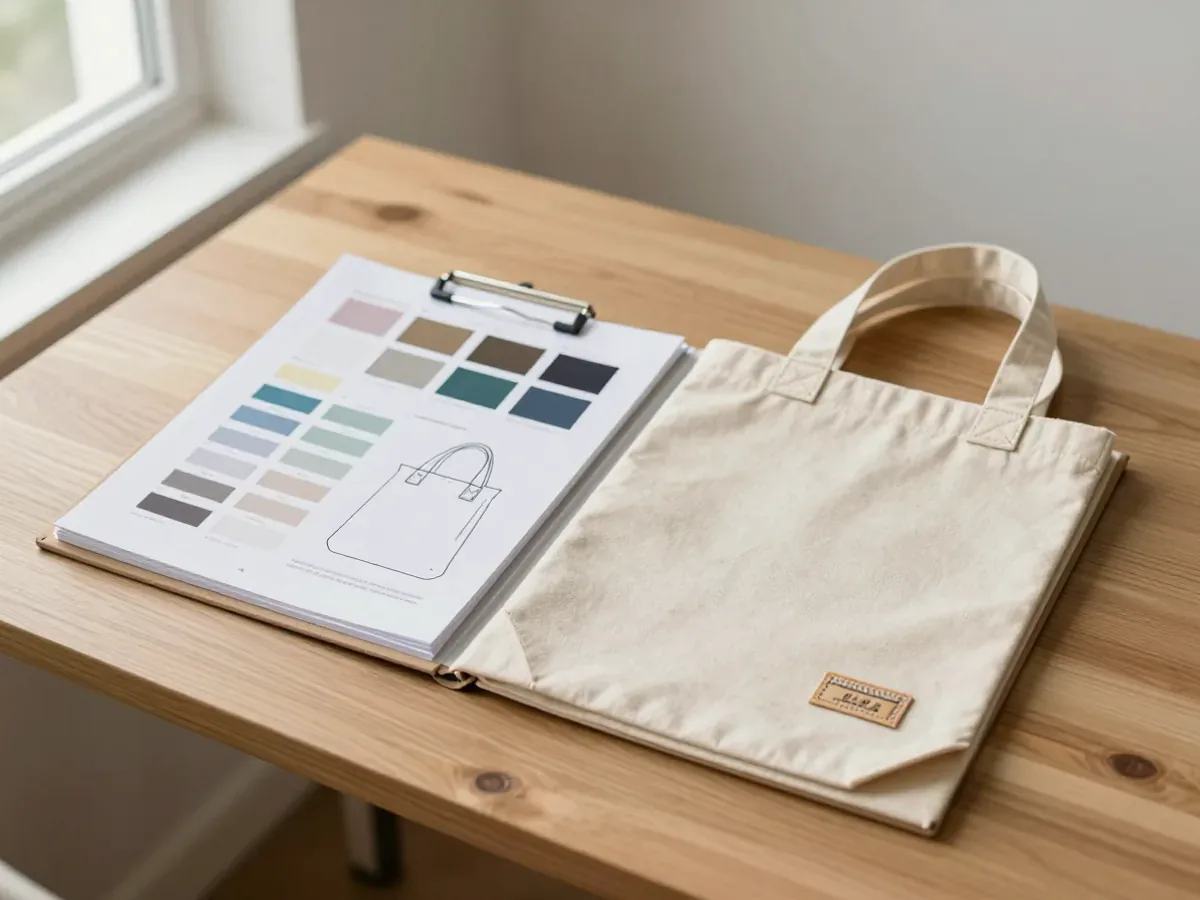
The digital proof is a document. It carries colour references, print position relative to seams, and a resolution check on every raster element. A factory can return it within a day of receiving artwork, and the buyer can mark it up without any fabric leaving the roll.
The physical sample is an object. It carries the weight of the canvas, the hand of the print after heat transfer, the way the handle stitching pulls when the bag is loaded. It arrives later, and it costs more to produce, but it answers questions the PDF cannot.
Neither folder is the final gate on its own. The proof settles what will be printed. The sample settles what will be worn, carried and inspected at the store. The decision is which one the buyer signs first, and that depends on what the order is actually testing.
What a digital proof can settle before any fabric is cut
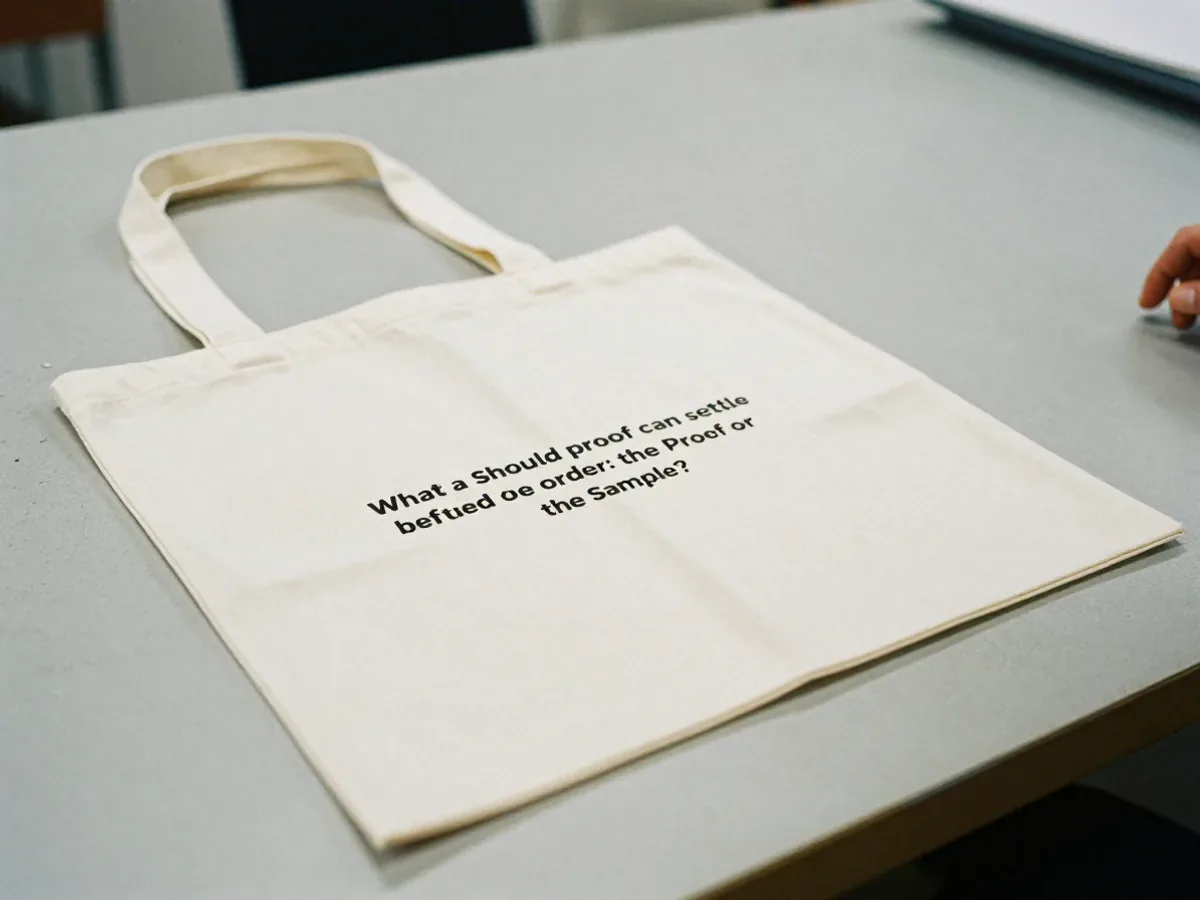
A proof catches the errors that live in the file. Fonts that were not converted to outlines show up as substituted type. Raster images below 300 DPI look soft on the proof and will look softer on cotton canvas, where the weave amplifies every pixel edge. A logo placed without bleed will show a white hairline the moment the seam shifts two millimetres during stitching.
Colour is the other settlement. Screen printing runs on Pantone references, not CMYK builds, and a proof that lists the Pantone numbers per element lets the buyer and the printer agree on the target before a screen is made. Heat transfer follows the same logic with a different substrate. The proof is where a five colour design can still become a two colour design without wasting a plate.
Print position relative to seams belongs here too. The proof shows the artwork against a dimensioned bag outline, so a logo that crowds the gusset edge is visible on paper rather than on a rejected carton. Artwork is checked before cutting, and the proof is the document that makes that check possible.
What only a physical sample can show on a sewn tote
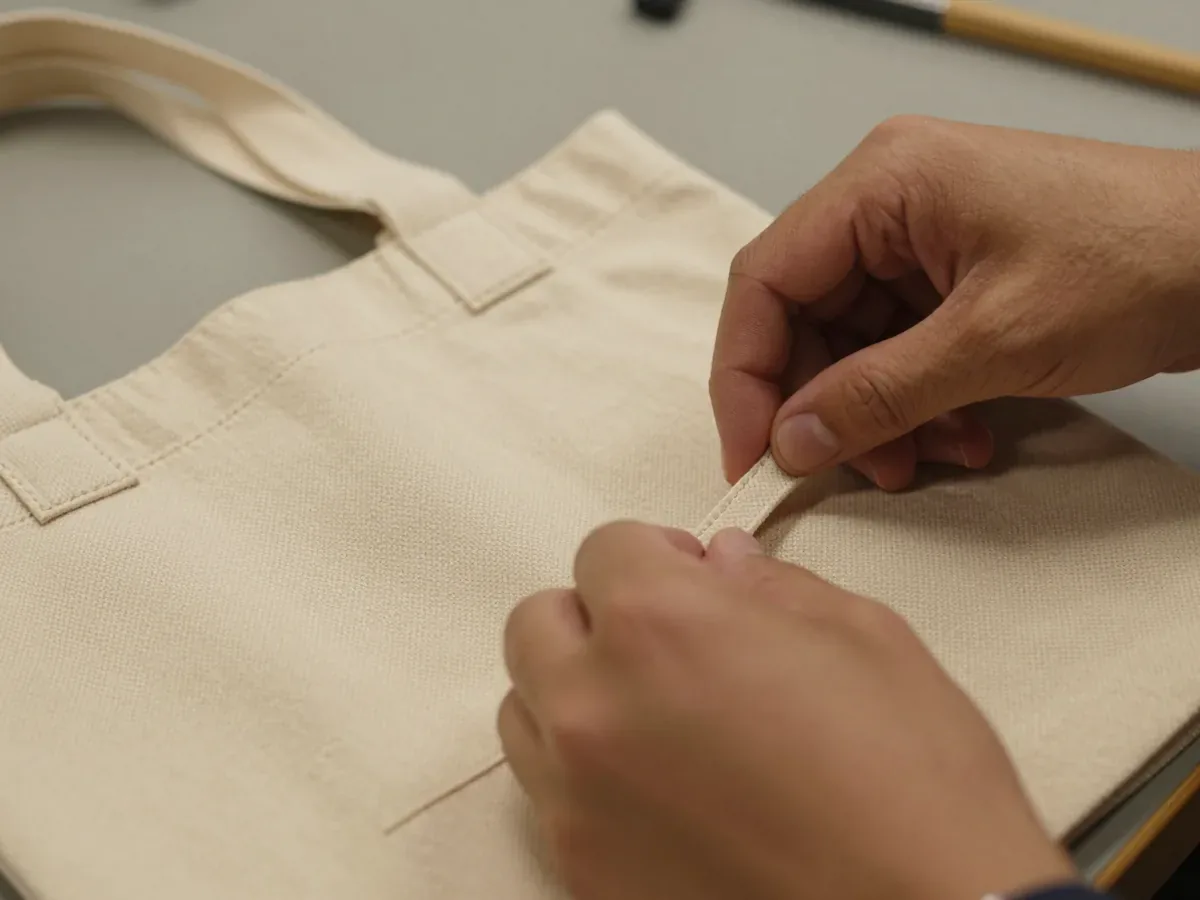
The sample answers the questions that start where the file ends. Canvas weight is quoted to the load the bag carries, and no PDF communicates how a six ounce canvas drapes when a bottle of wine sits inside it. Handle stitching is reinforced on the spec sheet, but only the sample shows whether the reinforcement sits where the hand actually grips.
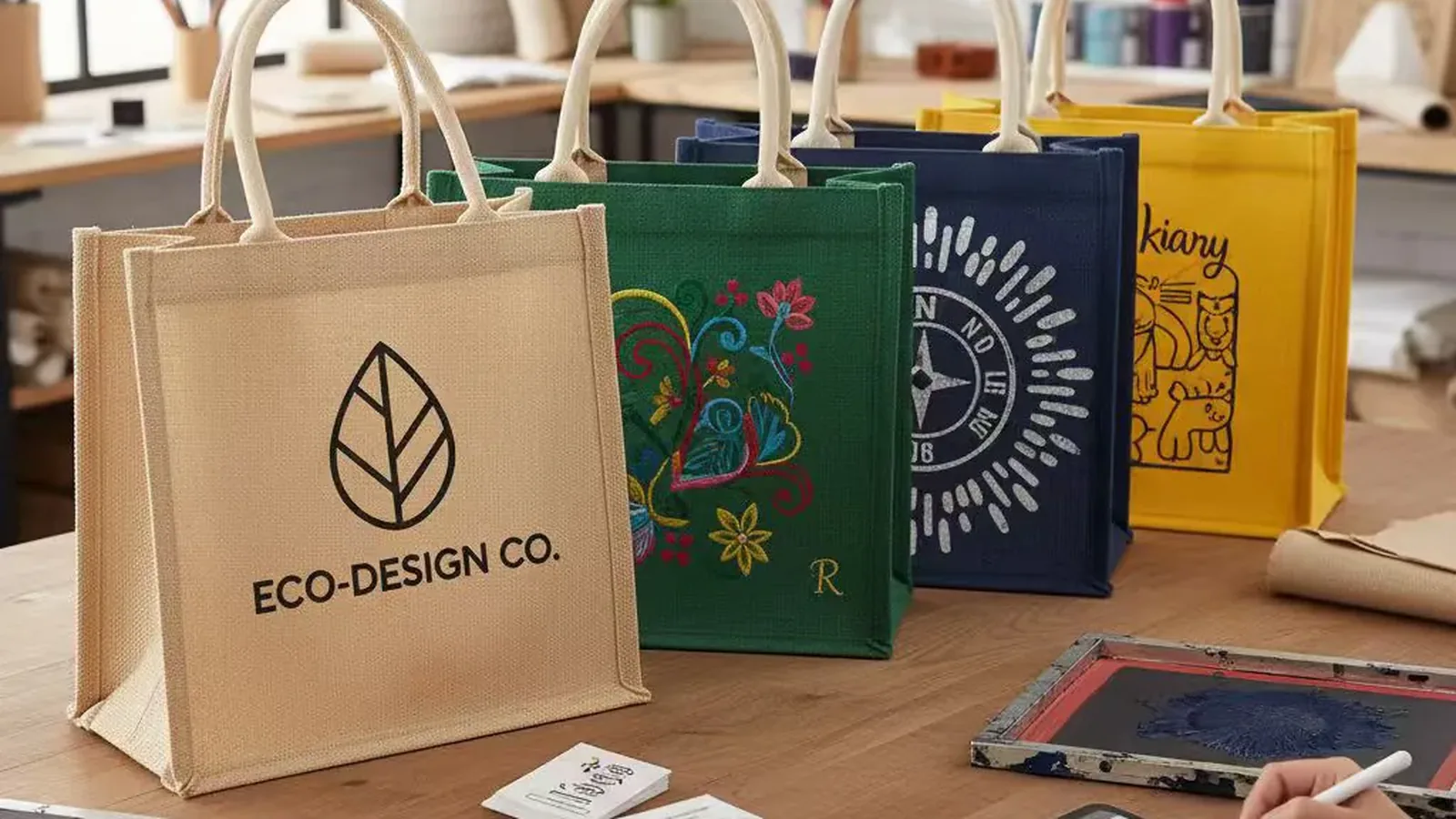
Print feel is a sample question. A screen print on canvas sits on the surface with a slight raise. A heat transfer sits flatter and can look glossier under retail lighting. Buyers who approve only a proof sometimes discover at the store that the print reads as a sticker rather than as part of the fabric.
The sample also carries the label. A printed or woven label is approved before the run, and its placement, size and stitch line are physical decisions. Dimensions, handles, logo and packed quantity are checked by hand, and the sample is the first object that can be checked that way. A size or fabric change takes one sample round, which is why the sample round should happen once, with the file already settled.
Colour, seam position and packed quantity: where the two routes disagree
Colour is the sharpest disagreement. The proof fixes the Pantone reference. The sample shows how that reference lands on the actual substrate, and canvas, non-woven and coated polyester each pull a shade differently. A buyer who approves colour on the proof alone is trusting the substrate to behave, and the substrate rarely behaves without a test.
Seam position is the second. The proof can show a bleed margin, but it cannot show how the sewing floor actually folds the side seam on a given day. A three millimetre bleed absorbs a small shift. A larger shift shows up as a cropped logo, and the sample is where that crop becomes visible before the run.
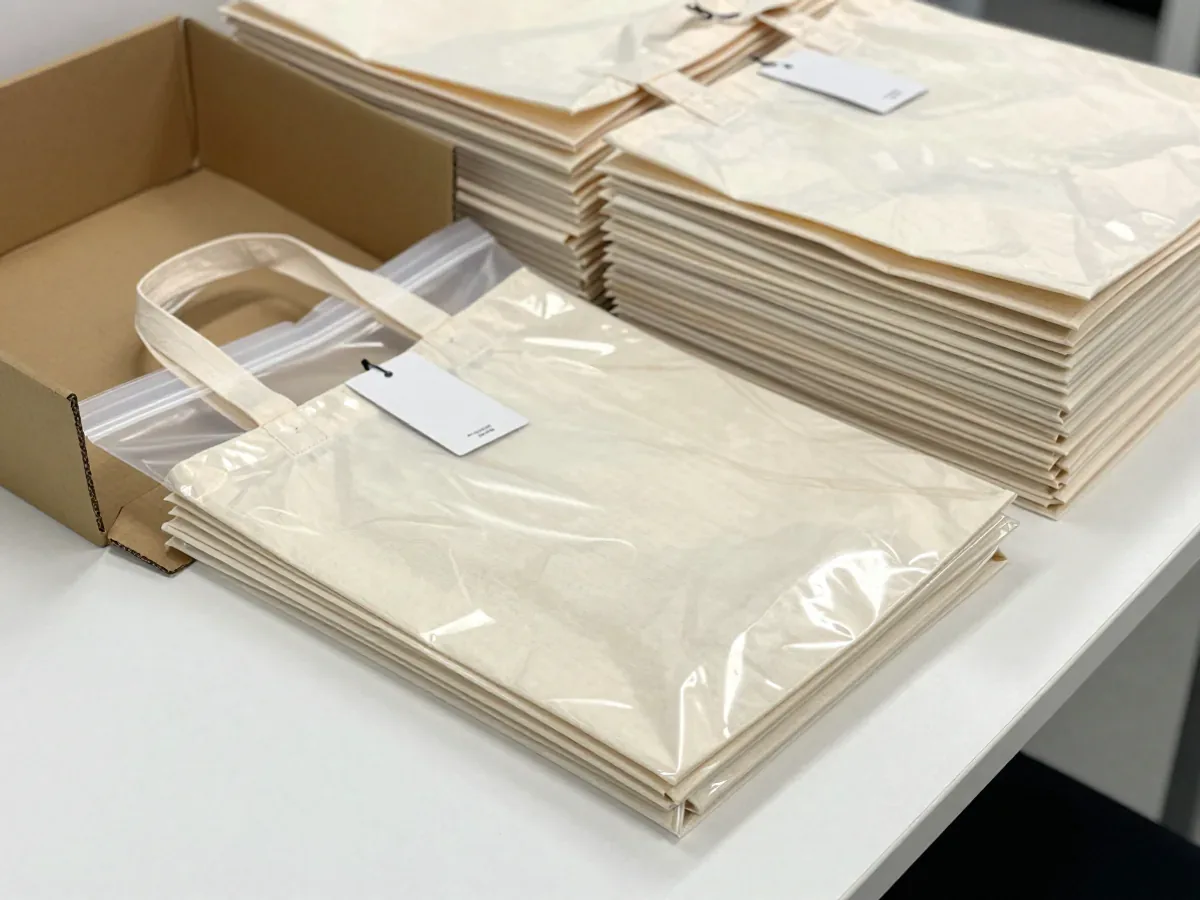
Packed quantity is the third, and it is the one buyers forget. Retail packing can be a polybag, a hang tag, a retail carton or a per store packing list. The proof says nothing about whether the folded bag fits the carton with the hang tag attached. The sample, folded and packed once, answers it in a minute.
The file package both routes depend on
Both routes draw from the same file package, and a weak package makes either route expensive. Vector artwork should arrive as .ai, .eps or .pdf with all fonts converted to outlines. Raster elements need at least 300 DPI at full print size, because anything lower turns fuzzy on cotton canvas or non-woven fabric.
Bleed extends three millimetres beyond the trim line. That margin covers the seam and gusset movement that stitching introduces, and without it a small shift leaves an unprinted hairline that fails inspection. Colour references should be Pantone Solid Coated numbers per element, not a CMYK build that the printer has to interpret.
The package should also include the label artwork as a separate item, since a printed, heat transferred, woven or embroidered label is approved on its own timeline. Artwork is proofed before production, and a complete package is what allows the proof to come back in a single round rather than three.
Which route fits a first order and which fits a repeat run
A first order with a new design, a new substrate or a new label belongs on the sample first route, with the proof approved before the sample is made. The proof clears the file, then the sample clears the object. This order costs one extra step and saves the cost of cutting fabric against an unproven file.
A repeat run on an unchanged design can move on the proof alone in most cases, provided the previous run's sample is still the reference and nothing about the substrate, print method or packing has changed. The proof confirms the file has not drifted. The sample does not need to be remade for a colour that was already matched.
A middle case sits between them. A repeat run with a new colourway or a new label is a proof first, sample second order, because the colour and the label are exactly the variables the sample exists to test. A first order with a stock colour and a one colour logo can sometimes run proof only, if the buyer accepts the risk on print feel.
A decision table to run against your own order

| Question | Proof first | Sample first |
|---|---|---|
| Is the design new to this factory? | Yes, then sample | No, proof may release |
| Is the substrate new or changed? | No | Yes |
| Is the colour a new Pantone match? | No | Yes |
| Is the label new or repositioned? | No | Yes |
| Is the packing format new? | No | Yes |
| Is this a repeat of an approved run? | Yes | No |
Read the table down the sample column. Two or more yes answers put the order on the sample first route, with the proof approved before the sample is sewn. One or zero yes answers put it on the proof first route, with the previous sample kept as the physical reference.
What to ask for on the day you approve
The approval day should produce three things in writing. A signed proof with the Pantone references listed per element, the bleed margin confirmed and the print position marked against the seam. A sample approval that names the exact substrate weight, the print method and the label type, so the bulk run has a fixed target.
The third item is the packing confirmation. Ask for the folded bag in its polybag, hang tag and carton, with the packed quantity stated. Dimensions, handles, logo and packed quantity are checked by hand at inspection, and the approval record is what the inspector measures against.
A buyer who signs all three on the same day has closed the gap between the file and the object. The proof stops the file errors. The sample stops the object errors. The order that approves them in the right sequence pays for one round instead of two.
FAQ
Can a digital proof replace a physical sample on a repeat tote order?
On an unchanged repeat, the proof can release the run if the previous sample remains the reference and the substrate, print method and packing have not changed. Any new colour, label or packing format puts the order back on the sample route.
What file format should the artwork arrive in for a printed tote?
Vector files as .ai, .eps or .pdf with fonts converted to outlines. Raster elements need at least 300 DPI at full print size, and colour should be supplied as Pantone Solid Coated references rather than CMYK builds.
How much bleed does a printed tote need beyond the trim line?
Three millimetres beyond the trim line. That margin absorbs the seam and gusset movement that stitching introduces, and without it a small shift leaves an unprinted hairline at the edge.
Does the label need its own approval separate from the bag print?
Yes. A printed, heat transferred, woven or embroidered label is approved before the run on its own record, because its placement and stitch line are physical decisions that the bag print proof does not cover.