Drawn from archived TIIOCTI tote bag articles and the tote product spec pages, reorganised around a single order's route through the factory.
Three canvas totes sat on the meeting table, all labelled 15 × 16.5 × 3.9 in. The buyer picked one up, then another, and asked the room why the second felt like a different bag. The spec sheet said they were identical.
That gap between paper and product is where tote orders go wrong. Not in one dramatic failure, but in small drifts that start at the purchase order and finish at the container seal. This is the route a tote order takes through a factory, station by station, and what each stop is really checking against the sheet.
The PO Lands and Someone Reads It Out Loud

The order starts as a document. Before any fabric is touched, a merchandiser reads the purchase order aloud to the cutting and sewing supervisors, line by line. Dimensions, fabric weight, handle length, print position, carton marks. The reading is not ceremony. It is the first test of whether the sheet can survive being spoken.
A spec sheet without tolerances is just a wish list. If the PO says 210 GSM and stops there, the factory can legally deliver anywhere from about 200 to 220 GSM under the usual plus or minus five percent band. The buyer who wrote "210 GSM" and meant "exactly 210 GSM" has already lost control of the order.
What gets checked here: does every line carry a number and a tolerance? Fabric weight, thread count, stitch density, handle drop, print size, colour reference. Any line that reads "good quality canvas" or "strong handles" is a line that will be interpreted differently by whoever runs the machine.
A useful habit at this station is to ask the factory which lines they had to guess at. The answer tells you where the sheet is thin.
At the Fabric Store, the First Three Numbers Get Tested
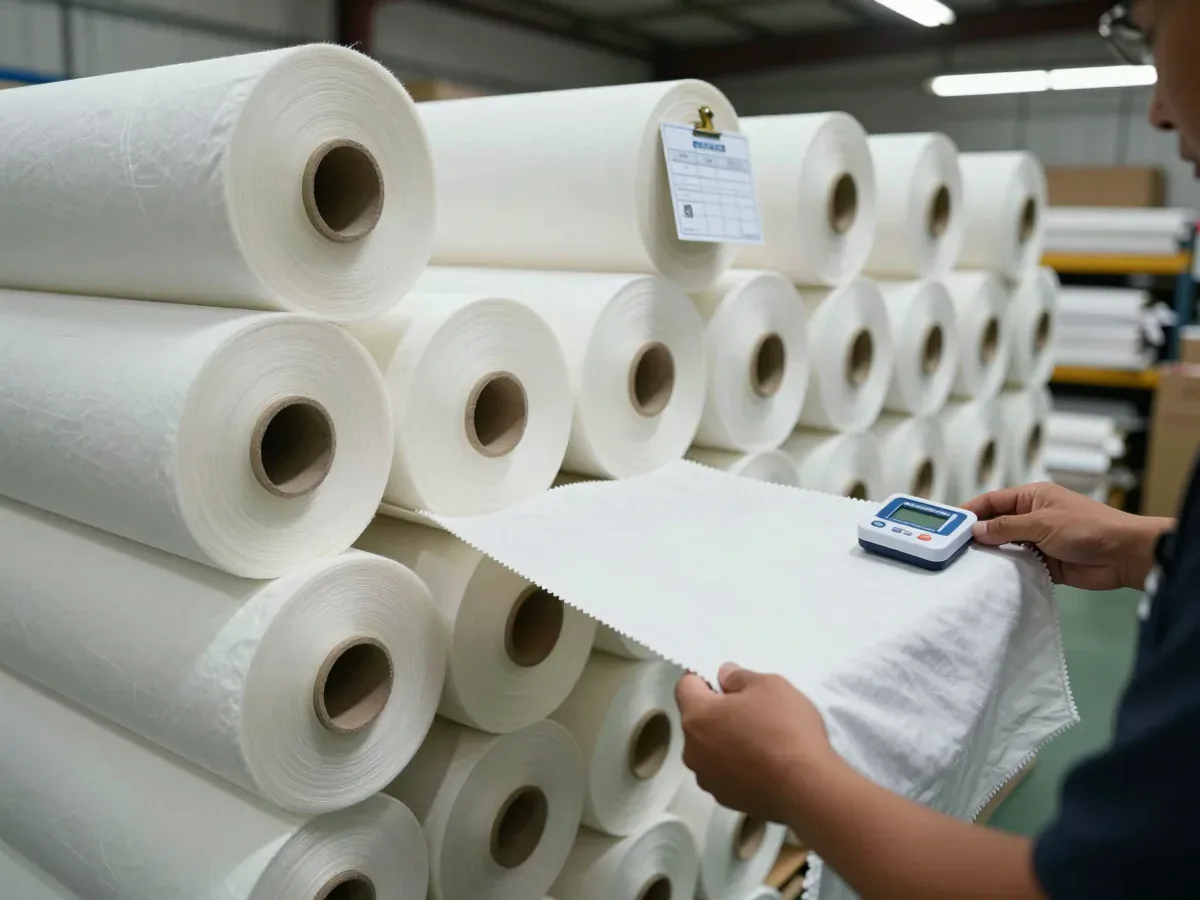
The fabric arrives in rolls, and the first thing checked is the material against the approved spec. Fabric, webbing, zips and thread are all compared to what was signed off before anything is cut.
The first three numbers on any spec sheet should be GSM, denier, and material type. GSM measures fabric density. For a canvas tote that has to hold groceries or promo stock without sagging, 200 to 240 GSM is the working range. Below 180 GSM the bag feels flimsy and loses shape. Denier replaces GSM when the material is nylon or polyester, and higher denier means tougher yarns. A 600D polyester tote will outlast a 300D version by roughly twice in abrasion terms.
There is a trap buried in this station. A factory can quote a higher GSM and still hit the number with loosely woven yarns. The bag weighs right but distorts under load because thread count is low. Ask for both GSM and thread count, and ask to see the mill certificate for the roll, not just the label on the outside.
Material choice also gets settled here. Cotton canvas gives natural texture and absorbs screen printing well. Polyester and nylon are lighter per GSM and dry faster. The canvas weight should follow the load the bag has to carry, so a bottle bag and a giveaway tote do not belong on the same fabric line.
Cutting: Where One Centimetre Becomes a New Die
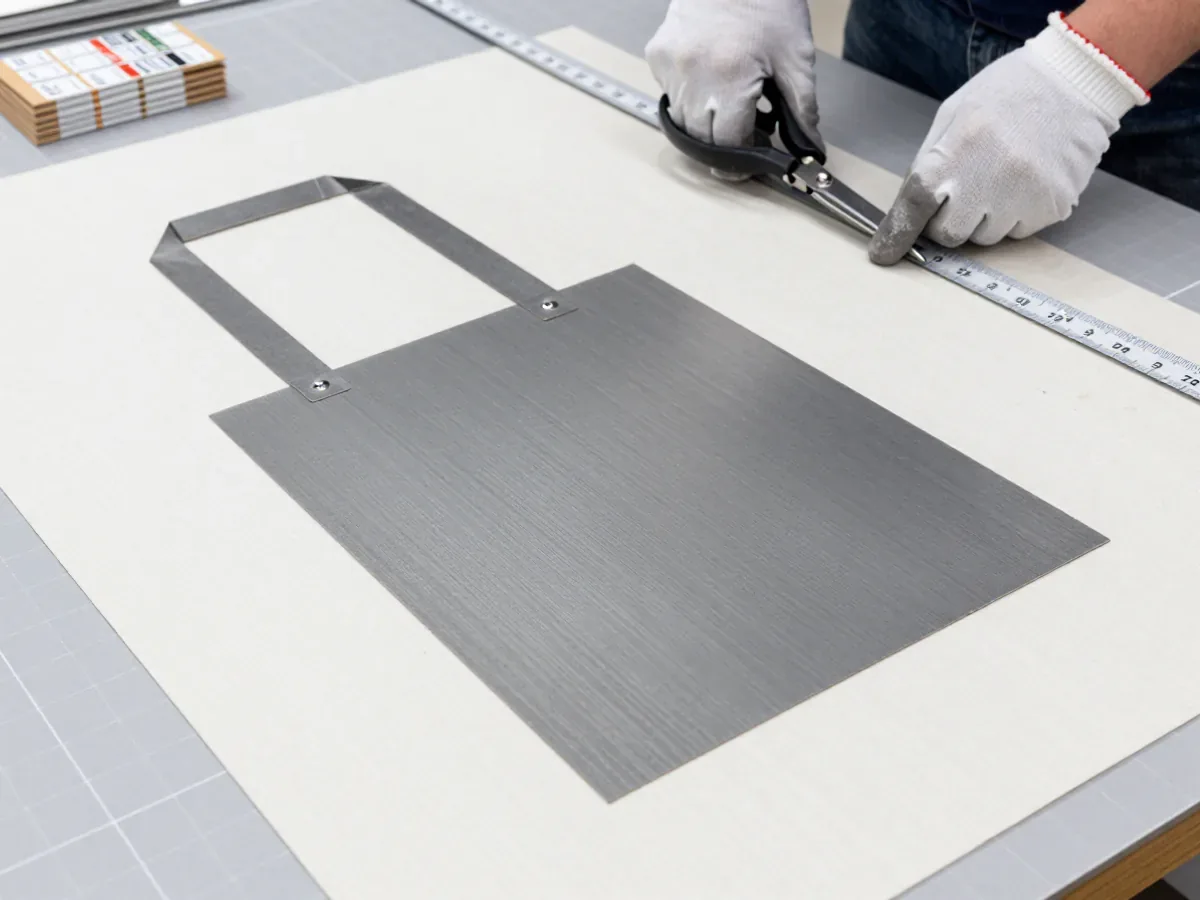
The fabric is relaxed, cut and bundled by size before sewing. This is the station where dimensions stop being text and become steel.
Standard tote dimensions such as 15 × 16.5 × 3.9 in or 11.8 × 15.7 in are built around common cutting dies. A custom dimension that is only 0.4 in off from standard can still trigger a new die charge, because the die is a physical object and it does not stretch. Many factories keep a near-standard list and can adjust an existing die by a small margin without a full retool, but the buyer has to ask for that list before the PO is signed.
What gets checked at the cutting table: the die number against the PO, the bundle labels against the size run, and the fabric direction against the print plan. A bundle cut on the wrong grain will sew into a bag that twists after the first wash, and no final inspection will catch it as a defect because the bag will still measure correctly.
For a seasonal line, starting from a standard size close to the target volume and using print placement and handle style for differentiation keeps the die cost out of the unit price. A new size takes one sample round, which is time, not tooling, but it still moves the launch date.
The Sewing Floor and the Handle Angle Nobody Wrote Down
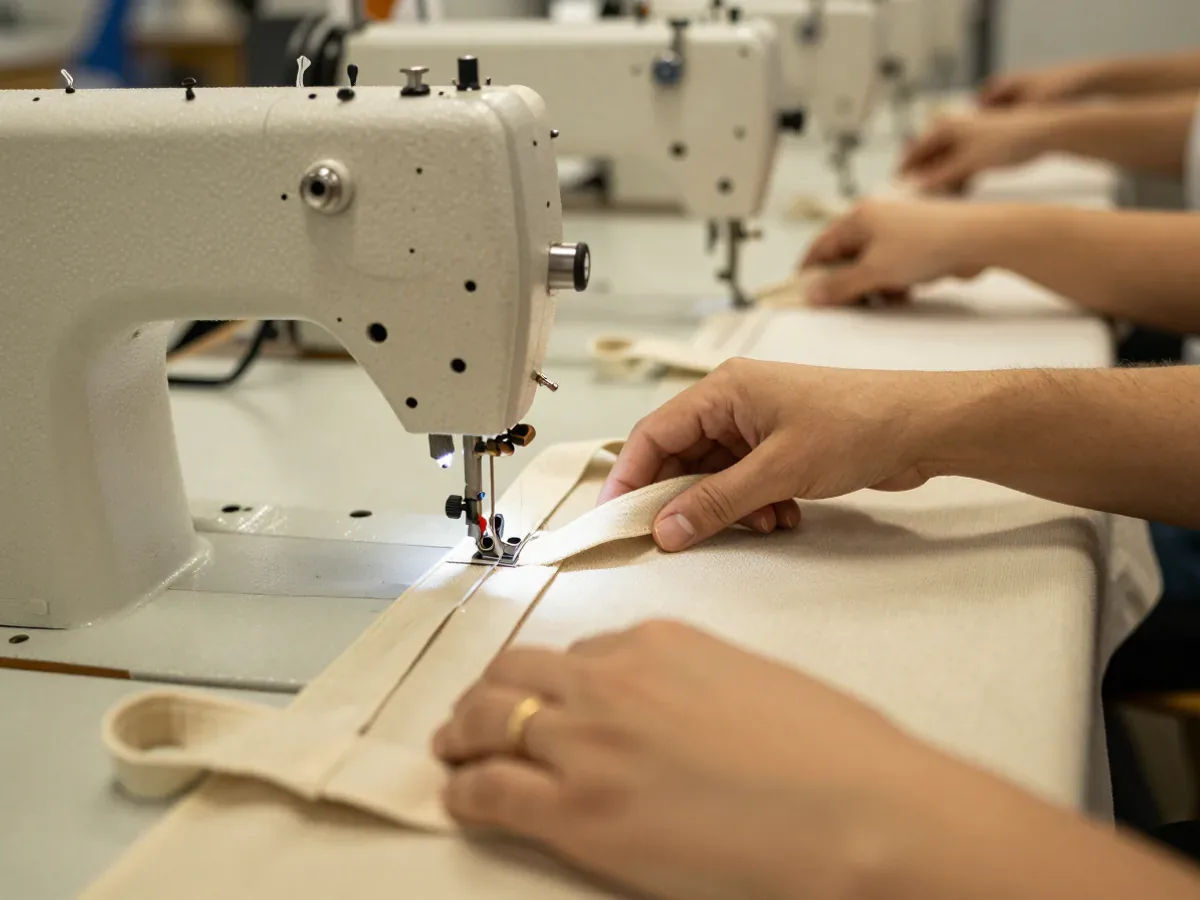
Handles, zips and seams are sewn on the same floor as the stock runs. The tote gets reinforced handle stitching, and the handles are stitched to the body rather than tacked on. A base reinforcement goes in where a bottle sits.
The handle is where the sheet most often goes quiet. A spec might say "handle drop 9.8 in" and nothing about the angle at which the handle meets the body, the width of the webbing, or how many bar tacks hold it. Two bags can both measure 9.8 in and still carry differently, because one handle pulls straight and the other pulls at a slight diagonal that digs into the shoulder.
What gets checked here: seam strength and stitch density on a pull test, bar tack placement, and the handle attachment method. Pull, seam strength and bar tack are tested on every batch, not sampled once at the start. A bag that passes the first pull and fails the fiftieth is a bag that was never really tested.
Stitch density is worth writing into the sheet as stitches per inch rather than "strong stitching." It is one of the few sewing variables a buyer can verify with a ruler and a magnifier at final inspection.
Print Proofing Before the Run, Not After
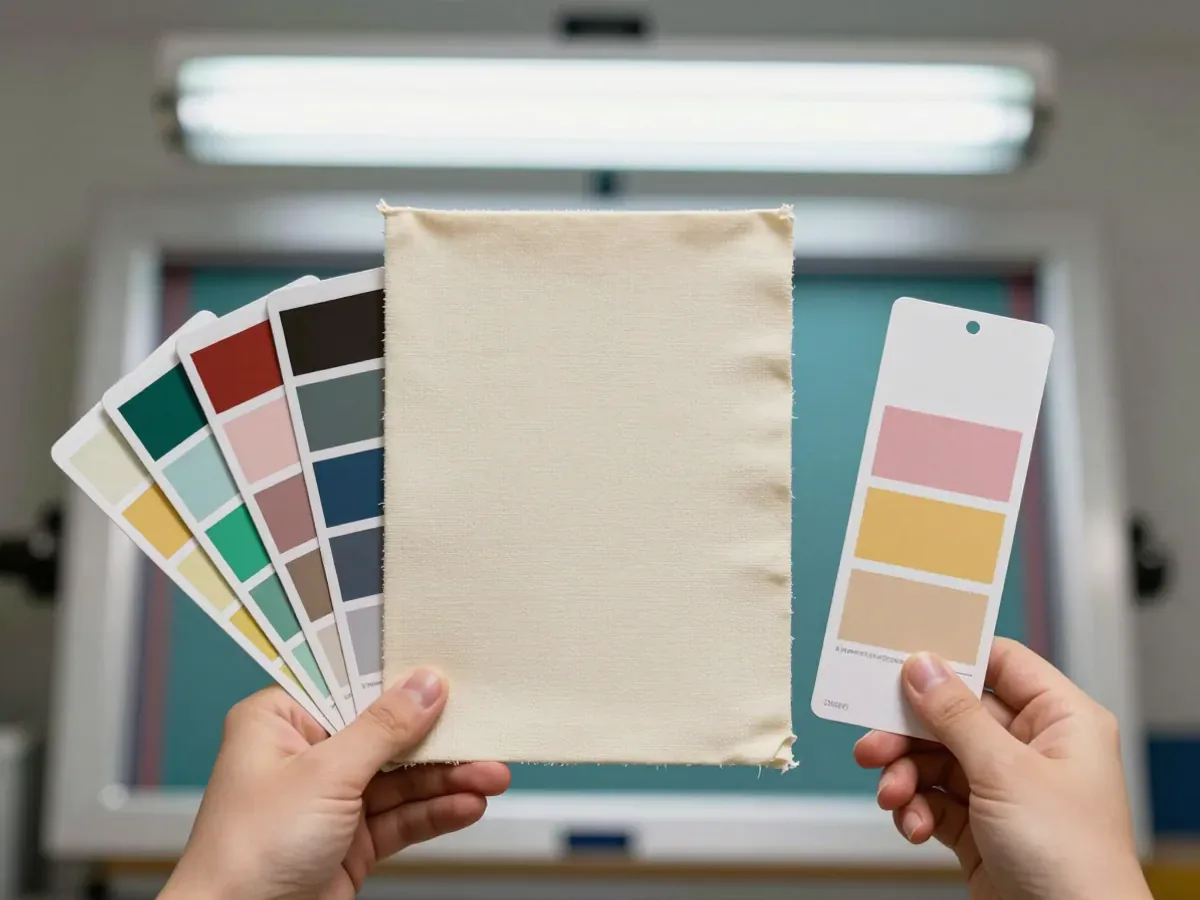
Printing is proofed before the run, and a sample is made to the same spec as bulk. Screen print, heat transfer or a woven label all go through the same gate. Print or woven label artwork is approved before production starts.
A colour match approved on screen will fail on fabric. Ink absorption, fabric texture and dye lot all shift the final colour, and a PMS colour printed on white canvas looks different from the same PMS on natural or black canvas. The proof has to be a physical strike-off on the exact fabric with the exact ink formula, held under at least two light sources, daylight and store lighting, because a colour that looks right in the QC room can look muddy under retail fluorescents.
If a supplier says the colour is fine based on a PDF or a photo sent over a messaging app, the buyer is looking at a return or a discount negotiation later. The physical sample has to be in hand before the run.
Print method also sets durability expectations that belong on the sheet. Screen printing on canvas holds up to around 500 washes in the best case, though thick ink can crack after 20 to 30. Heat transfer adhesion degrades after roughly 20 industrial wash cycles. Embroidery lasts the life of the bag but roughly doubles unit cost and pushes the minimum order up because of digitising. The method chosen determines per-unit cost, brand perception and lead time, and all three should be written down rather than assumed.
Final Inspection: What Hands Find That Eyes Miss
On the finished bag, dimensions, handles, logo and packed quantity are checked by hand. Not by eye alone. A tape measure on the body, a tape on the handle drop, a count of the packed quantity against the carton list.
Hands find what eyes miss. A handle that has been stitched at a slightly different angle feels wrong on the shoulder before it looks wrong on the table. A seam that was pulled too tight in sewing feels stiff at the gusset. The inspector who only photographs the bag and moves on will pass a batch that a customer will reject on first use.
What gets checked at this station: seam strength on a pull, stitch density against the sheet, print alignment against the approved position, handle attachment, and the packed quantity per carton. If the sheet specified a tighter GSM tolerance than the standard band, this is where the batch weight gets verified against the mill certificate and the cut bundle records.
This is also the last station where a colour drift can be caught before the bags are folded. Once they are in polybags, the comparison gets harder.
Carton Marks and the Last Hour Before the Seal
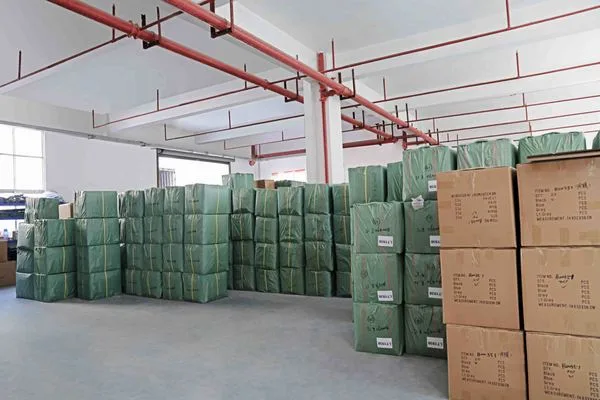
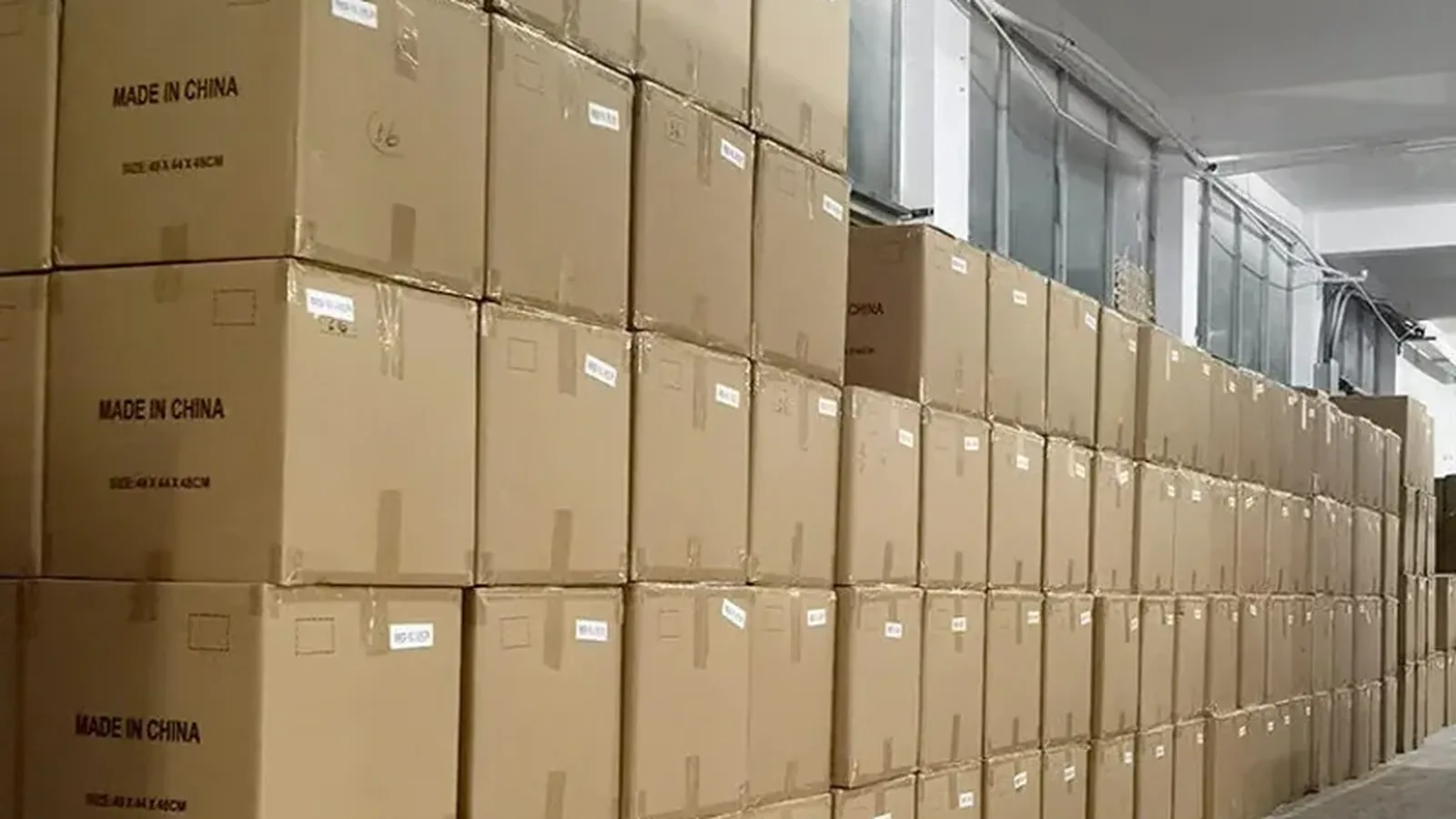
Cartons are counted and photographed before the container seals. Carton marks can be set per store, per listing or per pallet, and the mark on the box has to match the mark on the PO.
The last hour is where small errors become expensive. A carton labelled with the wrong size, a mixed size run in one box, a missing store code on a retail delivery. None of these are bag defects, and all of them cost money to fix at the warehouse.
What gets checked here: carton count against the packing list, carton mark against the PO, a photo of the sealed pallet, and a sample carton opened and resealed to confirm the contents match the label. The photo is not decoration. It is the record that settles the argument if the container arrives short.
What to Sign Off Before the Cutting Blade Drops
The order slips away from its spec sheet at predictable points. A tolerance left blank. A handle angle never written. A colour approved from a screen. A carton mark copied from the previous order. Each one is small, and each one is cheaper to fix before the blade drops than after the container seals.
A buyer can hold the line with a short list. Write GSM, denier and material type with explicit tolerances. Ask for the near-standard die list before committing to a custom dimension. Specify handle drop, webbing width, attachment method and stitch density in numbers. Approve colour only from a physical strike-off on the production fabric, checked under two light sources. Confirm carton marks per store or per pallet in writing. Then walk the route, station by station, and check that each line on the sheet is being tested somewhere on the floor.
The three totes on the table were not identical, whatever the sheet said. One had a tighter weave, one had a handle set two degrees off, and one had been cut on a slightly different grain. The sheet could have caught all three. It just did not say enough to try.
FAQ
Should I start from a standard tote size or spec a custom dimension?
Start with a standard size close to your ideal volume if you can. Standard dimensions reduce tooling cost and lead time because factories cut from pre-set dies. A custom dimension needs a new die and pattern adjustment, and even a 0.4 in change from standard can trigger the charge. Use print placement and handle style for differentiation before you change the cut.
What GSM should a canvas tote be for retail use?
For a canvas tote that holds groceries or promo materials without sagging, 200 to 240 GSM is the working range. Below 180 GSM the bag feels flimsy and will not hold shape. The standard weight tolerance is plus or minus five percent, so a 210 GSM spec can land between roughly 200 and 220 GSM. Ask for thread count alongside GSM so a loose weave cannot pass on weight alone.
How do I approve a print colour without standing in the factory?
Ask for a physical strike-off printed on the exact fabric with the exact ink formula that will run in bulk. Check it under daylight and under store lighting, because a colour that looks right in the QC room can look muddy under retail fluorescents. A PDF or a photo is not an approval. Hold the sample in your hand before the run starts.
Which printing method lasts longest on a canvas tote?
Embroidery lasts the life of the bag, with the highest unit cost and minimum order. Screen printing on canvas holds up to around 500 washes in the best case, though thick ink can crack after 20 to 30. Heat transfer adhesion degrades after roughly 20 industrial wash cycles, so it suits lighter promotional work rather than heavy-duty totes.