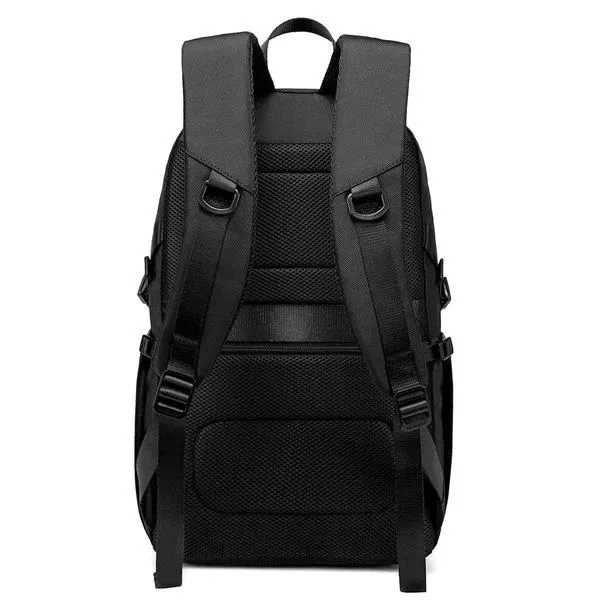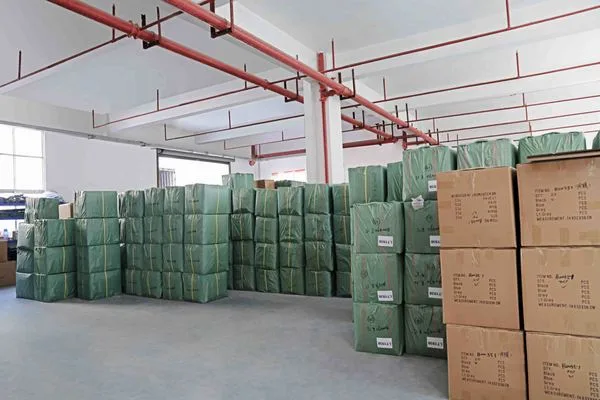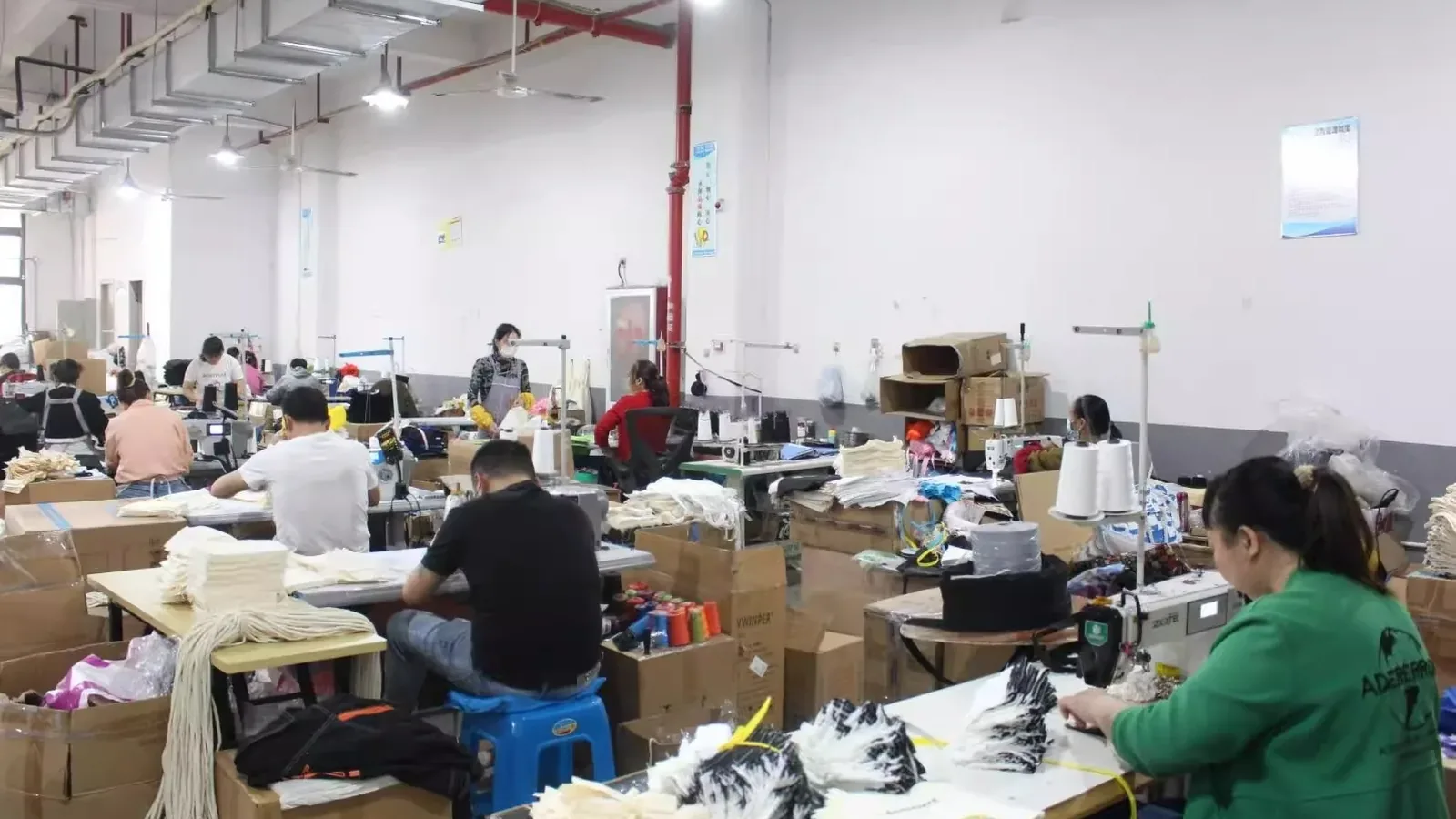
Reconstructed from a canvas tote order brief and the production checks that followed it.
The container doors were already sealed when the hotel's receiving team noticed the carton marks. Three pallets were labelled for the airport property, two for the downtown location, and one carried a mark nobody recognised. The bags inside were correct. The boxes were not, and the shipment sat at the dock while someone drove back to the office to find the original brief.
That scene repeats often enough to feel familiar. The same question arrives from buyers in different sectors: why does a custom wholesale canvas tote order that passed its sample review still arrive with details nobody approved? The answer rarely sits in the factory's sewing room. It sits in the document the buyer sent before the sample was made, and in the lines that document did not contain.
The Cartons Were Sealed Before Anyone Read the Label
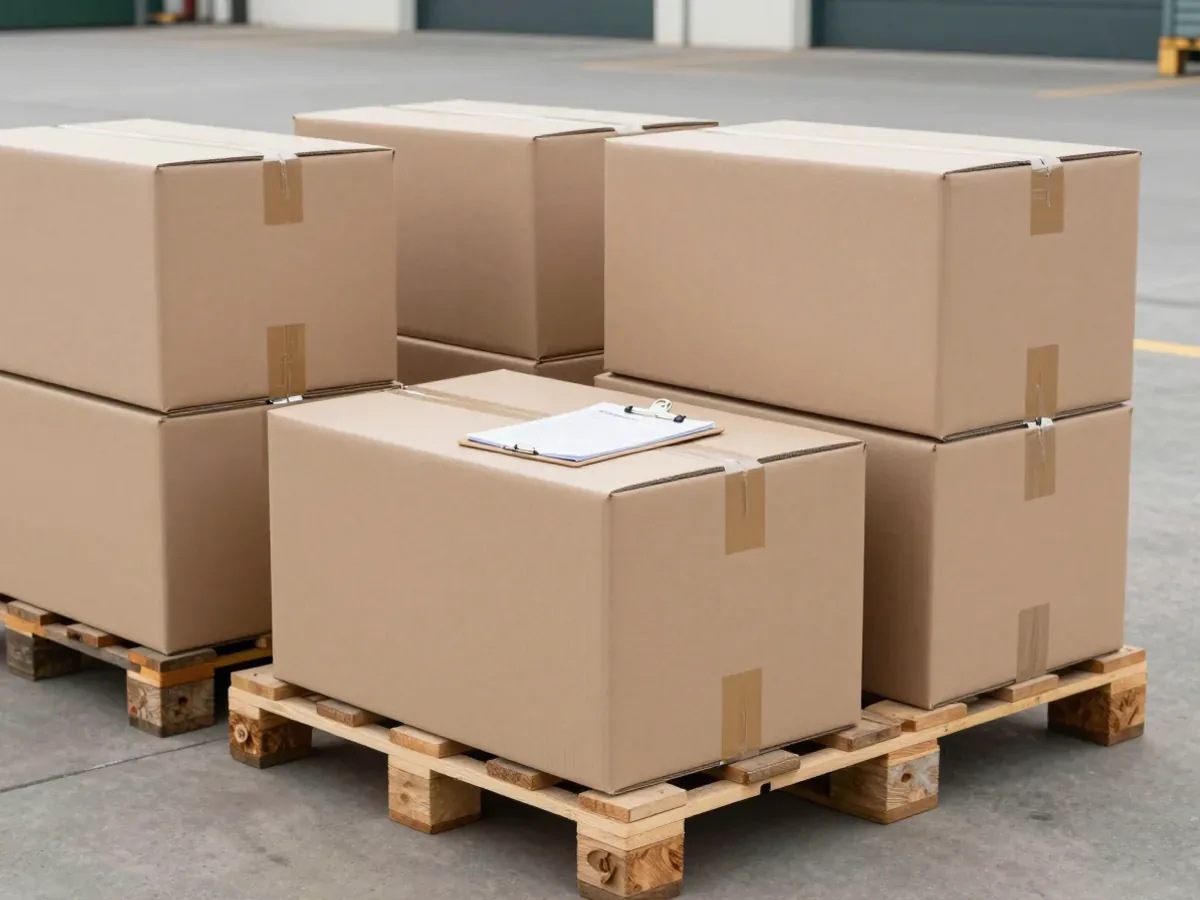
Carton marks look like clerical work until a shipment reaches a hotel loading bay. A property with six outlets needs each pallet to arrive at the right door, and a mark that says only the brand name forces staff to open boxes and guess. The brief for this order listed the bag size, the shell colour, and the logo position. It did not list the carton marks at all.
The factory defaulted to a single mark for the whole run, which is what most suppliers do when nothing is specified. Cartons were counted and photographed before the container sealed, so the packing quantity was right. The mark on the outside was simply never part of the conversation.
Per store, per listing or per pallet marks can all be set, but only when the buyer writes them down. A brief that leaves this line blank hands the decision to whoever runs the packing station that week.
The Brief Said Canvas, and Everyone Filled In the Rest
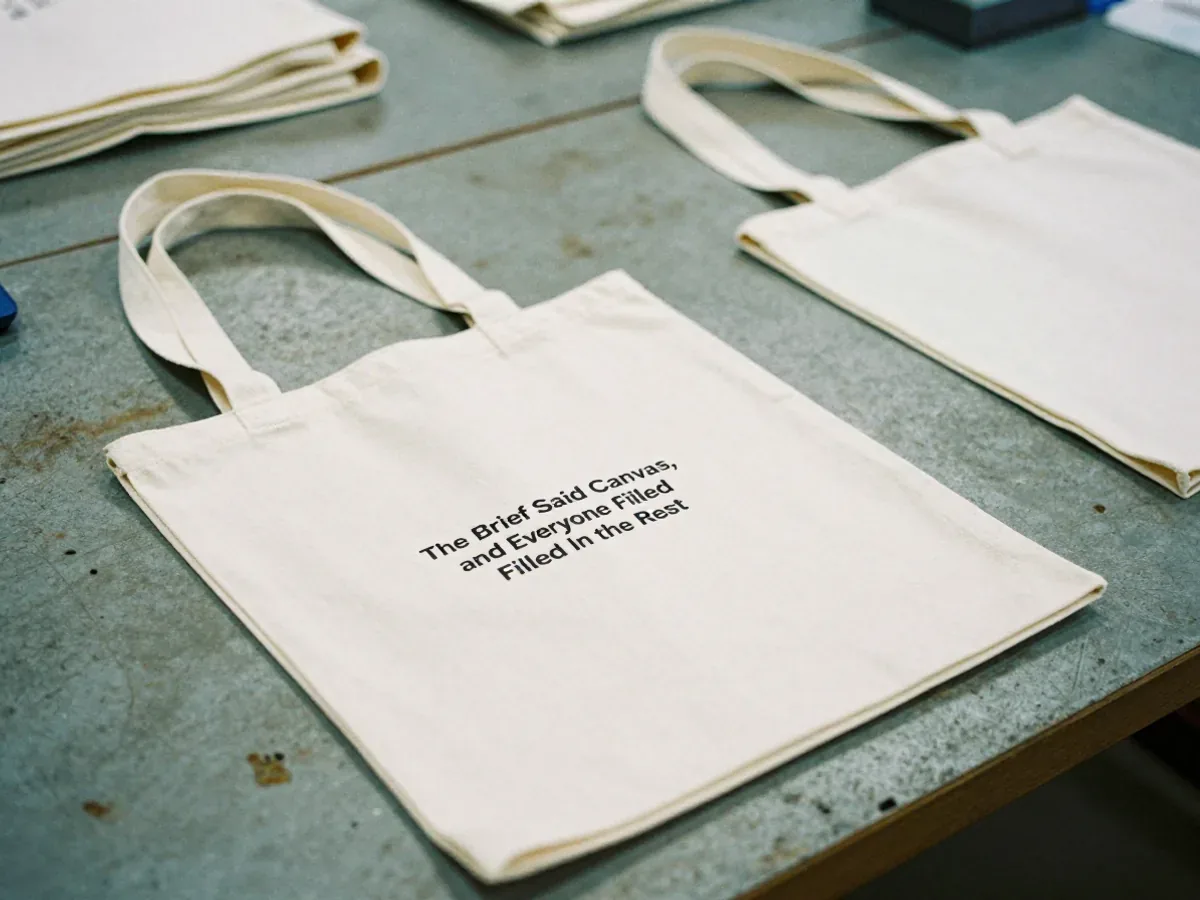
"Canvas tote, natural, one colour logo" is a sentence, not a specification. The buyer meant a cotton canvas shell in a natural tone with a screen printed logo on the front. The factory read the same words and made reasonable choices at every turn: woven handles instead of webbing, a printed label instead of a woven one, a handle attachment that met the standard but not the sample.
Each choice was small. Together they produced a bag that felt different in the hand from the one the buyer had approved. The sample had been made to the same spec as bulk, which is the normal promise, but the spec itself was thin enough to allow two different bags.
A canvas tote has more decision points than most buyers expect. The shell is cotton canvas in natural or dyed, and that alone opens questions about weight and shade. Handles can be woven, webbing or rope. Branding can be printed, woven or embroidered. None of these appear in a one line brief, and every one of them changes what arrives.
Where the Drift Started: Handle, Label, and Carton Marks
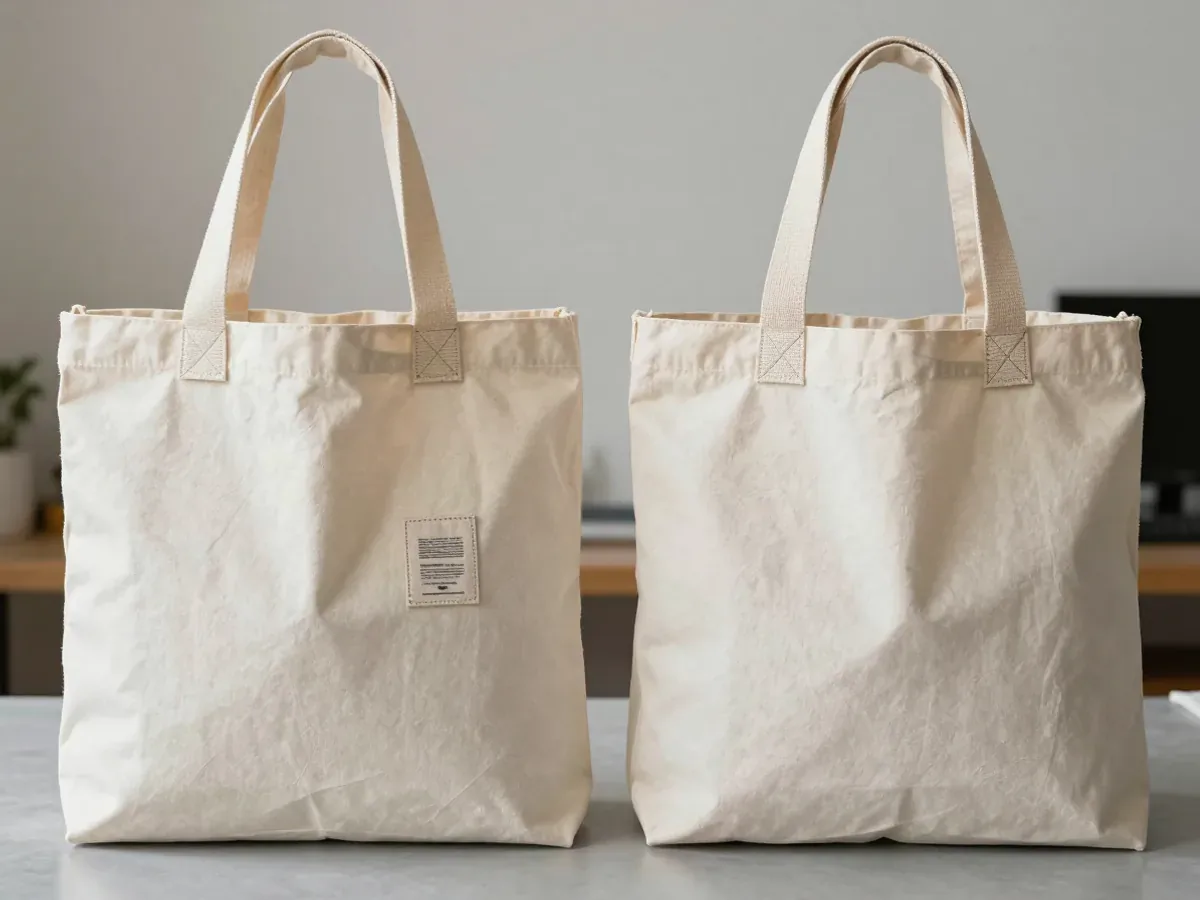
The handle was the first place the order moved. The approved sample carried webbing, which sits flat against the shoulder. Bulk production used woven tape, which is a legitimate handle material and was listed as an option, but it behaves differently under load. Handle stitching is reinforced either way, and handles are stitched through the body, so the bag holds. It just does not carry the way the sample did.
The label was the second. A woven label was offered next to print, and the sample used one. The bulk run used a printed label because the brief mentioned "label" without naming the type. Both are approved before the run in a well run order, but approval only covers what the buyer is shown, and the buyer was shown the sample.
Carton marks came third, and by then the pattern was set. Three lines in the brief were vague, and three decisions were made without the buyer in the room. The factory did not hide any of this. It filled gaps the way a factory fills gaps, with the option that keeps the line moving.
The Sample That Passed and the Bulk That Did Not
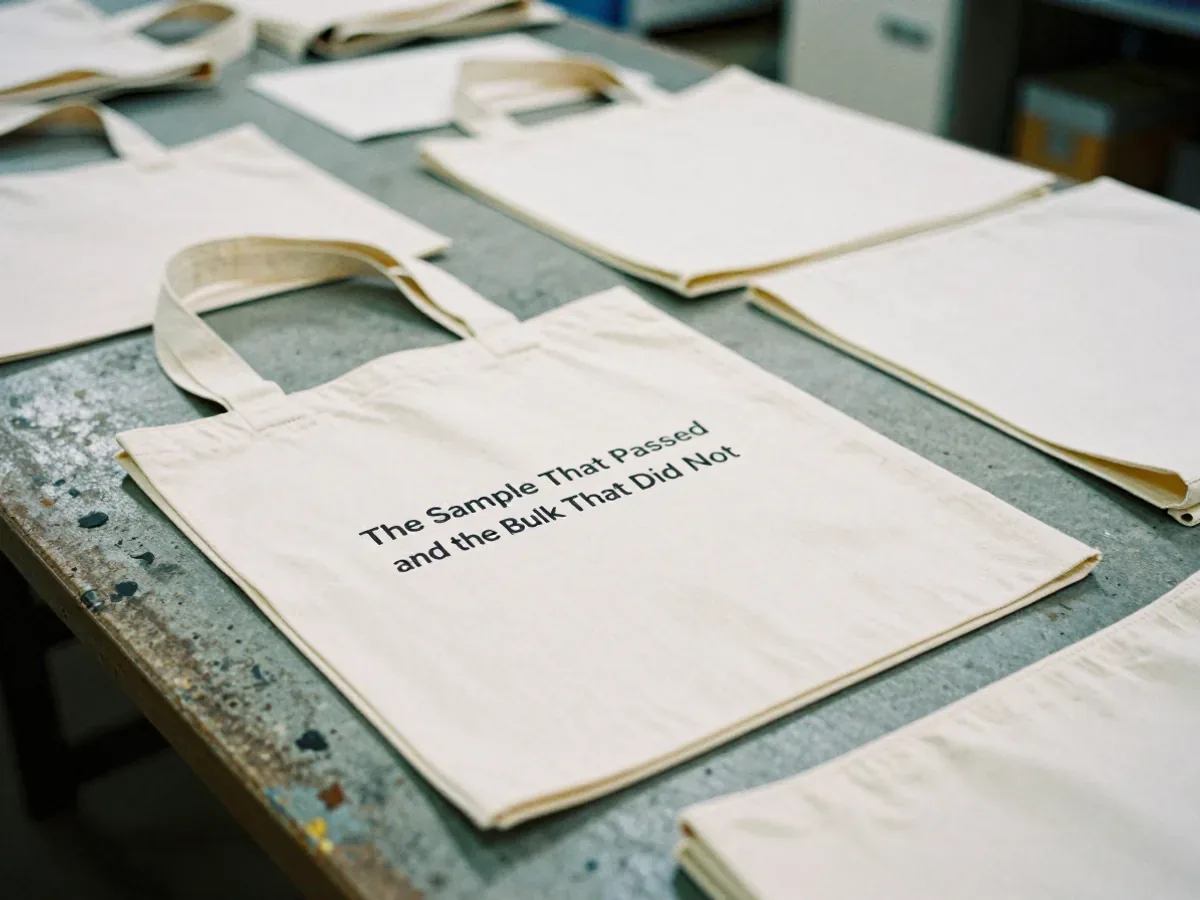
The sample review itself was thorough. The buyer checked the print position, the colour against a Pantone match, and the seam at the base. The bag had a reinforced base and reinforced handle stitching, and the print was proofed before the run. On every point the buyer examined, the sample was right.
What the review could not catch was the distance between the sample and the written spec. A sample proves that one bag can be made well. It does not prove that the next thousand will be made the same way unless the document behind it removes the choices. The buyer approved a bag. The factory produced a specification, and the two were not identical.
This is where most drift begins, and it begins before anyone touches fabric. The sample is a physical answer to a written question, and a vague question gets a confident answer that may not be the one intended.
What the Factory Checked and What It Could Not Check
Incoming fabric, webbing, zips and thread are checked against the approved spec. Pull, seam strength and bar tack are tested on every batch. Finished bags are hand checked for dimensions, handles, logo and packed quantity, and every bag passes four QC checkpoints before packing. Cartons are counted and photographed before the container seals.
All of that happened on this order, and all of it passed. The checks compare output to the approved spec, which means they inherit whatever the spec got wrong. A factory cannot test a bag against a handle type the buyer never named. It cannot flag a carton mark that was never written.
The gap between a good QC system and a good order is the brief. Checks catch defects. They do not catch ambiguity, because ambiguity looks like a valid instruction once someone has chosen an interpretation.
Rewriting the Brief Line by Line

The repair started with the handle line. Instead of "canvas tote with handles," the brief now reads: webbing handles, stitched through the body, reinforced stitching, sample to be matched for width and drop. That single line removes the choice that caused the first drift.
The label line now names the type. A woven label is approved before the run, and the brief states that a printed label is not an acceptable substitute. The branding line separates print from embroidery and names the method, since screen print and heat transfer behave differently on a dyed shell.
The carton line now carries a small table: property, pallet count, mark text. Per store, per listing or per pallet marks are all possible, and the table tells the packing station which one applies. The colour line names the Pantone reference and states that stock colours can be swapped for a match only with written approval.
The final line covers the sample itself. The brief states that the sample must be made to the same spec as bulk, and that any change after approval requires a new sample. That clause turns the sample from a one time review into a reference document.
What to Put in Front of a Supplier Before You Approve Anything
A brief that prevents drift fits on two pages, and every line on it is a decision the buyer keeps rather than delegates.
- Shell: cotton canvas, natural or dyed, with the shade named and a Pantone reference where colour matters.
- Handle: woven, webbing or rope, with width, drop and attachment method stated. Reinforced stitching and stitching through the body are the minimum.
- Label: woven or printed, named explicitly, approved before the run.
- Branding: screen print, heat transfer or embroidery, with artwork in vector format and the print position marked on a diagram.
- Size: quoted to the artwork, with the finished dimensions written in centimetres and inches.
- Carton marks: per store, per listing or per pallet, with the exact text for each.
- Sample rule: sample made to the bulk spec, and any post approval change triggers a new sample.
A buyer who sends this document before approving a sample gives the factory something to check against and gives themselves a record of every choice. The bags that arrive will still be checked at four points, still counted and photographed before the seal. The difference is that the checks now compare output to a decision rather than to a guess.
FAQ
Does a canvas tote sample always match the bulk order?
Only when the sample and the bulk run are made to the same written spec. A sample proves one bag can be built well. The spec is what carries that standard across a production run, and a thin spec leaves room for substitutions that no one intended.
How detailed should the handle and label lines be in a tote brief?
Detailed enough that two people reading the line would make the same bag. Name the handle type, the attachment method and the stitching. Name the label type and state whether a substitute is acceptable. Vague lines are where most drift starts.
Can carton marks be set per store or per event?
Yes. Marks can be set per store, per listing or per pallet. The buyer needs to supply the exact text and the allocation for each mark, because a factory with no instruction will default to one mark for the whole run.
What should a buyer check on a printed tote before approving the run?
Check the print position against the artwork, the colour against the Pantone reference, and the seam and handle attachment by hand. Confirm the label type matches the brief. Then confirm the brief itself names every choice the sample represents, since approval covers only what the document describes.