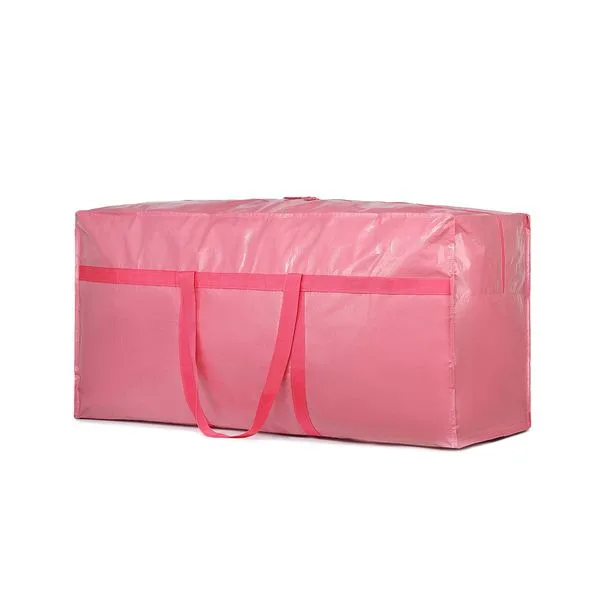
Built from a legacy moving bag article and the factory spec records behind it, rewritten line by line as a purchase order.
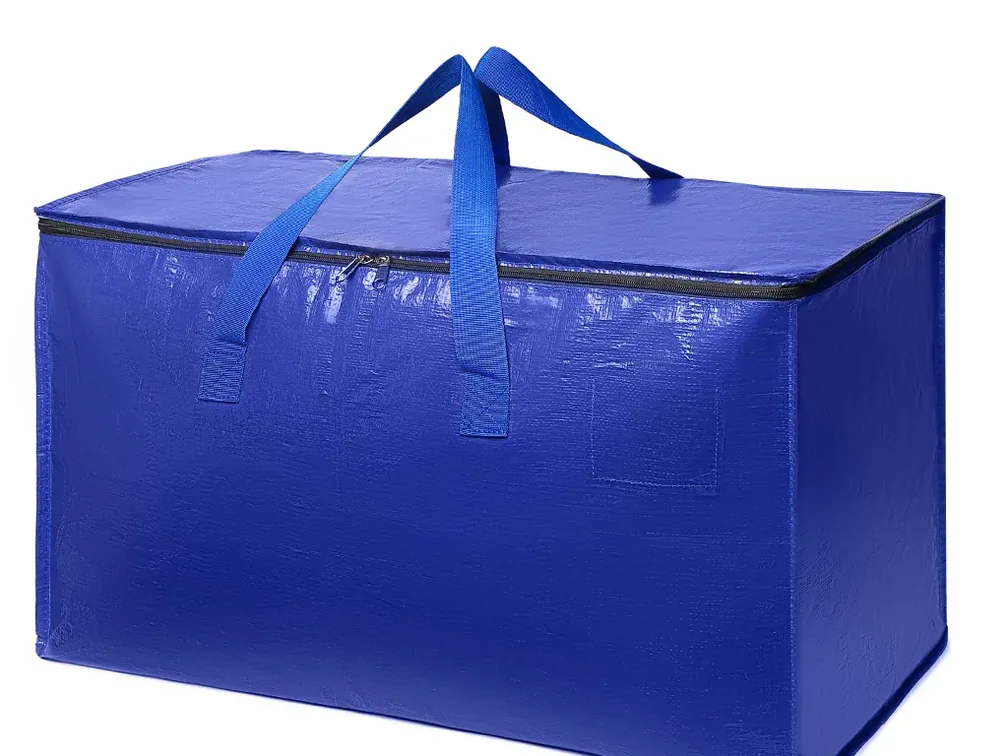
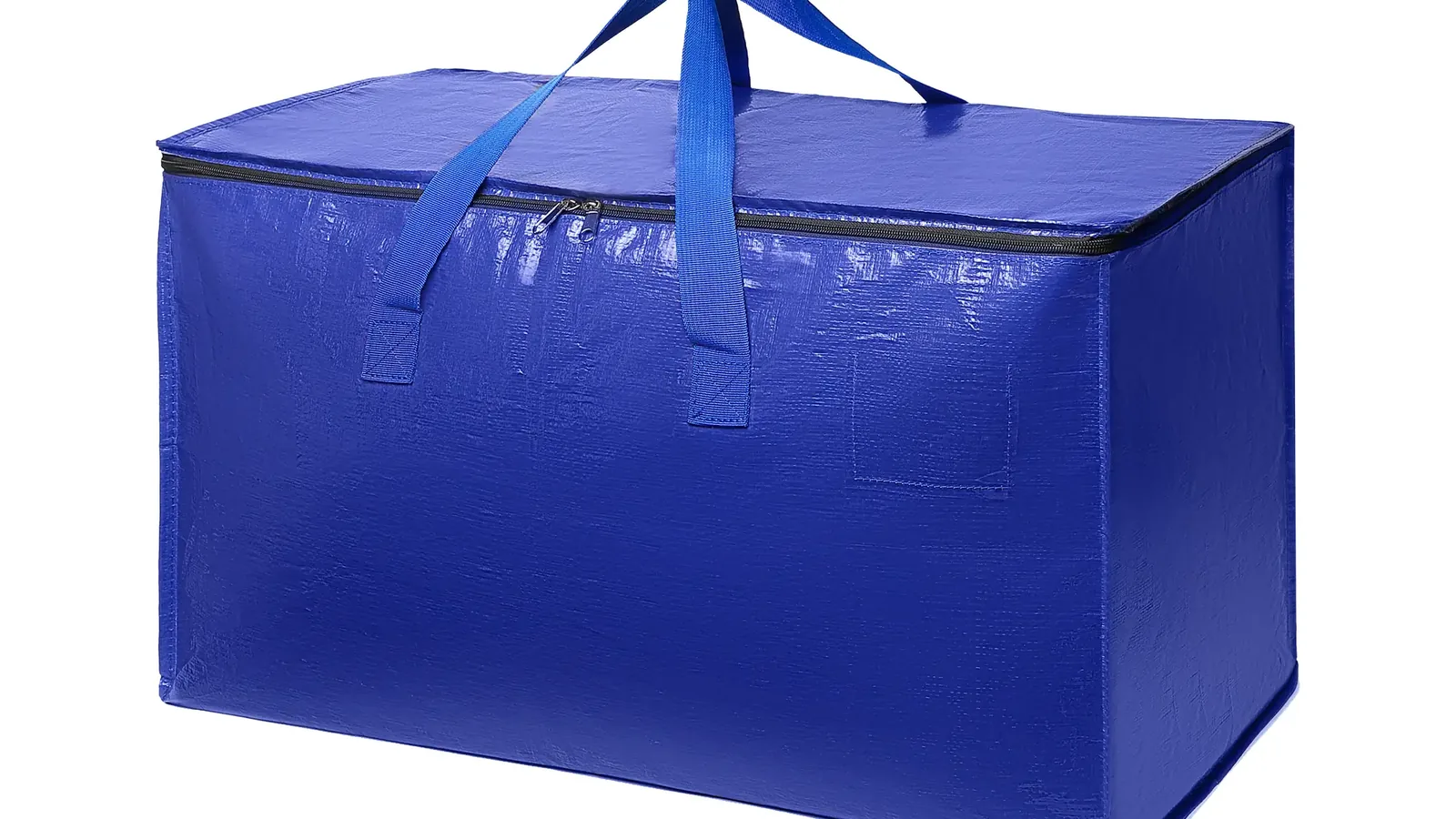
The carton label on a recent moving bag order said 29.1 × 13.8 × 13 in, royal blue PE, and the polybag label inside said nothing at all. That mismatch sat on the loading bay for half a day before anyone opened a carton to check. The order had been placed from a spec sheet with six lines on it, and only two of those lines were specific enough to inspect against.
A moving bag does not beat a cardboard box because a supplier says it is stronger. It beats a box when the spec sheet forces the bag to be measured, pulled, loaded and counted in ways a box never is. The sheet is where that contest is decided, line by line, before a single bag is cut.
The first line on the order: fabric, and the word waterproof
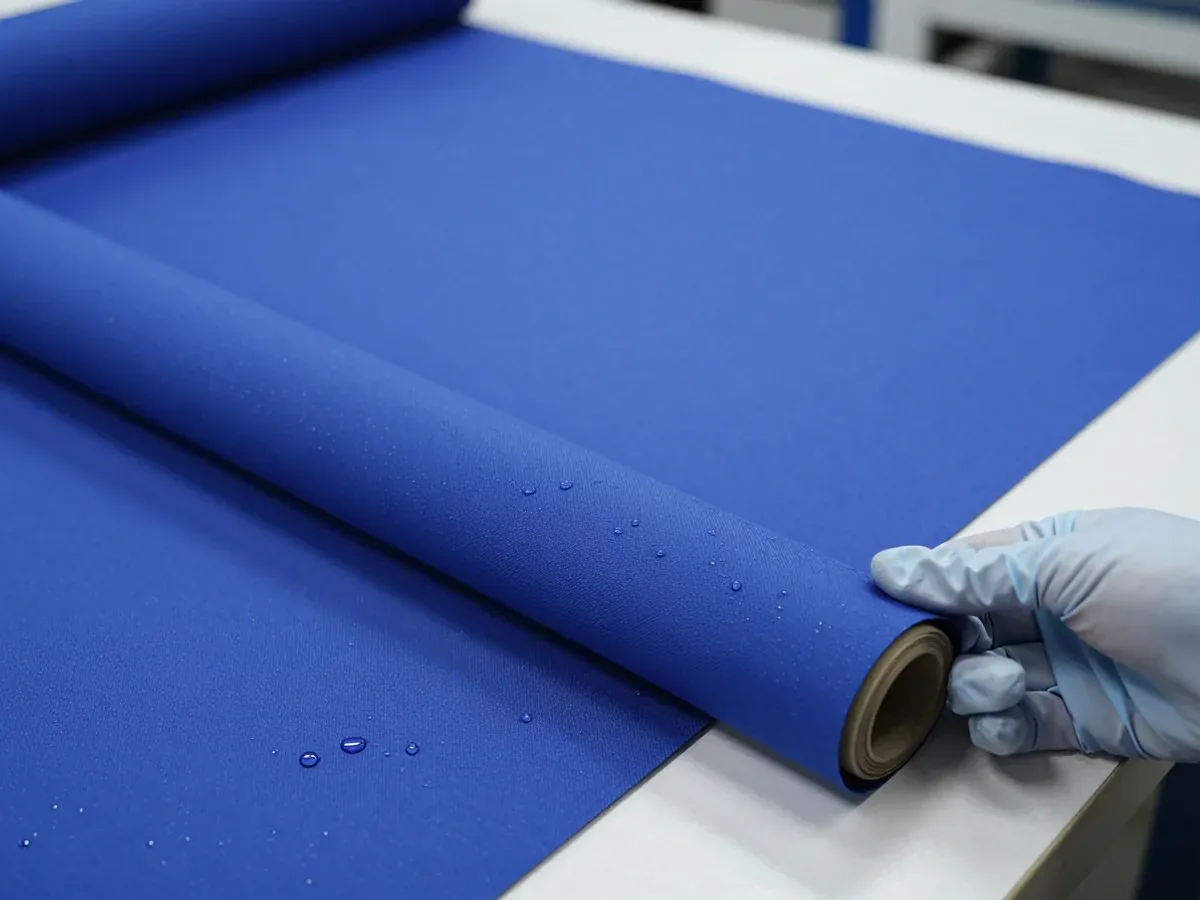
Most moving bag orders open with a fabric line, and most fabric lines are too short. A sheet that says "waterproof moving bag" has already lost an argument it will need later. PP woven resists splashes, but its seams are stitched rather than sealed, so a PP bag is not waterproof in any sense a buyer can defend to a customer. The fabric line has to name the material and stop claiming more than the construction allows.
The range a factory can actually run is wider than most sheets assume: PE, PP woven, non-woven, polyester, nylon, canvas, jute and rPET. Each one behaves differently under rain, abrasion and repeated folding, and the sheet should say which behaviour the buyer is buying. RPET has become the default for North American and European programmes that need a recycled story alongside the strength.
Write the fabric and the water claim as two separate entries. Then verify them separately. A fabric check at incoming material confirms the roll, and a splash test on a finished bag confirms what the stitching does at the seams. If the sheet merges the two, the inspection has nothing to measure.
Load rating and the seam that has to carry it
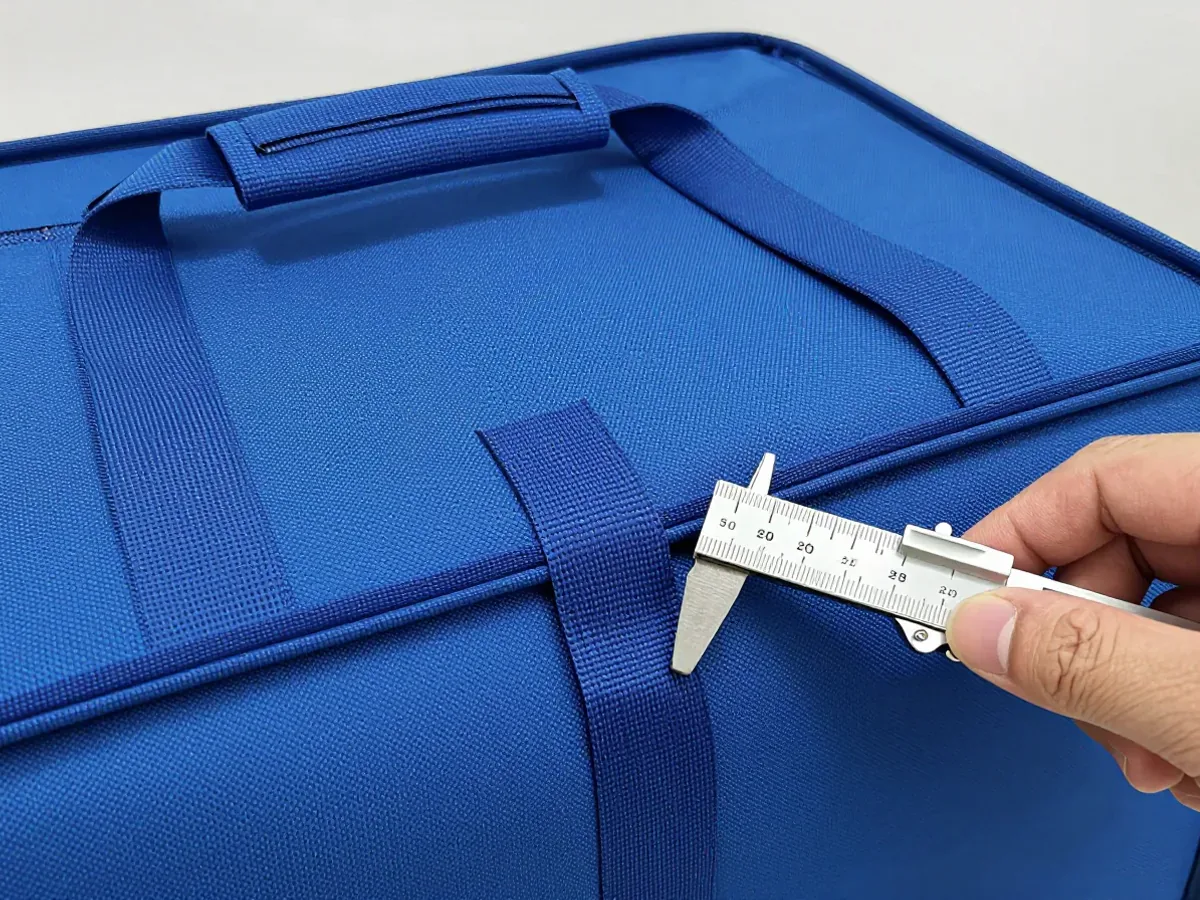
A load figure without a seam instruction is a wish. High-quality moving bags can carry 25 to 35 kg comfortably without tearing, but that number lives or dies at the seam, and the seam is where cheap orders quietly fail. Cross-stitching at the stress points is the difference between a bag that survives a move and a bag that opens on the stairs.
The sheet should state the load in kilograms and name the reinforcement in the same line. "30 kg, cross-stitched at handle junctions and base corners" tells the factory what to build and tells the inspector what to pull. A bare "heavy duty" note tells neither.
Verification happens twice. At the seams and zip checkpoint, the inspector looks for stitch density and for cross-stitching where the webbing meets the body. At the finished bag check, a loaded bag is lifted and held, because a seam that looks right can still travel under weight.
Buyers moving books or tools tend to order the extra-large sizes and report no rips after multiple uses. That outcome comes from the seam line, not the litre count.
Strap geometry: where the webbing actually runs
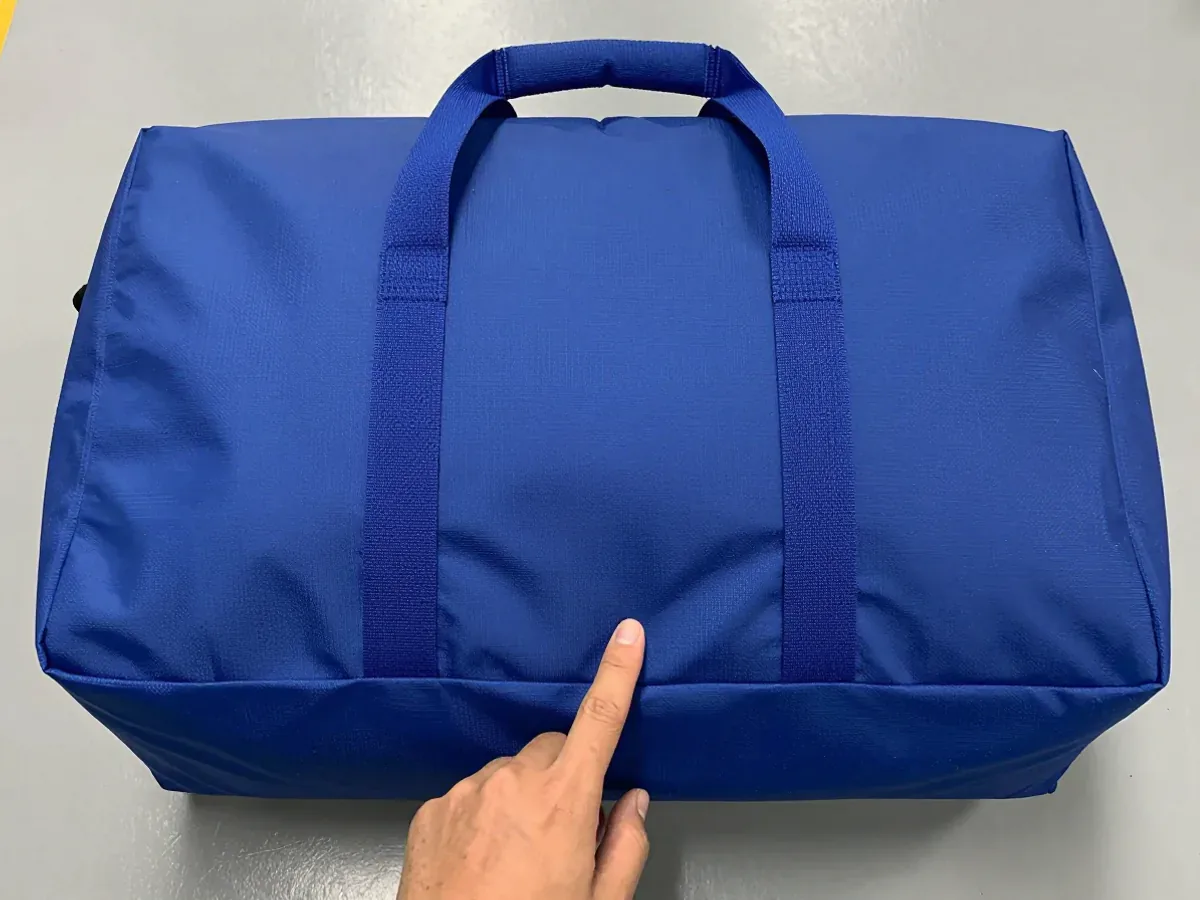
Two bags can share a fabric, a size and a load rating and still carry nothing alike, because the strap is a geometry decision. A wrap-around webbing strap runs the full length of the bag rather than stopping at the handles, which spreads the load across the body instead of concentrating it at four stitch points.
The sheet needs to say where the webbing starts and where it ends. "Handles only" and "full-length wrap-around" are different products at different costs, and a buyer who leaves the line vague will receive whichever the factory finds easier that week. Handles stitched to the body rather than tacked on belong on the same line, since tacked handles are the first thing to separate under a full load.
There is a second geometry question for bags sold into retail: whether the webbing doubles as a backpack strap. On a 29.1 × 13.8 × 13 in royal blue PE bag, backpack straps that stow flat let the same product work as a hand bag and a backpack. That is a spec line, not a marketing line, and it changes the pattern.
Verify strap geometry by laying the bag flat and following the webbing by hand from end to end. If it stops short of the base, the sheet and the sample disagree, and the sample wins unless someone writes it down.
Size range and the mixed carton that ships it

Moving bags run from 40L to over 120L, and a single-size order rarely matches how a retail or distribution programme actually sells. Mixed sizes give flexibility, and buyers running those programmes order them deliberately rather than as an afterthought. The sheet has to describe the mix before the carton is packed, not after.
Write the size range as a list with quantities per size, then add the carton composition. A carton holding six large and four medium bags is a different packing problem from ten of one size, and the count at final inspection depends on which one was agreed. Warehouse space and long shipping routes both reward a mix that stacks predictably.
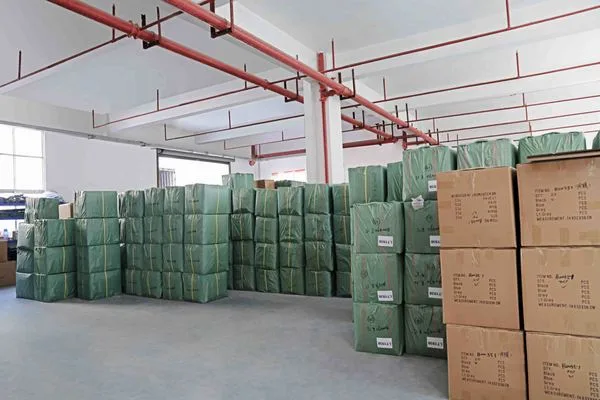
The verification step is the final count, and it should be done against the carton label rather than the packing list alone. That is the exact point where the royal blue order above went wrong: the carton label and the polybag label described different things, and nobody had written down which one was authoritative.
Zip, label pocket and the details that survive handling
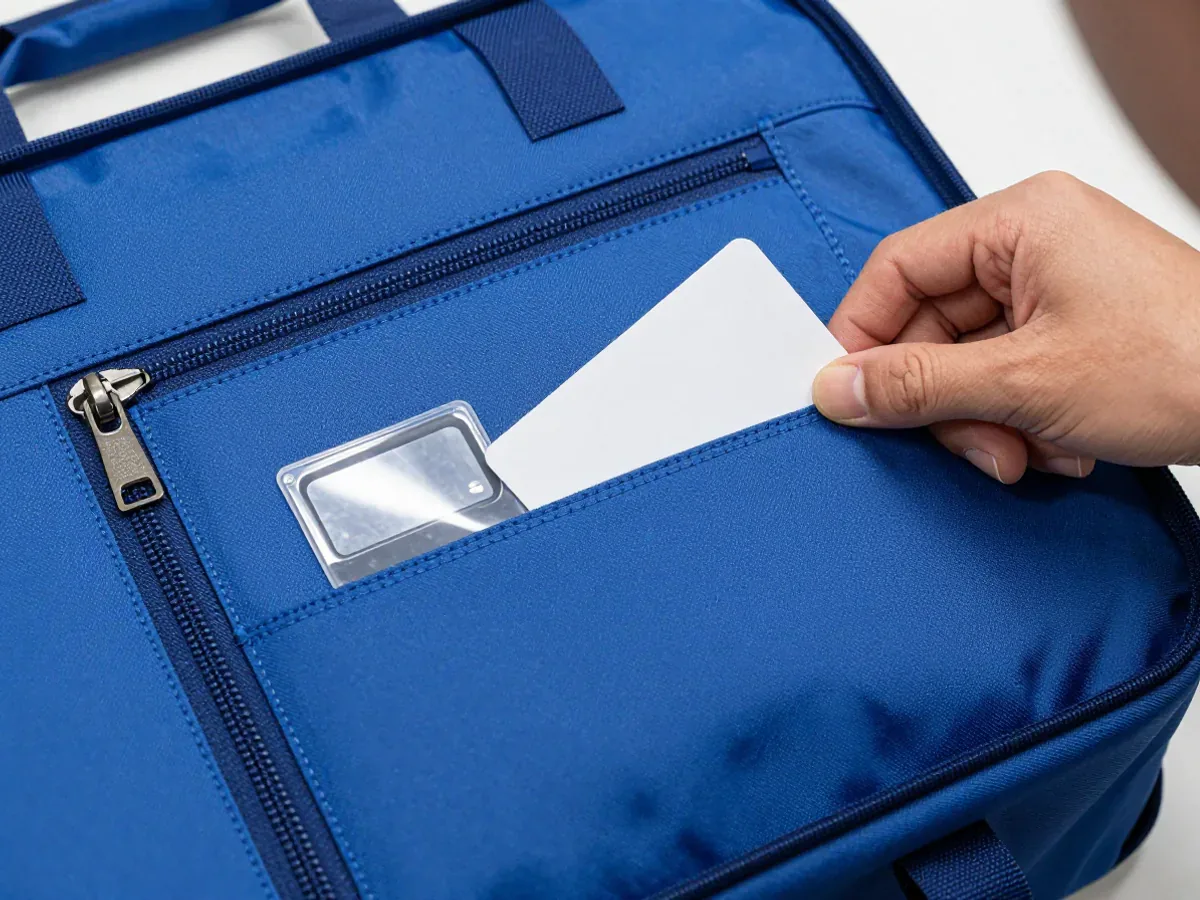
A zip on a moving bag takes pressure a clothing zip never sees, so the sheet should name it as heavy duty and expect it to be cycled under load. Buyers have pushed these zips to maximum loads and found they hold after hundreds of uses, but that result belongs to a specified zip, not to whatever was in the bin.
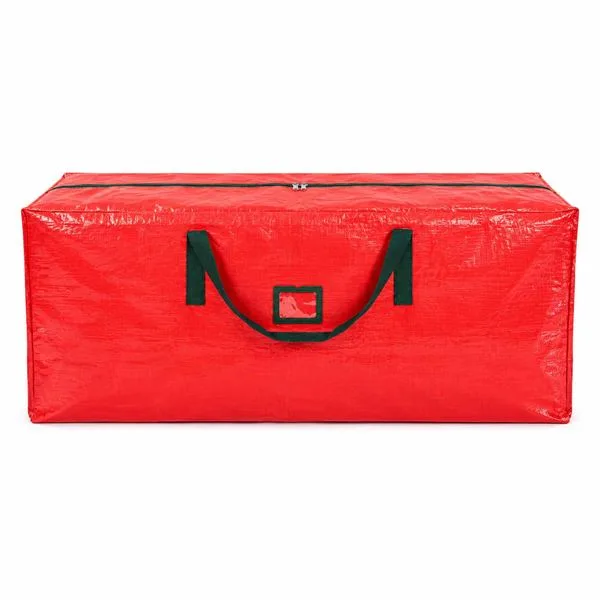
The label pocket is the detail that quietly decides whether a bag gets reused for storage. A clear pocket on the face holding a card that says what is inside turns an anonymous bag into a labelled one, and it costs almost nothing to specify. Leave it off the sheet and it will not appear on the bag.
Both details sit in the finished bag check. The inspector opens and closes the zip, looks at the puller attachment, and confirms the pocket is stitched on all four sides rather than spot-fixed. Small parts are where handling wear shows first.
The line most buyers leave blank: how the order gets checked
The blank line is not a product line at all. It is the inspection plan, and its absence is why two buyers can order the same bag and receive different quality. A sheet that describes the bag but not the checks has described half a purchase.
Four checks cover the order: incoming material, seams and zip, finished bag, and final count. Each one maps to a line above. Incoming material confirms the fabric and the roll identity. Seams and zip confirms the load path and the closure. Finished bag confirms strap geometry, label pocket and overall build. Final count confirms the mixed carton against the label.
Write those four checkpoints into the purchase order with the same seriousness as the size list. Then the moving bag versus cardboard box question answers itself on paper: a box order rarely carries a seam check, a strap geometry check or a reuse detail, and a bag order that carries all four is being bought as a durable product rather than a container.
FAQ
Is a PP woven moving bag waterproof?
No. PP resists splashes, but the seams are stitched rather than sealed, so water can pass at the stitching. A sheet should claim splash resistance and name the fabric, not promise waterproofing the construction cannot deliver.
What load should a moving bag spec state?
State a figure in kilograms and pair it with the seam reinforcement. Bags in the 25 to 35 kg range carry comfortably when the stress points are cross-stitched, and the pair of entries gives the inspector something to test.
Why order mixed sizes instead of one size?
Mixed sizes from 40L to over 120L suit retail and distribution programmes where buyers need flexibility across product types. The sheet should list quantities per size and describe the carton mix so the final count has a reference.
How many quality checks should a moving bag order include?
Four: incoming material, seams and zip, finished bag, and final count. Each maps to a spec line, and writing them into the order is what separates a checked bag from an assumed one.