Based on legacy TIIOCTI retail chain notes and current product spec data for non woven grocery totes.
Every February, grocery chains start planning the spring bag programme, and the same spreadsheet lands on the buyer's desk: three quotes, one column for unit price, and a line that reads "lowest offer." The cheapest non woven tote wins the order before anyone asks how many trips it will survive. That habit looks like discipline. For a chain with dozens of stores, it is often the most expensive decision in the file.
The reasoning behind it is not lazy. Promotional bags have always been bought like flyers: print a run, hand them out, order more next season. When a bag is treated as a giveaway, unit price is the only number that matters, because nobody expects the bag to come back. Retail chains still buy this way even when the bag is meant to leave the checkout and live in a customer's kitchen for a year.
The order that looked like a saving on paper
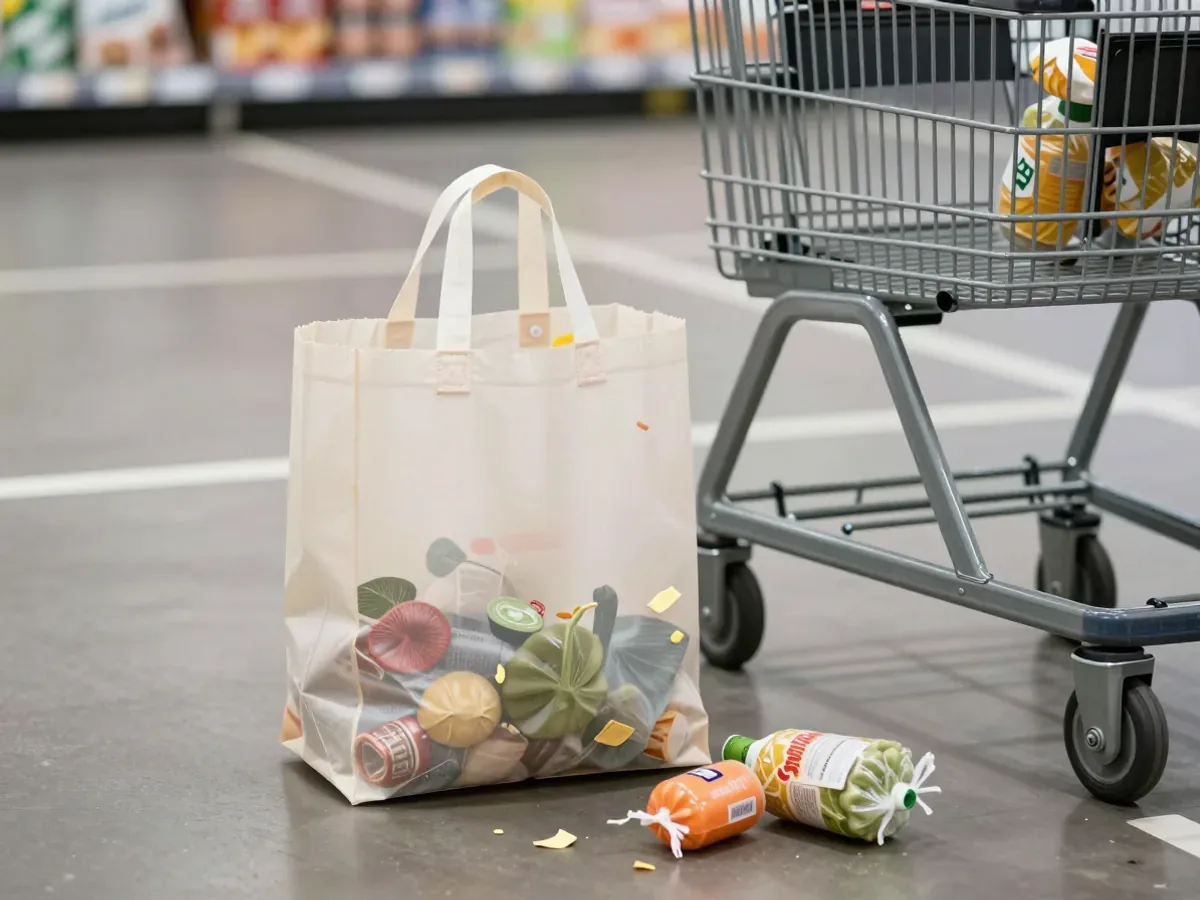
A regional chain once placed a seasonal order of printed non woven grocery bags at the lowest quote on the table. The bags arrived on time, the print was sharp, and the launch went ahead. Six weeks later, store managers were finding split handles in the car park and torn bases at the bottom of trolleys. The chain had saved on the invoice and lost on the shop floor.
The pattern repeats because the purchase order is written in the language of promotion. Quantity, print colours, delivery date, unit price. Nothing on that sheet describes how many shopping trips the bag must survive, how heavy a family shop runs, or how long the chain needs the bag to carry its logo. The supplier answers the question that was asked, and the question was about cost per bag.
Why the low unit price feels like the safe choice
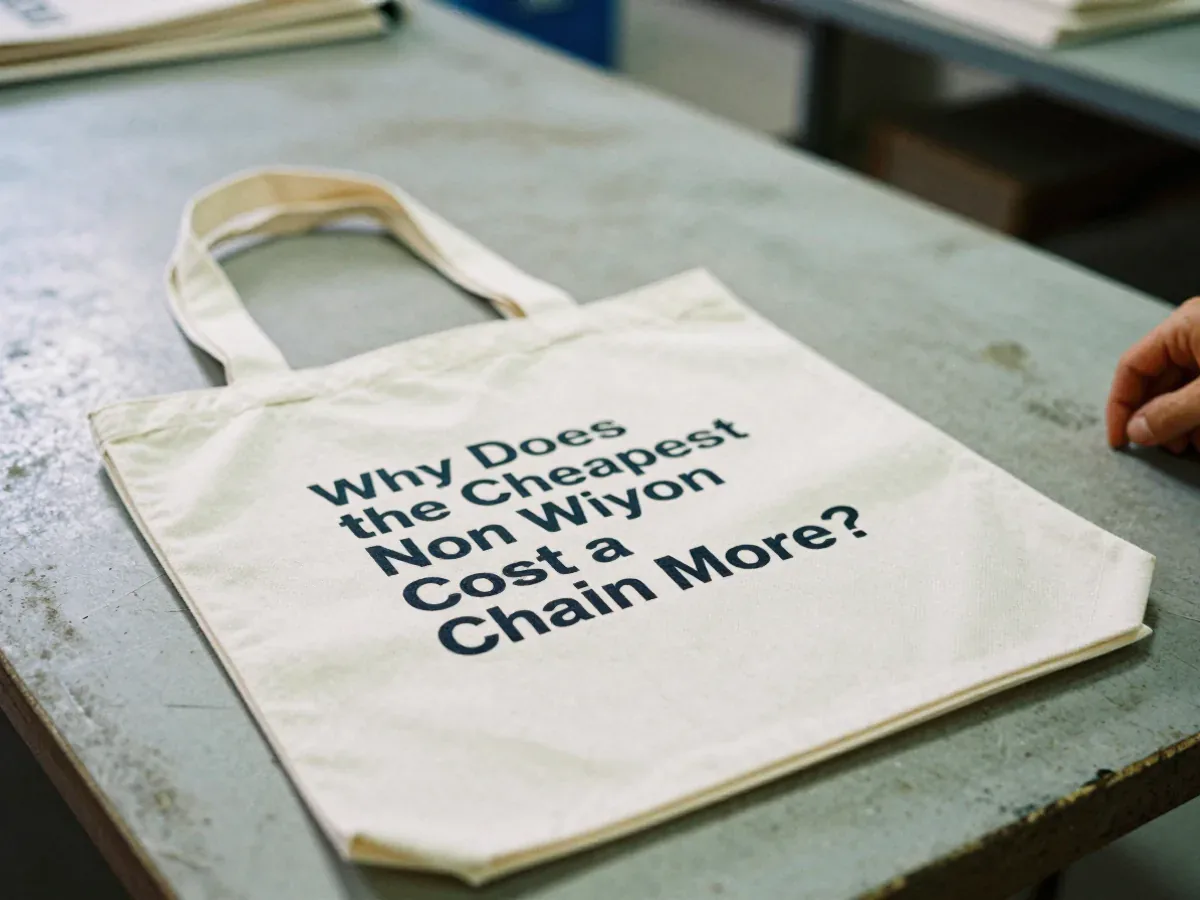
Cheap feels safe because the risk is invisible at the point of purchase. A bag that fails after eight trips looks identical to a bag that lasts two years when both are stacked in a warehouse. The buyer signs off on a sample, the sample survives a hand test, and the order ships. Nobody sees the failure until customers do.
There is also a budget logic at work. Promotional spend is judged on reach: how many bags, how many impressions, how far the money stretches. A lower unit price buys more bags, and more bags look like more brand exposure. That math holds only if the bag stays in circulation, which is exactly what the cheapest construction cannot guarantee.
Chains with many stores feel this most sharply. One bag type is ordered for the whole estate, and the spec is set by the store with the smallest basket. The result is a bag that is too light for the flagship store and too expensive to replace every quarter across the network.
Where the saving leaks out: handles, base and print
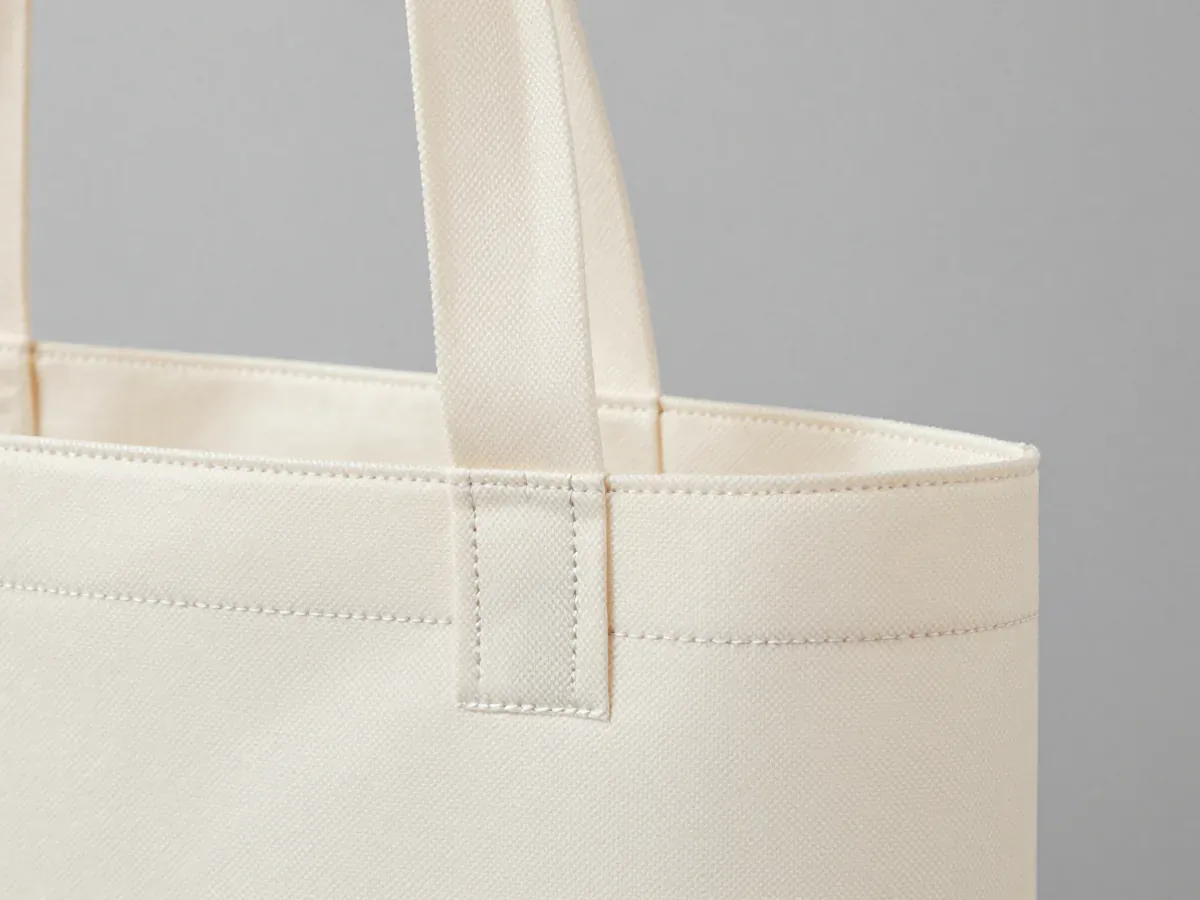
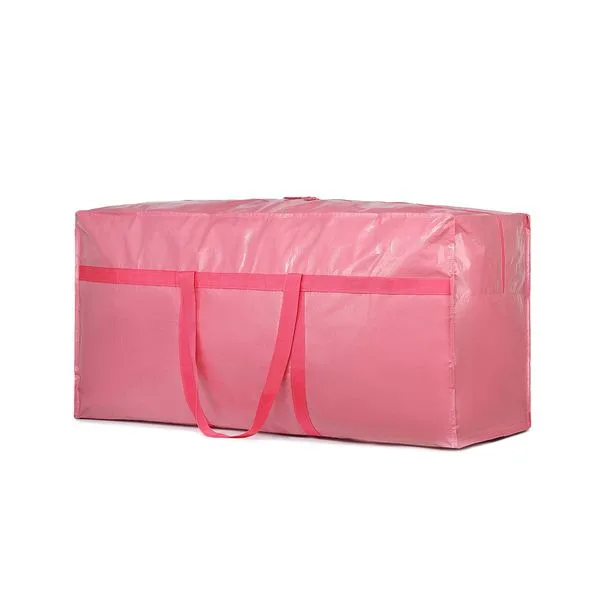
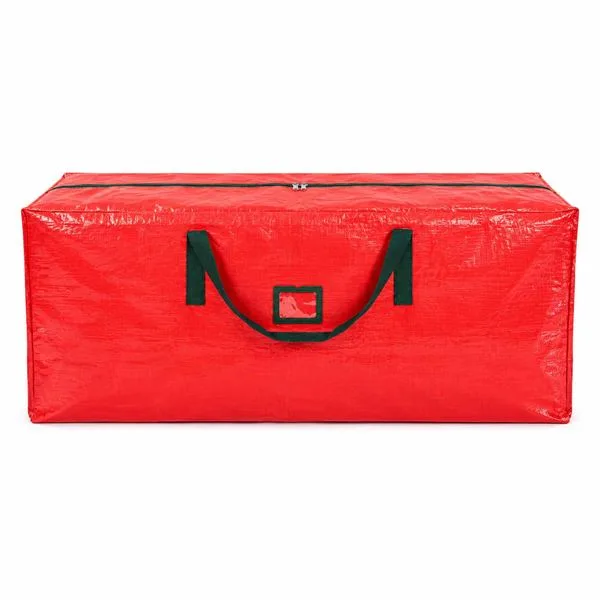
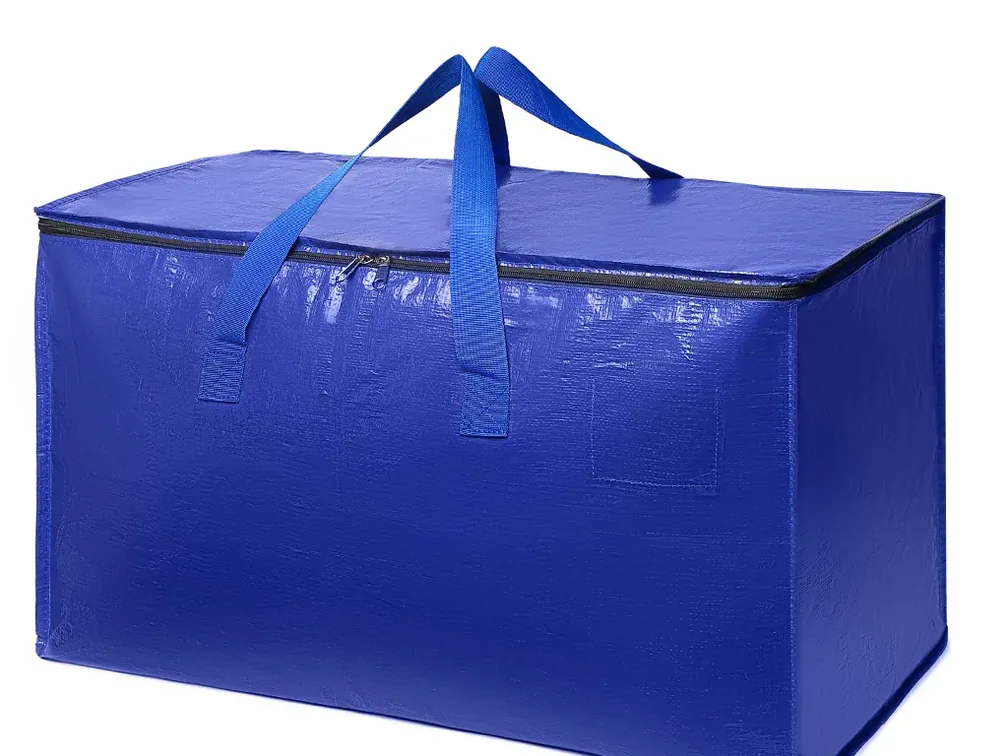
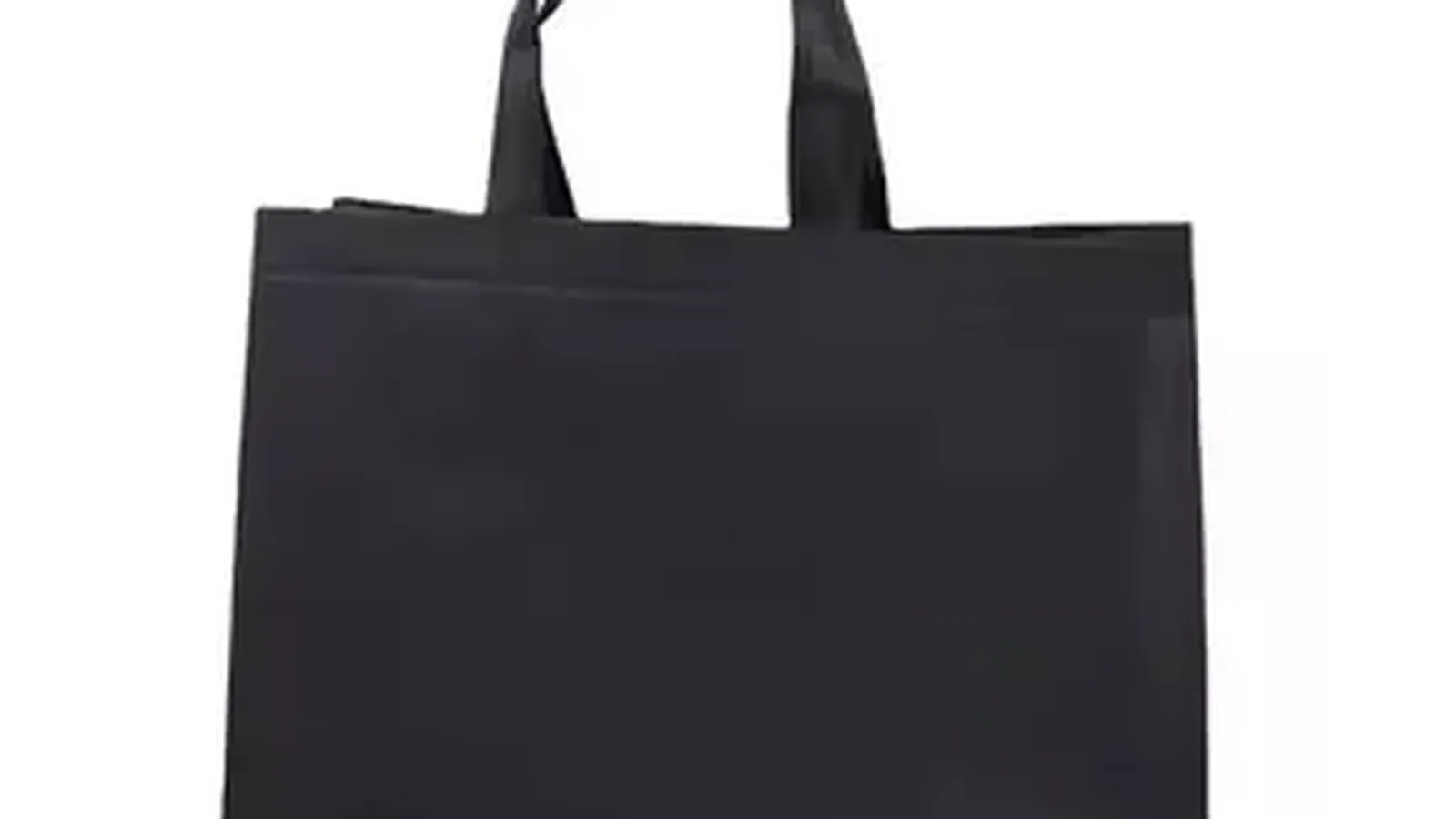
The first failure point is usually the handle. A handle that is tacked onto the body rather than stitched through it pulls away under a loaded shop. Reinforced handles and stitched seams are what let a non woven grocery bag carry heavy groceries without the attachment point giving way. A handle stitched through the body spreads the load into the fabric instead of concentrating it on two small anchor points.
The second is the base. A reinforced base keeps the bag from sagging when boxed cereal and bottles press down on it. Without that structure, the bottom corners wear first, and a worn corner becomes a hole. The bag still looks fine on a shelf and fails in the boot of a car.
Print is the third leak, and the least obvious. A print that cracks or fades turns a walking billboard into a worn-out rag. Screen print and heat transfer both work on non woven, but the surface has to be right for the ink to hold through repeated folding and washing. A bag that loses its logo after a month has stopped advertising anything.
None of these three costs appear on the quote. They appear later as reorders, as store complaints, and as a launch that loses its visual impact halfway through the season.
What a chain actually needs from a grocery tote
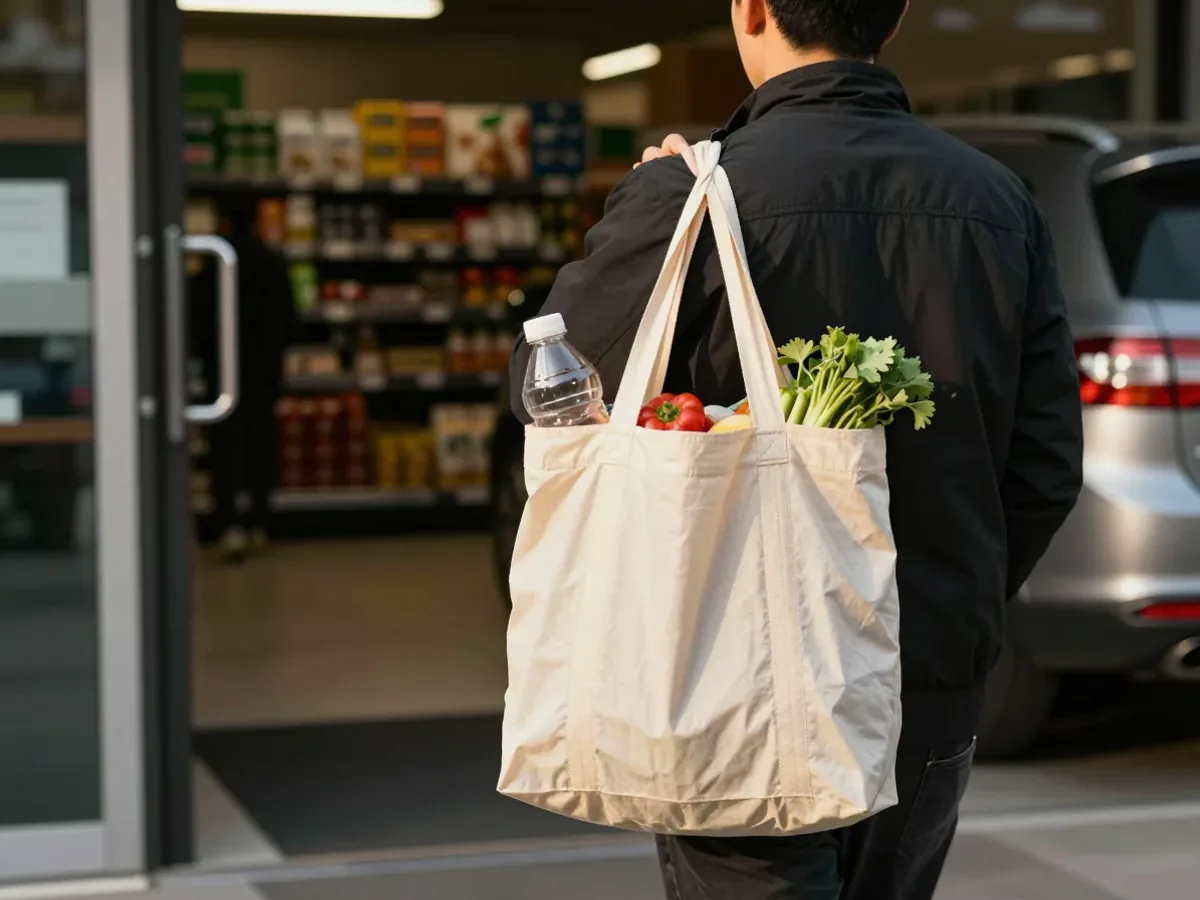
A grocery tote for a chain is not a giveaway. It is a reusable grocery bag that a customer carries home, refills, and brings back. That single shift changes the spec. The bag has to survive the number of trips a typical customer makes in a month, not the number of hours between the checkout and the car.
That means the handle attachment matters more than the print area. It means the base has to hold a full shop without bowing. It means the fabric has to resist rips and stretching across repeated loads, and the print has to stay legible long enough to be worth paying for. A bag that meets those conditions keeps the brand in the customer's hands for months. A bag that does not becomes litter with a logo on it.
Size also belongs to the store, not the quote. A medium tote around 30 by 25 by 5.9 in suits a quick grocery run, while a large bag around 40 by 35 by 7.9 in carries a family shop. A chain that runs both formats needs to decide which stores get which, because a bag that is too small for a weekly shop gets left at home.
Rewriting the spec around the store, not the quote
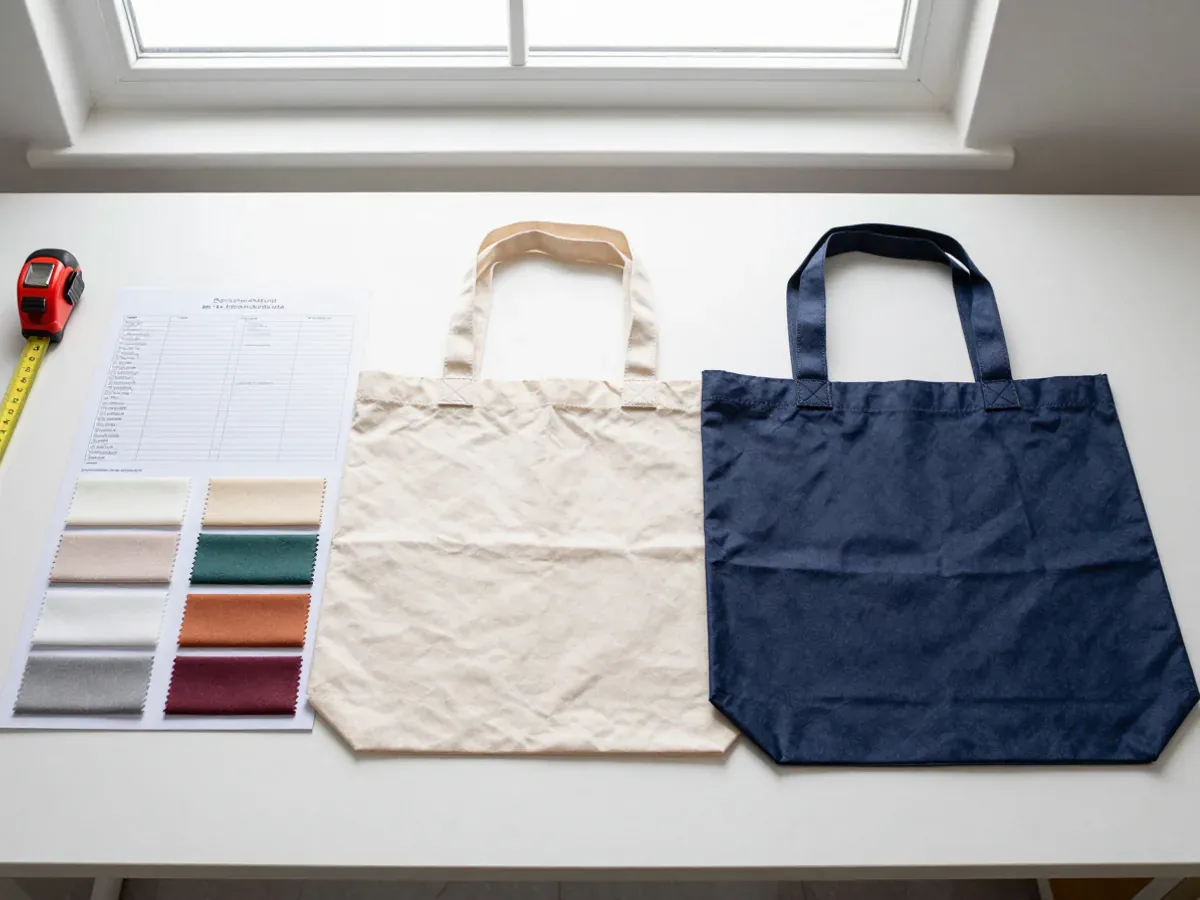
The fix is to write the purchase order around the store's flow instead of the supplier's price list. Start with the trip count: how many shopping trips should this bag survive before it is replaced? Then work backwards to the handle, the base, and the fabric weight that can carry that load. The quote follows the spec, not the other way round.
Colour and print come next, because a chain's bag is a brand asset across every store. Consistent colour matching keeps the bag recognisable whether it is seen under store lighting or daylight, and a print that holds its shape keeps QR codes and slogans readable. A bag that fades unevenly across a network looks like a different brand in every town.
The last decision is whether every store gets the same bag. A flagship store with a heavy basket and a small format store do not need identical totes. Splitting the order by store format costs a little more in planning and usually less in replacements. Packing per store also makes the rollout easier to manage, because each location receives the quantity it will actually use.
A short check before the next purchase order
Before the next order goes out, the buyer can run a short check that takes an afternoon and prevents most of the hidden cost.
- Write the expected trip count on the spec sheet, not just the quantity.
- Confirm the handle is stitched through the body, not tacked on.
- Confirm the base is reinforced for a full shop.
- Ask which print method will be used and how it holds through folding and washing.
- Decide the size by store format, not by the smallest basket in the estate.
- Check that colour will match across the whole order, not just the first carton.
- Ask how the order is packed per store before the rollout date is fixed.
A chain that runs this check is not paying more per bag. It is paying once for a bag that stays in circulation, instead of paying twice for a bag that fails before the season ends. The cheapest tote on the quote is only cheap if it never comes back as a complaint.
FAQ
Should a retail chain order the same tote for every store?
Not always. Stores with different basket sizes and customer flows can justify different formats. A large bag for family shopping and a medium bag for quick trips often serve a network better than one compromise size. The decision belongs to the store plan, not the quote sheet.
How do we compare two non woven tote quotes fairly?
Put the specs side by side before the prices. Compare handle attachment, base construction, fabric weight, print method, and colour control. Two quotes for the same unit price can describe two very different bags, and the cheaper one often leaves out the reinforcement that keeps it in use.
Does a heavier non woven bag always last longer?
Weight helps, but construction decides. A heavy bag with a tacked-on handle can fail before a lighter bag with a stitched-through handle and a reinforced base. Look at how the load is carried, not only at the fabric on the scale.