Reorganised from the original load capacity article and the factory spec sheet for woven PP moving bags.
A carton on the loading bay had been opened for a spot check, and the bag inside carried a sticker that read heavy duty. The buyer who ordered it had compared four quotes that month and picked the lowest unit price. Six weeks later, the same buyer was reconciling a damage claim, a re-ship, and a crew that had spent an extra hour restacking a truck.
The sticker was accurate in the narrowest sense. The bag was woven polypropylene, it had handles, and it held clothing without splitting on the first lift. What the quote never showed was where the money would go after the invoice cleared. A moving bag carries four separate costs, and only one of them appears on the quotation sheet. The other three arrive later, in different envelopes, from different people.
The Quote That Looked Cheapest on the Table

Four quotes for the same nominal product can differ by a wide margin, and the difference is rarely a supplier being generous. It is usually a set of decisions about fabric weight, handle attachment, and seam reinforcement that the buyer never asked about. The lowest quote is a bid on the smallest interpretation of the words in the request.
A buyer comparing woven PP moving bags line by line sees a unit price and a delivery date. What sits behind that price is a fabric weight in grams per square meter, a handle method, a bottom seam strength, and a lamination joint. Each of those is a cost input for the factory and a cost risk for the buyer. When one of them is left loose, the factory resolves it in the cheapest direction that still passes a casual look.
The four costs that matter are the unit price, the handle joint that sends bags back, the claim that arrives after the move, and the minutes a crew loses restacking. They do not appear together on any document a buyer receives. Putting them on one page is the whole exercise.
Line One: The Unit Price and What It Leaves Out

The unit price is the only line most buyers negotiate, and it is the least informative. Two bags at the same price can differ in shell weight, handle attachment, and bottom seam by margins that decide whether the bag survives a season. The price tells you what the factory will accept, not what the bag will carry.
Fabric weight is the first thing the price hides. A 60 GSM shell supports roughly 50 kg static, but the dynamic load factor for woven PP sits at 0.6 to 0.65 times the static rating. That puts a 60 GSM bag at about 30 to 35 kg when a crew is actually swinging it into a truck. A 70 GSM bag moves that ceiling up slightly, and an 80 GSM bag reaches the same 30 to 35 kg dynamic band with more margin at the seam.
The second hidden input is the bottom seam. The PAA standard for laminated PP bags sets minimum breaking strength at 91.8 kgf in both directions, but the bottom seam floor is 40.8 kgf. That is the single point carrying the most direct load when a bag is set down, and it is the number a quote will never mention unless the buyer asks for it in writing.
A quote that lands well below the others is usually a 60 GSM shell with a standard bottom seam and a direct-stitched handle. It is a real bag. It is also the bag that generates the next three cost lines.
Line Two: The Handle Joint That Sends Bags Back
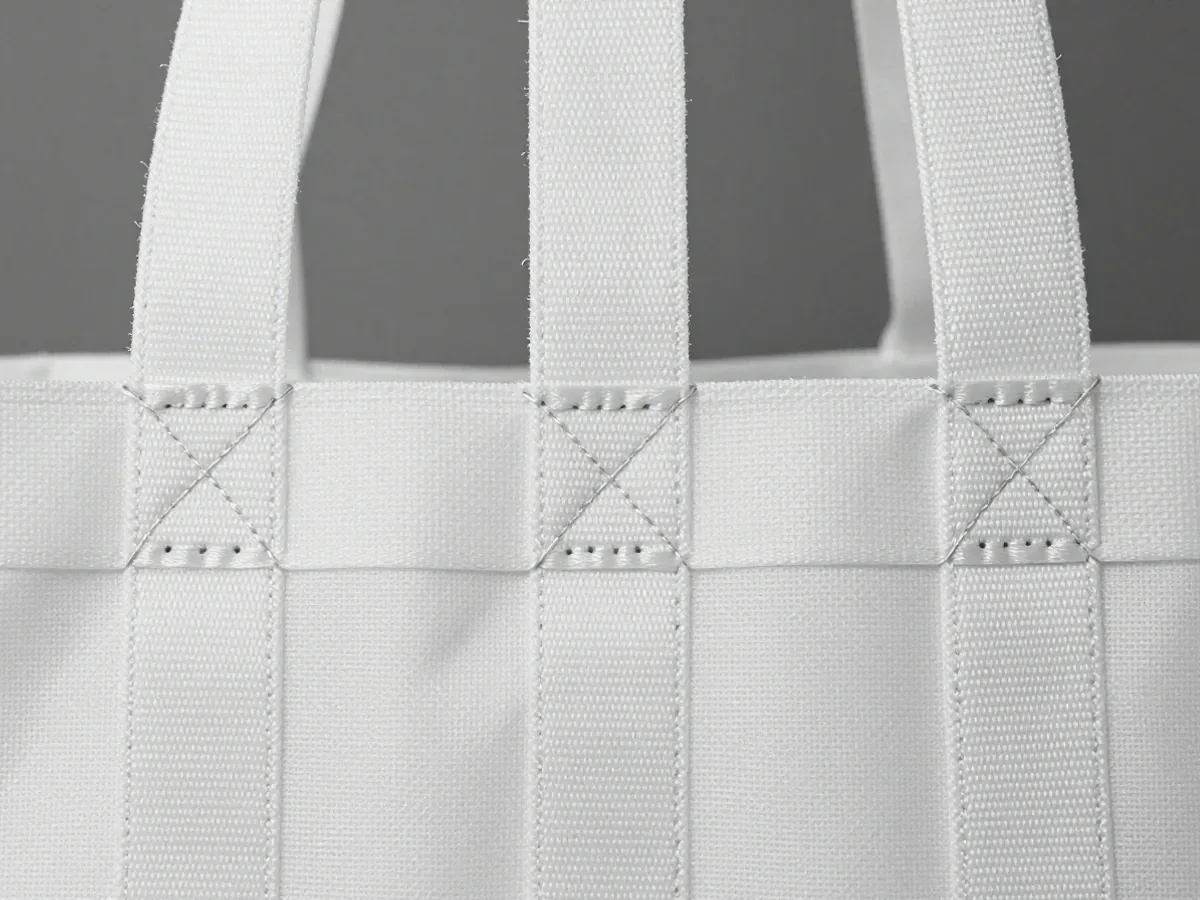
Handle tear-out accounts for an estimated 65 to 70 percent of field failures in moving bags under 80 GSM. The failure almost never starts in the body panel. It starts at the joint where the handle meets the fabric, where the load from a full bag concentrates into a small stitched area.
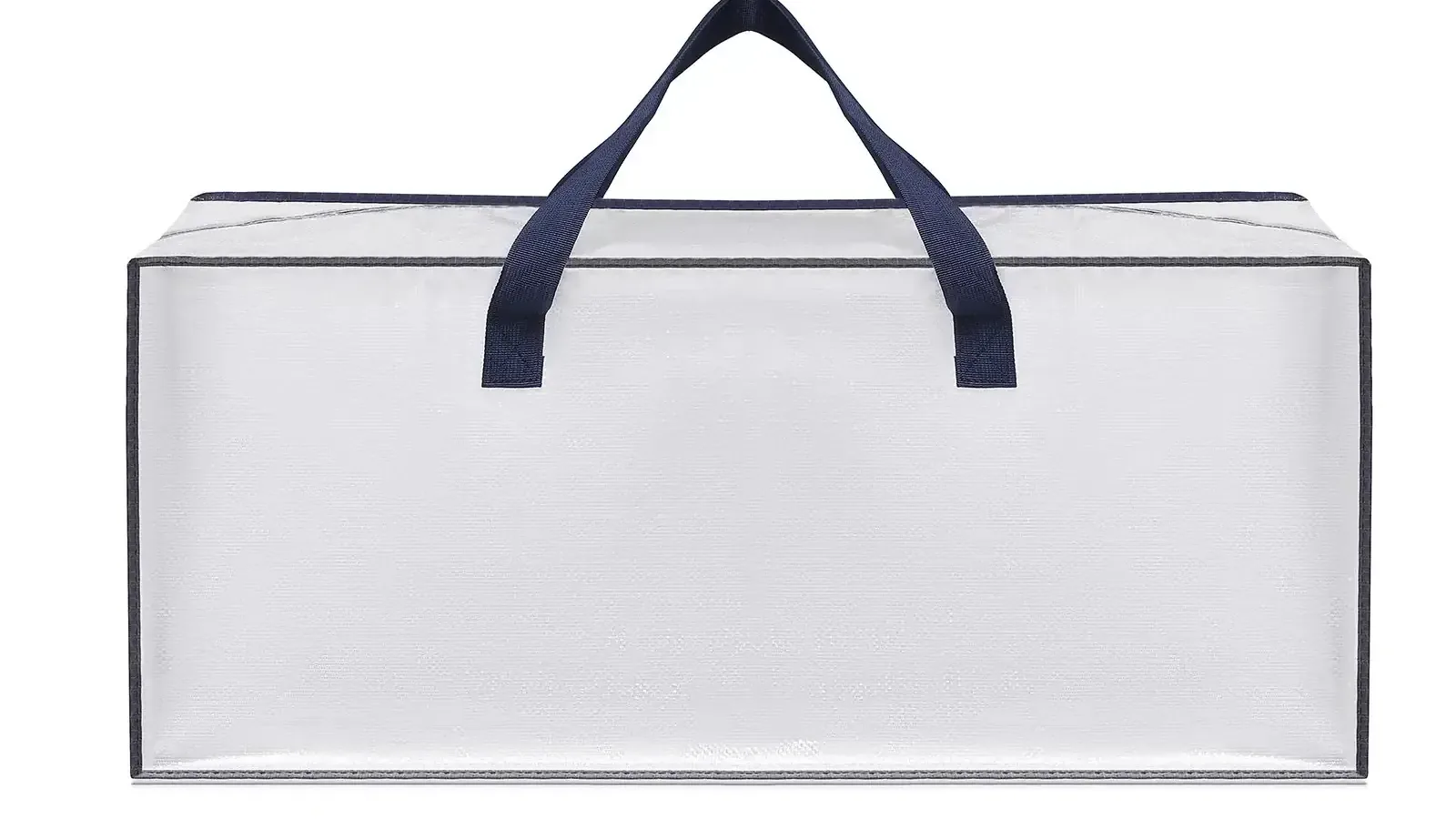
Three attachment methods behave very differently under the same dynamic load. A direct stitch-through handle anchors at two stitch lines and begins to fail around 20 to 25 kg dynamic at 60 GSM, because the needle holes become tear initiation points. A patch-reinforced stitch spreads those holes over a wider zone and pushes the threshold to roughly 28 to 32 kg. A wrap-around continuous loop runs nylon webbing under the top hem and reaches about 35 to 40 kg at 60 GSM, and 45 to 50 kg at 80 GSM.
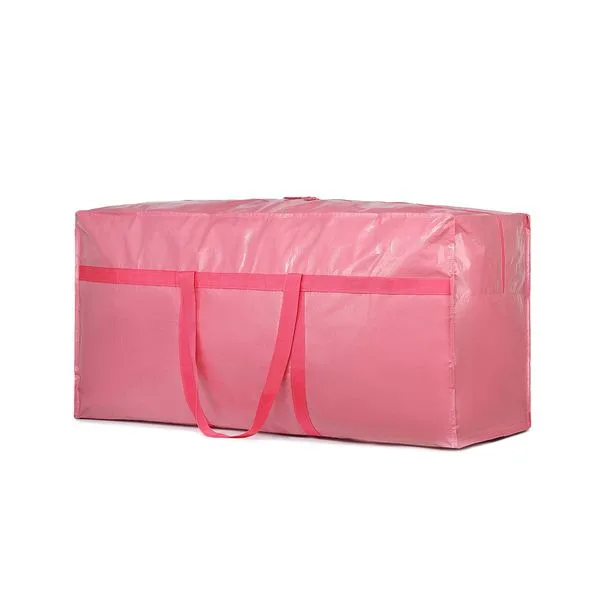
The gap between the first method and the third is 15 to 20 kg of dynamic capacity at the same fabric weight. That is the difference between a bag that survives a truck-to-curb transfer and one that drops a customer's books in a driveway. The webbing on a long bag can run the full length of the body rather than only under the handles, which spreads the load further and supports a large loaded bag from below.
Handle width is a distraction. A 1.8 inch nylon handle stitched to 60 GSM fabric will not tear at the handle, because the nylon is stronger than the shell. The fabric around the attachment point tears first. A wider handle creates a feeling of strength without changing the failure mode.
Line Three: The Claim That Arrives After the Move
A damage claim is the cost line that never appears in a procurement spreadsheet until it happens. When a bag fails mid-move, the loss is not the bag. It is the contents, the customer conversation, the replacement, and sometimes the insurance deductible. One property damage claim can erase the savings from a whole season of cheap bags.
The claim usually traces back to a seam or a joint that was never specified. A bottom seam at the 40.8 kgf floor is a 55 percent reduction from the fabric's own 91.8 kgf breaking strength, and it is the point that takes the impact when a bag is set down on a truck floor. A handle tear-out at 25 kg dynamic is a bag that was loaded by feel and lifted by two people.
Moisture adds a quieter claim. PP resists splashes, but the seams on a stitched bag are not sealed, so a bag is not waterproof. A move that includes a damp garage or a rainy loading day can put moisture against the contents through the seam line. A shell that wipes clean between jobs helps with surface dirt, not with water coming through stitching.
The claim line is hard to price in advance, which is why it gets ignored. A rough way to put a number on it is to take the claim rate per hundred bags, multiply by the average settlement, and add the labor to re-ship. Buyers who have run a season of cheap bags usually know this number better than they want to.
Line Four: The Minutes a Crew Loses Restacking
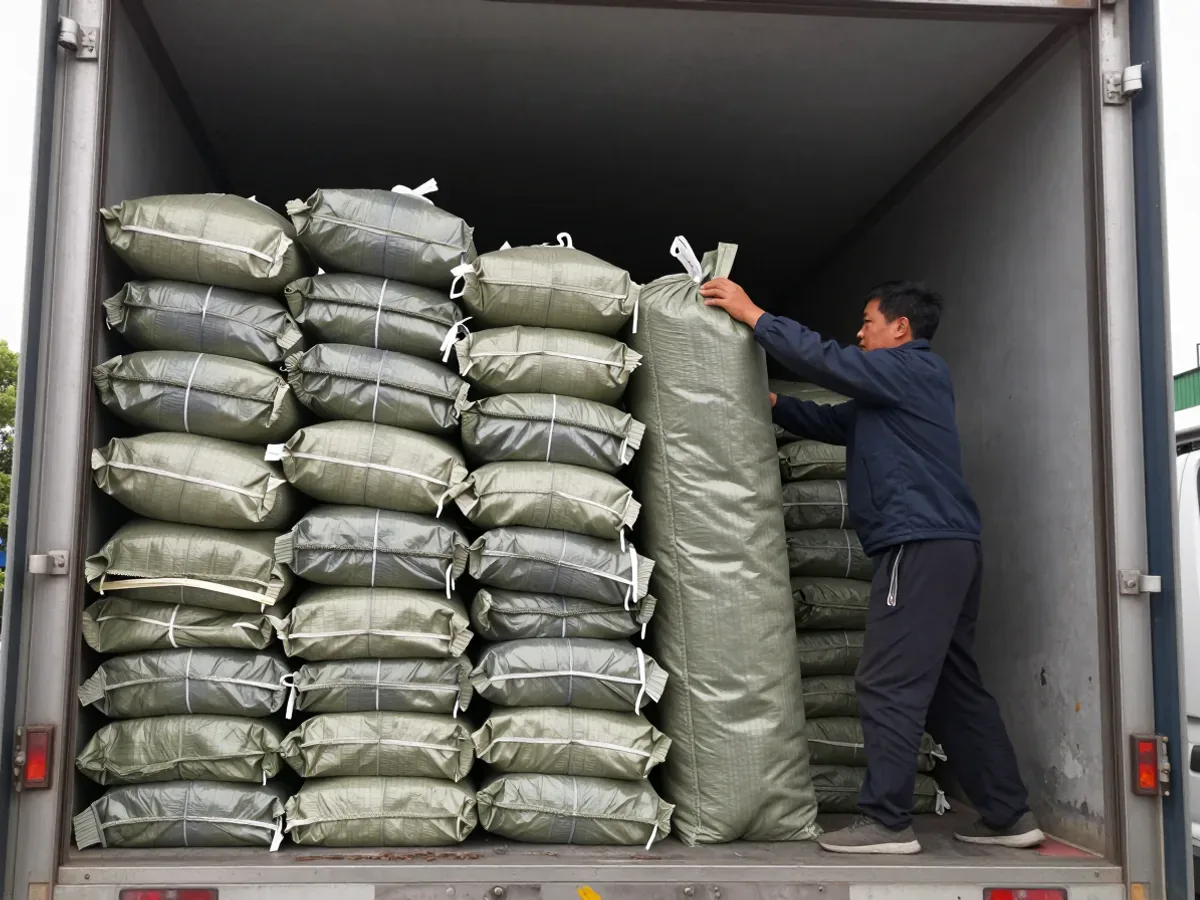
The fourth cost is time, and it shows up on the truck rather than on the invoice. Crews stack moving bags three to five layers high, and each layer adds compressive load to the bags beneath. Woven PP elongates only 10 to 15 percent under load, so a bottom bag compresses slightly and keeps its rectangular shape. Non-woven PP stretches 25 to 40 percent, and a stack built on it shifts into a pile.
A shifted stack costs 15 to 20 minutes per truck in re-securing, and sometimes a toppled column lands on a customer's furniture. That time is paid at crew rates, and it repeats on every load. Over a season, the minutes add up to a number that can exceed the unit price difference between a 60 GSM bag and an 80 GSM bag many times over.
The same low-elongation property protects the seam structure. A bag that holds its dimensions keeps the bottom seam under predictable load instead of cycling through stretch and recovery on every lift. Dimensional stability is not a comfort feature. It is the reason a stack arrives the way it was loaded.
How to Put a Number on Each Line Before You Order
The four lines can be estimated before a purchase order goes out, and the estimate does not need to be precise to be useful. The point is to compare quotes on total cost rather than unit price, and to see which supplier is quietly shifting risk onto the buyer.
Start with the unit price and convert it to a cost per successful move. Divide the unit price by the expected number of trips before failure, using the dynamic load band for the fabric weight. A 60 GSM bag at the low end of its dynamic range will not last as many trips as an 80 GSM bag at the same load, and the per-move figure reflects that.
Add the handle line by estimating tear-out rate for the attachment method in the quote. Direct stitch-through, patch-reinforced, and wrap-around continuous loop sit at different thresholds, and the rate difference is large enough to change the ranking of two quotes. Ask which method is quoted before comparing prices.
Add the claim line as a rough rate times settlement, and add the restacking line as minutes per truck times crew rate times trucks per season. The four numbers together give a total cost per move that is comparable across suppliers. A quote that wins on unit price often loses on the other three.
What to Write Into the Spec So the Cheap Line Stays Cheap
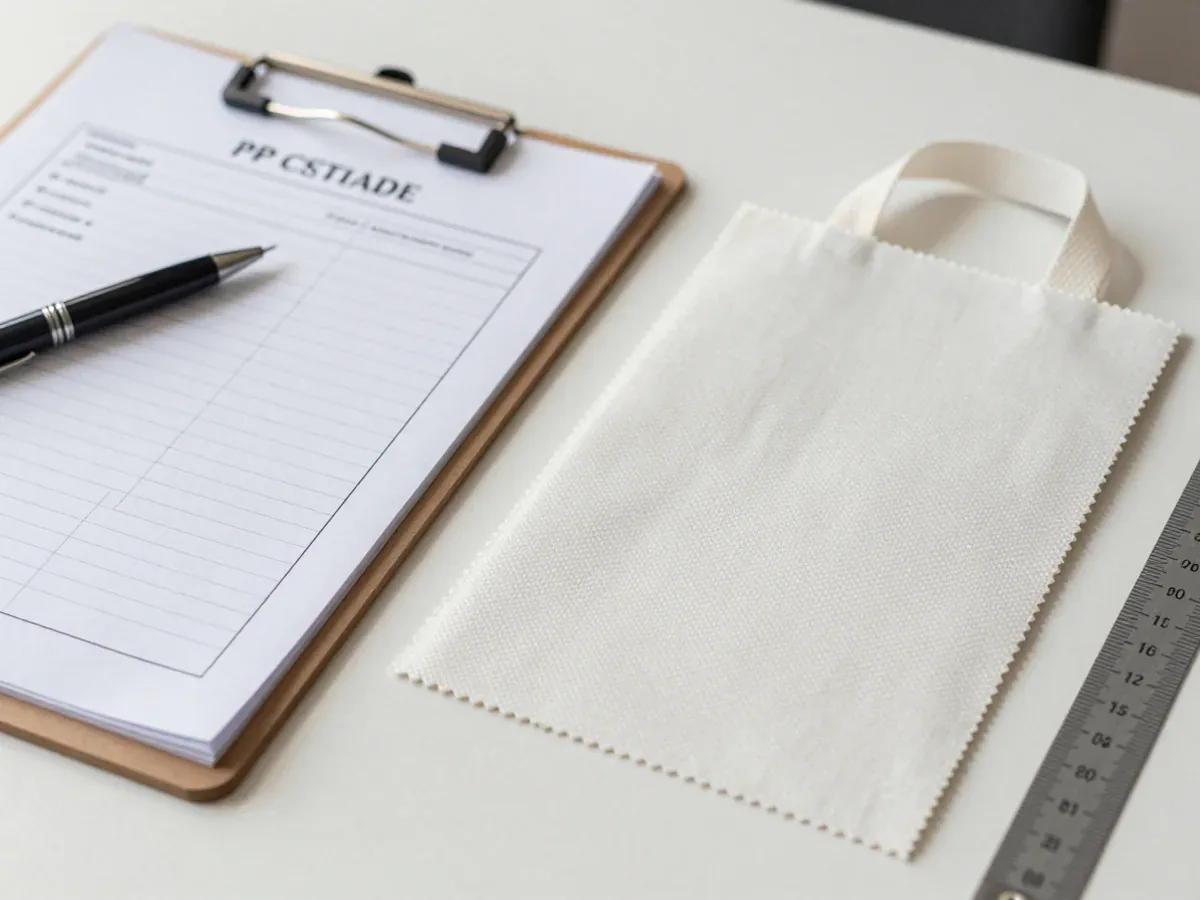
A cheap line stays cheap only when the specification removes the factory's room to interpret. Writing heavy duty in a request without a fabric weight, a handle method, and a seam requirement guarantees the factory ships its cheapest compliant version. In practice that means a 50 to 60 GSM shell with a standard seam and a direct-stitched handle.
Lock the fabric weight to a single target with a tolerance, such as 70 GSM or 80 GSM with a plus or minus 5 percent window. A range like 60 to 80 GSM invites the factory to ship 60 every time. Specify the bottom seam minimum breaking strength separately from the fabric strength, and ask for both numbers in writing.
Name the handle attachment method rather than the handle width. Ask whether the webbing is a wrap-around continuous loop or a stitched-on handle, and ask for the body GSM at the attachment zone. For a long bag, ask whether the webbing runs the full length of the body. A surrounding strap design supports a large loaded bag in a way a short handle patch cannot.
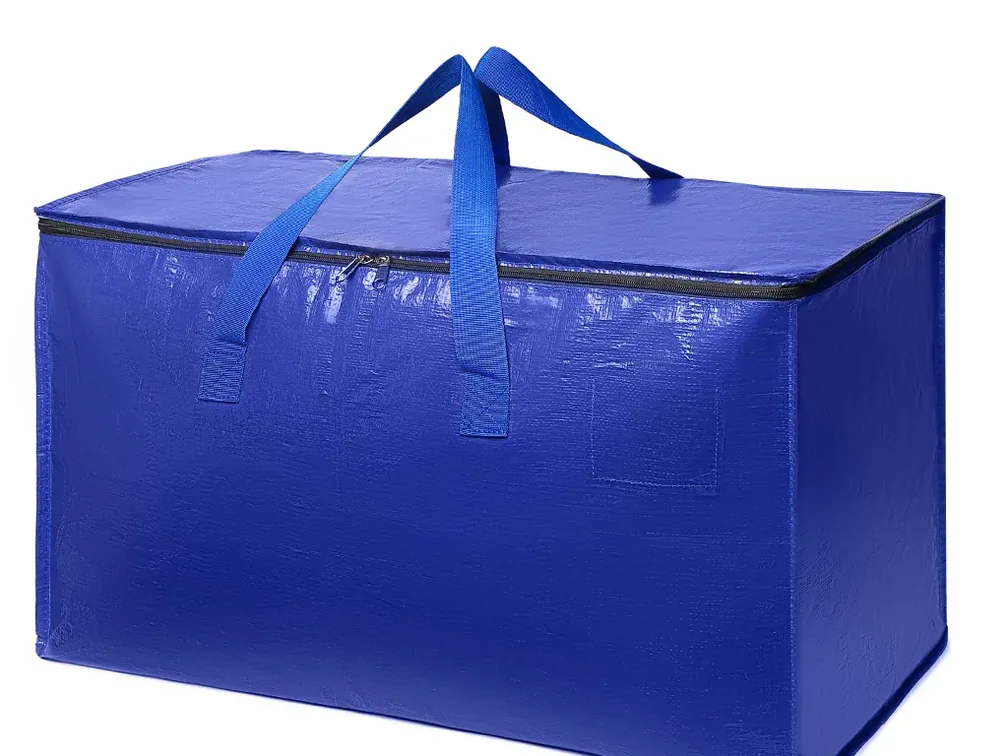
Add the practical details that decide whether a bag survives a season. Confirm that the shell folds flat when empty for storage, that the top closes from either end if the bag uses two pulls, and that the handle attachment is stitched with a dense row. Every order that passes four checkpoints has a paper trail behind it, and that trail is what a claim conversation rests on.
FAQ
Is a 60 GSM woven PP bag enough for a home move?
It can be, for light contents like clothing and bedding, where the bag fills by volume before it reaches its weight limit. For kitchen goods, tools, or anything dense, the dynamic ceiling of 30 to 35 kg is reached quickly, and the bottom seam sits at its minimum. A 70 or 80 GSM shell gives more margin at the seam and the handle joint.
Why do handles fail before the bag body does?
The handle joint concentrates the load of a full bag into a small stitched area, and the needle holes become tear initiation points. Handle tear-out accounts for an estimated 65 to 70 percent of field failures in bags under 80 GSM. The body panel is usually stronger than the joint that carries it.
Should I ask for a load rating or a GSM figure?
Ask for both, and ask for the bottom seam strength as a third number. A load rating without a fabric weight and a seam figure is a claim without a basis. The GSM sets the fabric behavior, the seam number sets the failure point, and the dynamic factor of 0.6 to 0.65 converts the static rating into what a crew can actually lift.
Does a heavier shell always cost more per move?
Not always. A heavier shell costs more per unit, but it can last more trips and reduce the claim and restacking lines. The per-move cost is the unit price divided by trips before failure, plus the handle, claim, and time lines. A 60 GSM bag that fails early can cost more per successful move than an 80 GSM bag that finishes the season.