

Reorganised from the archived mattress protection article, with product details from the cover specification sheet.
The new hire in the sample room held up a mattress cover and asked why the zip ran the whole length instead of stopping at one end. She had spent the morning watching a crew load a queen mattress into a van, and the cover they used had a short opening that forced two people to fold the mattress through it. The question sounded basic. It was also the same question most buyers ask after the truck is already booked.
The Question That Arrives After the Truck Is Booked

A buyer calls a moving company, gets a date, pays a deposit, and then starts looking at protection. By that point the loading method is fixed, the crew size is fixed, and the weather forecast is the only variable left. The cover becomes an afterthought squeezed into the last week.
That order of operations is backwards. A mattress is large, heavy, and soft, which is a poor combination for any vehicle. Every decision about the cover depends on decisions made earlier: how far the trip runs, whether the mattress travels upright, and how many people will lift it. Buyers who ask about covers first tend to buy the right one. Buyers who ask last tend to buy whatever the hardware store has on the shelf.
The questions below are the ones that surface in that final week. Each one has a practical answer that can be checked before the truck arrives.
Will a Blanket and Tape Survive a Rainy Load?
A blanket absorbs water and holds it against the fabric. Tape holds the blanket in place until the adhesive meets a damp surface, and then it lets go. Neither material was designed to keep moisture out, and a mattress that gets wet in transit does not simply dry on arrival.
Moisture buildup is the quiet failure in mattress transport. Foam and fiber take water into the core, and the outer fabric can feel dry while the inside stays damp for days. That is where mildew starts. A buyer who has watched a mattress come off a truck with a damp corner knows the smell that follows.
The material answer is a water resistant layer, not a breathable one. PE film is a thin water resistant cover intended for one way transport, and it does the job of keeping rain and road spray off the surface. It is not a permanent cover and it is not meant to be reused trip after trip. For a local move in dry weather, film over a properly wrapped mattress is often enough. For a long haul through uncertain weather, the film needs to be intact at every seam.
Does the Cover Open Wide Enough for One Person?
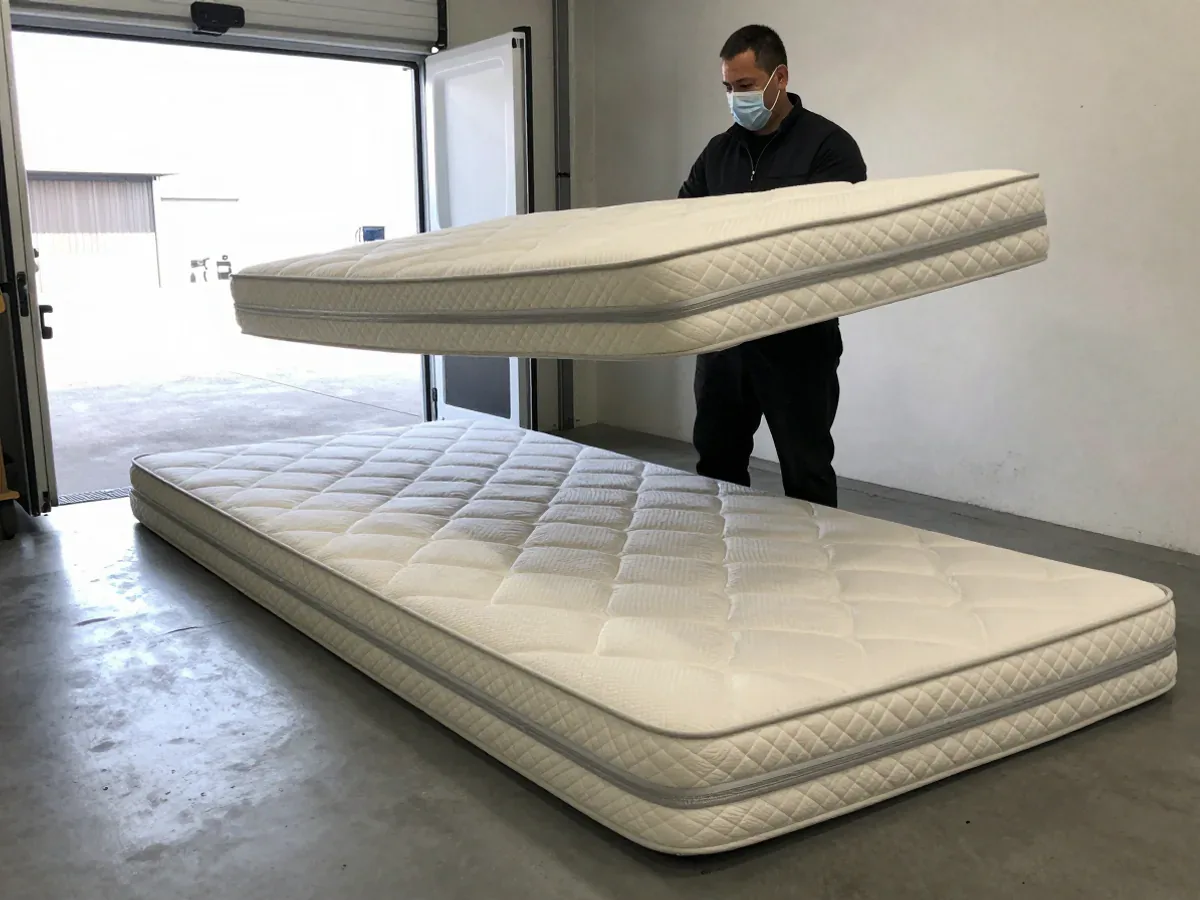
Most mattress covers open at one end, which turns loading into a two person job. One person holds the cover open while the other feeds the mattress in, and the mattress usually gets dragged across the floor in the process. Dragging is how corners get crushed and how the bottom fabric picks up grit.
A full length zip changes the loading sequence. The cover opens along its entire length, the mattress drops in from above, and one person can close the zip without wrestling the mattress through a narrow mouth. That is the reason the sample room assistant noticed the zip first. It is not a cosmetic detail. It decides whether a single mover can handle the load or whether the job needs a second pair of hands.
Zipper alignment matters as much as zipper length. A zip that runs true closes in one pass. A zip that pulls to one side catches at the corner and forces the loader to stop and restart. Checking alignment before packing is a standard step on heavy duty covers, and it is worth asking about when comparing suppliers.
Where Do Handles and Reinforced Corners Change the Lift?
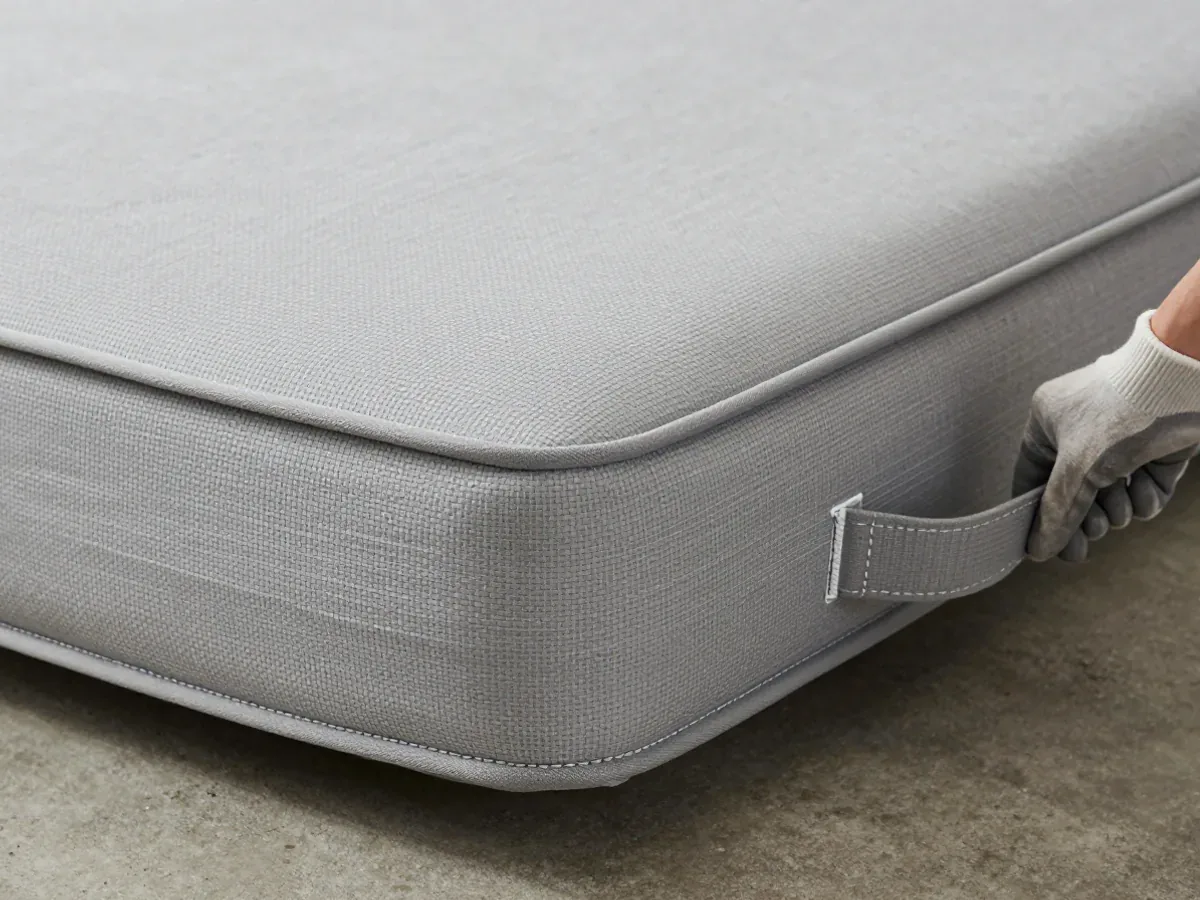
A mattress has no natural grip. Without handles, the crew grabs the fabric, and fabric stretches. Handles give the lift a fixed point, and an end handle lets one person control the leading edge while another takes the trailing edge.
Reinforced corners matter for a different reason. Corners take the first impact when a mattress is set down, leaned against a wall, or slid into a truck. A reinforced corner spreads that impact across a patch of material instead of concentrating it on a single stitch line. On a cover with carry handles, an end handle, and reinforced corners, the lift becomes predictable: two people, four grip points, no fabric stretch.
The size range also affects the lift. Covers that run from single through king, plus a custom size, mean the handle positions can be placed for the actual mattress rather than approximated. A king mattress with handles placed for a double is worse than no handles at all, because the crew lifts from the wrong balance point.
Is PE Film Enough, or Does the Trip Need a Woven Shell?

Film and woven shell solve different problems, and the choice depends on the trip rather than on the budget.
PE film is thin, water resistant, and suited to one way transport. It keeps rain, dust, and road spray off the mattress, and it costs little enough to be treated as disposable. It tears on sharp corners and it does not survive being dragged. On a short local move where the mattress goes from a clean room into a van and out again, film is a reasonable answer.
A woven shell is stronger and carries a zip, which makes it a reusable cover rather than a disposable wrap. It handles the abrasion of a loading ramp, the pressure of being stacked against other items, and the repeated handling of a move that involves stairs or a tight stairwell. Buyers moving into a retail showroom, a rental unit, or a second home often want the shell because the cover gets used more than once.
The decision point is simple. If the mattress will be handled twice, once out and once in, film covers the risk. If it will be handled repeatedly, leaned, stacked, or stored between trips, the woven shell earns its place.
What Happens in the First Hour After Unloading?

The mattress arrives, the crew leaves, and the cover stays on. That is the most common mistake in the whole process, and it undoes the protection that was just paid for.
A sealed cover traps whatever moisture came in with the mattress. If the mattress was wrapped while slightly damp, or if the truck was humid, condensation forms inside the film. Left for a day or two, that moisture works into the foam. Unwrapping immediately is the fix, and it costs nothing.
The first hour after unloading should include removing the cover, standing the mattress on its edge in a dry room, and letting air move around both faces. Vacuuming both sides removes dust and grit picked up in transit. A light sprinkle of baking soda, left for an hour and then vacuumed away, handles odor. The mattress should sit on a clean base rather than on a floor, and it should stay upright until it is fully dry.
The Question Buyers Have Not Asked Yet
Every question above assumes the cover is either sealed or open. The real decision sits between those two states, and it is about how the closure and the airflow work together.
A cover that seals completely keeps water out and keeps moisture in. A cover that vents freely lets the mattress breathe and lets rain through. The balance depends on the trip length and the arrival conditions. For a one day local move in dry weather, a full seal with immediate unwrapping on arrival is the safer combination. For a multi day haul or a humid climate, a cover that closes securely but can be opened at the end without cutting the material gives the crew a way to release trapped air before condensation sets in.
This is where the zip, the reinforced corners, and the label pocket stop being separate features. The zip is the closure. The corners are where the seal is most likely to fail under load. The label pocket is how the cover gets identified at the other end so it is opened rather than stored sealed in a garage. A buyer who asks about closure and airflow before booking the truck gets a cover that can be opened on arrival. A buyer who asks after gets a cover that has to be cut open, which means it cannot be reused and the mattress sits in a sealed bag until someone remembers.
The movers will not raise this question. They load what they are given and they leave when the job is done. The buyer who raises it before the truck is booked is the one who unwraps a dry mattress in a dry room.
FAQ
Can one person load a mattress without dragging it?
Yes, if the cover opens along its full length. A full length zip lets one person drop the mattress in from above and close the cover without pulling it across the floor. A cover with a short end opening usually needs two people.
Is thin PE film enough for a short local move?
For a one way trip in dry weather, PE film keeps rain, dust, and road spray off the mattress. It tears on sharp corners and does not survive dragging, so the wrap needs to be intact before loading and removed soon after arrival.
Do reinforced corners matter if the mattress stays upright?
They do. An upright mattress still gets set down, leaned against a wall, and slid into a truck. Reinforced corners spread that impact instead of concentrating it on one stitch line.
How long can a mattress stay sealed in a cover after arrival?
Unwrap it the same day. A sealed cover traps moisture against the foam, and condensation can form inside the film within hours. Air the mattress on its edge in a dry room before putting it on a base.