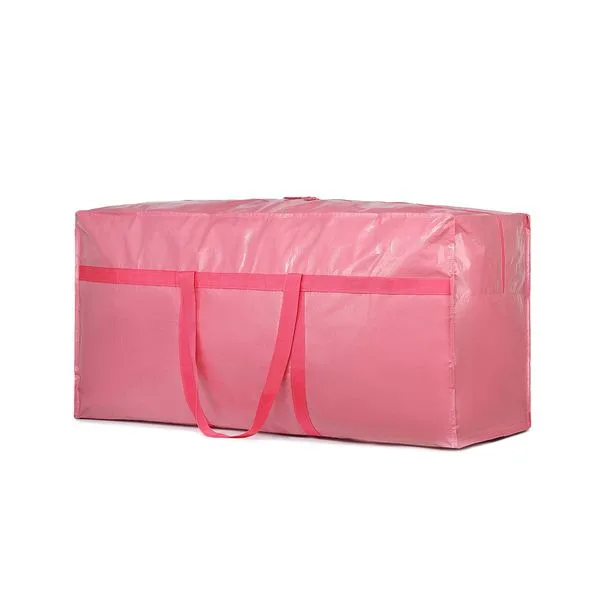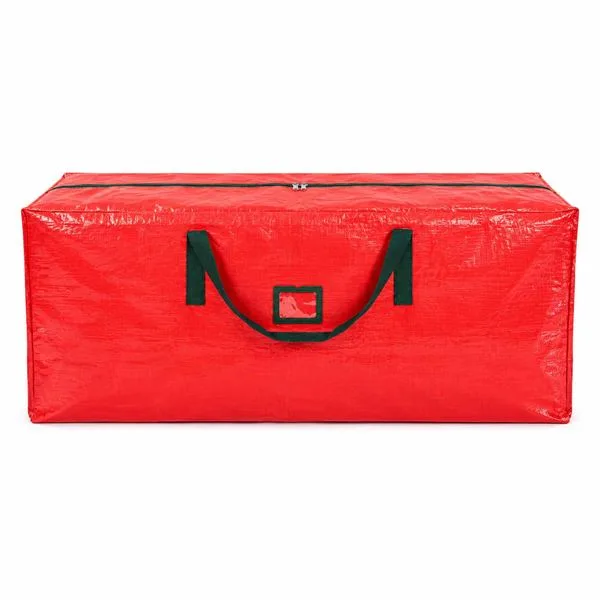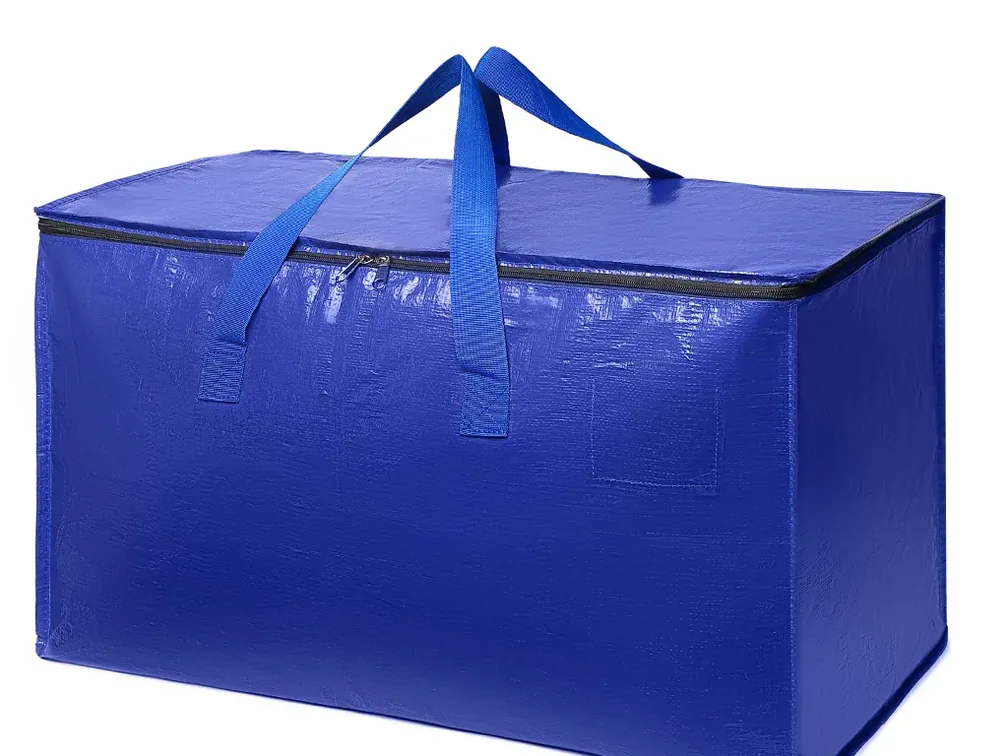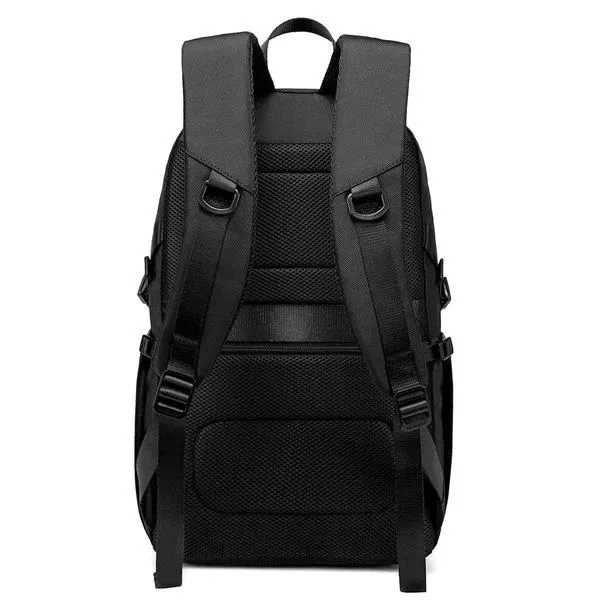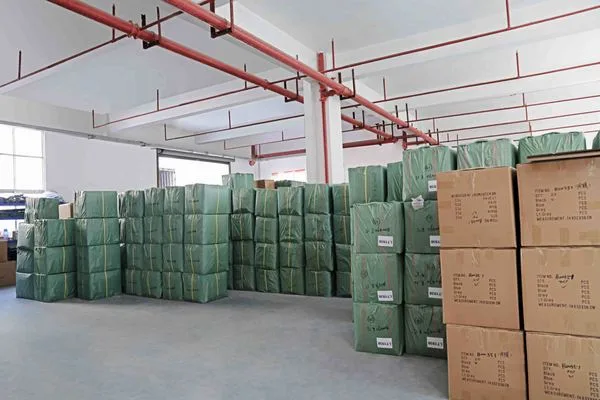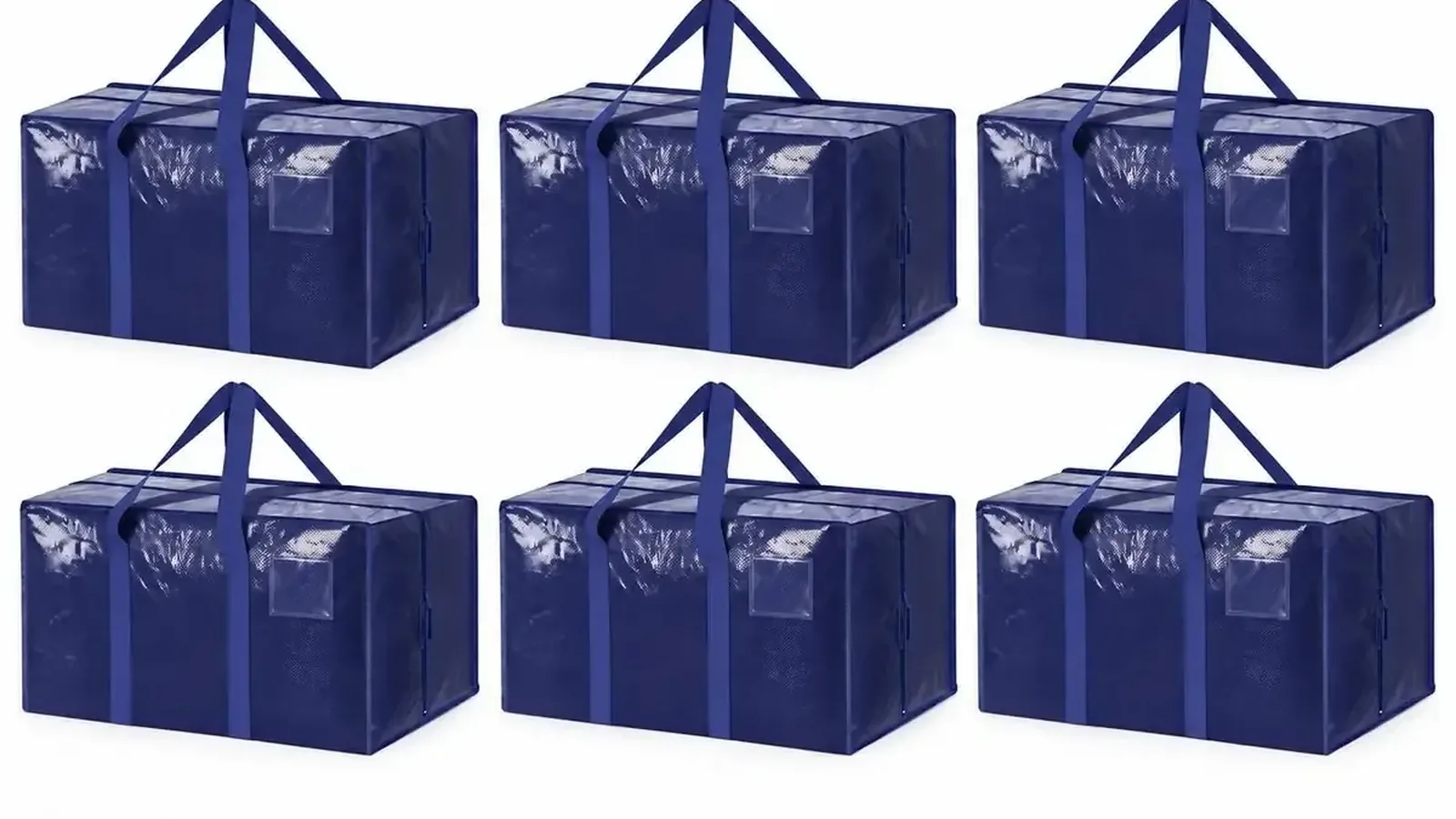
Built from a legacy moving bag QC article and the current product spec data for heavy duty moving bags.
On dispatch day, a carton of moving bags sits open on the loading bay floor while a QC clerk reads the spec sheet line by line against the sample inside. The carton has already passed the general inspection. What she is checking now is whether the sheet itself said enough to catch the things that fail six months later.
Most large moving bag orders do not fail because the factory cannot sew. They fail because the purchase order left a row blank, and the factory filled that blank with whatever was already on the floor. A spec sheet for a bulk order is not a product description. It is a set of instructions that a cutting room, a sewing line, and an inspector will each read differently unless every line is written to be read one way.
The order line that starts everything: fabric weight and weave

The first row on any moving bag PO is the shell. It usually reads something like "woven PP, heavy duty" and stops there. That phrase tells a mill nothing it can measure and tells an inspector nothing he can reject.
Write the row as a number and a method. Fabric weight belongs on the sheet as a target GSM with a tolerance, and weave density belongs beside it as picks per inch in both warp and weft. The reason is simple: a bag can hit the weight target with a loose weave, and a loose weave opens gaps at the zipper seam even when the yarn itself is strong.
Verification starts before cutting. A one square foot sample weighed on a calibrated scale, a pick glass count in both directions, and a grab break specimen pulled on a tensile tester give three readings that can be logged against the roll. Ask for those readings per fabric batch, not per factory. A mill that tested one roll in March tells you nothing about the roll that arrived in June.
The line most buyers leave vague here is the tolerance. Write the rejection threshold into the row, not into a separate quality agreement nobody opens on the floor.
The handle row buyers rewrite most often
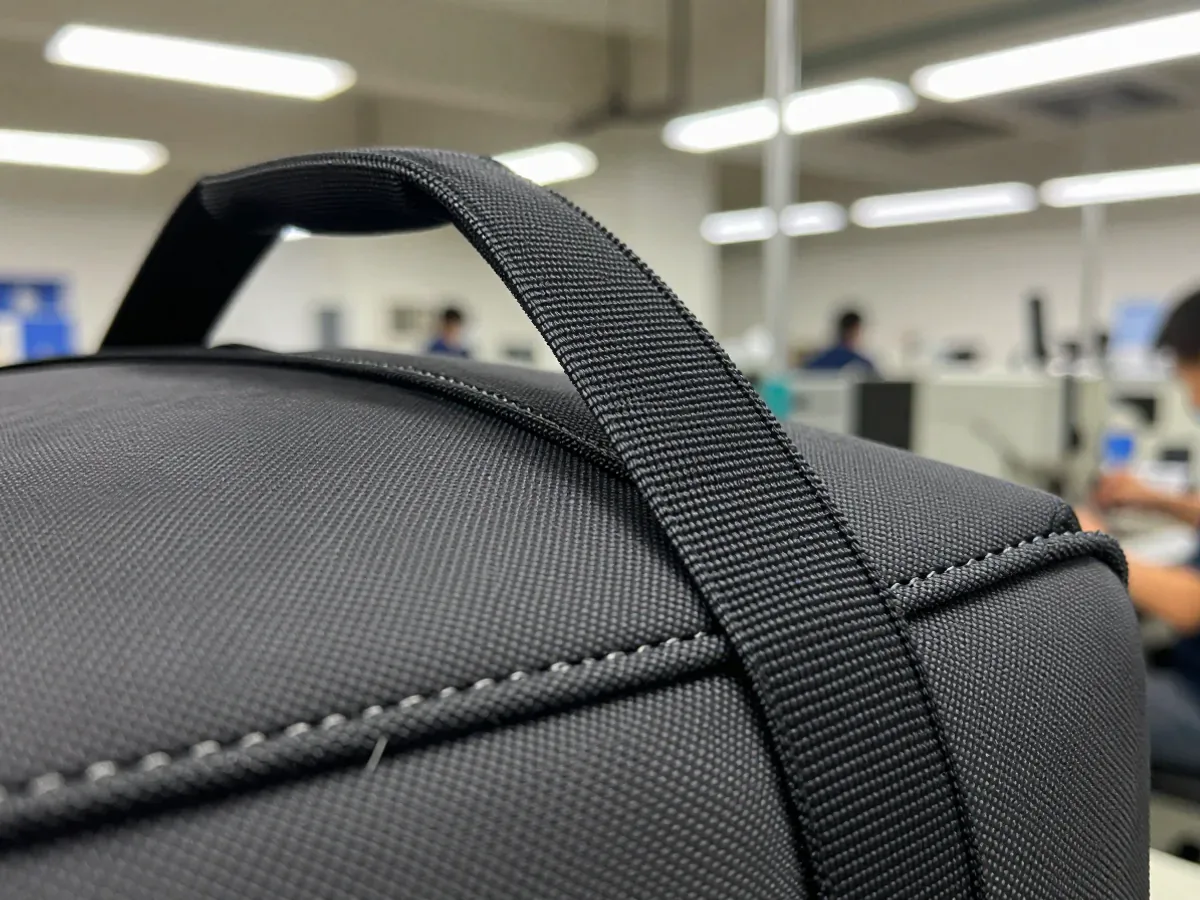
Handles are where a moving bag earns or loses its reputation, and the handle row is the one buyers edit most between orders. One season it says "reinforced handles," the next it says "bartack at stress points," and the factory treats both as the same instruction.
Write the row as three parts: the webbing width and material, the stitch type at the join, and the bartack placement. A lockstitch uses two threads interlocking inside the fabric, so a cut on one side does not unzip the whole seam. That property matters on a handle that scrapes against a door frame, and it belongs on the sheet as a named stitch, not as "strong stitching."
Verification on a large batch cannot mean pulling every bag. It means a defined sample per lot, a grab break pull on the bartacked join, and a record of the result under the lot code. The sheet should name the pass threshold and the sample size so the inspector is not inventing either.
The handle row also needs to say where the handle sits. A handle placed a few centimetres off centre changes how the load hangs, and on a 10,000 unit run that shift will not show up until cartons are stacked.
The strap line that runs past the handles

A row that reads "webbing handles" describes two short pieces of webbing. A row that reads "webbing strap running the full length of the bag" describes a load path that carries weight around the whole shell instead of concentrating it at four stitch points.
That difference belongs on the sheet as a length and a route. Write the strap as running the full length of the bag, not just between the handles, and state where it is anchored at each end. The reason is mechanical: a full length strap spreads the pull of a loaded bag across the base and sides, while a handle only strap puts the entire load into the bartacks.
Verification is visual and dimensional. On the sample and on random units from each lot, the inspector measures the strap run and confirms the anchor stitching at both ends. A strap that stops short by a few centimetres looks identical in a photo and behaves differently under load.
This is also the row where a factory will substitute. If the sheet does not state the strap length, the cutting room will use the webbing left from the previous order.
The zip and side grip lines that decide how a bag is lifted

The top zip row is usually written as "heavy duty zipper" and left there. A better row names the pull count and the tape attachment. The top zip carries two pulls so the opening closes from either end, which matters when a bag is packed tight against a wall and only one end is reachable.
Write the tape attachment as a stitch length and a needle type. A heavy zipper sewn with the wrong stitch length will run rough within a season even if the teeth are sound. Verification is a manual cycle on sampled units plus a seam inspection under magnification for skipped stitches and waviness.
The side grip row is the one that gets omitted entirely. A side grip is a second handle on the end of the bag, used for lifting a loaded bag into a van. Without it, the mover grabs the top handles at an angle, and that angle is what tears bartacks.
Write the side grip as a position, a webbing spec, and a reinforcement. Verify it by lifting a loaded sample from the end grip only, which is the motion the bag will actually see on a moving day.
The label pocket and clear PP line most buyers leave blank

Two rows on a moving bag PO are routinely left empty because they look like finishing details rather than durability specs. The first is the label pocket. A clear pocket on the bag face holds a card that names the contents, and that card is what lets a mover sort a stacked load without opening anything.
Write the pocket as a position, a size, and a material. The reason it belongs on a spec sheet is that a pocket sewn with the wrong thread weight will tear at the corner before the bag sees real load, and a pocket placed over a seam line creates a weak point in the shell.
The second blank row is the window material. Clear PP lets a mover check a bag without unzipping it, which reduces handling on every bag in a load. Write it as a material and a thickness, and verify it by confirming the window is stitched to the shell rather than welded to a coating that will peel.
On a large batch, these two rows are also where a factory quietly changes supplier mid run. A different clear film with the same name looks the same on the sample table and clouds over after a few weeks in a warehouse.
The test column: what to demand per batch, not per factory
Most spec sheets have no test column at all. The buyer relies on the factory's certificate and a general inspection, and neither of those is tied to the roll that made the bag in the carton.
Add a test column to the sheet and fill it per batch. Fabric weight, weave density, and grab break belong to the incoming roll. Bartack pull and stitch density belong to the in line record. Zipper cycle and seam inspection belong to the assembled bag. Each result gets logged under the lot code that ties back to the raw fabric roll.
The reason to write the column rather than ask for it later is that a factory will test what the sheet names. If the sheet names nothing, the in house tester runs on whatever the QC lead decides that week.
Verification of the column is a document check at pre shipment. The lot code on the carton should open a file that contains the fabric readings, the in line stitch logs, and the final inspection result. A report that summarizes without the underlying readings is a summary of a test, not a test.
The line that quietly gets copied wrong across a large batch
The row that causes the most trouble on a bulk order is not the fabric and not the zip. It is the strap length combined with the side grip position, because both are written as dimensions and both get copied by hand from the previous order sheet.
A cutting room working through thousands of units copies the strap length from the last job card. If the new sheet changed the bag height by a few centimetres and the strap row was not updated with it, the strap stops short of the base anchor on every unit in the run. Nothing fails at inspection. The bag looks correct, lifts correctly when empty, and starts pulling at the anchor stitch once it is loaded and dragged.
The same copy error hits the side grip. A grip moved ten centimetres toward the base changes the lift angle, and the bartack that held on the sample now takes a shear load it was not designed for.
The fix belongs on the sheet as a cross reference. Write the strap length as a function of the bag height, and write the side grip position as a distance from the base seam rather than from the top. Then add both to the first article check, so the first bag off the line is measured against the sheet before the run continues.
FAQ
Should the spec sheet list a load rating or a test method?
List the test method and the pass threshold. A load rating on its own is a claim, and a claim cannot be checked at the carton. A named method with a number attached gives the inspector something to pull against and gives the buyer a record to compare across batches.
How do I verify handle stitching on a large batch without testing every bag?
Set a sample per lot and pull the bartacked join on those units. Record the result under the lot code alongside the in line stitch density reading. The sample tells you about the lot, and the lot code tells you which rolls to look at if a field return comes back.
What belongs in the traceability code on each carton?
The code should open a file that links the carton to the fabric roll, the in line stitch and tension logs, and the final inspection result. A code that only identifies the order number closes no loop, because it cannot point back to the material that made the bag.