moving bag zipper repair is the first checkpoint buyers should lock before they approve a supplier, budget, or production slot. Heavy duty zipper repair becomes a real cost line item when you’re managing a fleet of moving bags that see daily abuse. You’ve seen the pattern: a slider pops off mid-load, a zipper tape tears at the end stop, or the teeth separate under pressure. Each failure means a bag out of rotation, a crew waiting, and potentially damaged goods. The math shifts fast when you’re tracking total cost per move.
Factory tests show that 80% of these failures happen at the end stops from lateral stress — the kind you get when a bag is overstuffed and dragged across a truck bed. A $2 FixnZip slider can patch things up for a few cycles, but the real insight is why the zipper failed in the first place. Most “heavy duty” bags use #5 nylon zippers that top out at 22 lbs lateral force. That’s fine for a weekend trip, not for daily logistics.
This guide covers both the quick field repairs and the permanent spec fix — because the cheapest option isn’t repairing a bag three times, it’s buying one that doesn’t break. Let’s walk through what causes zipper failure, how to spot weak construction before you buy, and what to demand from your supplier to keep your fleet running without interruptions.

80% of zipper failures occur at end stops from side-pull stress when overstuffed.
The physics is simple: when a moving bag is overstuffed and dragged, the zipper experiences lateral (side-pull) forces far beyond its design limit. Factory tests show that #5 nylon zippers, standard in budget bags, fail at an average lateral load of 22 lbs. #10 metal zippers withstand 58 lbs — nearly 3x the strength. That difference is the line between a bag lasting 20 moves versus 80.
A common hidden defect is inadequate zipper tape width. Many budget bags use 1-inch tape that tears at the ends under load. Spec-grade bags use 1.5-inch tape with extra stitching. The real cost of a zipper failure isn’t the repair — it’s the labor downtime and potential damage to moved goods. One ruined sofa from a broken bag zipper costs more than 100 replacement bags.
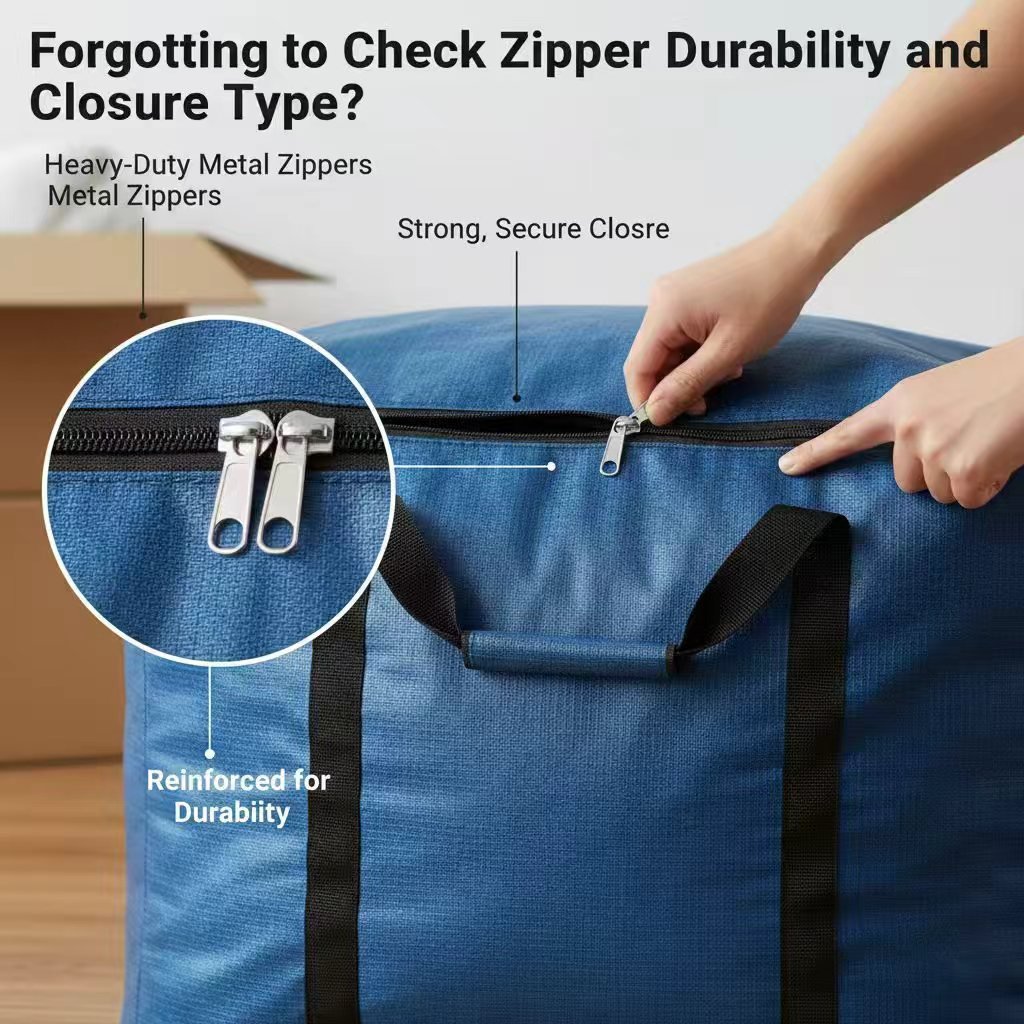
Inspect the zipper size mark and pull test – that reveals real quality in seconds.
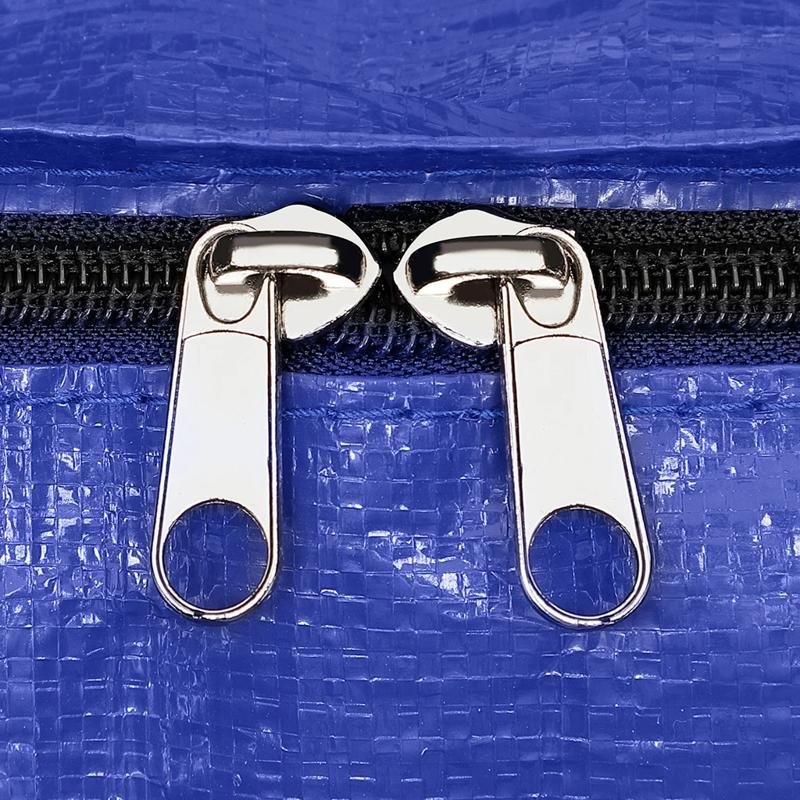
You can identify weak zipper construction in under 60 seconds with four checks. Start at the slider: look for a size mark like #5, #8, or #10. Most budget moving bags use #5 nylon zippers that fail at roughly 22 lbs lateral pull. Industrial-grade bags use #10 metal zippers tested to 58 lbs in the factory. If there’s no size mark, treat it as #5 – that’s a red flag for bulk orders.
My factory data shows that bags with #10 metal zippers and double bartack reinforcement survive four times longer than those with #5 nylon and single stitching. One ruined sofa from a broken zipper costs more than 100 replacement bags – the real cost is downtime and damaged goods, not the repair bill.
These fixes work for a load or two.
When a zipper fails on a heavy duty moving bag, the first impulse is to throw the bag away. But 80% of failures happen at theend stopsfrom lateral stress, not because the teeth are broken. That means a simple field fix can get the bag back in service quickly — but understand upfront: these are temporary solutions. Factory data shows a FixnZip slider lasts only 3-5 cycles under moving bag loads, and a #5 nylon zipper will fail again at roughly 22 lbs of pull. For a permanent fix, you need a #10 metal zipper with double bartack stitching.
Here are the five quick fixes every logistics manager should know, ranked from most to least reliable.
Every one of these repairs buys you time, but they do not solve the root cause: the zipper assembly itself. Bags built with #5 nylon zippers and single stitching are designed to fail. If you are managing a fleet, the math is clear: a $2 slider per bag plus 20 minutes of labor adds up fast. Upgrading to bags with #10 metal zippers and double bartack reinforcement cuts repair frequency by 60% and extends bag life 4x. That is the only fix that saves you money.
80% of zipper failures start at the end stops—here’s how to find the ones that don’t.
You’re evaluating moving bags for a fleet that sees daily abuse. The zipper is the single point of failure that determines whether a bag lasts 20 moves or 80. Here are the exact specs that separate industrial-grade closures from the ones that will leave you swapping out bags every quarter.
Zipper failure drives up TCO through repair costs and lost labor time. Factory tests confirm that bags with #10 metal zippers and double bartack stitching withstand lateral stress 2.6x longer than standard #5 nylon versions. Upgrading to industrial-grade construction cuts replacement frequency and protects your reputation.
Replace the broken slider with a #10 metal unit. A temporary FixnZip slider costs $2 and can restore function, but permanent repair requires a new slider and reinforcing the end stops. For permanent fix, upgrade to a #10 metal slider.
A true heavy duty zipper is size #10 in metal. Budget moving bags use #5 nylon which fails at 22 lbs lateral force, while #10 metal withstands 58 lbs. Specify #10 metal zippers for industrial use.
Cut out the old zipper and sew in a new #10 metal zipper, but professional labor runs $20–$40 per bag. For bulk operations, buying a new premium bag with reinforced zippers is often cheaper. Evaluate repair vs replacement based on bag value.
If the slider is intact, use a fork to open the slider slightly and snap it back onto the zipper teeth. If the slider is broken, replace it with a matching size—#10 metal. Use fork for quick fix; replace slider if damaged.
Insert the fork’s tines into the zipper teeth above the slider to straighten them, then slide the pull back onto the track. This works only for misalignment, not broken teeth or worn sliders. Fork trick for misalignment only; otherwise replace parts.
REQUEST A QUOTE
Product, size and quantity is enough to start. We reply with a price and a sample plan fast.
Saved locally for this preview.
