Based on legacy moving bag coverage and current product spec notes from the TIIOCTI sample room.
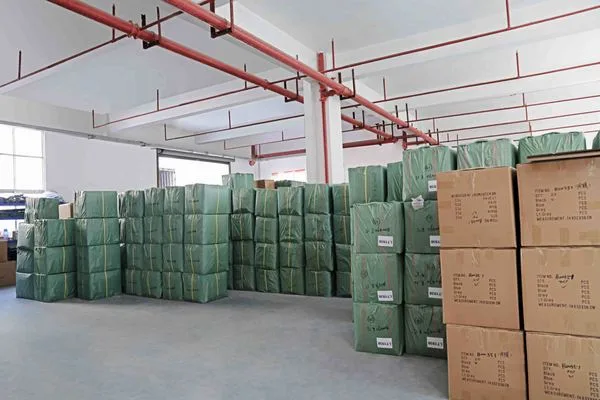
The carton on the loading dock carried two labels that disagreed. One said 45 L, the other said 60 L, and the warehouse crew had already stacked twelve of them before anyone noticed. A buyer in the middle of a residential relocation had ordered heavy duty moving bags to replace cardboard, and the label mismatch was the first sign that the order had been built on a single assumption: thicker means tougher.
That assumption travels well. It fits on a hangtag, it fits in a sales email, and it survives right up until the bag is unpacked after move one and refilled for move two. The failures that matter rarely show up on the first trip. They show up when the same bag is asked to do the same job again.
The Advice Buyers Hear Most: Buy the Thickest Bag
Search results for reusable packing bags tend to reward one number. Listings push denier, grams per square metre, and the word heavy duty in bold, as if the shell alone decides whether a bag survives a household move. A buyer comparing three suppliers can end up choosing on fabric weight and nothing else.
The advice is not wrong so much as incomplete. A thicker woven shell does resist abrasion and puncture better than a thin one, and that matters when a bag slides across a tailgate or brushes a stair rail. But thickness says nothing about where the load hangs, how the opening closes, or what happens to a stitched seam in the rain.
Why Thickness Feels Like the Right Answer
Fabric weight is the easiest specification to compare. It appears on every quote, it can be checked with a gauge, and it gives a procurement team a defensible line item. A 600D shell sounds more serious than a 420D shell in a way that a seam construction note never will.
There is also a psychological shortcut at work. Cardboard fails visibly and dramatically: it sags, delaminates, and collapses when wet. A buyer who has watched a box give way in a doorway naturally looks for the opposite of flimsy, and thick fabric reads as the opposite. The first move usually confirms the choice, because a new bag with a light load rarely fails.
Where a Thick Bag Still Tears
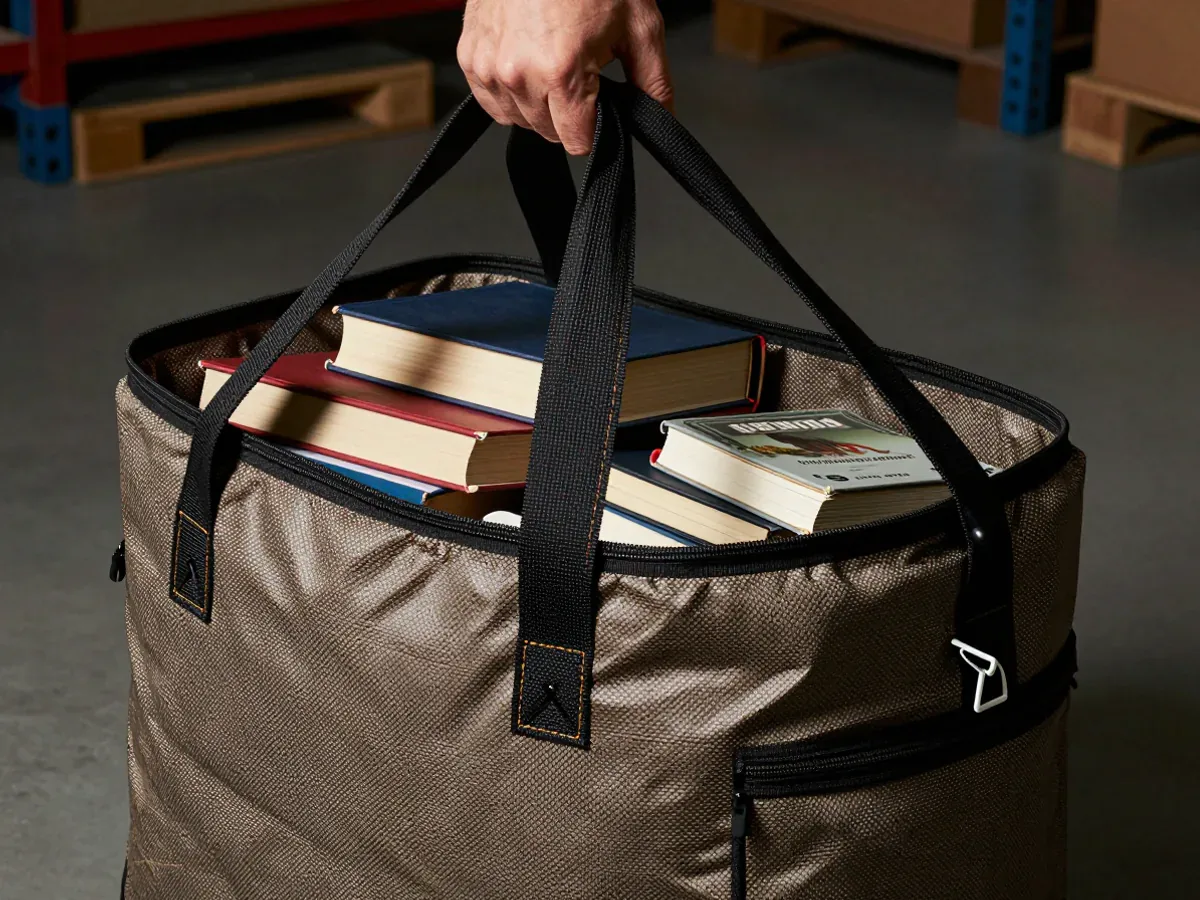
The stress on a moving bag does not spread evenly across the shell. It concentrates at the points where the load is transferred to a hand, a shoulder, or a van hook. On a typical design, that means the handle attachment and the webbing that carries force down the body.
A bag built with handles sewn only at the top edge puts the entire load on a short row of stitching. Fill that bag with books, lift it by one handle, and the fabric around the anchor point takes a load it was never shaped to carry. The shell can be thick and still tear at that junction.
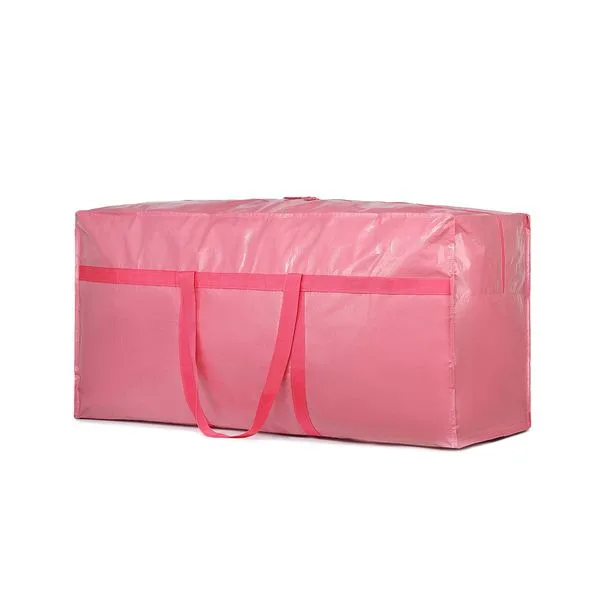
Webbing that runs the full length of the body changes the load path. Instead of pulling on a small patch of fabric, the handle transfers force into a continuous strip that distributes weight down the side of the bag. On a 45.3 in bag holding a folded tree, a cot, or a whole wardrobe rail, that difference decides whether the handle holds on the second lift or the twentieth.
Long handles add a second question. A handle sewn to the body so a full bag can go over a shoulder spreads weight across the torso rather than the fingers, which matters on stairs and in narrow hallways. A long strap that is only stitched at the ends does the opposite, concentrating force at two small points.
The Zip That Decides Whether the Bag Closes Again
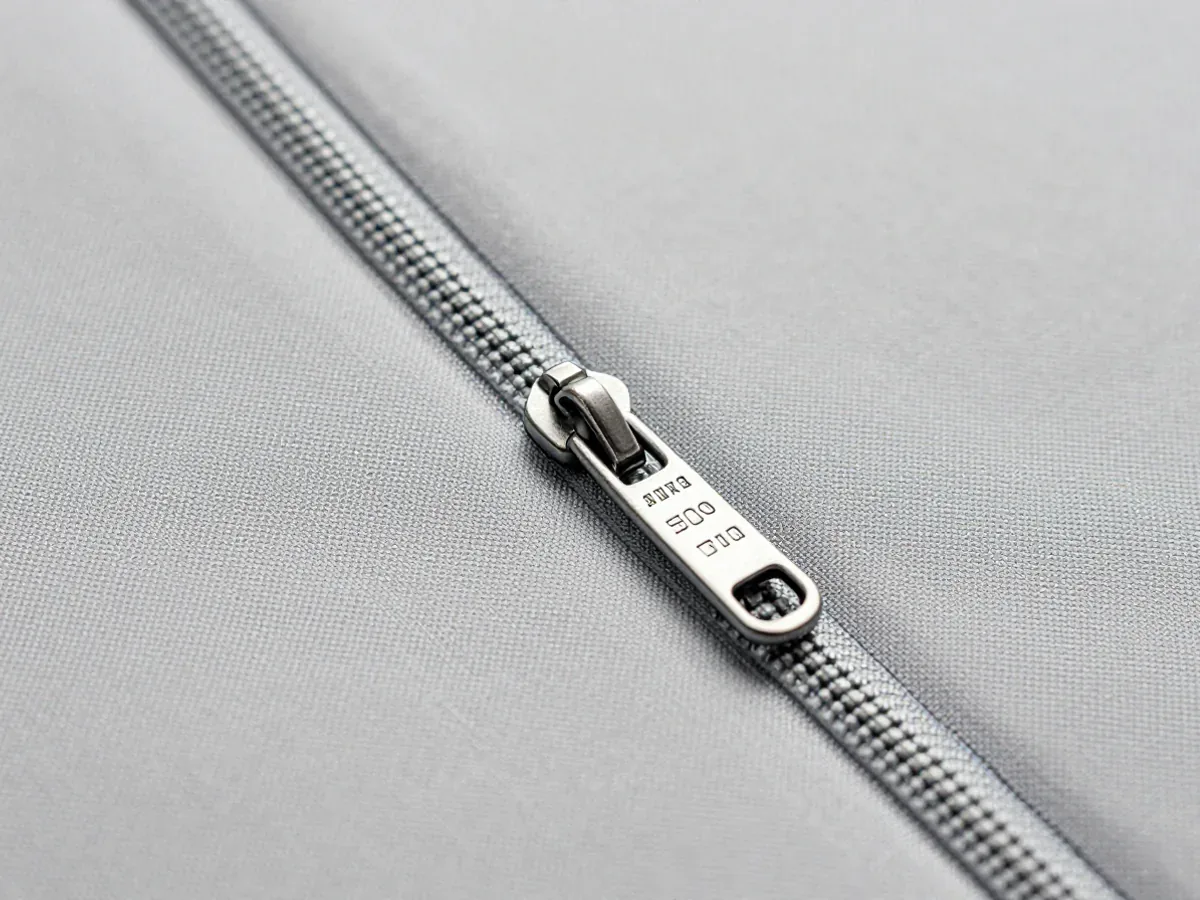
A zip is the part of a moving bag that gets used most and inspected least. On the first move it opens once at the old home and closes once at the new one. By the second move it has been opened in a storage unit, closed on a closet shelf, and reopened for a seasonal swap.
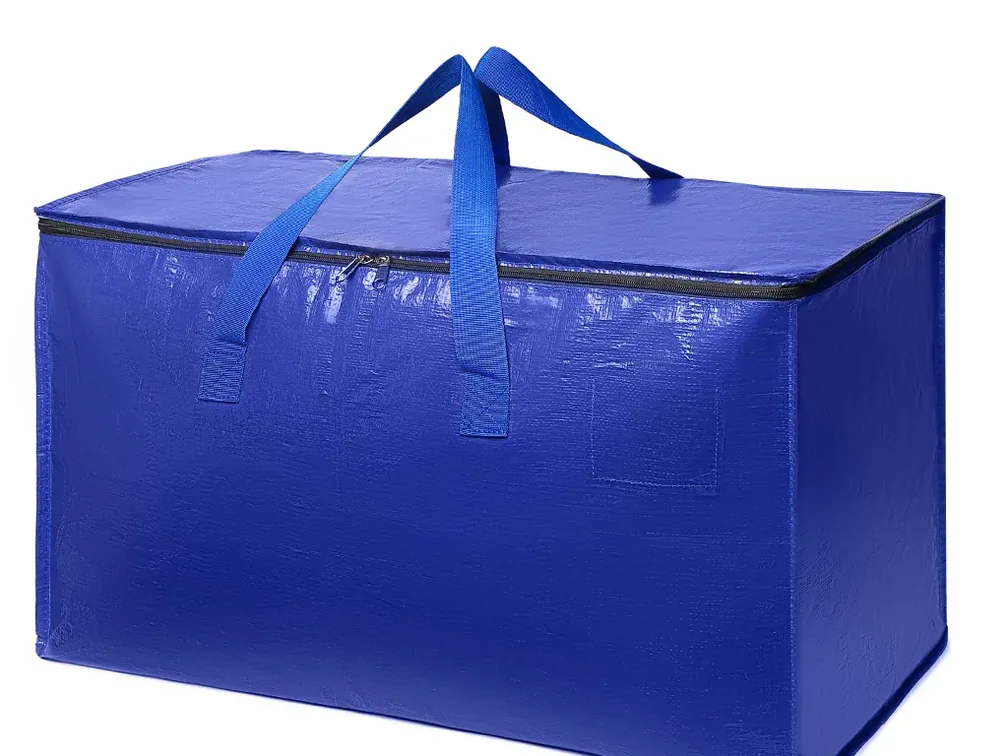
Single-pull zips force the user to start closing from one fixed end every time. When a bag is overfilled, that end takes the strain, and the slider starts to skip teeth. A top zip with two pulls closes from either end, so the load can be worked toward the middle and the final closure happens where the fabric has slack.
Zipper failure is also a load problem in disguise. A bag packed past its comfortable volume pushes outward against the teeth, and no slider survives that for long. Buyers who specify a two-pull closure usually find that packers close the bag more carefully, because the closure invites them to work from both sides.
Splash Resistant Is Not Waterproof, and the Seam Explains Why
Water resistance claims on moving bags deserve a careful reading. A woven polypropylene shell resists splashes and blocks dust, which is a real improvement over cardboard on a damp loading day. It is not a waterproof barrier, and the difference lives at the seam.
Stitched seams create small holes along the stitch line. Water that pools on a seam can wick through those holes even when the fabric itself sheds the droplet. Sealed or taped seams close that path, and they cost more to produce. A bag described as water resistant with stitched seams is telling the truth about the fabric and saying nothing about the seam.
For a move across town on a dry day, a splash resistant shell with stitched seams is adequate. For a bag that will sit in a garage or a storage unit through a wet season, the seam is the part to ask about. The same logic applies to dust: fine particles travel through stitch holes more easily than through the weave.
What a Label Pocket Does for a Second Move
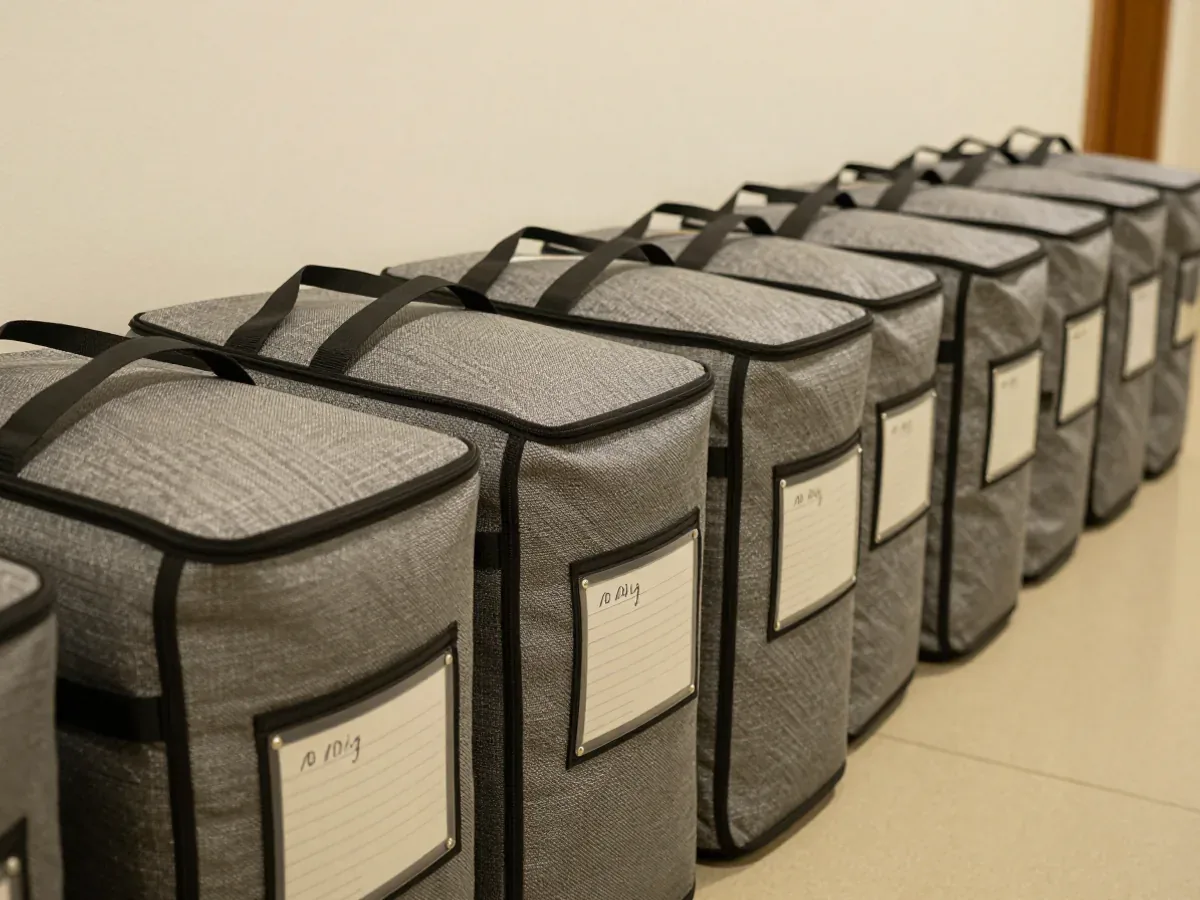
The first move has a system, even when it is a bad one. Boxes get marker on the side, bags get a rough mental map, and the person unpacking knows which room each container came from. The second move inherits none of that. Contents get shuffled during storage, and the bag that held kitchen tools last time now holds winter coats.
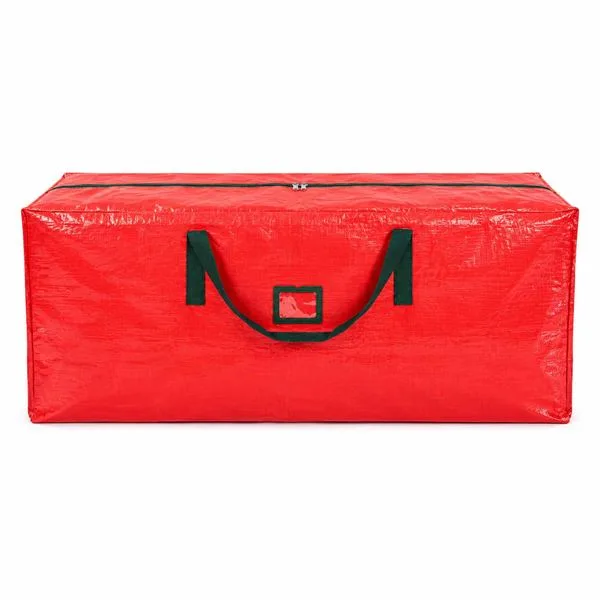
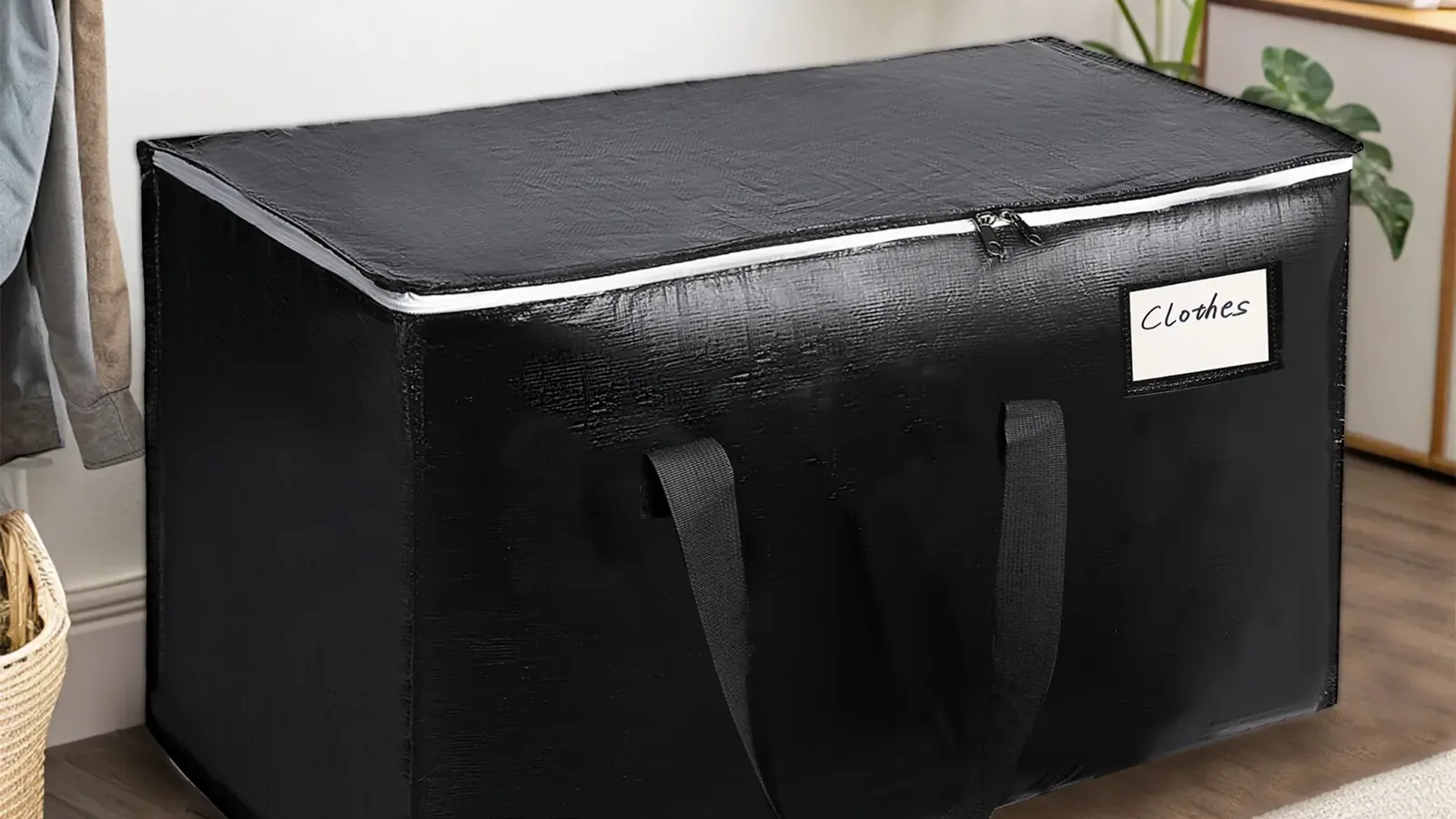
A clear label pocket on the face of the bag holds a card that says what is inside. It sounds like a small feature until a household is standing in a new hallway with thirty identical bags and no idea which one has the kettle. A card can be rewritten in seconds, which a printed panel cannot.
The label pocket also supports a packing method that pays off on move two. Grouping by room and labelling each bag keeps essentials accessible, and a first-night bag with bedding, a charger, a toothbrush, and coffee can be pulled without opening anything else. None of that requires a thicker shell. It requires a bag that can be identified after it has been refilled.
A Short Self Check Before the Order Goes Out
The questions below are the ones that separate a bag that survives one move from a bag that survives several. They can be answered from a sample and a specification sheet, without a lab.
- Does the webbing run the full length of the body, or stop at the handle? Ask for a photo of the inside seam where the strap meets the shell.
- Is the top zip single pull or double pull? A two-pull closure lets the packer close from either end and reduces strain on one corner.
- Are the seams stitched or sealed? Stitched seams are fine for splash resistance; they are not a waterproof claim, and the spec sheet should say so.
- Do long handles attach along the body or only at the ends? Shoulder carry depends on how the load is distributed, not on strap length alone.
- Is there a label pocket, and does it take a replaceable card? A permanent print cannot follow contents that change between moves.
- Does the size range include a lower-profile pattern for shelves and under-bed storage? A 69U pattern at 13.8 in high instead of 15 in fits spaces a full-height bag cannot.
- Has the order been through a defined QC sequence before packing? Four checkpoints on a production line catch handle and zip faults that a fabric weight test never will.
FAQ
How many moves should a reusable moving bag last?
There is no universal number, and any supplier who quotes one is guessing. A bag with full-length webbing, a two-pull zip, and a shell suited to the load will outlast a bag chosen on fabric weight alone. The realistic target is several household moves plus storage use in between, and the features above are what make that target reachable.
Are heavy duty moving bags waterproof enough for a rainy loading day?
They are splash resistant, not waterproof. A woven polypropylene shell sheds water and blocks dust, but stitched seams are not sealed, so water that pools on a seam can work through. For a wet loading day, keep bags under cover and treat the shell as protection against splashes rather than immersion.
Does a longer handle mean the bag can carry more weight?
Handle length changes how a bag is carried, not how much it holds. A long handle sewn to the body lets a full bag sit on a shoulder, which shifts load away from the fingers. A long strap attached only at the ends concentrates force at two points and can fail sooner than a short, well-anchored handle.
Why does the 69U pattern sit lower than other sizes?
The 69U pattern is 13.8 in high instead of 15 in. The reduced height lets a filled bag slide onto a shelf or under a bed, which suits moving storage bags that stay in a home after the move rather than going straight into a van. It is a storage decision as much as a transport one.