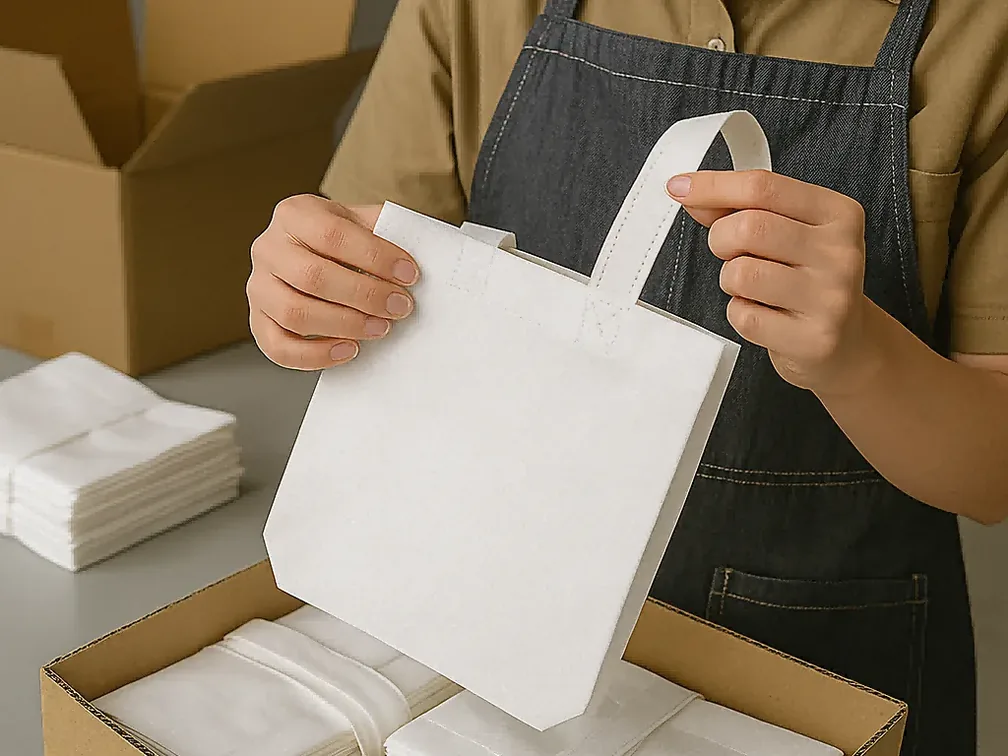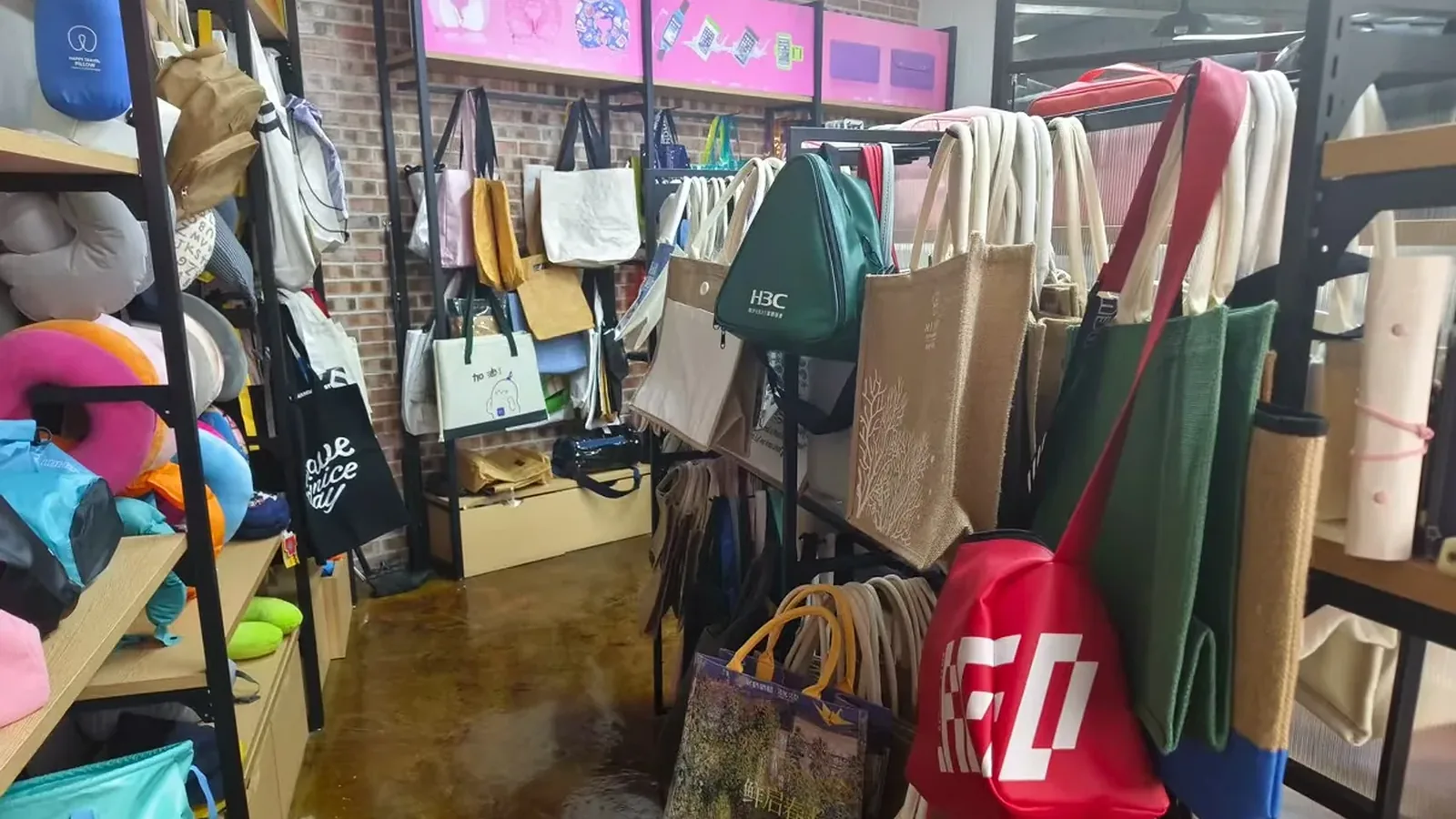
Custom printed non woven bags work at an event because the sheet is light, the face takes a print in one pass, and the bag folds flat into a car door or a kitchen drawer. The parts that decide reuse are 3: the handle attachment, the base and the print proof, not the colour of the logo. Oversized bags get left behind as often as thin ones, because the boot of a car sets the limit.
The spec review asks custom printed non woven bags: the seam, the handle join and the label are read on a sample before the batch. The question keeps coming up from buyers who book a booth: what custom printed non woven bags have to do to outlive the event.
The team could picture an attendee carrying the third one twice, and that is the whole test an event bag has to pass.
The old title asked it plainly, and the old answer was a bag that is reusable, printable and light on the budget. What the old post left implicit is the build, and the build is the part that decides whether the bag comes back next season.
What a giveaway bag has to do after the booth
Not every event bag is built to the same job, and the difference shows up in the first hour after the hall closes. A flimsy bag loses its handle on the walk to the car, and a generic one gets folded into a cupboard and never seen again. The ones that survive combine three things: a load bearing build, a repeat use and a face that carries branding an attendee is happy to show.
The print is where most of that reputation is made or lost. A bag is often the first thing a visitor keeps from a brand, and it is read in a crowd where a bold mark and a short line beat a paragraph of copy. Our own range shows how far that can be pushed with a simple sheet: a yellow non-woven body with orange handles and a printed cartoon design, and a set of assorted colours that leaves the logo area free.
The five checks our print team runs on an event design are plain: is the logo large enough to read at 3 paces, does the colour sit with the brand palette, is the slogan short, does the sheet finish match the theme, and does the print sit inside the usable face rather than over a seam. A bag that passes all five turns into a moving sign for the brand during the event and after it.
The reuse case is the one an event buyer can defend in a meeting. The EPA waste hierarchy ranks source reduction and the reuse of waste materials above recycling, so a bag that comes back to a shop does more than a bag that carries a recyclable line. The same agency counts reusable shopping bags among the simple ways a household cuts waste, which is the behaviour an event bag is trying to borrow.
The hierarchy prioritizes source reduction and the reuse of waste materials over recycling. U.S. Environmental Protection Agency, Recycling Basics and Benefits
Bag types and the sizes that fit an event
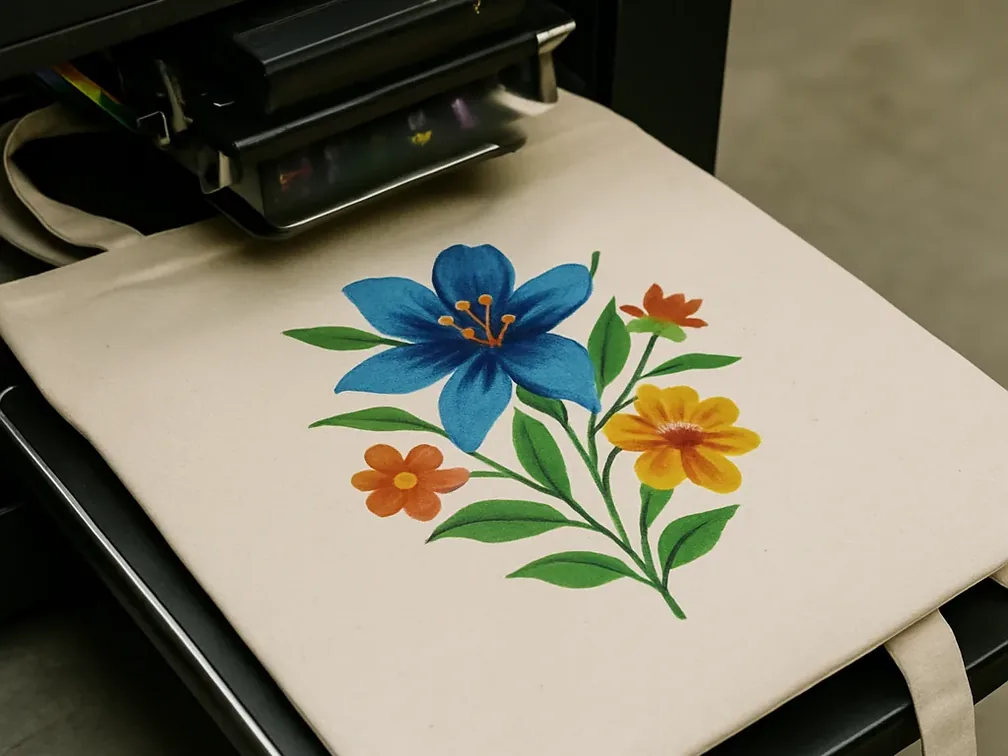
Size is the decision buyers most often get wrong, because it is made from a logo rather than from a load. Too large a bag wastes sheet and looks empty on the stand; too small a bag disappoints the visitor who has just been handed a catalogue. The honest way to choose is to start from what the attendee is carrying when they reach the booth and work back to the bag.
| Bag type | What it carries | Where it fails at an event |
|---|---|---|
| Plastic giveaway | a flyer and a pen | the handle tears before the car park |
| Cotton tote | samples, catalogues, a jacket | the sheet weighs more than the print |
| Non-woven bag | brochures, samples, a water bottle | a heavy load in a thin sheet |
| Event | Bag size | What it should hold |
|---|---|---|
| Booth giveaway | 11.8 x 9.8 x 3.1 in | flyers, a pen, one small sample |
| Seminar or conference | 13.8 x 11.8 x 3.9 in | a notebook, a folder, a gift |
| Hall floor | 15.7 x 13.8 x 3.9 in | brochures, catalogues, samples |
A simple rule covers most events: measure the folder or box the visitor will be handed, add the width of a hand on each side, and pick the size that closes over it without folding the contents. A flat folding body keeps that size usable after the event, because the bag packs down instead of taking a shelf.
Print, size and handle choices that decide the bag
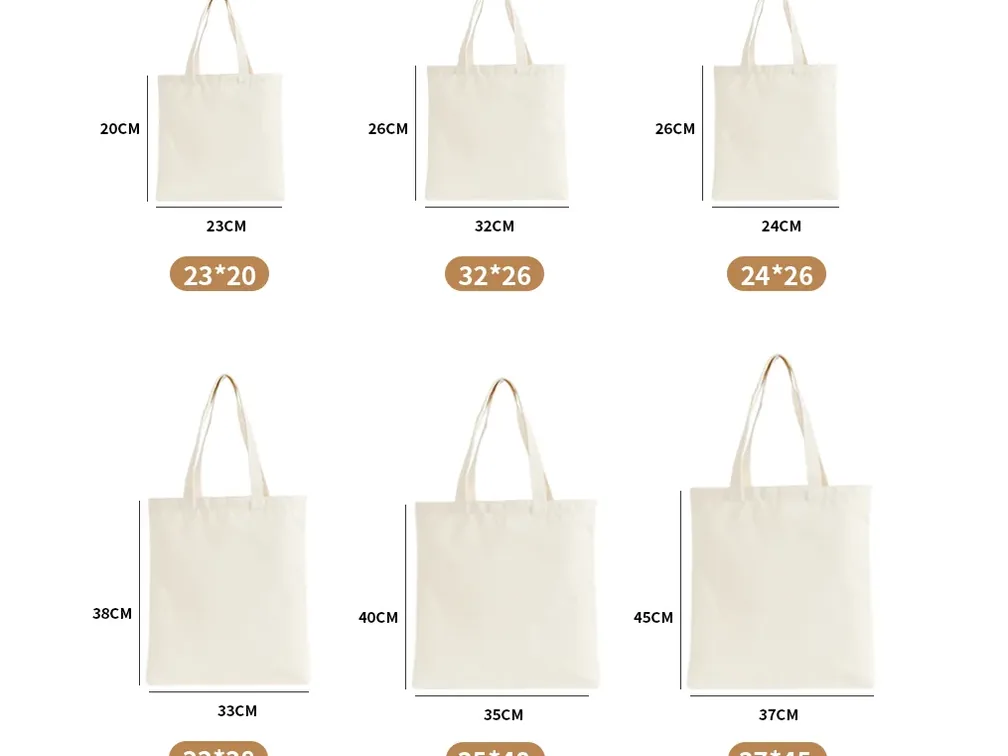
The print method is the first of 3 choices, and it follows the artwork rather than the budget. Screen print carries a solid block of colour and a line mark, heat transfer holds a small detailed logo, and a woven label is the option that survives the heaviest use. Whichever route the artwork takes, the proof goes out before the run and the sample is built to the same spec as the bulk order, so what the buyer approves is what the event receives.
The handle is the second choice, and it is the cheapest place to get the bag wrong. Handles are stitched to the body rather than tacked on, and the base carries a reinforcement where a bottle sits, which is what stops an event bag from opening on the way home. Our standard reusable build lists a reinforced base, handles stitched through and a flat folding body as the three structure points.
The sheet is the third choice, and the range is wider than most buyers expect: PE, PP woven, non-woven, polyester, nylon, canvas, jute and rPET. Non-woven is the sheet an event order usually lands on, because it takes a print, folds flat and keeps the cost of a short run low. It is the same sheet we run for the non woven shopping bags a store hands out at the till, so an event bag and a retail bag can come off the same press.
The theme is the last choice, and it is the one that ties the bag to the booth. Colour, typeface and tone have to match the campaign and the stand behind it, because the bag is photographed next to the banner far more often than it is photographed alone. It also has to be read out of that context, which is why the bag has to look right against a plain backdrop too.
Questions event buyers ask
Will a non-woven bag survive a full day on the floor?
It will when the 3 structure points are there: a reinforced base, handles stitched through and a body that folds flat. A plastic bag of the same size will not, because the handle is the weak point and the load is the same.
Does the print colour change between the proof and the run?
Not when the proof is approved before the run and the sample is built to the same spec as the bulk order. The check is to compare the printed sample against the approved proof on the same day, in daylight, before the run is released.
Can one design cover several events in a year?
Yes, and it is usually the better brief. A bag with a neutral face and a small brand mark crosses seasons, while a bag built around a single campaign date dates itself.
Do short runs make sense for a small stand?
They do, and a pilot run is how a design gets tested before a bigger event. A partial colour variation on a short run is also a cheap way to compare two options on the same stand.
What to put in the bag
A bag that keeps telling the brand story after the hall empties is the one worth printing, and that is a design decision before it is a print decision. Reusable appeal, a bold mark and a design that is useful on a weekday do more than a stack of slogans. On our line the promotional bags that come back for a reorder are the ones with a short line, a clean face and a handle an attendee can trust with a full load.
The details that keep a promotional bag in circulation are 4 small, cheap additions: reinforced handles for long use, a shape or print that draws a second look, a badge that states the material plainly, and a quiet URL or hashtag on a side panel. A QR code that leads to the offer or the site and a short call to action asking people to share the bag also give the print a second job. Limited colour runs are the other lever, because a colour that only exists for one event gives the visitor a reason to take it.
What does not work is a bag printed with a date and a single address. The old post asked how to boost the return on a promotional bag, and the honest answer is that the return comes from the number of times the bag comes out of the cupboard, not from the print area. One used for a month of weekly shops returns more than a bag admired once on a stand.
How to check a bag before the event
Event deadlines move, and a bag that lands after the hall opens is worthless however good the print is, so the schedule belongs in the brief from the first message. A supplier with a flexible line and an express shipping route is the one that can absorb a date change without dropping the print quality, and that is worth knowing before the artwork is sent. Planning ahead removes most of that risk, which is why the sample stage is worth protecting on a short timeline.
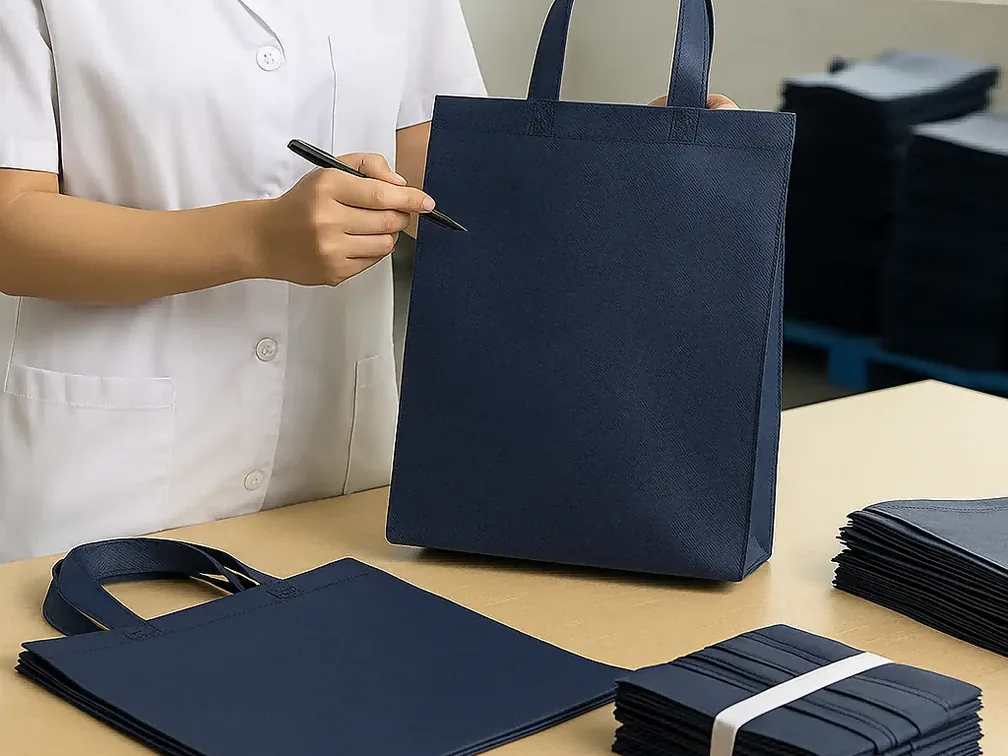
Four checks cover an event bag before the cartons leave, and they are 2 of the 4 QC checkpoints we run.
- Fill the bag with the show catalogue, lift it by one handle and watch the stitch line.
- Fold the bag flat and open it again, checking that the base reinforcement stays in place.
- Put the approved proof next to the printed sample in daylight and compare the mark, not the memory.
- Read the side panel at arm's length, because a hashtag or a URL that cannot be read is decoration.
Every order passes 4 checkpoints before it is packed, and the print and seam checks are 2 of them. Budget pressure is real on an event, and the cost of a bag splits into the sheet, the print, the freight and the run length, so trimming the print area is usually cheaper than trimming the handle.
Industry to industry the brief changes rather than the bag: an estate agency wants a welcome kit for a new buyer, an insurer wants a document folder for a seminar, a store wants a loyalty reward, and a fitness brand wants a member gift. Matching the purpose to the bag is what makes the print land, and a non-woven bag carries all four of those jobs without a change of spec. A short pilot run is what a boutique event or a new design should use before the bigger order, and it also settles the size question with real contents.
The old post closed on the point that still holds: a non-woven bag is a practical, low cost way to promote a brand at an event, and it earns that place by being used again. If the print sits on a heavier sheet, printed tote bags covers the claim side of the same decision, and custom non woven tote bags covers the retail branding side.