
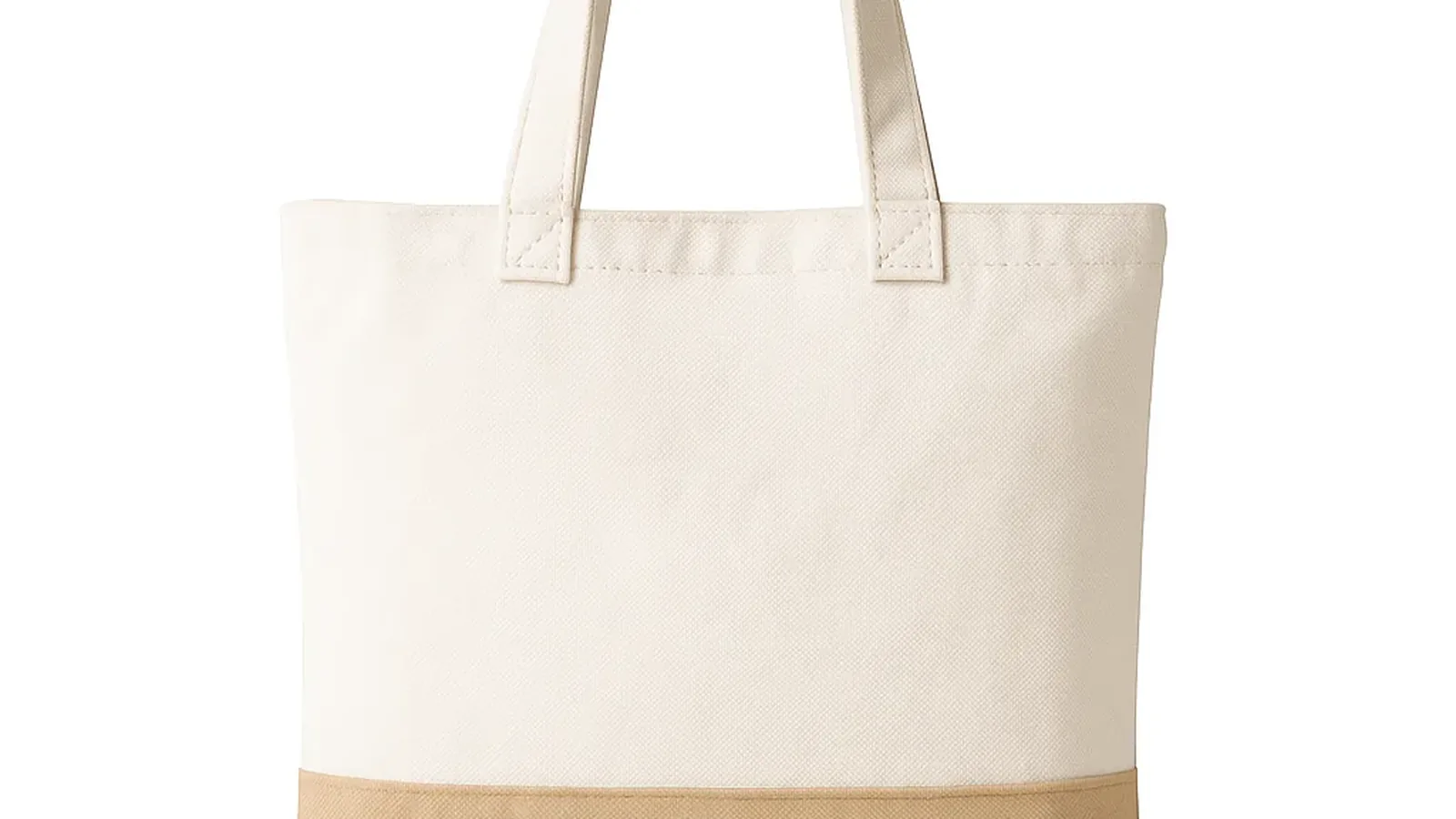
Drawn from archived notes on tote structure and the spec sheets behind our tote and moving bag lines.
A store manager set two totes side by side on a display table and watched one stand upright while the other slumped into a soft pile. Both carried the same canvas, the same screen print and the same webbing handles. The price tags were identical, the fabric was identical, and the difference on that table was already decided before either bag left the cutting room.
She sent a photo to the buyer, who sent it to the factory, and the reply came back with a single word: structure. That answer took three weeks to unpack. The chain that led to the slumped bag started at the pattern table, ran through the sewing line, and ended in a carton that had been packed tighter than it should have been. Rebuilding that chain is what this story is about.
Two Totes on the Same Shelf, Two Different Jobs
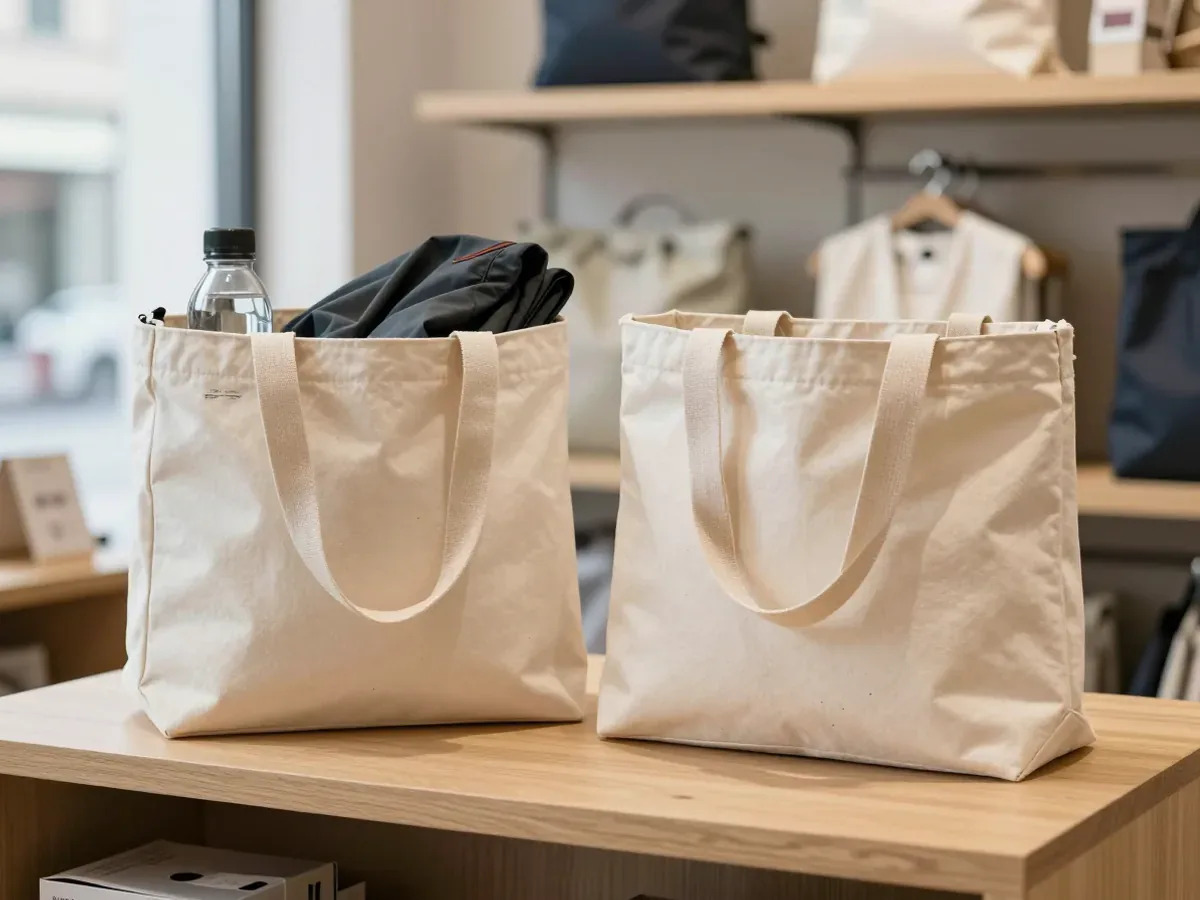
The standing tote had a fold running up each side and a panel across the base. When a customer dropped a water bottle and a folded jacket inside, the bag opened into a boxy shape and held it. The slumped tote had two panels sewn edge to edge, and it held the same load by pressing it flat against the fabric. Same capacity on the label, different capacity in the hand.
A shopper picked up the standing bag first, filled it, and carried it to the counter without thinking. The second bag needed both hands to keep its shape. Nothing about the fabric explained that. The fabric was a constant across both samples, and the variable was the base.
Shelves are unforgiving testing grounds. A bag that cannot stand loses height on a display table, hides its print, and gets handled less. A bag that stands presents its front panel at eye level and keeps its shape through a full day of customers picking it up and putting it back down. The store manager noticed this within a week and moved the standing tote to the front.
The Bottom Was Deciding All Along
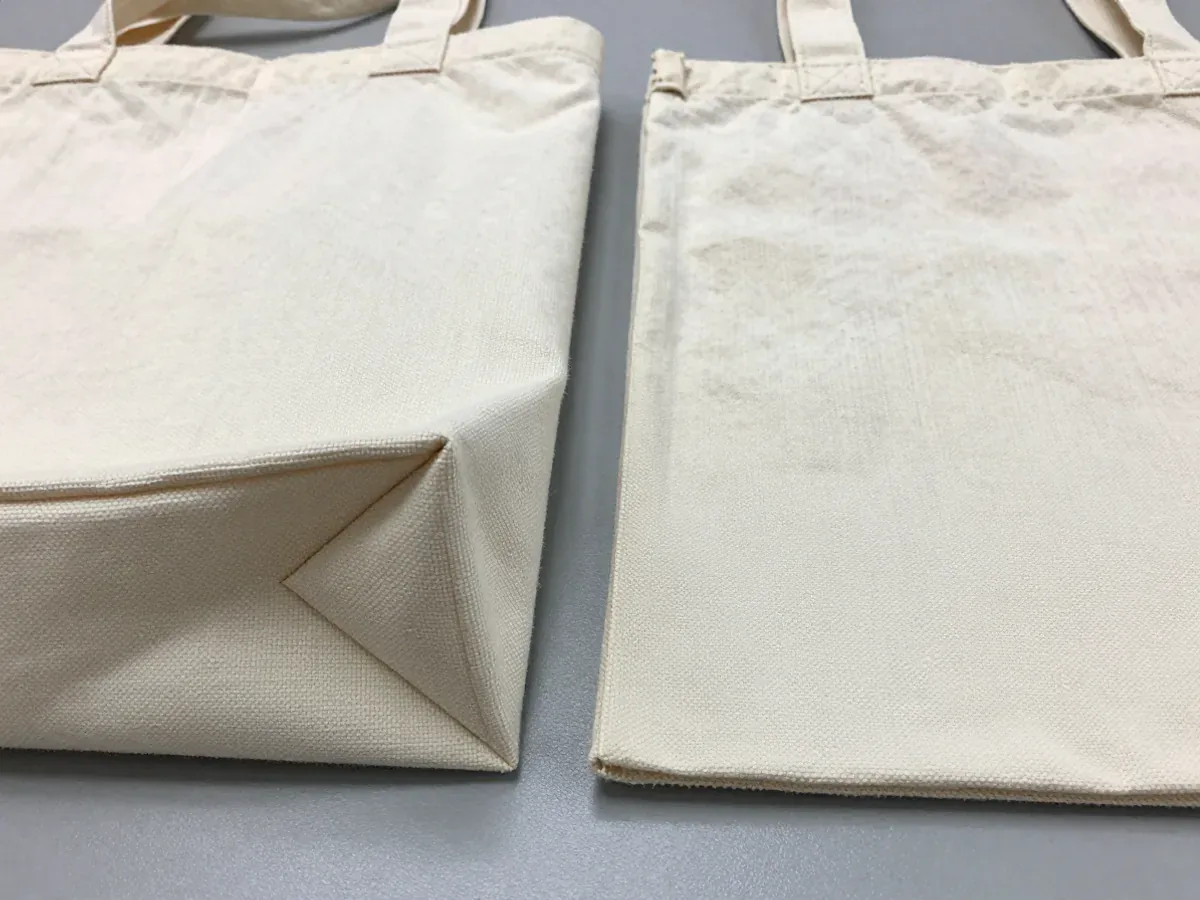
A gusset is an allowance of material, usually an inverted fold at each side or a boxed base panel, that lets the bag expand once something is inside it. The fold is not decoration. It is stored capacity, folded flat until a load pulls it open. That is why a gusseted tote can stand open on a counter and why a flat bottom tote cannot.
The flat bottom tote is two panels sewn edge to edge. It lies flat, stacks flat, and holds whatever can press against its faces. For the same length and height, a gusseted tote carries materially more, because the depth it gains from the fold is volume that a flat bottom simply does not have. The difference is not small at the top end of a load.
This is where the two bags on the display table diverged. One had a structure that converted a flat pattern into a three dimensional volume. The other had a structure that stayed two dimensional under load. The print, the handle attachment and the fabric weight were all identical, and none of them could compensate for the base.
What the Fold Adds and What It Costs
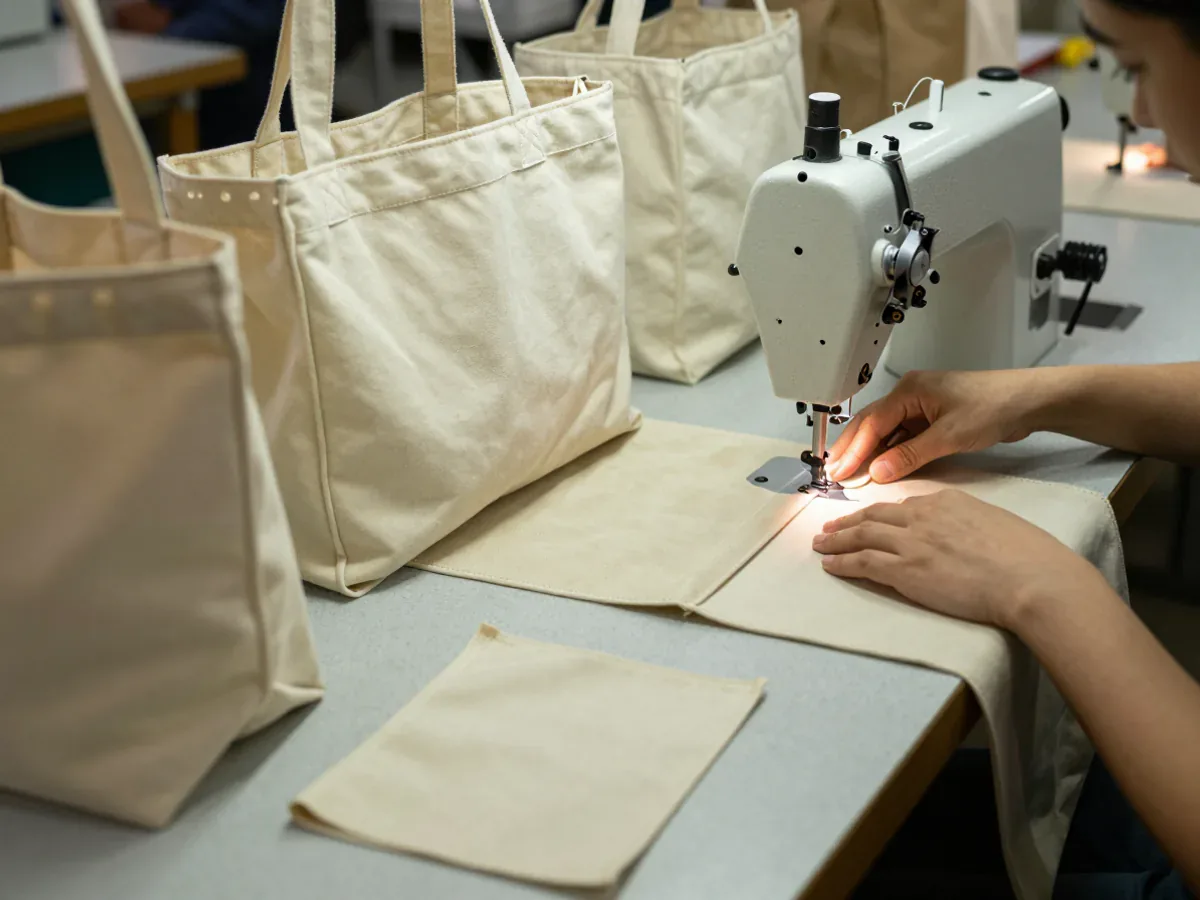
A gusseted build costs a little more for two reasons: more fabric per unit and one more operation on the line to form and sew the fold or base panel. On a short promotional run that difference is trivial. Across a bulk run it becomes a line item that a buyer has to justify against the shelf performance it buys.
The extra fabric is easy to see on a cutting table. The fold consumes material that a flat pattern leaves as offcut, and the base panel adds a piece that has to be cut, aligned and sewn. The extra operation is easier to miss in a quote. It sits in the sewing line as a station where the base is formed, squared and joined, and it takes time that a two panel bag does not need.
None of this makes the gusseted tote expensive in absolute terms. It makes it a different purchase. A buyer comparing unit prices across two structures is comparing two different products that happen to share a fabric. The comparison only becomes fair when the shelf behaviour, the load type and the storage plan are placed next to the price.
The Storage Side Nobody Priced In
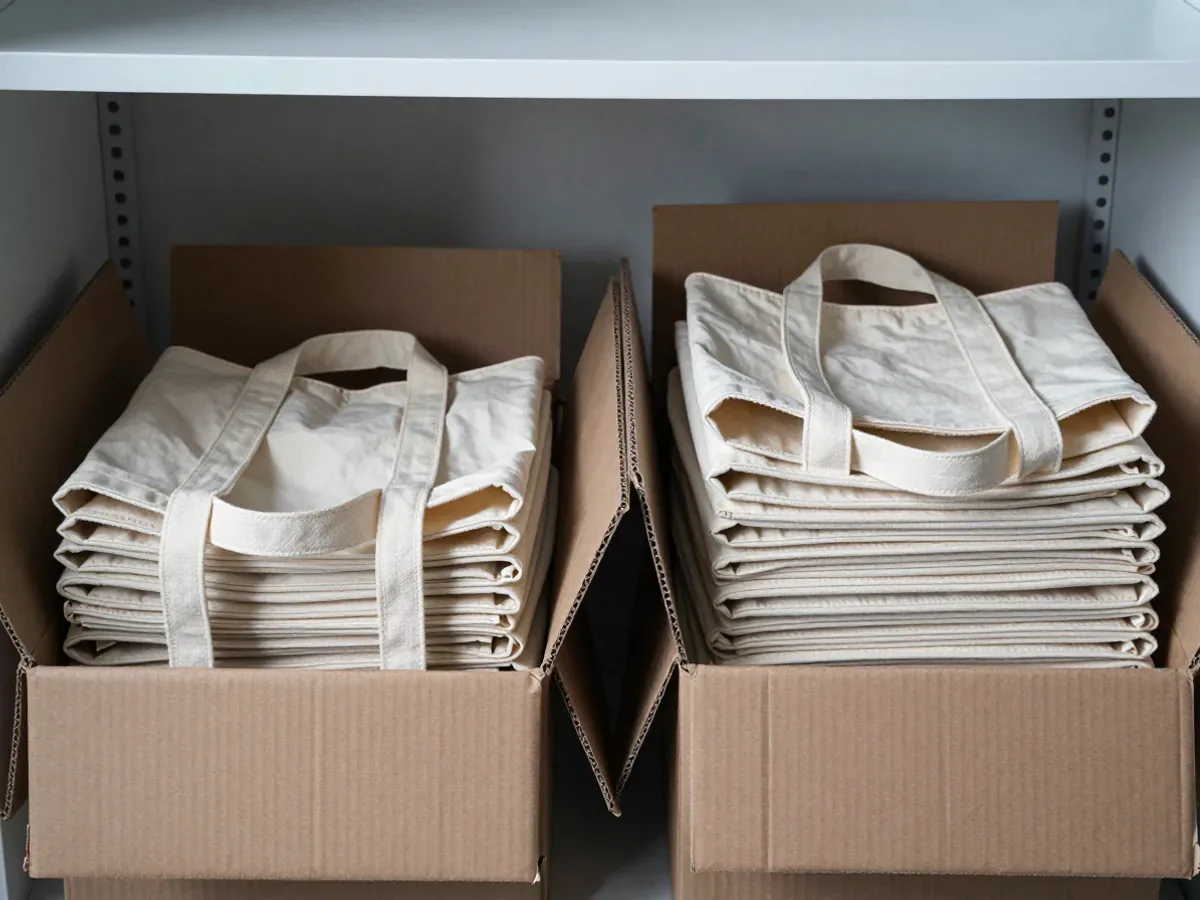
The trade-off flips in storage and freight. A flat bottom tote folds to almost nothing and nests tightly in a carton, so more units fit per shipment and the empty bags take barely any shelf space in a store back room. A gusseted tote folds down too, but the folded bundle is thicker and the carton fills faster.
That difference shows up in two places a buyer rarely models at the sampling stage. The first is freight. A carton that holds more flat bags moves more units per cubic metre, and the per unit shipping cost falls without anyone negotiating. The second is the stockroom. A store that receives a large drop of empties needs somewhere to put them, and flat bags disappear into a shelf that gusseted bags would fill.
The store manager in this story had a stockroom the size of a small closet. Her flat bottom totes lived in a drawer. Her gusseted totes lived in a stack of cartons that had to be broken down and recycled after every delivery. That was a real cost, paid in labour hours rather than in the invoice.
Where the Flat Bottom Quietly Wins
Choose a flat bottom when the load is thin, when a large quantity of empties has to move or store tightly, or when the order is short and cost sensitive and the extra capacity of a gusset adds fabric and sewing cost the buyer cannot recover. Those conditions are common in giveaways, event bags and lightweight retail packaging.
A flat bottom tote also wins when the bag is a carrier rather than a display. If the bag’s job is to get a purchase from the counter to a car, a flat structure does that with less material and less sewing time. The customer folds it, puts it in a glovebox, and the bag’s lack of structure stops mattering.
The mistake is ordering a flat bottom for a shelf that needs a standing bag. That is the failure that started this story. The buyer had approved a flat sample on a table where it lay flat and looked fine, and nobody had stood it up with a load inside before signing off.
Reading a Base Sample Before You Approve It
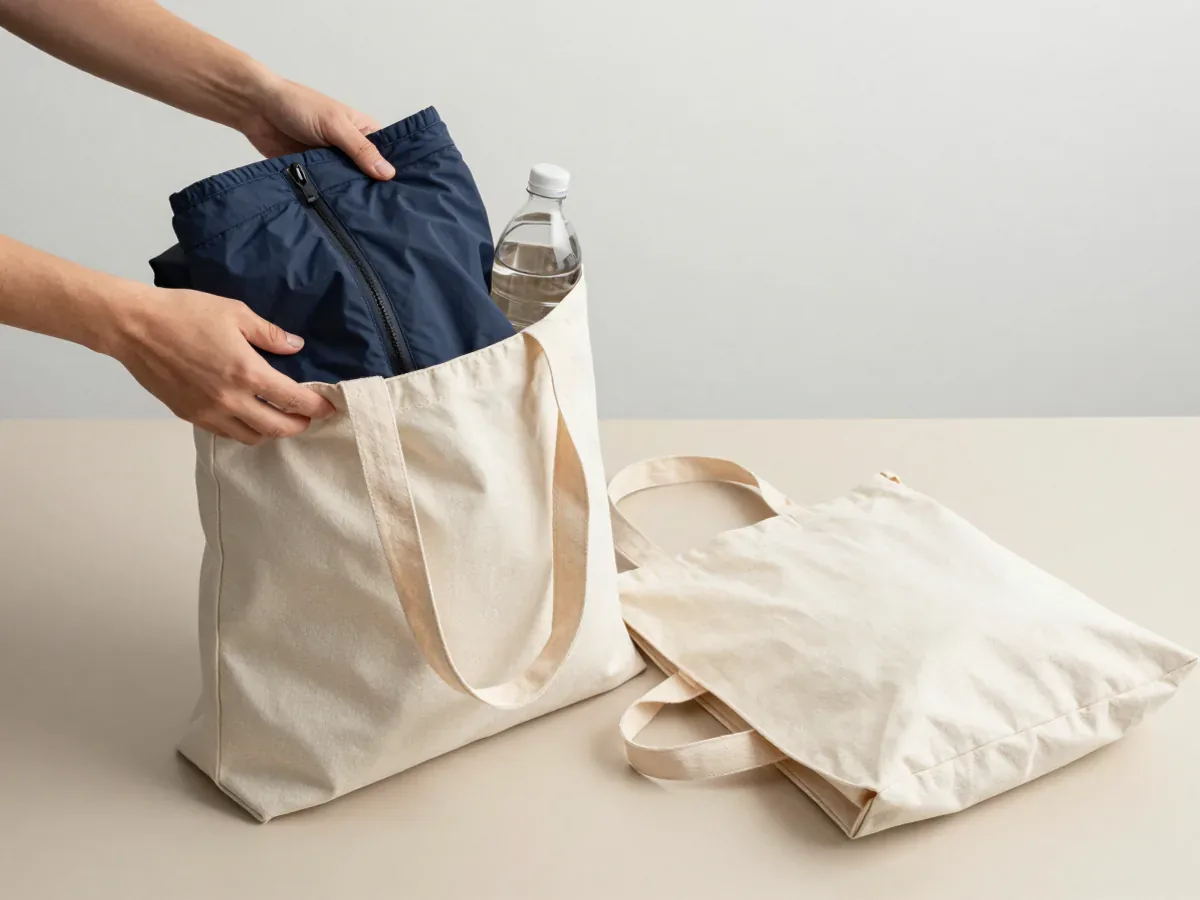
A base sample has to be tested the way the shelf will test it. Fill the bag with the expected load, set it down, and let go. A gusseted tote should hold its footprint and stay upright. A flat bottom tote will lean or collapse, and that is expected, so the question becomes whether the display plan can live with it.
Then check the base itself. On a gusseted sample, look at the fold lines and the base panel seams. The fold should sit square, the panel should be centred, and the seam should run straight without puckering. A base that is sewn slightly off square will stand, but it will lean, and the lean gets worse with load.
Handle stitching deserves the same attention on either structure. Reinforced stitching at the join is a standard build on a tote, and a base sample that carries a full load by the handles is the only honest test of it. Pull the handles apart gently with the bag loaded and watch the join, not the fabric.
Finally, fold the sample down and pack it. A gusseted bag that will not fold neatly into its carton creates a packing problem that shows up at the container, not at the sample table. Every bag passes four QC checkpoints in production, and finished bag inspection covers dimensions, handles and logo by hand, but none of that catches a structural mismatch the buyer approved.
What to Write on the Spec Sheet
The spec sheet is where the two bags stop being interchangeable. Write the structure first: gusseted with side folds and a base panel, or flat bottom with two panels sewn edge to edge. Then write the dimensions that the structure implies, including the depth the gusset adds, because a length and height alone do not describe a gusseted bag.
Add the load the bag is expected to carry and where it will be displayed. A spec that says “stands open on counter” tells the factory what the sample has to prove. A spec that says “packs flat for bulk shipment” tells it what the fold has to survive. Incoming fabric, webbing, zips and thread are checked against the approved spec, and pull, seam strength and bar tack are tested on every batch, but the structural line is the one that decides which bag gets made.
Custom size is available on request, which matters here because the right base often comes from adjusting depth rather than changing fabric. A buyer who needs more capacity can add gusset depth without changing the panel size, and a buyer who needs tighter nesting can reduce it. That adjustment belongs on the spec sheet as a number, not as a note in an email.
FAQ
Does a gusset tote really hold more than a flat bottom tote of the same size?
Yes, for the same length and height. The fold adds depth, and depth is volume that a flat bottom bag does not have. The label may show the same face dimensions, but the usable capacity differs once the bag is loaded.
When is a flat bottom tote the better order?
When the load is thin and flat, when large quantities of empties must nest tightly for shipping or storage, or when a short cost sensitive run cannot recover the extra fabric and sewing cost of a gusset. Giveaway and event bags often fit this profile.
Why does a gusseted build cost more per unit?
Two reasons. It uses more fabric per unit, and it needs one more operation on the line to form and sew the fold or base panel. The gap is small on a short run and grows across a bulk order.
What should I check on a base sample before approving it?
Fill it with the expected load and let go. Check that the fold sits square and the base panel is centred, pull gently on the loaded handles to watch the join, and fold the bag down to confirm it packs into its carton.