Reorganised from the old moving bag load capacity article and the current product spec for heavy duty moving bags.
A buyer at a relocation company copied "200 lb capacity" from a supplier listing straight onto the purchase order, then watched a crew fill the bags to the top on the first job. Halfway through the second day, a handle tore out of a bag holding roughly 100 lb, and the box inside hit the floor. The number on the listing had never meant what the buyer assumed it meant.
That assumption is common and it is worth taking apart slowly. A moving bag rated 200 lb is not a bag you can put 200 lb into and carry by the handles. The rating describes one condition, and the handles live in another.
The number buyers copy straight onto the purchase order
Most moving bag listings publish a single figure, and it usually arrives without a test method attached. A procurement team reads 200 lb, converts it into a loading rule for a crew, and writes that rule into a supplier agreement. Nobody in the chain asks how the number was produced.
The figure almost always comes from a static load test. The bag is filled, sealed, and set down on a flat platform while weight is added until something gives. The fabric body carries that load across its whole base panel, so no single point of the bag sees more than a share of the total.
Static safe working load is a real measurement and it belongs on a spec sheet. It answers a narrow question about the bag at rest. It says nothing about the moment a worker grips the webbing and takes the load off the floor.
Why a flat platform test looks like proof
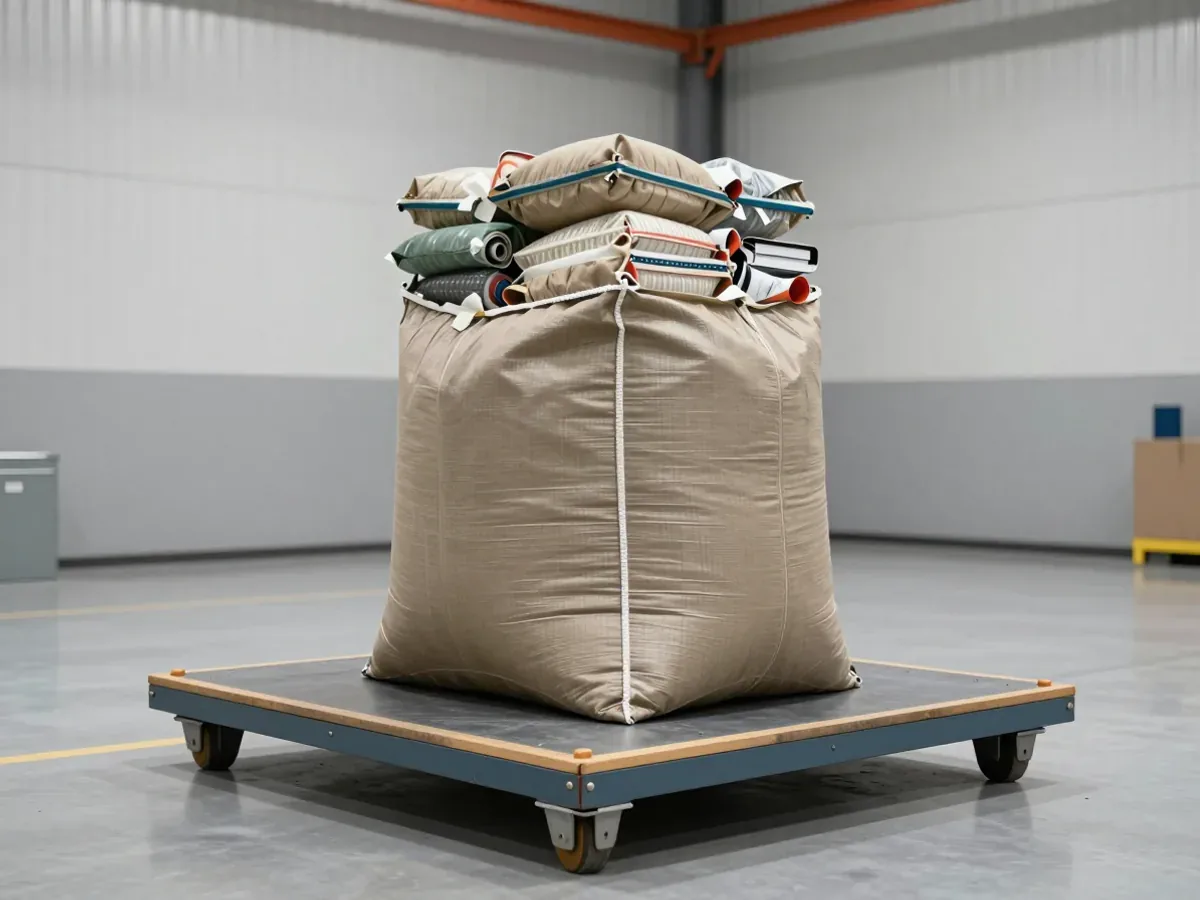
A platform test produces a clean, repeatable result, which is why it ends up in so many listings. The bag sits still, the weight spreads evenly, and the fabric either holds or it does not. Suppliers like it because it is easy to run and easy to pass.
The test also matches how a bag looks in a product photo. A full bag standing on the ground appears solid, and the number beside it appears to describe that picture. A buyer comparing three suppliers sees three similar photos and three similar ratings and treats them as equivalent.
What the platform removes is the handle. The test never asks the webbing to hold anything, so a bag with weak stitching can pass it comfortably. A bag can earn a 200 lb static rating with handle attachment that would not survive a single loaded lift.
Where the weight goes when a handle leaves the floor
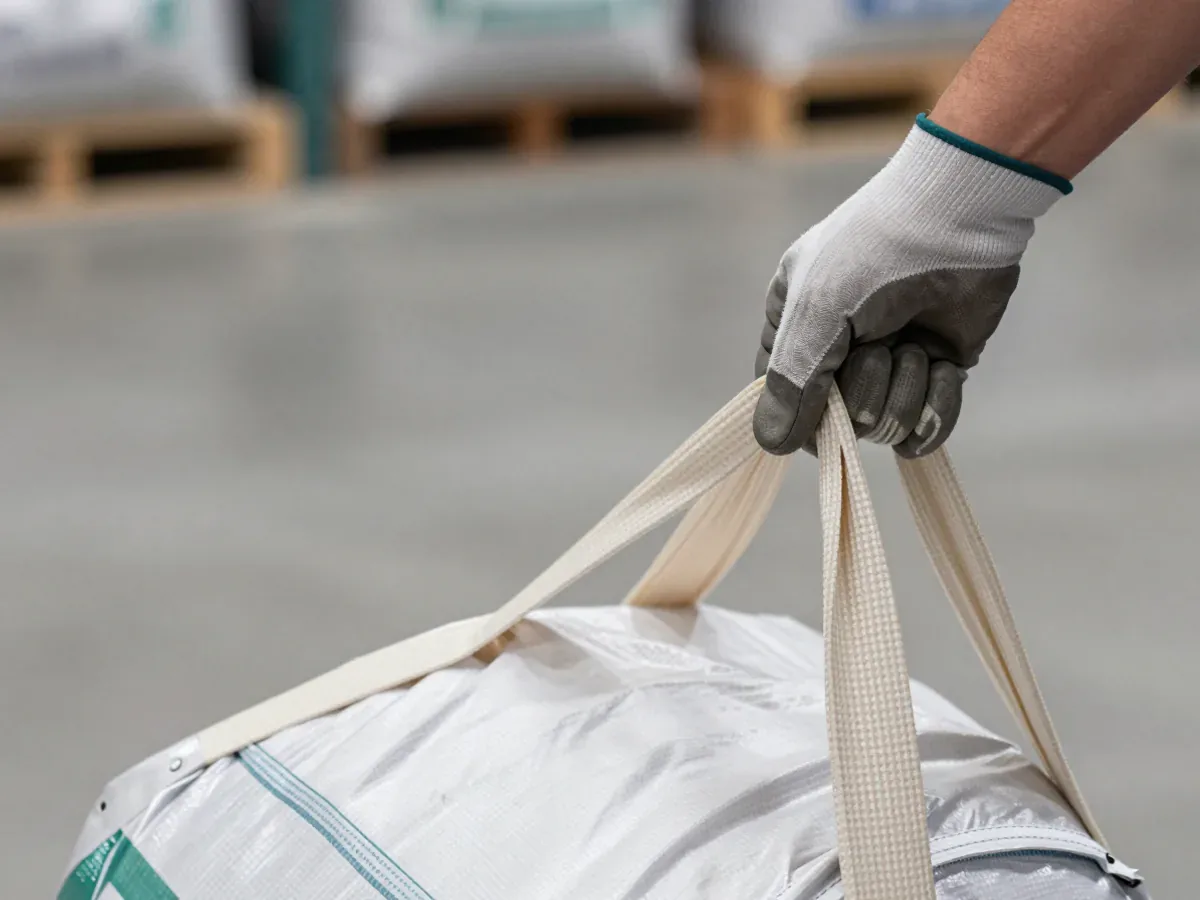
Lifting changes the load path completely. The base panel stops carrying the weight and the entire mass transfers to two strips of webbing and the rows of thread that attach them. Force that was spread across a wide area now concentrates on a few square inches of stitching.
That concentrated pull is the dynamic load, and it is the condition a crew works in all day. A bag rated 200 lb static can put more than 100 lb of pull on each handle stitch cluster once it is off the ground. The fabric body is usually still intact when the handle lets go.
Industry practice applies a safety factor of roughly three to one for dynamic loading. Read against that convention, a bag rated 200 lb static should be hand carried at about 65 lb. Almost no listing prints that figure, so the gap between the label and the safe carry weight stays invisible to the buyer.
The stitch pattern that decides the real limit
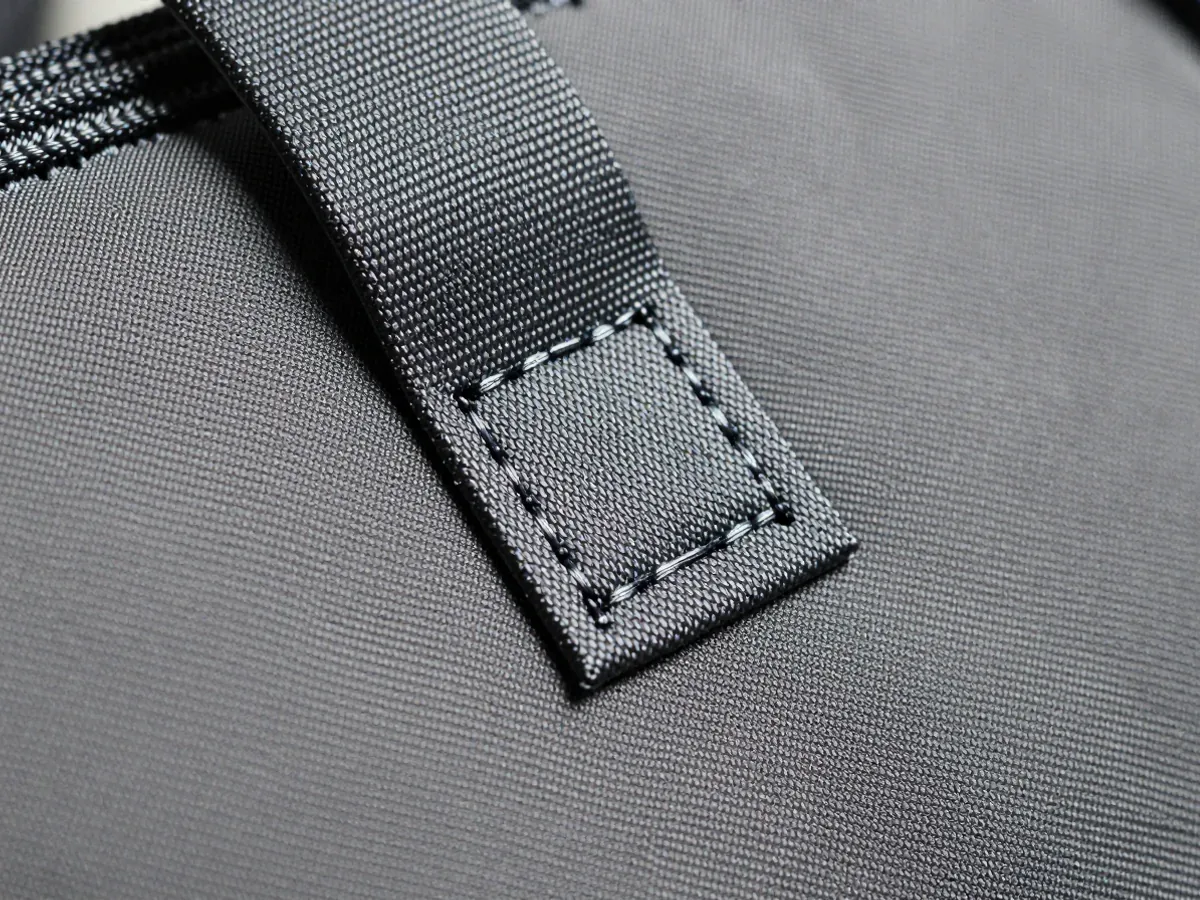
The failure point on a moving bag is almost never the fabric. It is the join where the handle meets the bag, and the stitch pattern at that join sets the true limit. A single row of stitching concentrates stress on one line of thread loops, and those loops take the whole load in sequence.
Double stitching with a bar tack at the stress point changes the picture. A bar tack packs a dense block of thread passes into a small square at the corner where the handle pulls hardest, so the load spreads across many loops instead of one. Bags above 50 lb dynamic load generally need that reinforcement to hold.
Seam type matters as well. A chain stitch allows a small amount of stretch before it fails, which absorbs the jolt of a lift, while a lockstitch seam snaps under sudden pull at a fraction of that strength. A bag with single stitched handles and lockstitch seams can fail at 35 to 45 lb dynamic even when the fabric body is sound.
Fabric still has a role, just a different one. Woven polypropylene at 200 GSM and above gives the panel enough break strength to resist tearing under load, and incoming fabric, webbing, zips and thread are checked against the approved spec before production starts. That check protects the body of the bag, not the handle join.
What to ask for instead of a single number
A buyer who wants a usable figure should ask for two documents and treat them as a pair. The first is the static load report, which should state the safe working load, the test method, and the fabric break strength behind it. The second is a dynamic handle pull test, which is the one that exposes weak stitching.
On the dynamic side, ask how the handles were loaded, how many cycles were run, and what stitch tensile strength the handle join reached. A handle stitch result above 500 N gives a bag rated 100 lb dynamic some margin, and a supplier who cannot produce that data is telling you something useful.
Batch testing is the other half of the question. Pull, seam strength, and bar tack should be checked on every batch rather than proven once at sampling, because thread tension and needle condition drift across a production run. Finished bags should also be checked by hand for dimensions, handles, and logo before cartons are counted and photographed.
A pre-order check that takes one sample and ten lifts

The cheapest verification a buyer can run needs one sample and about ten minutes on a warehouse floor. Fill the bag to 70 percent of its stated static rating, which puts a 200 lb bag at 140 lb. Lift it by the handles, hold for five seconds, and set it down.
Repeat that cycle ten times and watch the handle join rather than the fabric. Look for thread pulling away from the panel, a widening gap at the bar tack, or webbing that has started to separate at the seam. A bag that shows movement at the join on the third lift will not survive a working week.
Then write the result into the order. State the dynamic carry limit on the purchase order, put the handle pull requirement next to it, and ask for the batch test record with each shipment. A crew that knows the real limit loads bags differently, and a supplier that knows the limit is being checked stitches accordingly.
The 200 lb figure is not a lie, but it answers a question nobody on a moving job is asking. The question that matters is how much weight the handle join will take off the floor, and that number has to be requested, tested, and written down before the first carton is sealed.
FAQ
Does a 200 lb static rating mean I can carry 200 lb by the handles?
No. The static rating describes the bag at rest on a flat surface with the load spread across the base. Once the bag is lifted, the weight moves onto the handle stitching, and the safe carry weight drops well below the label. A 200 lb static bag should be hand carried at roughly 65 lb under a three to one safety factor.
What stitch strength should handle webbing meet?
Handle stitching should exceed 400 N, and 500 N or above is preferable for bags rated at 100 lb dynamic. Ask for the test report behind that figure rather than a verbal assurance, and confirm the same check runs on every batch.
Is bar tack stitching necessary on moving bags?
For loads above 50 lb dynamic, yes. A bar tack concentrates a dense block of thread passes at the point where the handle pulls hardest, and without it the handle can tear out below 80 lb dynamic even when the fabric body is strong.
How do I test a moving bag sample before a bulk order?
Fill the sample to 70 percent of its static rating, lift by the handles for five seconds, and lower. Repeat ten times and inspect the handle join for pulled thread, a widening bar tack, or webbing separating at the seam. Record what you see and put the dynamic limit on the purchase order.