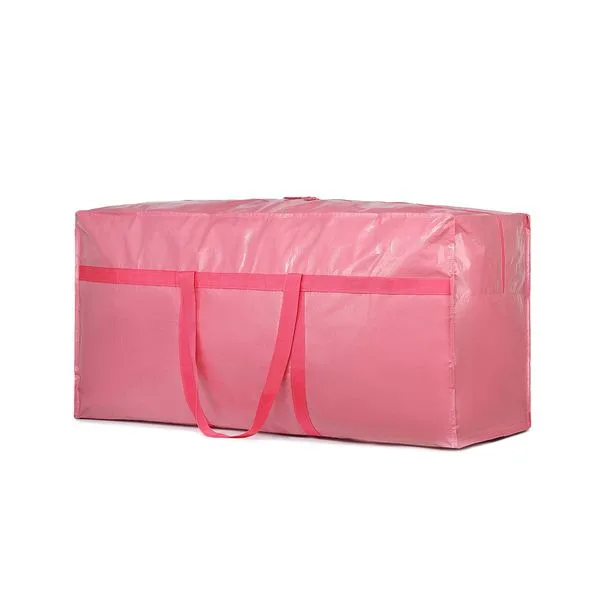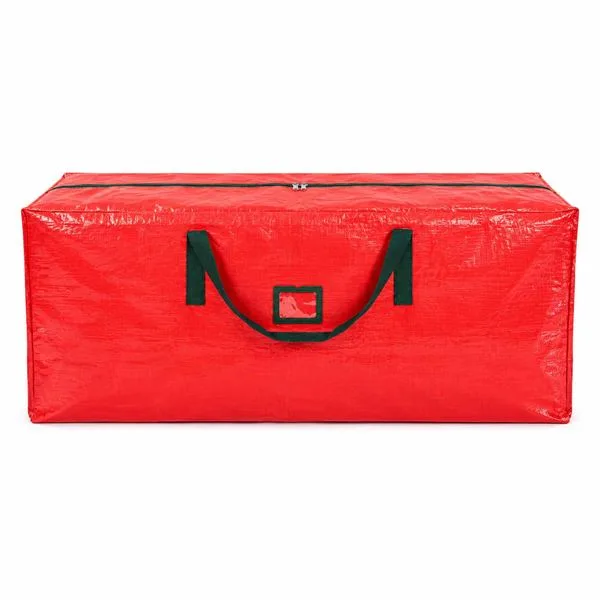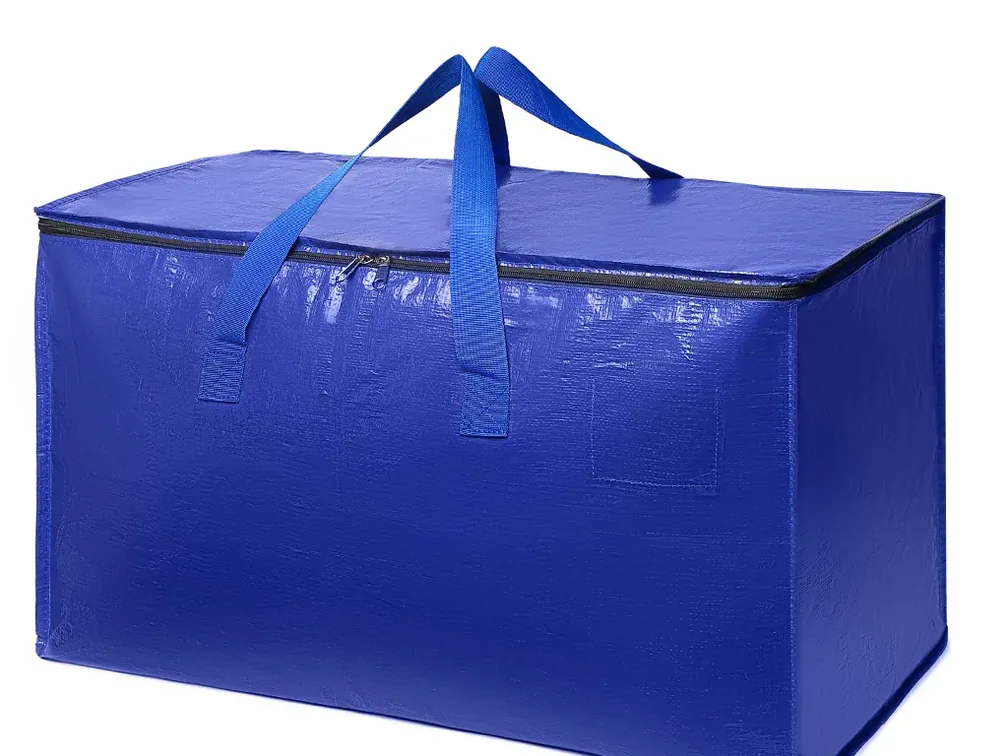
A side-by-side look at the two test documents moving bag suppliers most often send, drawn from archive notes and the current heavy duty moving bag spec.
Two test reports arrive in the same email from a supplier, and they disagree about the same handle. One shows a fabric breaking force measured in a single pull; the other shows a handle that survived repeated lifts before the stitch line opened. The buyer has to decide which document describes the bag her crews will actually carry.
The two files usually look equally official. Both carry a standard reference, a lab stamp, and a table of numbers. What separates them is not the formatting but the force they measured: one pull to failure, or many lifts under a moving load.
Two reports land on the same desk, and they disagree
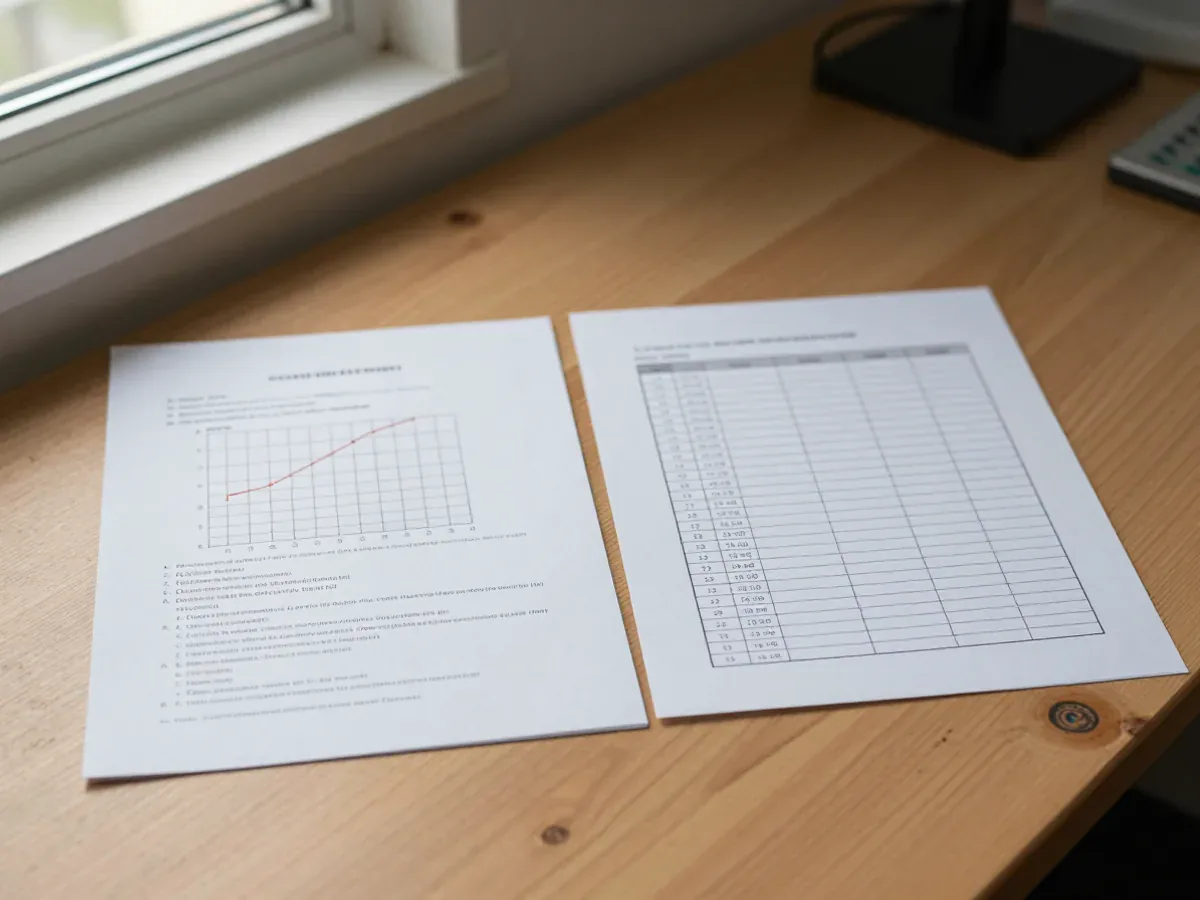
The first report is a grab test on woven fabric, run to ASTM D5034. It grips a narrow center section of the shell and pulls until the weave breaks, which tells a buyer how the fabric behaves under tension in one direction. It says nothing about what happens at the point where the handle meets the bag.
The second report is a dynamic cycle record. It lifts a loaded bag repeatedly, and the load shifts and twists as it rises, the way a mover hoists a full bag by one handle and swings it onto a truck bed. The number that matters is the cycle count at which the handle attachment starts to fail.
A supplier with only the first document can still be a competent fabric supplier. A supplier with both is telling a buyer something about the handle junction, which is where moving bags fail first. The disagreement between the two files is not a contradiction; it is a difference in what each one was built to measure.
Fabric weight: what the shell number hides about the handle
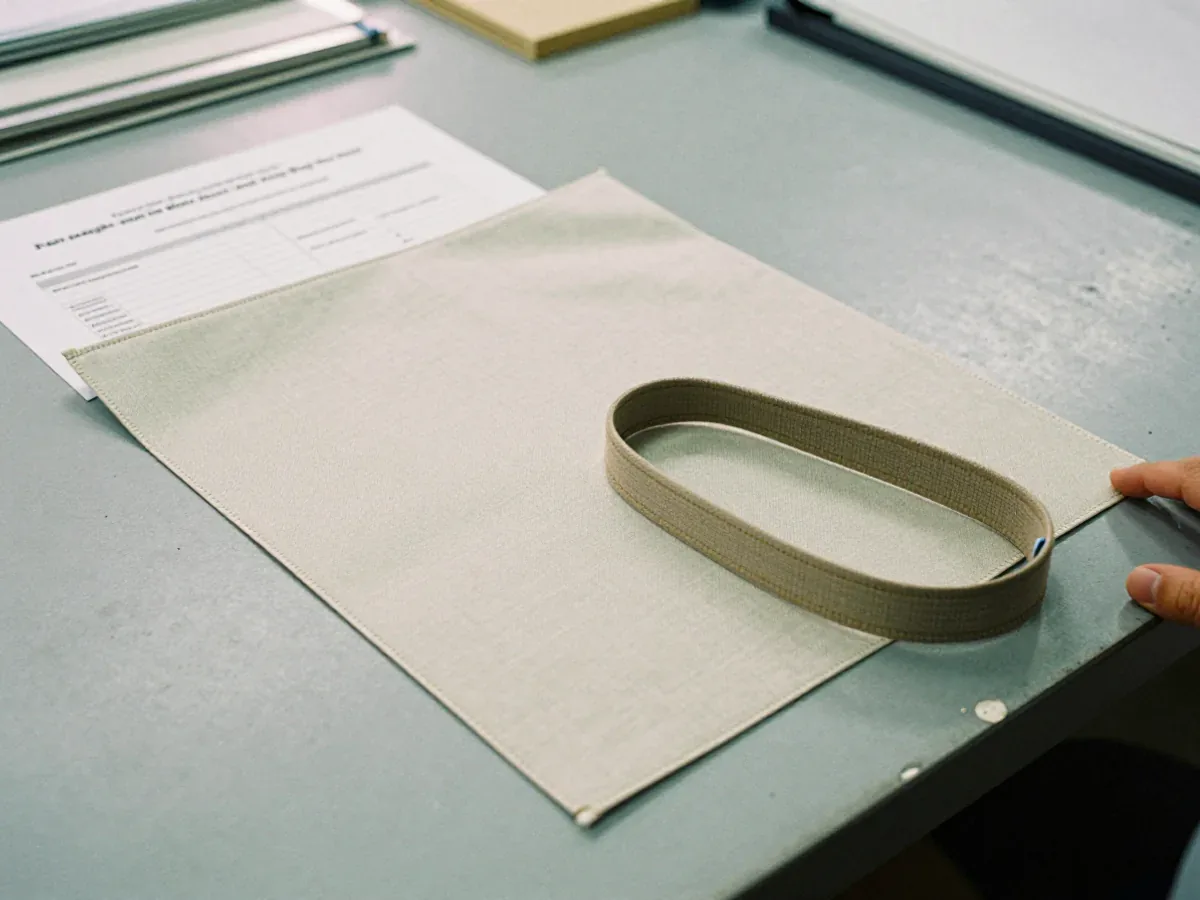
The shell weight sits at the top of most spec sheets, and buyers learn to read it as a proxy for strength. A 140 gsm woven polypropylene shell and a 200 gsm shell do behave differently under lateral stress, and the lighter fabric gives up tear resistance sooner. That part of the comparison is real.
The number also hides the load path. A moving bag carries its weight through the webbing strap that runs the full length of the bag, not through the handles alone. The shell can be heavy and the handle junction still weak if the strap is short and the stitching is light. A static fabric report will not show that gap.
Fabric weight also sets how the handle behaves after the bag is full. A shell that sags at the base pulls the handle line out of shape, and a handle that has to fight a sagging base loads its stitches unevenly. The 180 g shell in a bedding load holds its base without sagging, which keeps the handle under a straighter pull. A heavier shell helps, but only when the strap and the stitch pattern carry the load with it.
Stitching and bartack: where the two documents stop talking
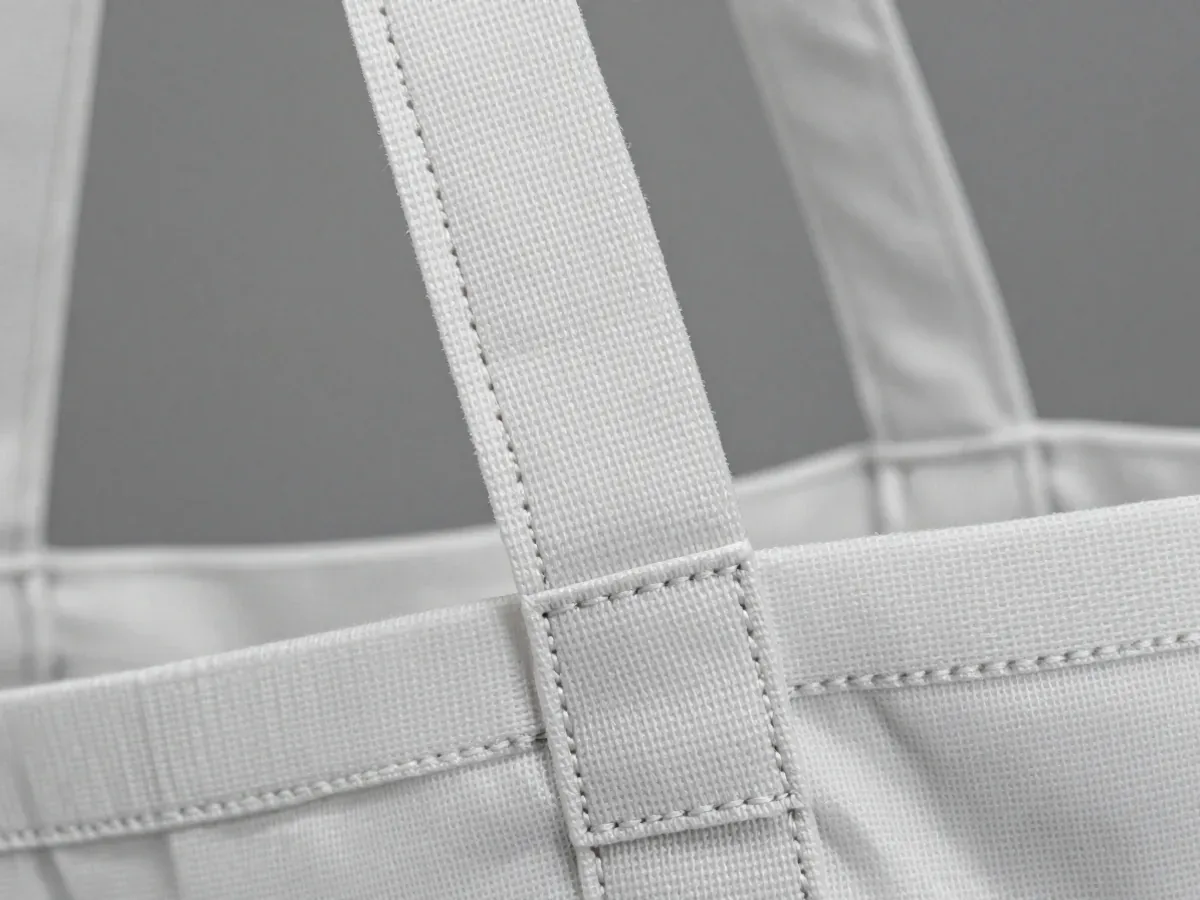
The static report stops at the fabric edge. It has no column for stitch type, thread size, or how many stitches per inch run along the handle attachment. A single-needle lockstitch can unravel after twenty to thirty cycles, and no grab test will predict that.
The dynamic report starts where the static one stops. It records the handle-to-bag junction as the failure point, and it shows whether a bartack reinforcement was present at that junction. A bartack is a dense block of stitching that spreads the pull across more fabric, and its absence is the most common reason a handle tears out before the shell shows any wear.
A buyer comparing the two documents should notice what each one is silent about. The static file is silent on stitch structure and bartack. The dynamic file is often silent on fabric breaking force, because it was not designed to measure the weave. Reading them together closes both gaps.
Static pull versus repeated lift: the cycle count gap
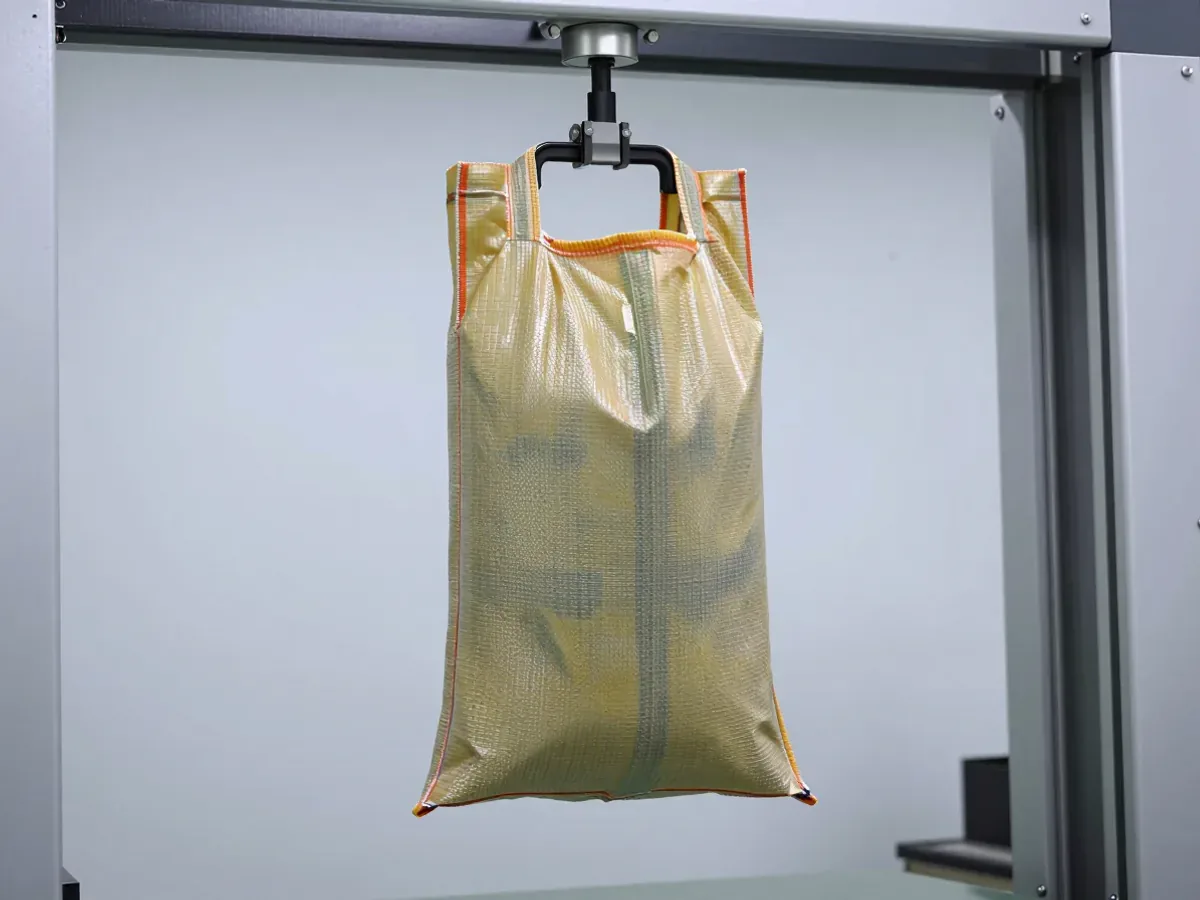
A static pull applies one increasing force until something gives. It is a clean, repeatable test, and it is useful for comparing fabric lots against each other. It is also a poor model of a moving day, when a bag is lifted, set down, dragged, and lifted again, with the load shifting sideways each time.
A dynamic cycle test applies the load many times, and the bag twists and swings between lifts. Lateral forces enter the handle junction, which is exactly where a static pull sends its force straight down the strap. A handle that passes a static pull can still open at cycle eighteen under a moving load.
The cycle count is the number a buyer should read first in a dynamic report. It tells you how many lifts the handle survived before the stitch line began to fail, and it gives you a way to compare two suppliers on the same basis. A report that lists only a pass or fail, with no cycle count, leaves the buyer guessing.
Who should accept a static-only report
A static-only report is enough when the bag is not lifted repeatedly under a shifting load. Storage bags that sit on a shelf, or bags that are filled once and moved by pallet, put most of their stress on the shell and the base seam. For those uses, a fabric breaking force and a base seam check cover the main risk.
It is also enough at the sampling stage, before a buyer has committed to a handle design. A grab test confirms the shell meets the weight and weave the buyer specified, and it catches a supplier who substituted a lighter fabric. That is a useful first filter, not a final approval.
A static-only report becomes thin when the same bag is issued to crews who lift it by one handle all day. The report cannot see the handle junction, and the handle junction is where the failures cluster. Accepting it as final approval means carrying the handle risk without any data on it.
Who should insist on dynamic cycle data
Any buyer whose bag is lifted by hand, loaded unevenly, and reused across many jobs needs the cycle data. That covers relocation crews, delivery fleets, and any operation where a full bag is hoisted by one handle onto a truck or up a stairwell. The load path in those settings runs through the handle junction on every lift.
The dynamic report also matters when a supplier changes the handle attachment without changing the shell. A new bartack pattern, a different thread, or a shorter webbing strap can all shift the failure point, and a static fabric report will not register the change. Cycle data on the new sample is the only document that will.
A buyer should ask for the cycle count, the load used during the test, and the point on the bag where failure occurred. A report that gives a cycle count but not the failure location is only half a document. The location tells you whether the fix belongs in the stitch pattern, the bartack, or the strap length.
The decision table a buyer can carry into a meeting
| Decision point | Static report (ASTM D5034 grab test) | Dynamic cycle report |
|---|---|---|
| What it measures | Breaking force of the woven shell in one pull | Handle survival across repeated lifts with shifting load |
| Fabric weight | Confirms shell weight and weave against spec | Confirms the shell holds under a loaded, moving bag |
| Stitch structure | Silent on stitch type and density | Records the junction and whether bartack is present |
| Handle reinforcement | Not covered | Shows the handle-to-bag junction as the failure point |
| Best use | Lot comparison, incoming fabric check, first filter | Handle approval, crew-use bags, post-change verification |
| What it cannot tell you | How the handle behaves after many lifts | The shell's breaking force in a single pull |
The table is not a ranking. It is a way to match the document to the question. A buyer who needs to know whether the fabric matches the purchase order uses the static file. A buyer who needs to know whether the handle will survive a season of lifts uses the dynamic file.
What to ask for on the next sample bench
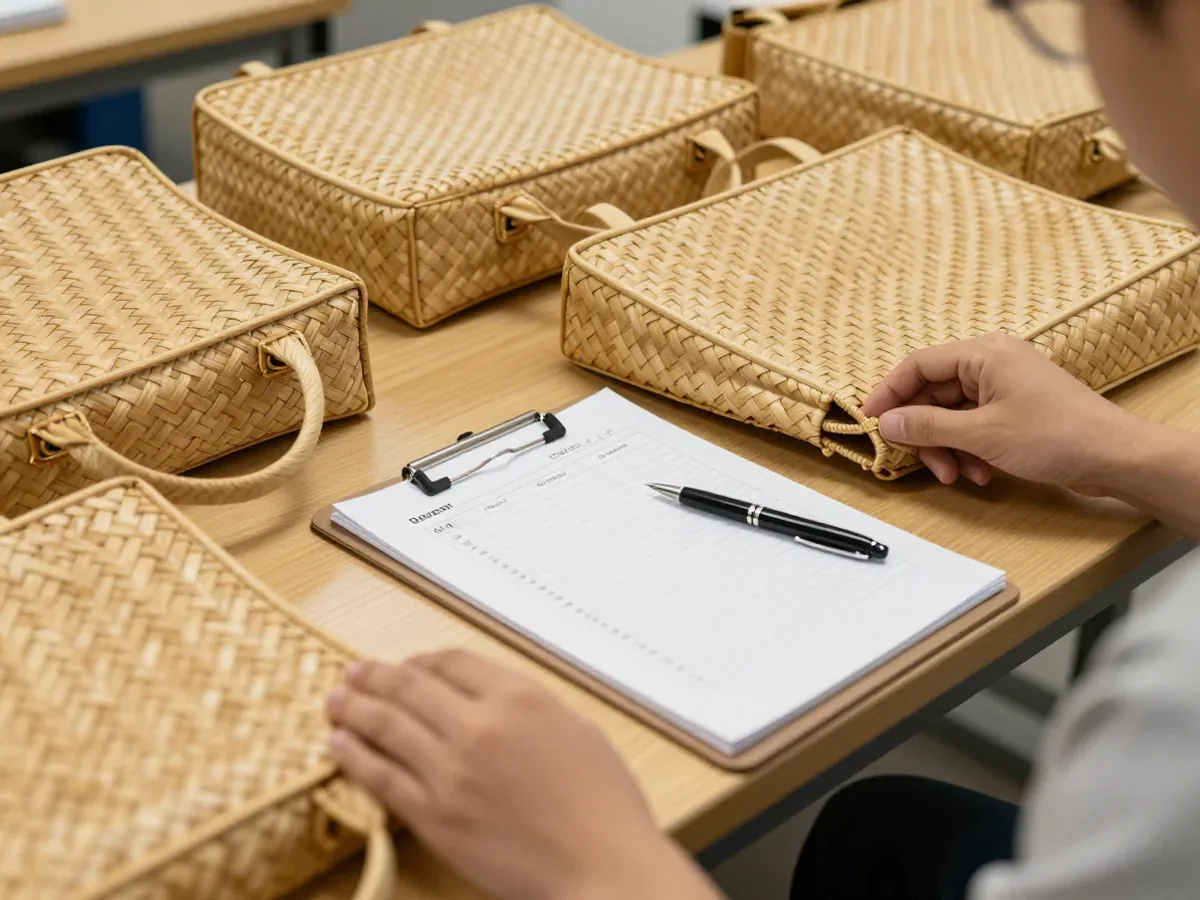
The next sample review is the right place to close the gap. Ask the supplier for both documents on the same sample, so the fabric and the handle are tested on the bag the buyer will actually receive. A static report on one lot and a dynamic report on another lot tells you very little.
Ask for the QC checklist that covers incoming fabric, in-process stitching, and final load testing on a per-lot basis. A supplier who runs every order through four checkpoints can show where the handle attachment is inspected, not just where the fabric is checked. Video or photos of the dynamic test are a reasonable request alongside the report.
On the bench itself, look at the handle junction before the numbers. Check whether a bartack sits at the point where the webbing meets the bag, and whether the strap runs the full length of the bag rather than stopping at the handle. Those two details decide how the bag will behave long before any test report is written.
FAQ
Does ASTM D5034 cover the handle, or only the fabric?
It covers the fabric. The grab test measures the breaking force of a narrow center section of woven material, so it speaks to the shell and not to the handle attachment. Handle behavior needs a cycle test that loads the junction repeatedly.
How many lift cycles should a moving bag handle survive before I accept a lot?
There is no single number that fits every use. Ask the supplier for the cycle count at which the handle began to fail, and compare that count against the lifts one bag sees in your operation. A bag lifted by one handle many times a day needs a higher count than a bag lifted once per job.
Can a supplier add bartack reinforcement without changing the sample I approved?
A bartack changes the stitch structure at the handle junction, so it changes the sample. Treat it as a new sample and ask for cycle data on the reinforced version. The reinforcement should be approved on its own test record, not assumed from the earlier sample.
What should a QC checklist include for incoming fabric and in-process stitching?
It should name the fabric weight and weave checked on arrival, the stitch type and density checked during sewing, and the load test run on the finished lot. A checklist that lists only a final visual check leaves the handle junction unverified until a crew finds the failure.