
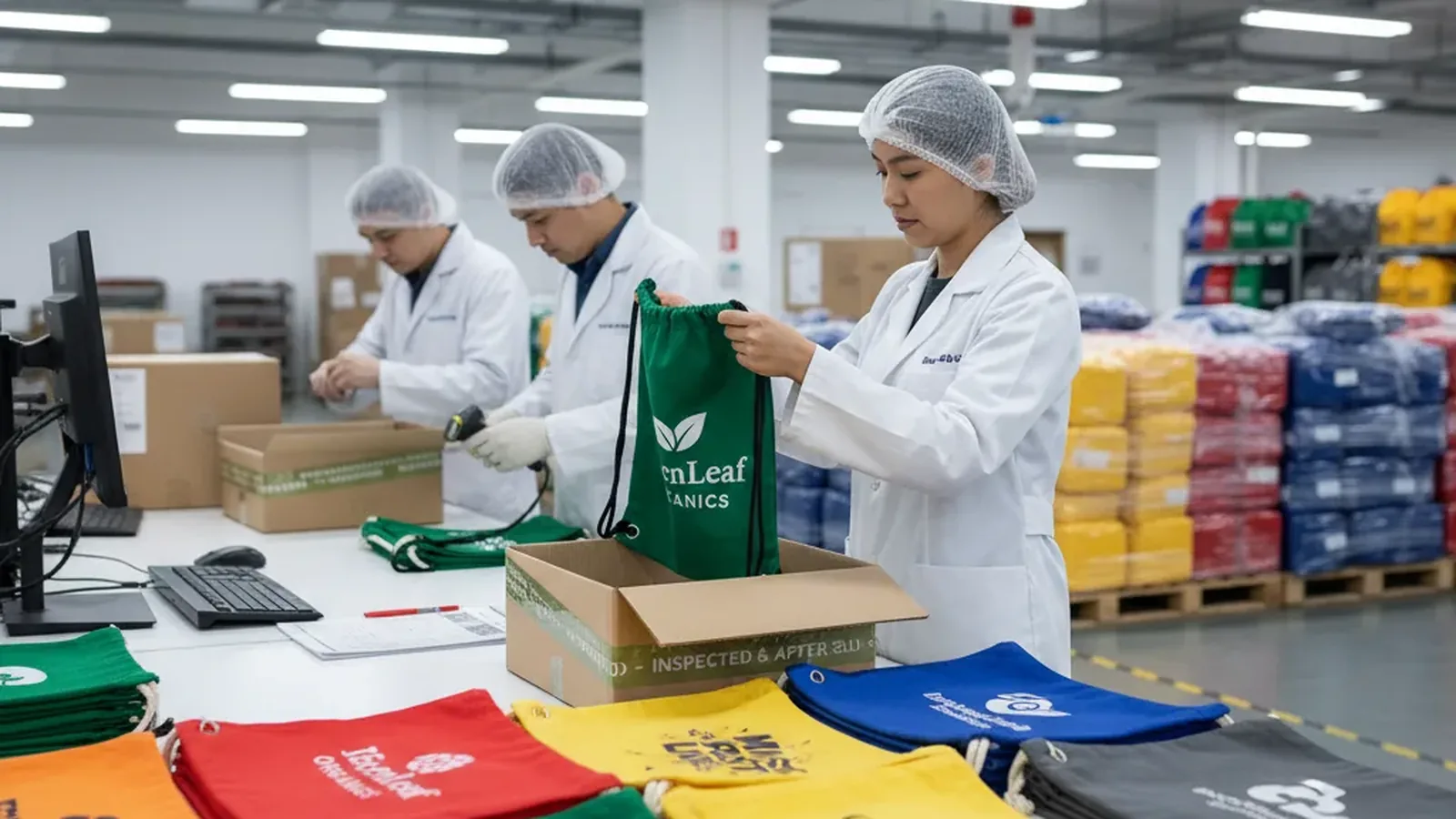
This walk follows one polyester bag order through the stations where a custom logo is decided, printed and packed.
The test report came back clean, and the buyer still could not say where her logo would sit on the finished bag. The report covered fabric strength, colourfastness and seam slippage, but it never showed a single panel with artwork on it. So she asked for something the lab could not give her: a walk through the order, station by station, until the logo found its place.
That walk is the only honest way to answer whether polyester suits a brand logo. A polyester bag with a custom logo is not one decision made at the order desk. It is a series of small decisions, and each station on the line can move the logo a few millimetres or change how it ages. The buyer who follows the goods from purchase order to sealed carton sees the answer before the first bag ships.
At the Order Desk, the Logo Decision Starts on Paper
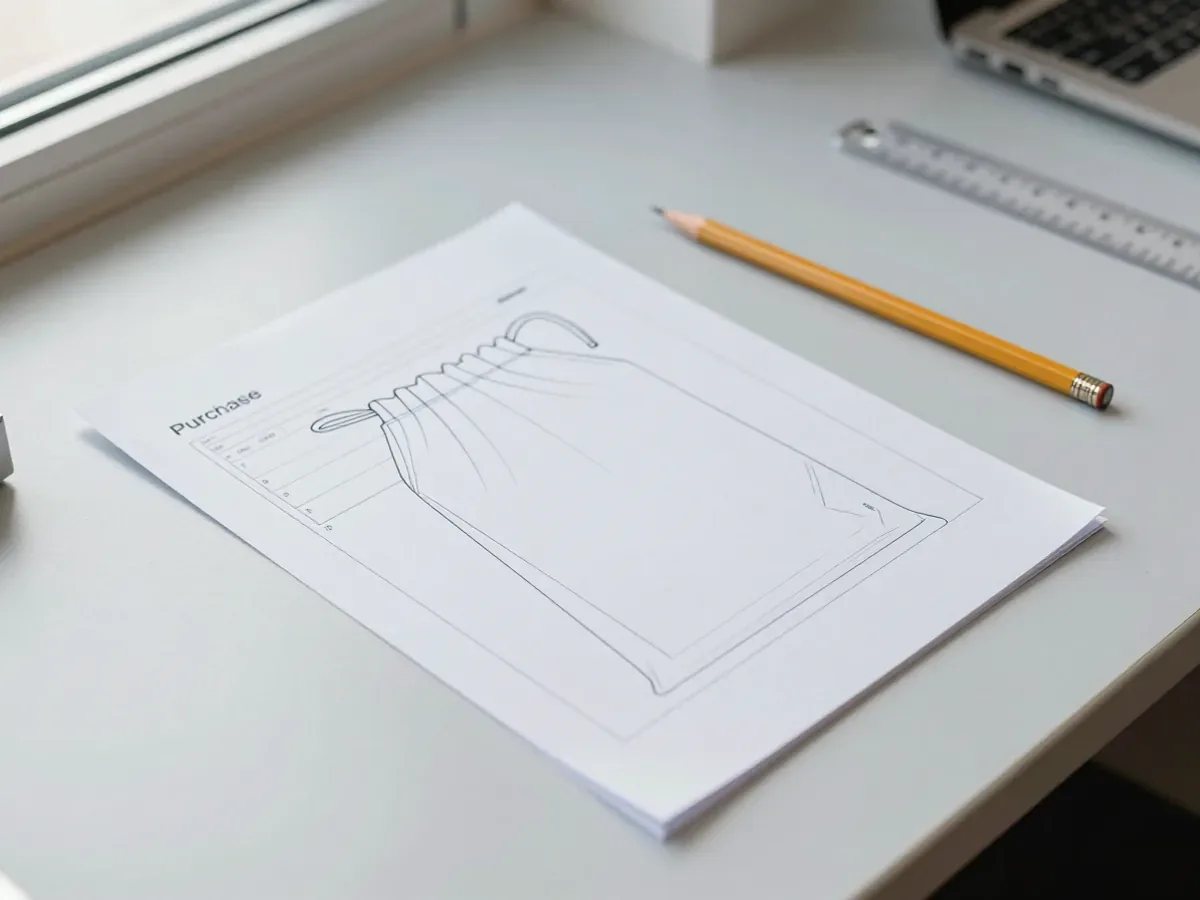
The purchase order usually arrives with a logo file and a bag size, and nothing else. That is where the first gap opens. The file shows a shape; the order needs a position, a method and an approval step. On the drawstring range, a logo can go on as a print, a woven label or a patch, and each route needs different artwork and a different panel.
The desk work is to fix three lines before anything is cut. First, the method: print, woven label or patch. Second, the panel: front body, gusset, strap or channel. Third, the size of the mark relative to the panel, because a logo scaled to a mockup often grows once it reaches production. Artwork for print or a woven label is approved before the run starts, and that approval is the moment the buyer owns the position.
A useful check at this stage is a flat drawing with the logo drawn to scale on the actual panel outline. If the drawing cannot be made, the position is not yet decided.
When the Shell Arrives, Grade Shows Before Print
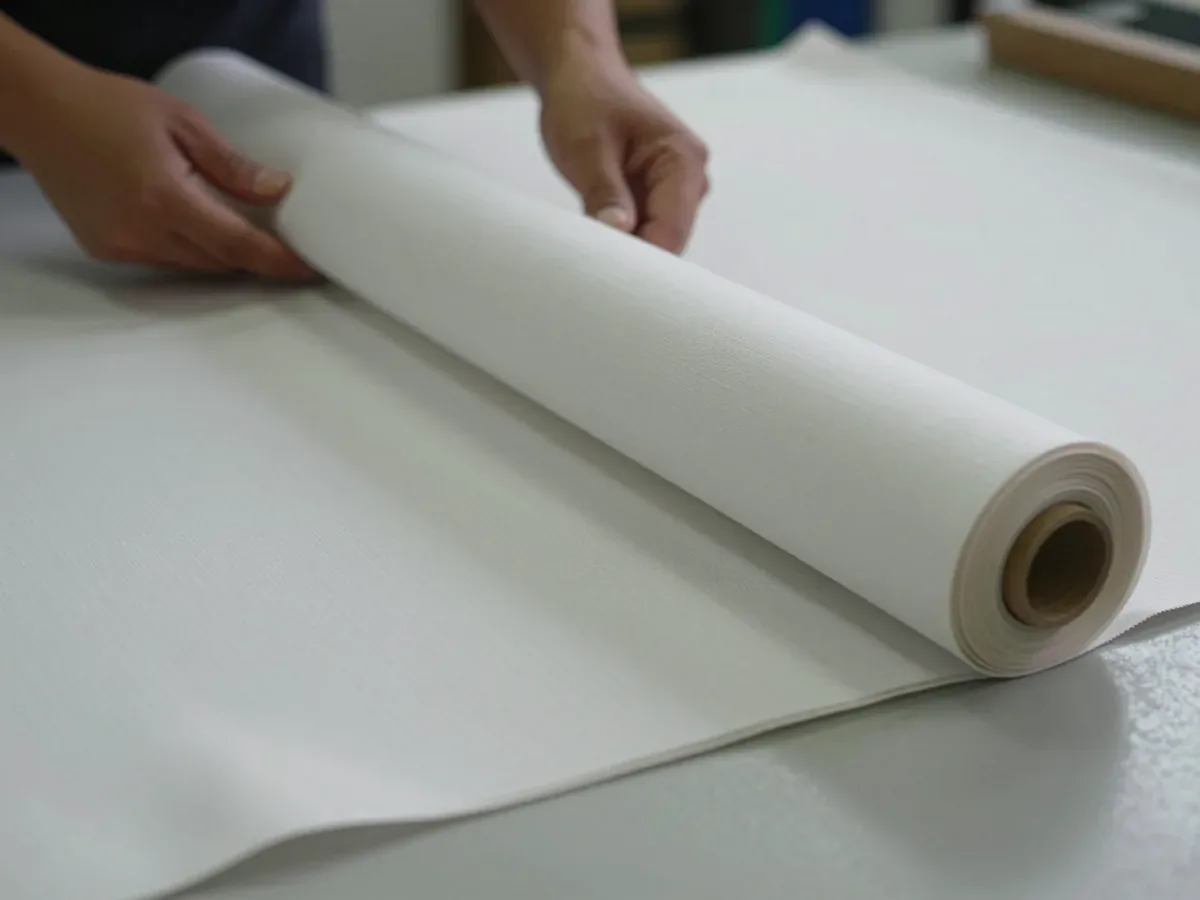
The fabric rolls arrive before any logo exists, and the first inspection happens on bare cloth. Polyester quality depends on the grade used. Higher grade cloth resists wrinkles and fading better, and it holds a printed edge more cleanly than a loose, thin shell. The buyer who only looks at the logo file never sees this difference.
At goods-in, the check is simple and physical. Unroll a metre, hold it against light, and look for thin spots and uneven weave. Fold a corner and press it; a low grade creases sharply and stays creased. Rub a scrap with a white cloth to see whether surface dye transfers.
This matters for the logo because print sits on the surface. A shell that fades or pills will take the logo with it, and no print method compensates for cloth that cannot hold ink. The grade decision is made long before the print station, but its effect lands there.
At Cutting, the Panel Decides Where the Logo Can Sit

The cutting table is where the logo stops being a file and becomes a place. A panel has a centre, edges, a seam allowance and, on some bags, a curve. A logo placed by eye on a screen can end up crowding a seam or drifting off centre once the panel is cut.
The cutter works from a marker, and the marker shows how many panels fit on the cloth. If the logo position is not marked on the pattern, the print station will guess, and guessing produces drift across a run. The check here is to see the pattern piece itself, with the logo position marked and the seam allowance visible.
On the drawstring range, padded panels change the geometry. A padded front panel is not flat, so a logo centred on the flat pattern can look low once the padding goes in. The cutter and the sample room need to agree on the padded position, not the flat one.
At the Print Station, Mesh and Heat Transfer Split the Run

Two print routes run on the line: screen print and heat transfer. They behave differently on polyester, and the split usually happens here rather than at the desk. Screen print pushes ink through a mesh and suits solid shapes and repeated runs. Heat transfer carries finer detail and works well on panels that are hard to screen.
The station check is a first-off bag, pulled before the run continues. Look at the edge of the logo under a lamp. A clean screen print has a sharp edge with even ink; a starved print looks patchy at the corners. Heat transfer shows its own faults: a faint halo, a lifted corner, or a shine where the carrier pressed too hot.
Polyester takes print well, which is part of why it is a common choice for branded bags. That advantage only holds if the first-off is checked and the settings are locked before the rest of the run follows.
At Sewing, the Logo Meets the Strap and the Channel
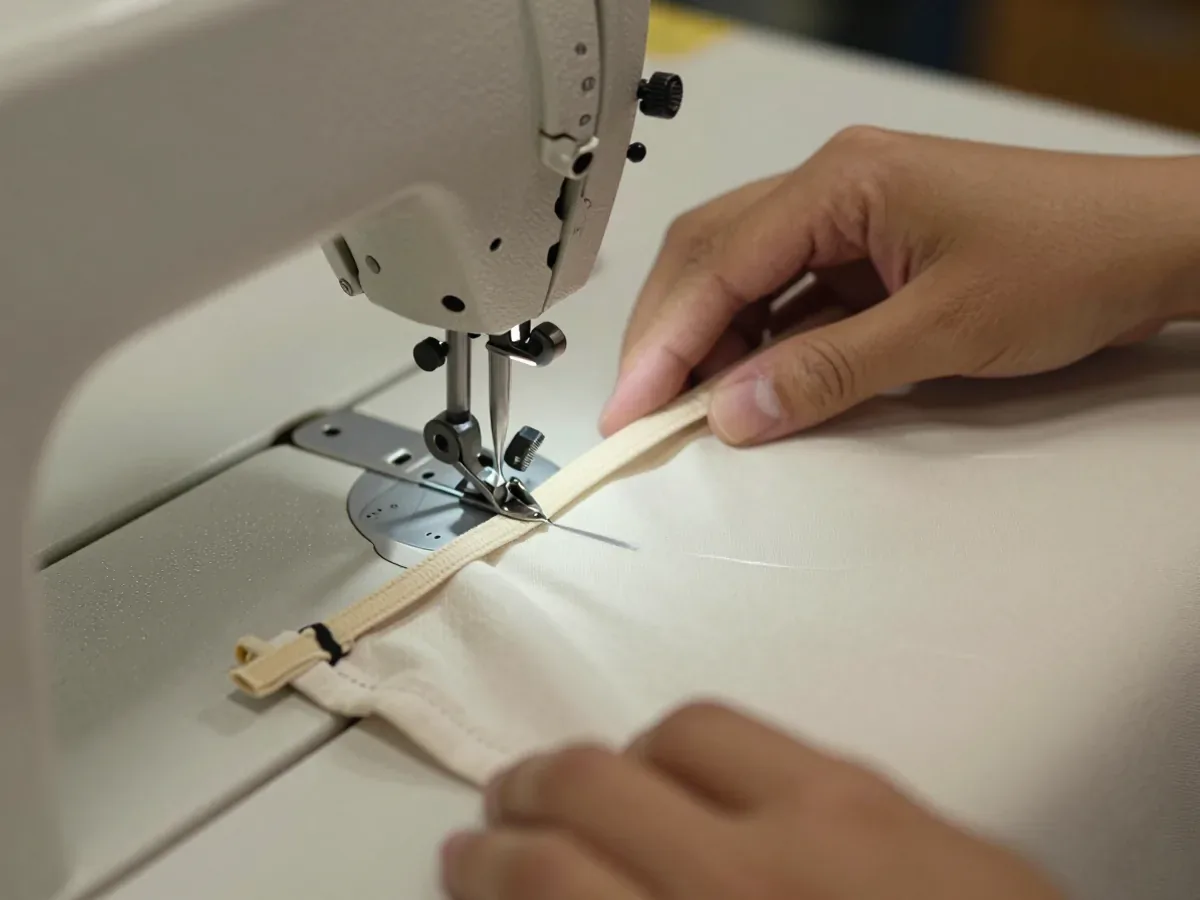
Sewing is where the logo meets the hardware of the bag. On a drawstring bag, the strap and the channel run close to the front panel, and a logo placed too near either one gets caught in the seam or hidden by the cord. The strap anchors are bar-tacked at the point where packs usually fail, and that reinforcement sits exactly where a low logo might land.
The sewer’s view is the one the buyer rarely gets. Ask where the needle will pass relative to the logo. If the seam allowance crosses the mark, the logo will be clipped or covered. If the channel gathers the front panel, a centred logo can pull off centre when the bag is closed.
On reusable bags, handles are stitched into the body rather than tacked on, and that seam is another boundary the logo must respect. A logo that ignores the seam line looks correct on a flat sample and wrong on a filled bag.
At Final Inspection, the Logo Is Checked Under Light
Every order passes a finished bag inspection, and the logo belongs in that check as much as the seams do. Under ordinary room light, a weak print and a strong one look similar. Under a lamp at an angle, the difference shows: ink density, edge sharpness, and whether the mark sits where the approved artwork placed it.
The inspection should measure position, not just presence. A logo two centimetres off centre passes a glance and fails a brand. Check the mark against the approved drawing on the same panel, and check it on a bag that has been filled and closed, because a filled bag shows the true position.
This is also the station to catch method failures. A woven label that puckers, a patch that lifts at one corner, or a print that cracked along a fold will all appear here first. The inspection is the last chance to hold the run before packing.
At Packing, the Count and the Carton Label Close the Loop
Packing looks like the end of the logo story, and it is actually the last place it can go wrong. Every order passes a final count before dispatch, and the carton label ties the count to the artwork version. If two versions of the logo ran in one order, the carton label is what keeps them apart.
The check is to match the carton label to the approved artwork reference and to the count inside. A mixed carton reaches a store and splits a display into two slightly different logos, which is the kind of fault a buyer remembers. Polybags, often made of polyester, are lightweight and cost-effective, and they are also where a loose bag with a smudged print hides until unpacking.
Seal the carton only after the count and the label agree. That closes the loop from the order desk to the loading bay.
When Polyester Is the Wrong Carrier for That Logo
Polyester is a versatile material that works well for bag making, and it is often the go-to choice for a cheap, durable and customizable bag. It resists stretching, shrinking and fading, and it prints easily. Those are real advantages for a brand logo, and they explain why the material keeps appearing in promotional ranges.
The limits are just as real. Polyester is not biodegradable, and its production involves petrochemical resources, which is why some brands avoid it on environmental grounds. A bag can last anywhere from one to five years depending on use, care and grade, and that lifespan is a range rather than a promise.
The material is also the wrong carrier when the logo needs a soft hand on a premium shell, or when the brand cannot defend a fossil-based fabric. Nylon is stronger and more abrasion resistant, while polyester is more cost effective and easier to print on. The choice depends on whether durability or cost and printing flexibility matter more to the brand.
FAQ
Can a polyester bag with a custom logo be recycled?
Polyester can enter recycling streams, but a bag carrying print, a woven label or a patch mixes materials. The logo method affects how easily the bag separates, so ask the supplier which method was used before assuming a recycling route.
Is recycled polyester a better choice for a logo bag?
Recycled polyester answers part of the environmental concern, and it takes print in much the same way as virgin polyester. The grade still decides how well the logo holds, so the question to ask is the grade, not only the recycled content.
How long does a printed logo last on a polyester bag?
A print on a good grade shell can stay legible for the life of the bag, which runs from one to five years depending on use and care. Washing, abrasion and folding stress the print first, so the care instructions matter as much as the ink.
Should the logo be a print, a woven label or a patch?
Print suits solid shapes and volume runs, a woven label gives a cleaner edge on fine detail, and a patch adds texture and depth. The panel and the seam line decide as much as the artwork does, so settle the position before choosing the method.