This walk follows a single bulk Christmas canvas bag order through the factory, station by station, using the checks that apply to canvas totes and custom holiday prints.
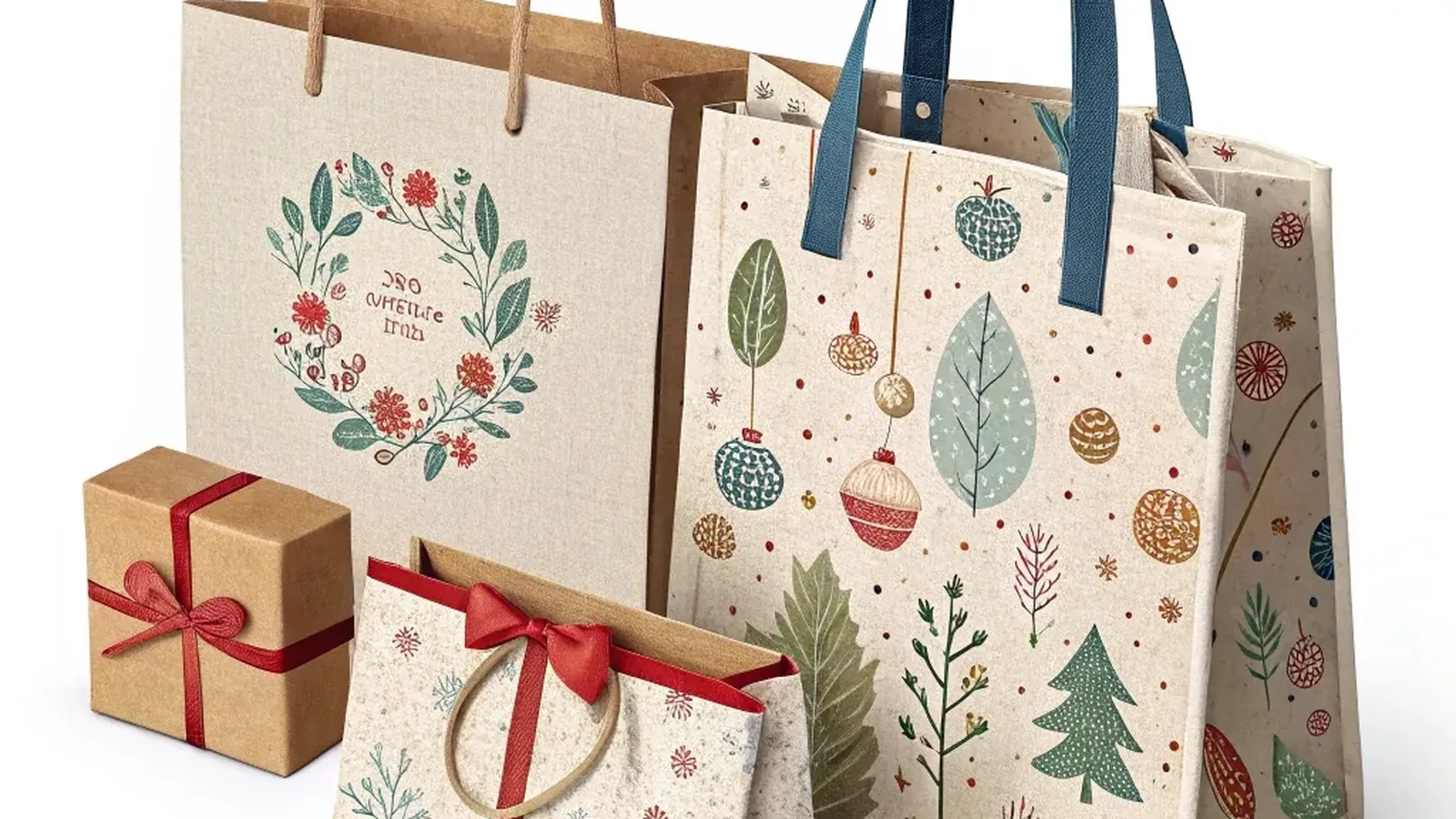
Every October the same order profile lands on the production desk: a few thousand canvas totes with a snowflake print, a red woven handle, and a delivery date that cannot move. The buyer has already promised the stock to stores, so the schedule is fixed before the first metre of fabric is cut. What follows is the walk that decides whether those bags are worth releasing, station by station, from the paper order to the sealed carton.
The walk is not a formality. Each stop on the floor catches a different class of error, and most of them are cheap to fix at the station where they appear and expensive to fix after the container is loaded. A buyer who knows what is checked at each stop can ask better questions and read an inspection report with more confidence.
The order lands, and the first check is not the fabric

Before anyone touches a roll of canvas, the order sheet has to survive a reading. The size line, the handle style, the print placement, the colour reference and the packing instruction all sit on one page, and each of them can be copied wrong. A 30 by 15.7 in tote and a 30 by 15.7 in tote with a different gusset are two different bags on the cutting table.
This is where the buyer's own spec does most of the work. Canvas weight is quoted from the load the bag has to carry, so a gift tote for bottles and books needs a heavier shell than a flat tote for cards and small items. If the order sheet says only "canvas" and a size, the factory will pick a weight, and it may not be the one the buyer pictured.
The handle line deserves the same attention. Woven, webbing and rope handles all attach differently, and reinforced handle stitching is a construction decision, not a trim detail. A buyer who leaves the handle open on the order sheet hands the choice to the sample room.
Colour is the third item read at this stop. Stock colours can be swapped for a Pantone match, and a new size takes one sample round. Both of those are schedule facts, not preferences, and they belong in the conversation before the order is confirmed rather than after the fabric is dyed.
At incoming material, the canvas roll and the cord decide the rest
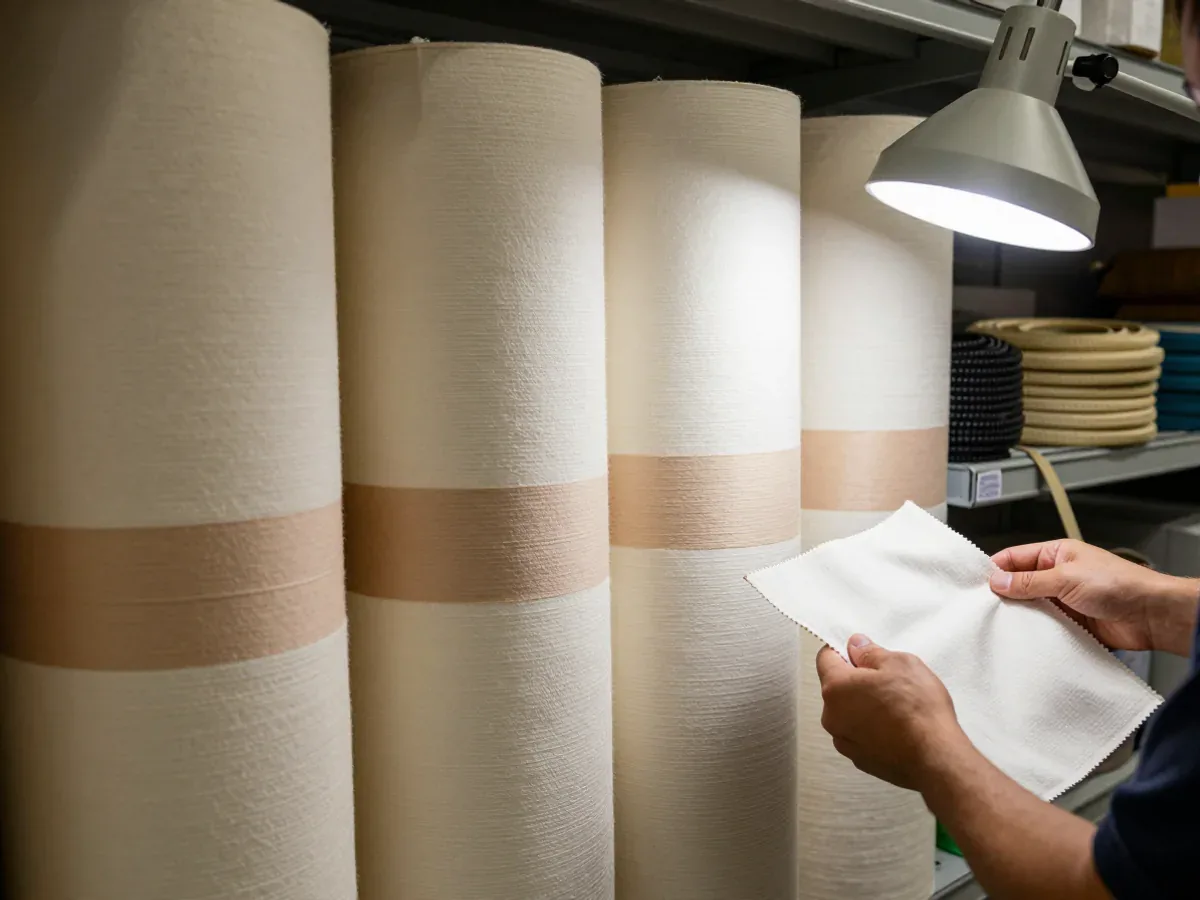
The first physical checkpoint is the material store. Rolls arrive with shade bands, and a Christmas order usually runs one shell colour across the whole batch, so a shade drift between rolls shows up as a visible seam line on the finished bag. The check is a roll-by-roll comparison against the approved swatch under the same light.
Weight is checked here too. A 12oz and a 14oz canvas feel different in the hand, and the difference matters most on the handle and the base, where load concentrates. The shell is cotton canvas, natural or dyed, and the buyer's approved weight should be written on the material ticket, not remembered.
Cord and handle tape get their own look. A cord that arrives with a dry hand or a loose twist will fray at the channel exit after a few weeks of use, and the fault will be blamed on the sewing floor. Checking the cord at goods-in moves that discovery to a point where the roll can still be rejected.
For programmes with an environmental claim, the recycled route runs on the same construction. rPET is woven from recycled bottles, and the paperwork that supports the claim should travel with the roll, not arrive later by email.
At cutting, the size line and the print panel get measured twice
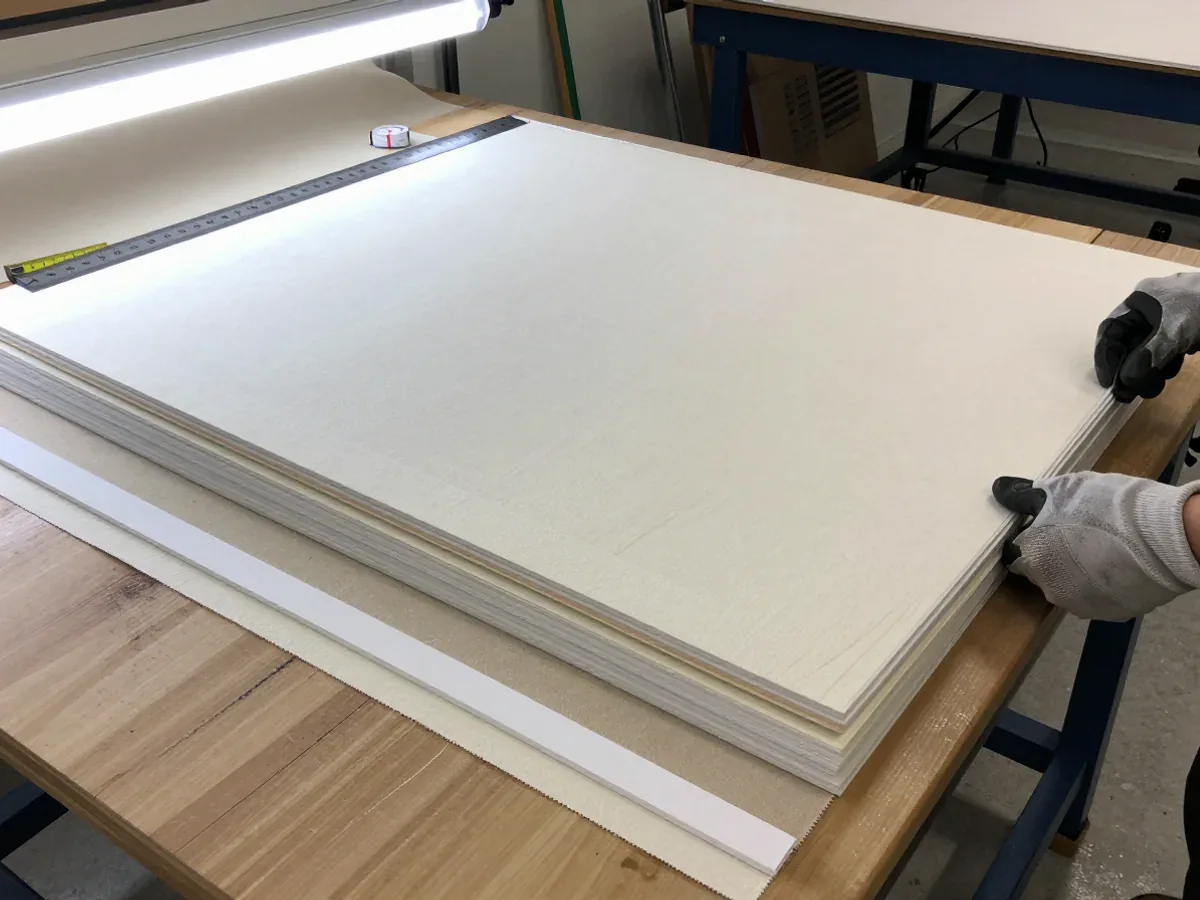
The cutting table is where a millimetre becomes a thousand millimetres. A pattern that is 5 mm short on the width produces a bag that will not sit flat when folded, and the error repeats across every layer in the stack. The first article off the cutter is measured against the order sheet, then the stack is checked at intervals.
Print panels are cut with extra allowance, and the allowance is where Christmas artwork gets into trouble. A snowflake border that runs close to the seam needs a panel wide enough to hold the registration, and a red-green typography block needs a clean edge on all four sides. If the panel is cut tight, the printer has no room to correct registration later.
Directional fabric is the quiet risk at this station. Canvas with a visible weave direction can show a shade shift when panels are cut at 90 degrees to each other, and the shift appears as a two-tone bag under store lighting. The cutter should lay all panels in one direction unless the pattern says otherwise.
Offcuts tell their own story. A stack of narrow strips beside the cutter usually means the marker was nested for yield rather than for grain, and the saving in fabric shows up as a quality complaint three months later.
At the sewing floor, the handle stitch is the slowest and most telling stop
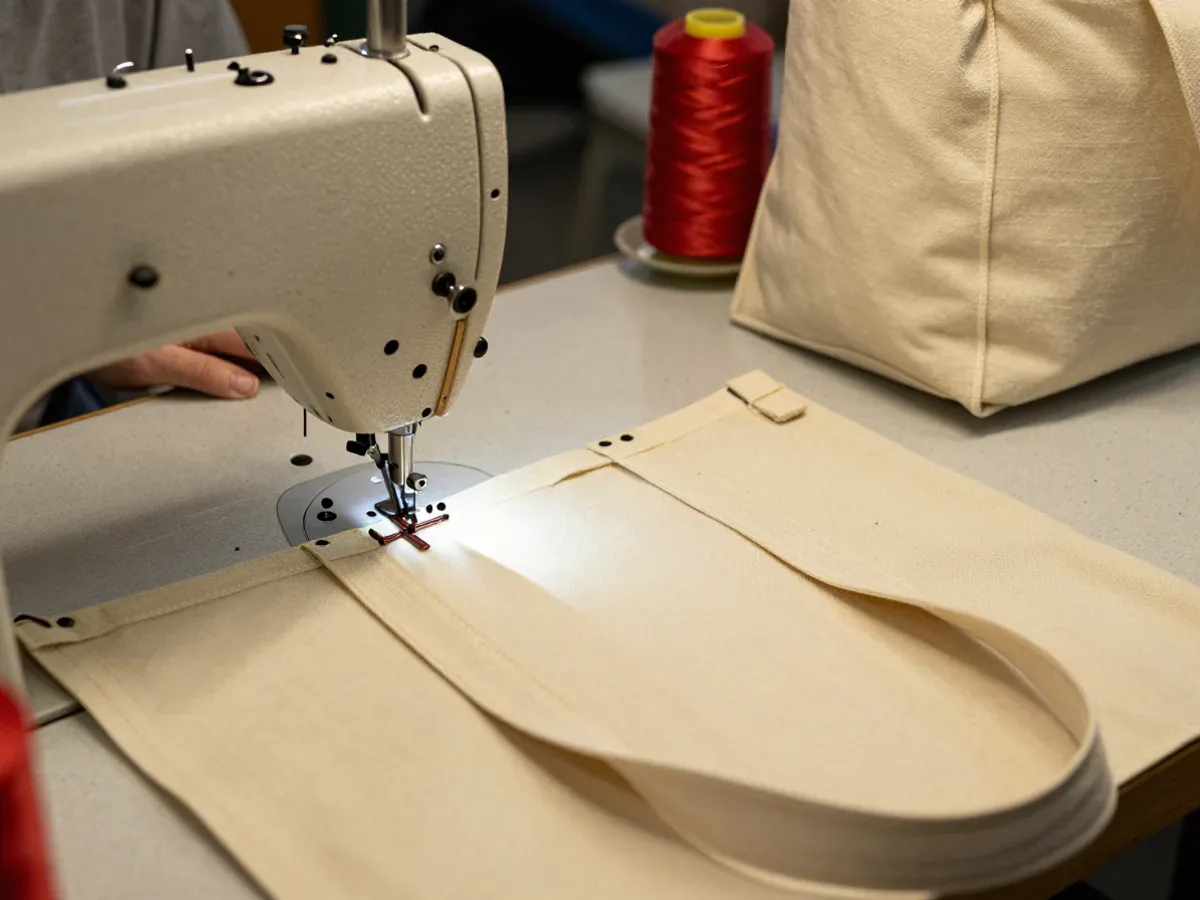
The handle station sets the pace of the line, and it is the stop where construction quality is easiest to read. Handles are stitched through the shell with reinforcement, and the reinforcement is what carries a loaded bag from the shop to the car without the attachment pulling away.
A bar tack at each handle end is the usual answer, and the check is simple: pull the handle firmly while the bag hangs free, then look at the stitch density and the shell around the tack. A tack that sits too close to the top edge can tear through the binding, and a tack that is too light will fail under a bottle or a book.
Seam strength on the side and base gets checked on the same pass. The base is reinforced on a reusable shopper, and the reinforcement should be stitched flat so the bag folds without a bulge. A base that puckers will not stack neatly in a retail carton, and the packing team will feel it before the buyer does.
The print station sits close by, and the first bag off the line shows whether the artwork survived the mesh. Screen print, heat transfer and woven labels are all proofed before production, and the proof is the reference at this stop. A print that looks correct on paper but sits 3 mm off centre on the bag is a placement fault, not a colour fault, and the two are corrected differently.
At final inspection, the print and the fold are what the buyer sees first
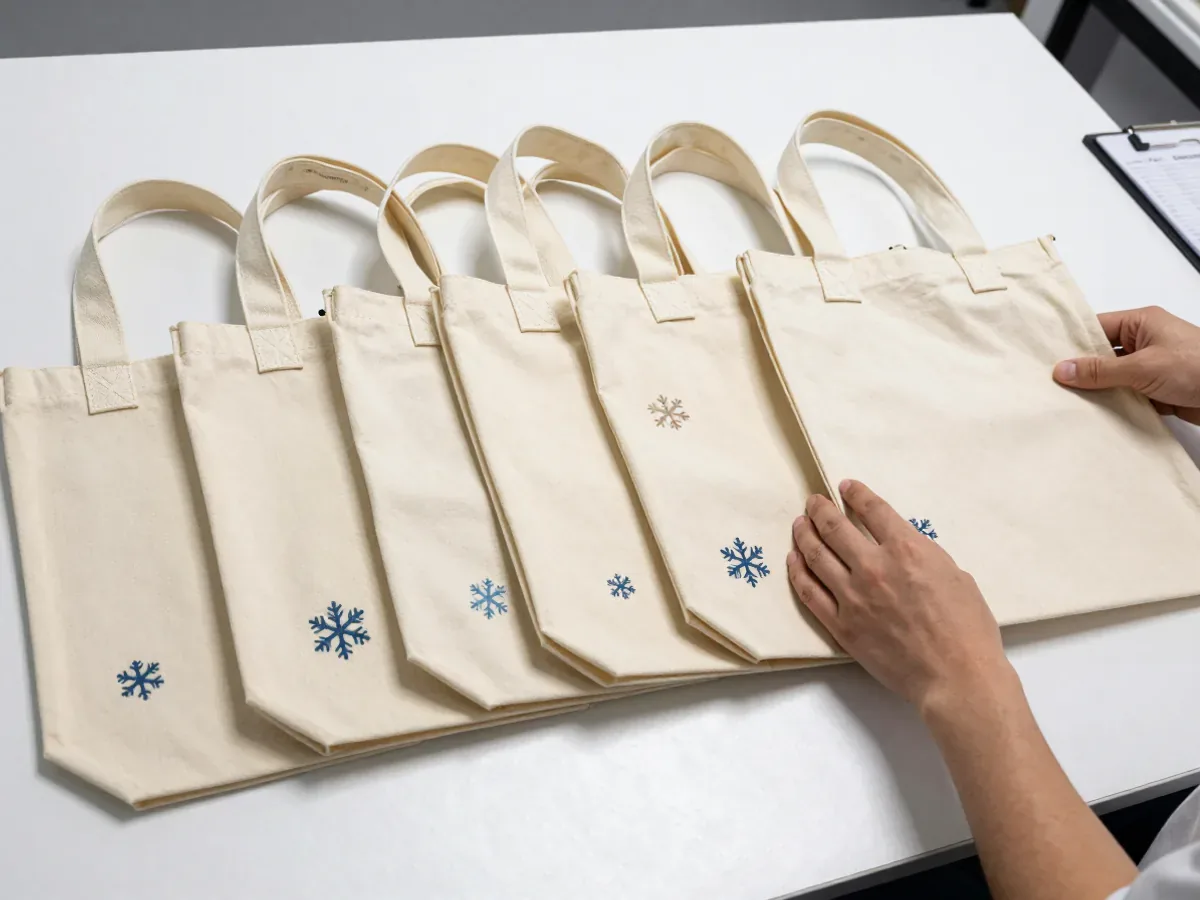
Final inspection is the stop where the bag is judged as a customer would judge it. The print is checked for registration, opacity and edge sharpness against the approved proof, and the check happens on a flat table under neutral light rather than on the moving line.
The fold matters more than buyers expect. A Christmas tote is often packed flat, and a bag that folds unevenly looks second-hand before anyone lifts it out of the carton. The inspector folds one bag from each carton and checks that the body sits square and the handles lie flat.
Colour consistency across the batch is read at this stop as well. Ten bags pulled from ten cartons, laid side by side, will show a shade band that a single-bag check misses. If the order runs more than one shell colour, each colour gets its own row.
Every order runs four checkpoints from incoming material to the final count, and final inspection is the one that produces the record the buyer keeps. A report that lists the sample size, the defects found and the cartons passed is worth more than a line that says the batch looks good.
At packing and loading, the carton label is the last place errors hide
Packing is where the order meets the buyer's retail reality. Polybag, hang tag, retail carton and per-store packing lists are all options, and each one adds a label that can be printed wrong. A polybag label that says one size and a carton label that says another is a common fault, and it is caught only if someone reads both.
The count is checked against the packing list carton by carton. A short carton discovered at the loading bay can be topped up from stock; the same short carton discovered at the destination becomes a claim. The final count is part of the four checkpoints for exactly this reason.
Loading itself is a schedule check. Cartons are sealed before the cord ends and the hang tags are verified on a sample basis, and that order of work is worth reversing on a Christmas order. Once the container doors close, the only remaining lever is paperwork.
What a buyer can ask for at each stop
The walk gives the buyer a set of questions that map to the floor rather than to a general promise of quality. At order confirmation, ask for the approved spec sheet with the canvas weight, handle style, colour reference and print placement written on it. At goods-in, ask for the material ticket and the shade check against the swatch.
At cutting, ask for the first-article measurement and the print panel allowance. At sewing, ask for the handle pull check and the bar tack position. At final inspection, ask for the report with sample size and defect list. At packing, ask for the carton label proof and the final count.
Timing sits behind all of it. Christmas orders that are planned early enough to clear production before the December deadline avoid the peak-season queue, and the schedule is set by the sample round and the print proof, not by the sewing line. A buyer who books the sample round in spring has room to correct a shade or a placement; one who books it in autumn is buying whatever the calendar allows.
FAQ
How early should a Christmas canvas bag order be placed to avoid peak season delays?
Early enough that the sample round and the print proof are closed before the peak booking window. A new size takes one sample round, and a Pantone match on stock colour adds a step, so both belong in the plan well ahead of the December deadline.
Can a Christmas canvas bag be printed with a logo and a holiday design at the same time?
Yes. Screen print, heat transfer and woven labels are all proofed before production, and a logo can sit alongside a snowflake or reindeer design as long as the panel allowance and placement are agreed on the proof.
What canvas weight is right for a gift tote that carries bottles or books?
Weight is quoted from the load the bag has to carry. A tote for bottles or books needs a heavier shell than a flat gift bag, and the handle and base carry most of that load, so the weight decision belongs with the handle style.
Is rPET canvas a good fit for a Christmas gift bag program?
rPET is woven from recycled bottles on the same construction as cotton canvas, and it suits programmes that want a recycled material story. The claim needs supporting paperwork with the roll, so ask for it at goods-in rather than after the order ships.