

Built from a legacy comparison of moving bags and cardboard boxes, reworked around the specification lines a buyer actually signs off.
Two buyers read the same moving bag spec sheet in the same week and placed orders that arrived as different products. One had written the opening line as "full length zip" and moved on. The other had written it as a construction instruction, with the webbing position named and the zip length tied to the panel. The gap between those two orders is the gap between a bag that replaces cardboard and a bag that gets returned.
The sheet is where that gap gets decided. A moving bag competes with a box on a handful of lines, and most of them are written in fewer words than they deserve. What follows walks the sheet line by line, in the order a buyer would actually fill it in, and ends on the line that almost never gets written at all.
The first line on the order: shell fabric and what it promises
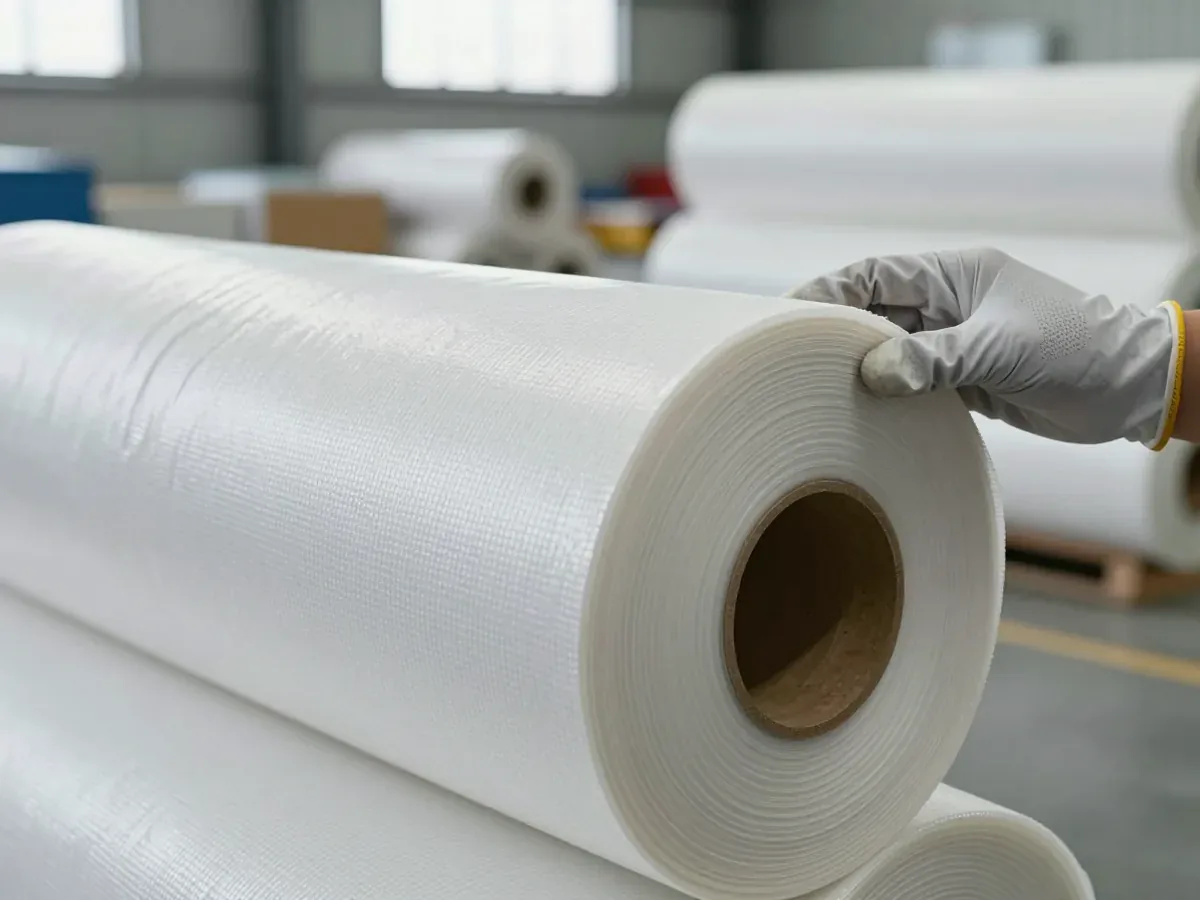
The shell line usually reads something like "woven PE, water resistant" and stops there. That is enough to price the bag and not enough to predict what happens to it in a humid storage unit or on a truck bed in the rain. A water resistant woven PE shell is the stock default for moving loads, and it earns that position because it sheds ambient moisture instead of absorbing it the way corrugated board does.
Write the shell as a promise, not a material name. Name the polymer, name the water resistance, and name what the bag is expected to carry: duvets, pillows, bedding, the awkward soft goods that do not cube neatly. If the range includes an Oxford shell for premium sets, that belongs on its own line with its own reason, because a heavier hand feel is a retail decision, not a logistics one.
Verification starts before the bags exist. Incoming fabric, webbing, zips and thread get checked against the approved spec, and that check is the first place a substitution shows up. A shell that reads correctly on paper and feels thinner on the roll is the most common quiet downgrade in a moving bag order.
The opening line most buyers write too short
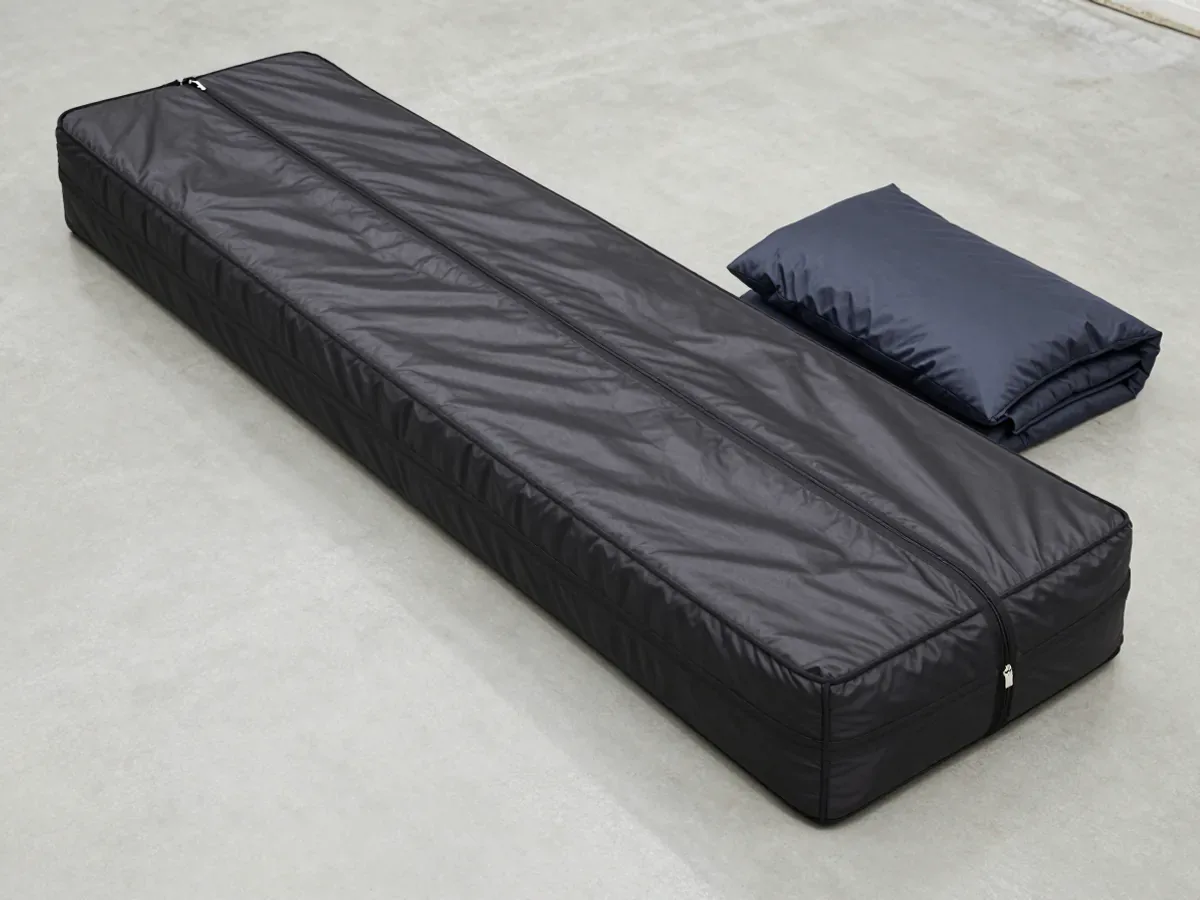
"Full length zip" is four words that hide the whole reason a moving bag beats a box. A full length zip opens flat, so a duvet or four pillows go in without folding twice, and the packer does not have to fight the opening to close it. That flat opening is the labor argument. It is also the line most often written so briefly that the factory has room to interpret.
Write the opening as a sequence: where the zip starts, where it ends, how far the panel opens, and where the webbing sits relative to it. The reinforced top carries webbing the full length of the opening rather than stopping at the handles, and that detail is what keeps a loaded bag from tearing at the point where the zip meets the handle. A sheet that says "reinforced handles" without saying where the reinforcement runs has described half a bag.
Verification is a pull test and a look. Open the sample flat, load it, and watch the two ends of the opening where the webbing terminates. If the webbing stops short of the zip ends, the load concentrates on the stitching there, and that is the seam that fails first.
Handles and stitching: where a loaded bag gives way
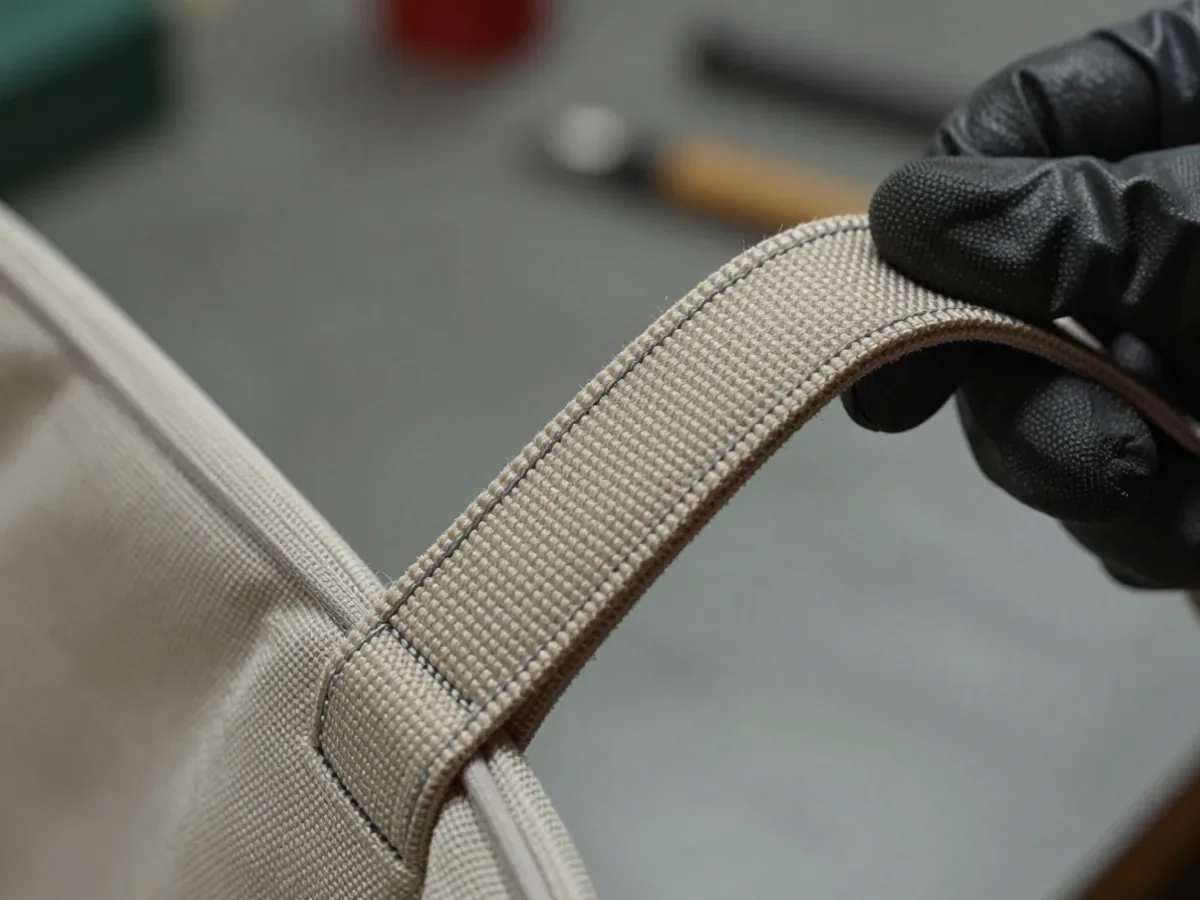
Handles get one line on most sheets, usually "double stitched," and that line is doing more work than any other. The handles are wrapped and double stitched, and the wrapping matters as much as the stitch count because it spreads the pull across the webbing instead of concentrating it on a single row. A bag rated for a working load will still fail at the handle if the attachment is stitched through the shell without a wrapped anchor.
Write the handle line with three parts: the webbing width, the stitch pattern, and the anchor. Then write the load the handle is expected to survive in normal use, not the burst weight. A dynamic working load is the number a crew actually tests every time they lift a full bag onto a truck, and it is the number that should sit on the sheet next to the handle spec.
Verification is destructive and should be. Pull, seam strength and bar tack are tested on every batch, and the handle attachment is where those three tests meet. A bar tack that misses the webbing by a few millimeters passes a visual check and fails on the third lift.
Sizes that share one construction
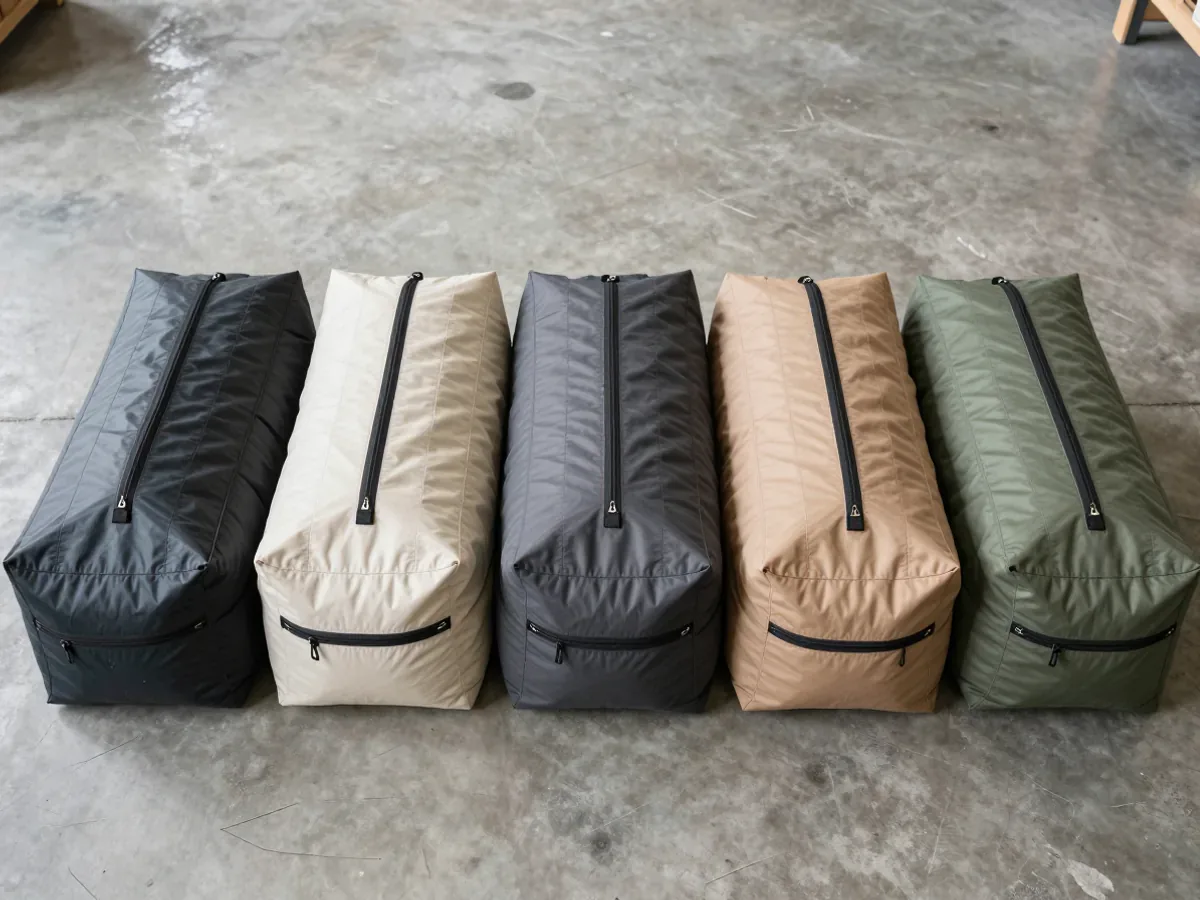
A moving bag range usually spans several capacities, and the sheet often lists them as separate products with separate construction notes. That is where quality drifts. Five sizes share the same construction, so a range can mix capacities without mixing quality, and the sheet should say so explicitly rather than leaving each size to be specified from scratch.
Write one construction block and attach it to every size. The zip, the webbing run, the handle anchor and the stitch pattern stay identical across the range, and only the panel dimensions change. That structure is what lets a buyer order a mixed pallet without ordering a mixed quality level, and it is what makes a reorder predictable six months later.
Verification is a side by side comparison. Pull one bag from each size and lay the openings next to each other. The webbing should terminate in the same relationship to the zip on every size. A small bag that shortens the webbing run to save material is a different product wearing the same name.
What the packing line checks by hand
The last production line on the sheet is usually the vaguest, and it is the one that decides whether the carton matches the order. Dimensions, handles, logo and packed quantity are checked by hand, and each of those checks catches a different failure. Dimensions catch a panel cut to the wrong size. Handles catch an anchor stitched in the wrong position. Logo catches a print plate that drifted. Packed quantity catches a carton that will not match the packing list.
Write this line as a checklist with tolerances, not as a statement that checks happen. A dimension tolerance in millimeters, a handle position tolerance, a logo placement reference and a units per carton figure give the inspector something to fail against. Without numbers, the check becomes a glance.
Verification is the packing line itself. Ask for the check record from the last production run, not a promise that the check exists. The record should show the measured values, the inspector and the date, and it should cover every size in the run rather than a single sample.
The line that never makes it onto the sheet: batch test records

Almost every moving bag sheet ends at packed quantity. The batch test record is the line that decides whether the bag on the truck matches the bag that was approved, and it is the line buyers most often leave off. Pull, seam strength and bar tack are tested on every batch, and that record is the only document that connects a delivered carton to the sample that passed.
Write the requirement into the purchase order even though it is not a product dimension. State that each batch ships with a test record covering pull, seam strength and bar tack, and state which batch it belongs to. Then state that incoming fabric, webbing, zips and thread are checked against the approved spec, because a batch test on substituted material tests the wrong bag.
Verification is a document review at receiving, not at production. Match the batch number on the test record to the batch number on the carton. A record that cannot be matched to a carton is a record for some other order, and a moving bag range without batch traceability is a range that cannot be audited after a failure.
Reading the sheet against a cardboard box order
A cardboard box order is specified by board grade, dimensions and a stacking expectation, and the box either survives the stack or it does not. A moving bag order is specified by shell, opening, handle anchor, shared construction and batch record, and the bag either survives the lift cycle or it does not. The two sheets are not comparable line for line, which is why buyers who copy a box spec across get a bag that behaves like a box: rigid in the wrong places and weak at the opening.
The comparison that matters sits on four lines. The shell line decides moisture behavior. The opening line decides packing labor. The handle line decides failure point. The batch record decides whether any of the first three survived production. A box order has no equivalent of the fourth line, and that absence is exactly why moving bags need it.
When a buyer asks which line decides whether a bag beats a box, the honest answer is the opening line, because it is where the labor advantage lives and where the construction is most often under specified. The line that protects that advantage is the batch record, and it is the one that never gets written.
FAQ
Should a moving bag spec list a dynamic load rating?
Yes. A dynamic working load describes what the bag carries during a lift, and that is the condition a crew repeats all day. A burst weight describes a single failure point and tells a buyer nothing about the third lift onto a truck.
Do all sizes in a moving bag range need separate approval samples?
They need separate samples if the construction changes. When five sizes share the same construction, one approval sample can cover the construction and the remaining sizes can be checked against it for dimensions and webbing position.
What belongs in the batch record for a moving bag order?
Pull, seam strength and bar tack results, tied to a batch number that matches the carton. The record should also confirm that incoming fabric, webbing, zips and thread were checked against the approved spec before production started.






