Reorganised from an older market-tote article, with the layer logic kept and the unverified test figures left out.
The sample came back in a courier box with a note clipped to the handle: "lettuce was fine, the milk was not." A buyer for a small grocery chain had carried the same Saturday market load in two bags, one insulated tote and one plain cotton shopper, and the note described a gap she could not explain from the outside of either bag. The tote looked like a tote. The cotton bag looked like a cotton bag. Only the contents told the difference.
That note sat on a sample room bench for a week before anyone cut a bag open. What came out of the cut explained the morning better than any spec sheet had.
The Kitchen Counter at One in the Afternoon
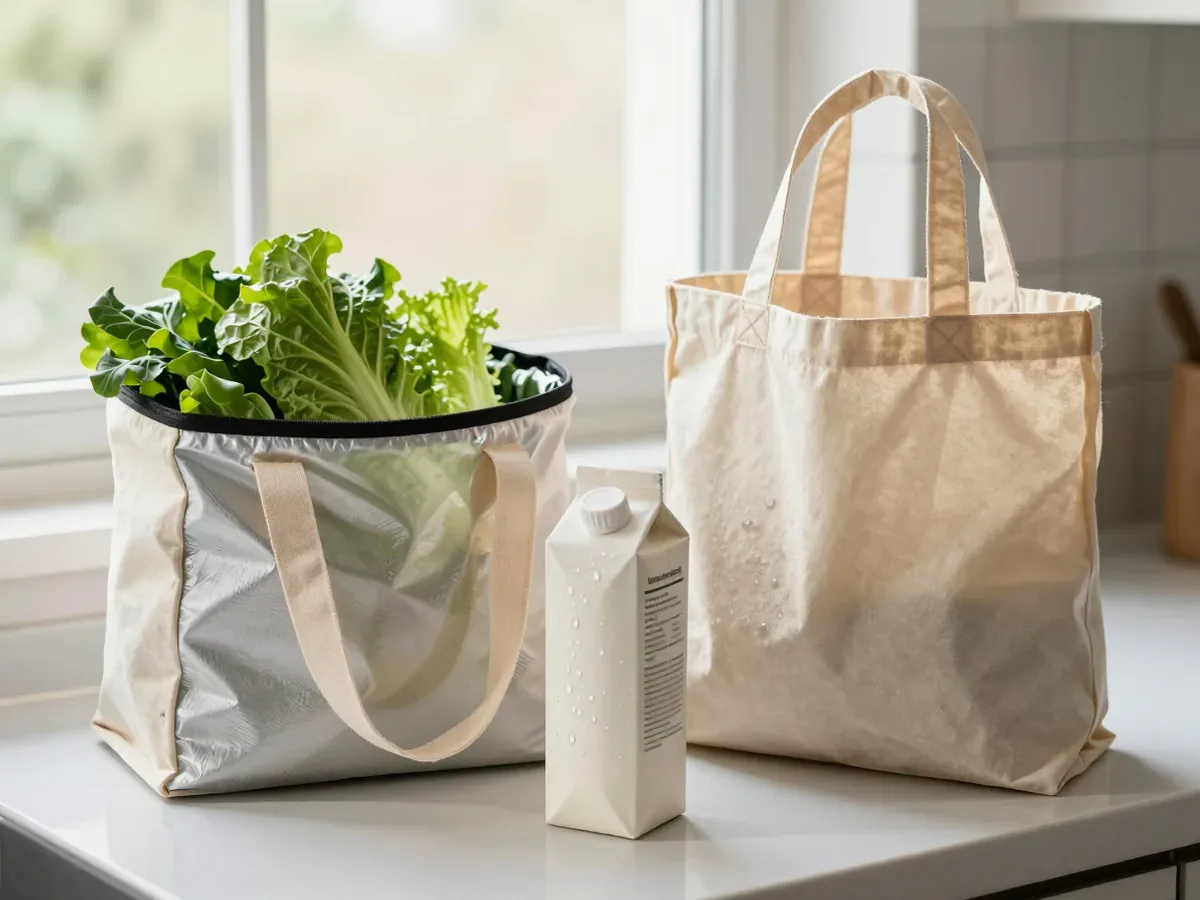
By early afternoon, the counter told its own story. The greens from the tote were still crisp at the stem and dry at the leaf edge. The dairy from the cotton bag had sweated through its carton and left a ring on the counter. The same stall, the same hour of purchase, the same walk back to the car.
A market morning is a slow heat soak rather than a single hot moment. Produce sits unrefrigerated at the stall for hours before a buyer even reaches it, then rides in a bag through a warm car and a longer walk. The bag is the only part of that chain a buyer controls.
Two bags that look similar on a table can behave very differently across four hours. The difference is not thickness or price. It sits in what the wall of the bag is made of and how those materials are stacked.
Tracing Back to the Stall and the Bag
The buyer's morning started at eight, at an outdoor market where the stalls had no refrigeration. She bought greens first, then dairy, then walked the aisles for another hour with both bags on her shoulder. The cotton bag absorbed the ambient heat of the morning within minutes. The tote held a pocket of cooler air around the food.
That pocket is what a market tote is built to create. It is not a cold source. It is a barrier that slows the exchange between the food and the warm air outside. A bag with no barrier simply passes heat through its wall, and the food inside reaches room temperature at roughly the speed of the air around it.
The buyer's note described the result, not the mechanism. To understand why one bag failed and the other held, the bag had to be opened.
The Three Layers That Decide the Outcome
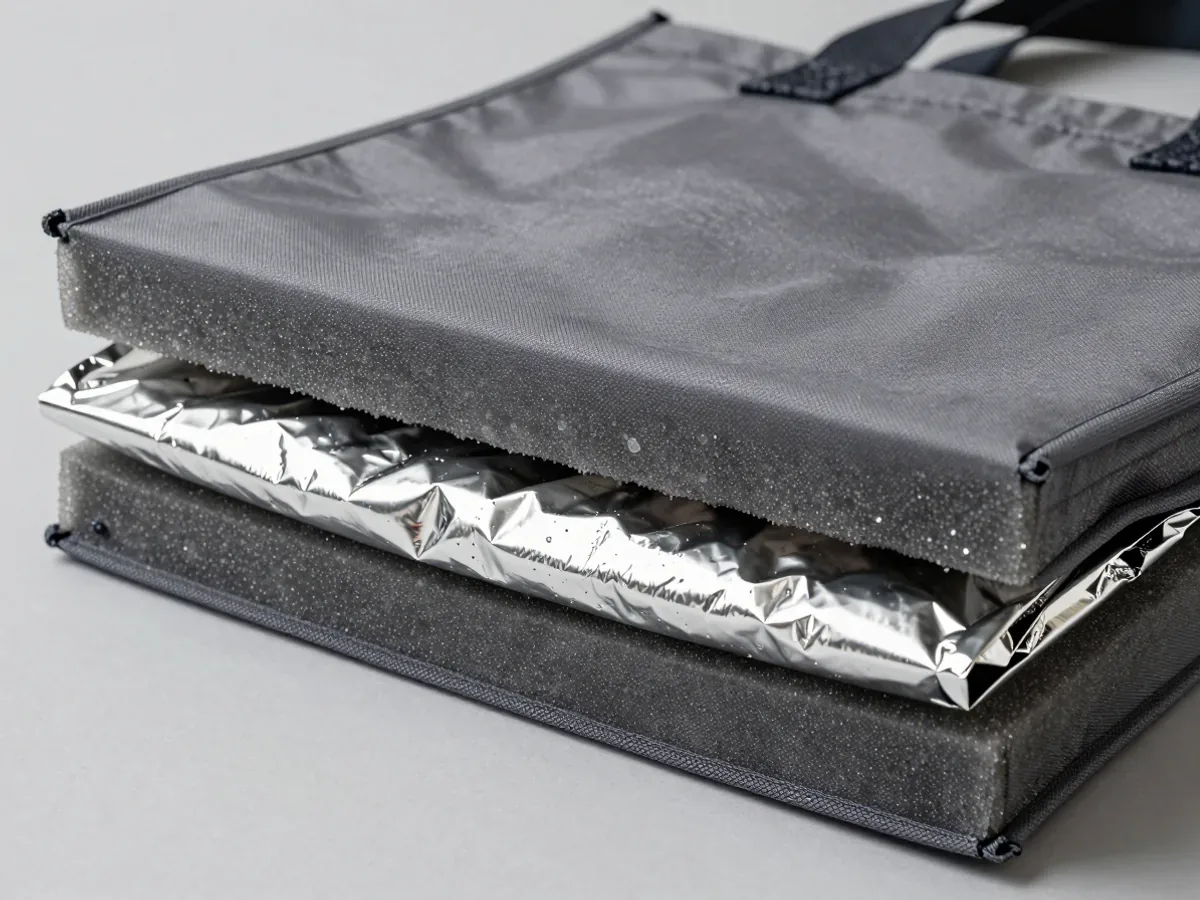
A cutaway of a market tote shows three working parts. The outer shell is a durable fabric that takes abrasion, handles the weight of bottles and jars, and carries any print. Behind it sits a foam padding that slows heat movement through the wall. Inside that, an aluminium foil lining faces the food and reflects radiant heat back toward the contents.
Each layer answers a different failure. The shell answers wear. The foam answers conduction through the wall. The foil answers radiant heat from a warm car interior or a sunlit back seat. Remove any one and the bag still looks like a tote, but the morning result changes.
The order matters as much as the presence. Foil bonded directly to a thin shell with no foam behind it reflects heat but conducts it quickly through contact. Foam without a foil face slows the wall but lets radiant heat load the interior. The stack is the product.
Some builds go further and make the foam panels removable, sitting behind the foil lining so they can be taken out for washing or replaced when they compress. That detail shows up in how the bag is assembled, not in how it looks on a shelf.
What the Foil Lining Actually Blocks
Foil is often described as if it generates cold. It does not. A foil lining reflects radiant heat, the kind that travels across an air gap from a warm surface to a cooler one. In a car parked in the sun, that radiant load is significant, and a reflective face reduces how much of it reaches the food.
Foil does very little against heat that arrives by direct contact. A bag pressed against a warm seat or stacked against a hot carton will pass heat through the wall regardless of the shiny interior. The foam behind the foil is what handles that path.
This is why a foil lined bag with no ice pack still helps, but within limits. It slows warming rather than stopping it. A bag with bottles, sandwiches and ice packs together uses the foil to hold the cold the ice packs produce, which is a different job from holding back outside heat.
The lining also keeps moisture inside the bag rather than letting condensation soak through the wall. That matters for dairy, for greens, and for whatever the bag sits on at the end of the trip.
Where the Chain Breaks Before the Bag Does
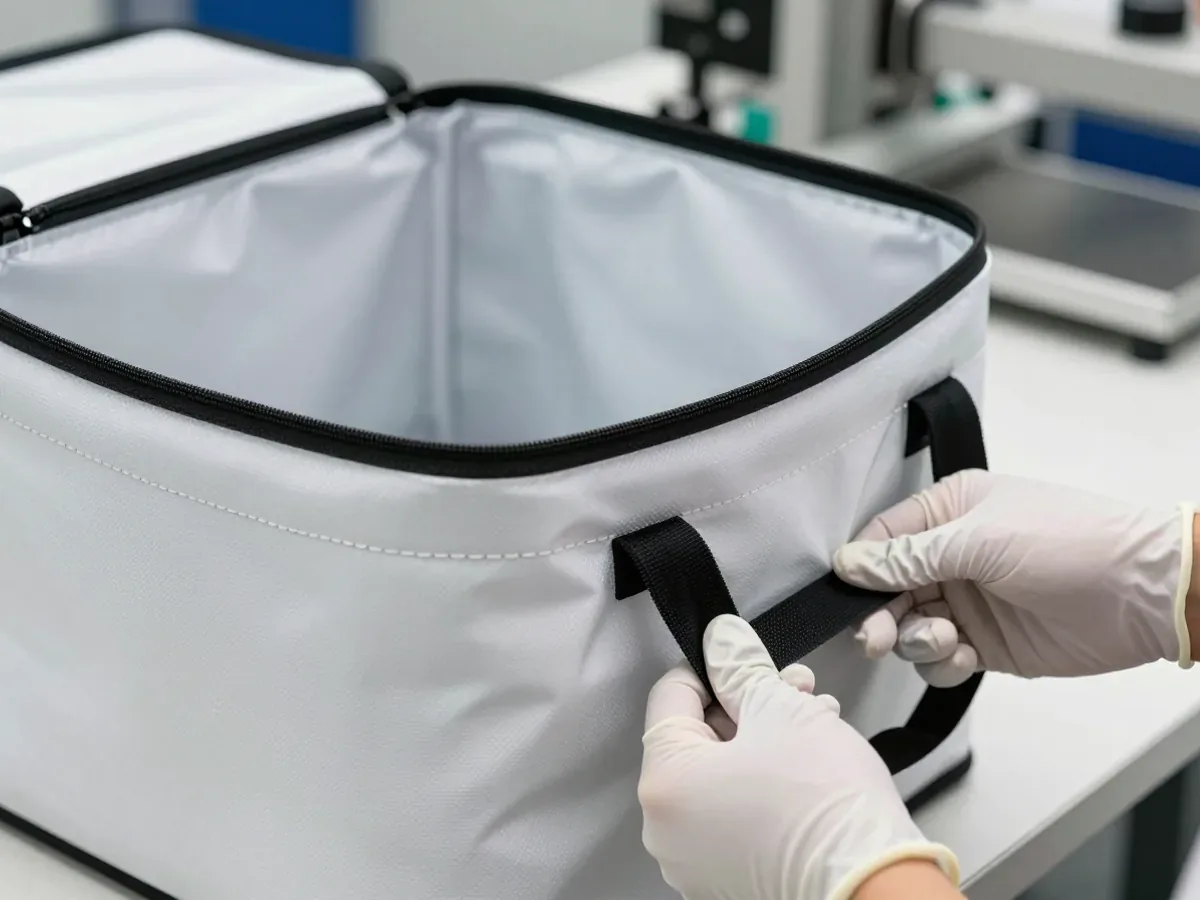
Most market failures happen at the seams and closures, not in the middle of a panel. An open top lets warm air pour in and cool air drain out. A lid with a foil face and a closing zip holds far more of the morning than an open tote with the same wall construction.
The second break is at the base and handle attachments. A bag loaded with bottles and jars puts stress on stitched joints, and a small gap at a seam becomes a path for both heat and moisture. On a production floor, these are the points that get pulled and twisted during a check.
The third break is handling. A bag that gets folded flat and stored in a hot car between trips compresses its foam. Foam that stays compressed loses loft, and lost loft means a thinner barrier. A bag that looks intact can be doing less work than it did on the first Saturday.
None of these failures show up in a photo of the bag. They show up in how the bag is built and how it is closed.
Four Lines a Buyer Can Put on the Order
A purchase order for market totes can carry the whole specification in a few short lines, and those lines decide whether the bag that arrives matches the bag that was approved.
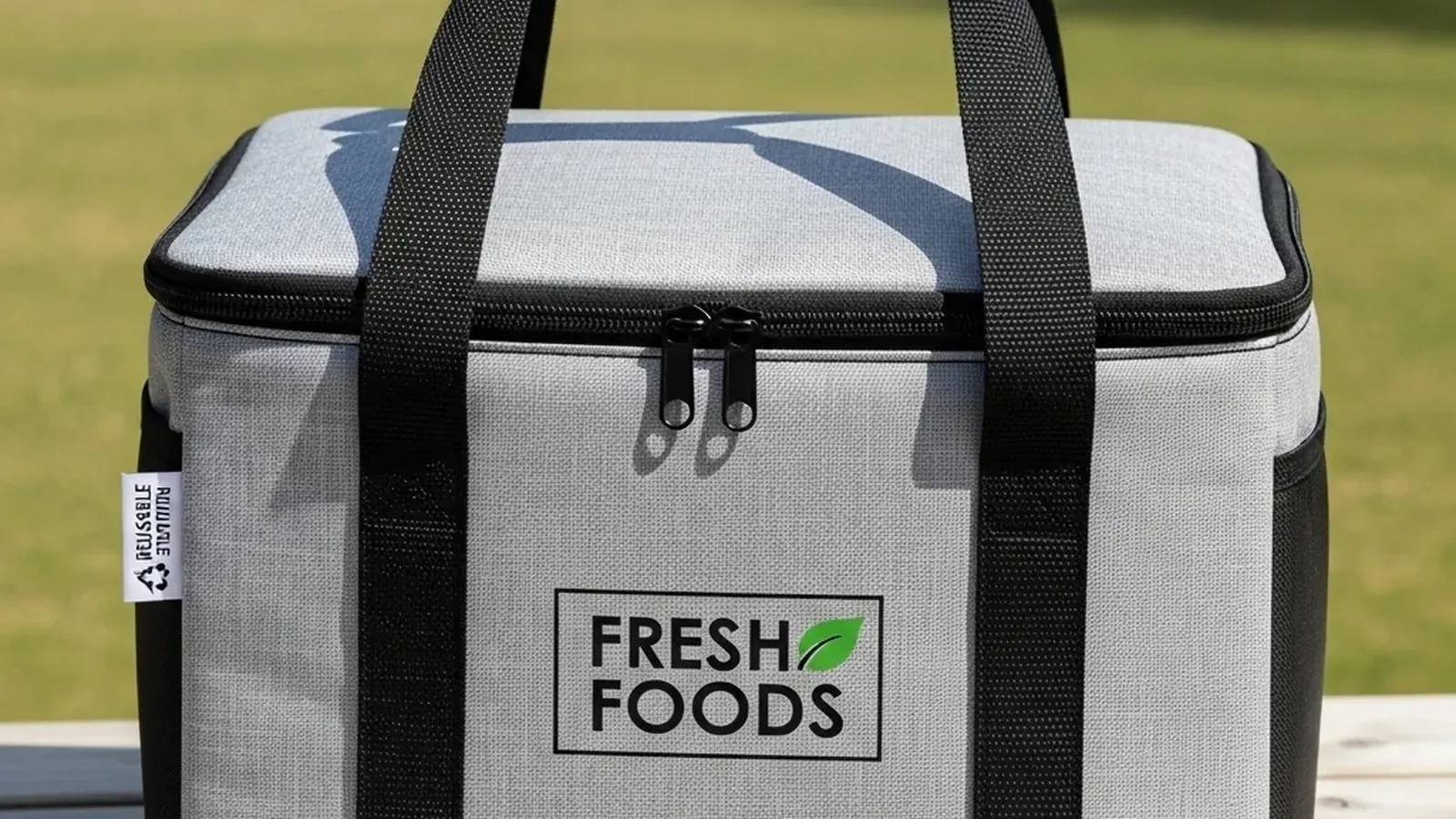
The first line names the wall build: outer fabric, foam padding, aluminium foil lining, in that order. The second names the closure: open top, zip, or foil lined lid, because that single choice changes how long the bag holds its interior condition. The third names whether the foam panels are fixed or removable, which affects washing and replacement. The fourth names the print placement and method, since a printed insulated grocery bag is often bought as much for the branding as for the insulation.
A fifth line, optional but useful, describes the load the bag must carry: bottles, sandwiches and ice packs together, or greens and dairy alone. That line tells the factory which stress points to reinforce.
These lines cost nothing to write and prevent the most common mismatch, which is a bag that meets the photo and not the morning.
What to Check on the First Bulk Sample
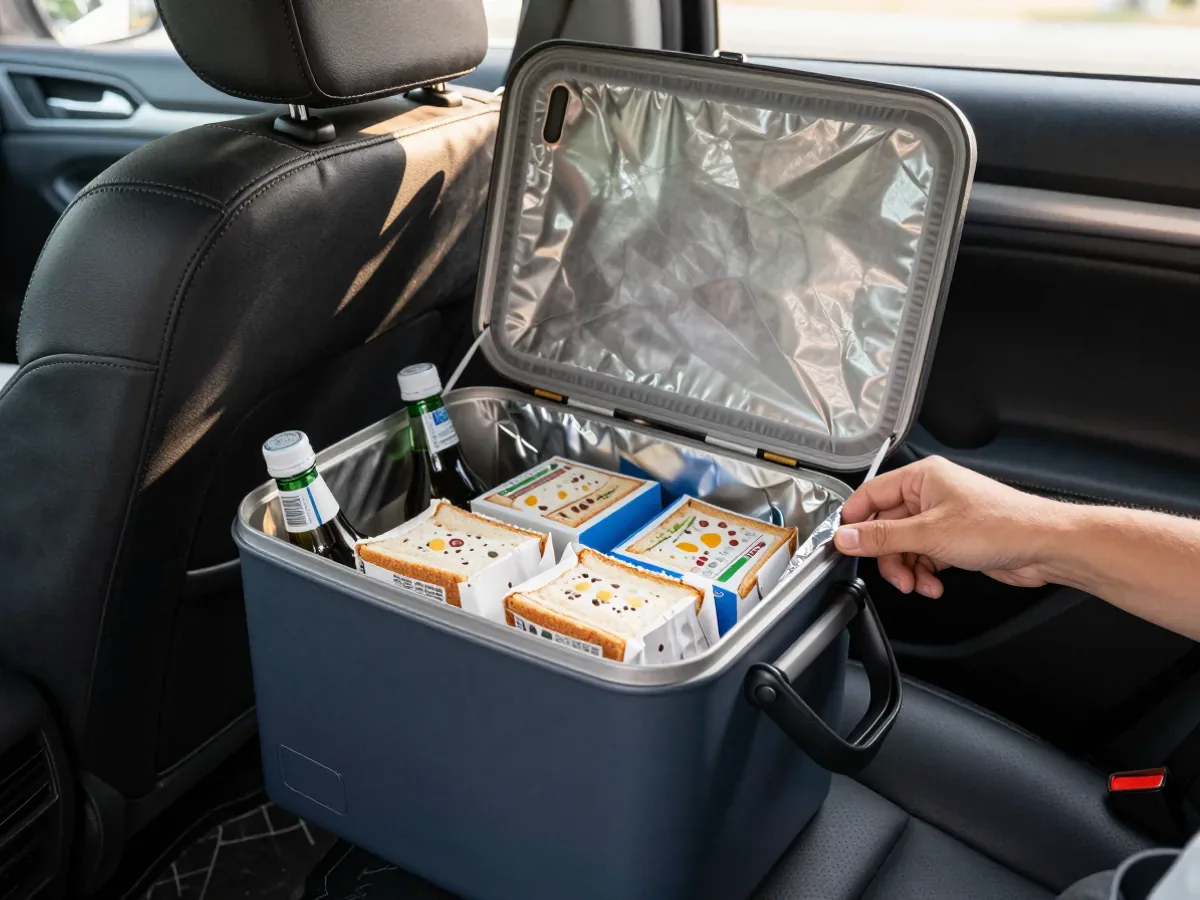
The first bulk sample is the moment to test the bag the way the market will. Load it with the real mix, close it, and leave it in a warm car for the length of a normal shopping trip. Then open it and look at the food, not the bag.
Run a hand along the inside seams and the base. Check that the foil lining is bonded flat with no bubbles or lifted edges, and that the foam behind it has not shifted. Pull the handle attachments and press the base with weight inside.
If the panels are removable, take them out and put them back. A panel that is hard to reseat will be left out by the end user, and a bag without its foam is a fabric bag with a shiny interior.
Finally, check the print against the approved artwork on a finished bag, not a flat proof. Print on a padded shell behaves differently from print on paper, and the first bulk run is where that difference becomes visible.
The buyer's note came back with one line changed. She now writes the wall build and the closure on every order, and the lettuce and the milk arrive in the same condition. The bag did not get more expensive. The order got more specific.
FAQ
How long can an insulated tote keep produce cool at an outdoor market?
It depends on the wall build, the closure and the outside temperature. A foil lined bag with foam and a closed lid slows warming across a normal market morning. An open top bag with the same wall gives much of that back.
Does a foil lining work without an ice pack?
It reflects radiant heat and slows warming, but it does not create cold. Without an ice pack the bag holds the food's starting temperature for a shorter window, and direct contact with a warm surface still passes heat through.
Can the foam panels be removed for washing?
Some builds place removable foam panels behind the foil lining so the outer bag can be washed separately. Whether a specific bag allows this should be stated on the order, since fixed and removable builds look identical from outside.
Is a printed insulated grocery bag worth it for a small vendor?
A printed bag carries the vendor's name on every trip, and a bag that looks good gets reused more often. For a small vendor the decision usually comes down to print placement and method rather than whether to print at all.