
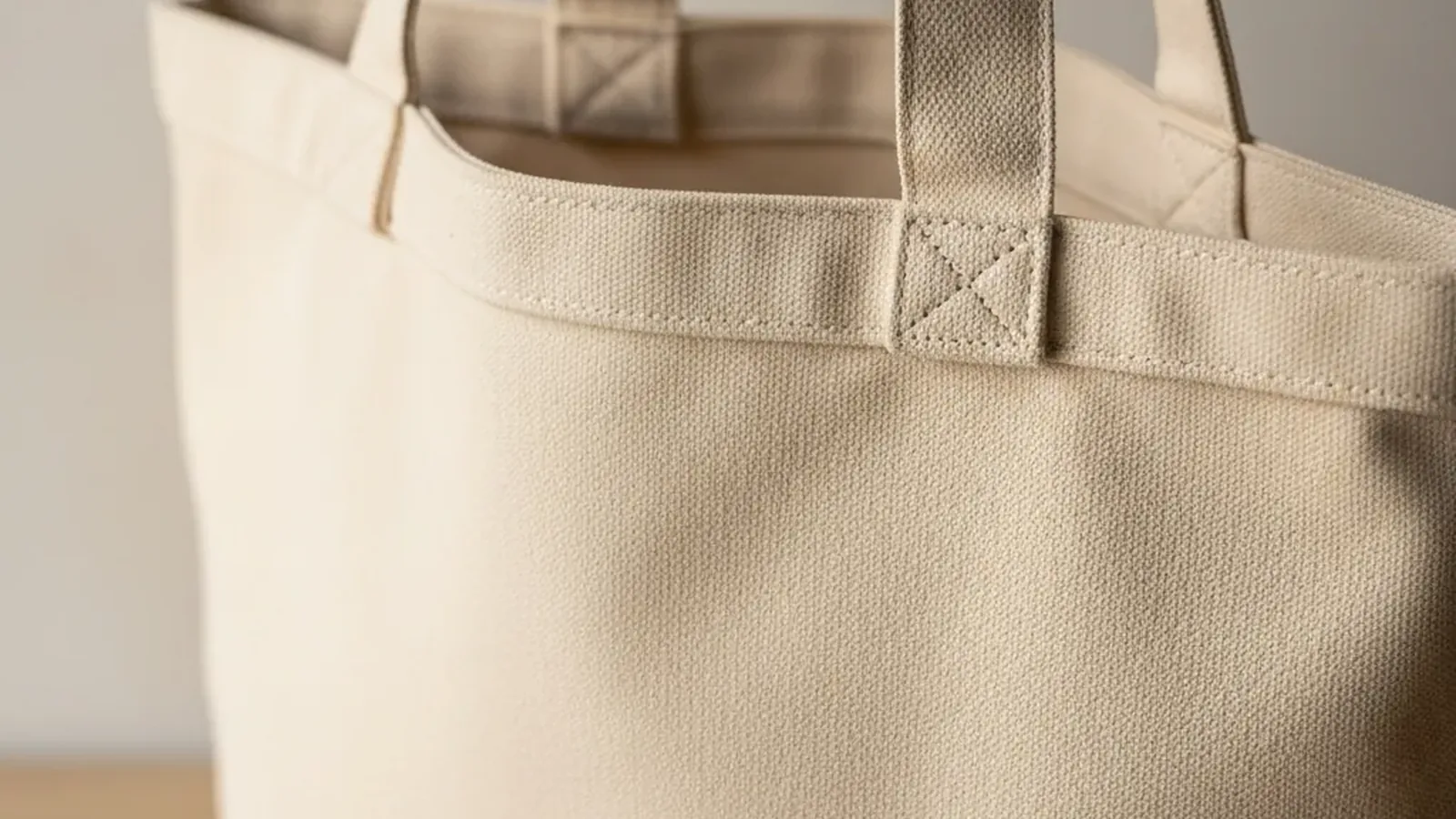
This walk follows one bulk canvas tote order through the factory floor, using spec and inspection notes from the TIIOCTI archive.
A new sample-room assistant asked a question that stopped the morning meeting: if a tote bag and a plastic bag both carry groceries home, at what point does the tote actually win? The buyer's PO for 8,000 custom canvas totes was already signed, so the answer had to come from the floor, not from a brochure. The walk from goods-in to the loading bay is where the comparison stops being a slogan and starts being a set of checks.
The PO Line That Starts the Walk
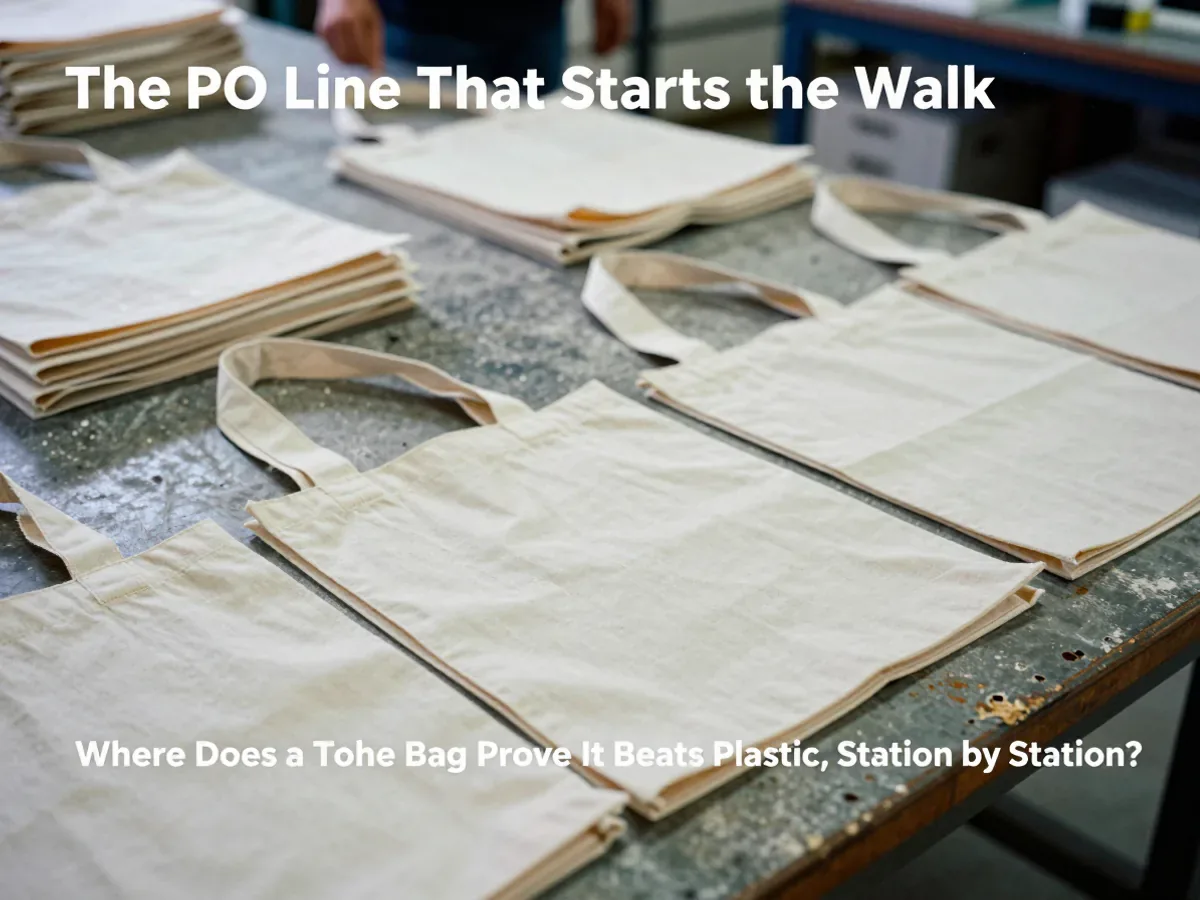
The order line read “reusable shopping bag, canvas, printed one side, bulk quantity.” That single line hides every decision that decides whether the bag survives a year of use. A plastic bag has no equivalent line because nobody expects it to last past the first trip.
The first thing to settle is what the bag is for. A promotional tote handed out at an event and a grocery carrier used weekly are different products, even when the spec sheet looks the same. The buyer who writes the intended load and the expected reuse into the PO saves the factory from guessing.
Size follows use. Bulk totes commonly run from small giveaway sizes up to large grocery carriers, and a bag that is too big for its handle will fail at the join before the fabric wears. The PO should name the size, the canvas weight, the handle type, and the print method in separate lines.
At Goods-In: What the Canvas Roll Already Decides
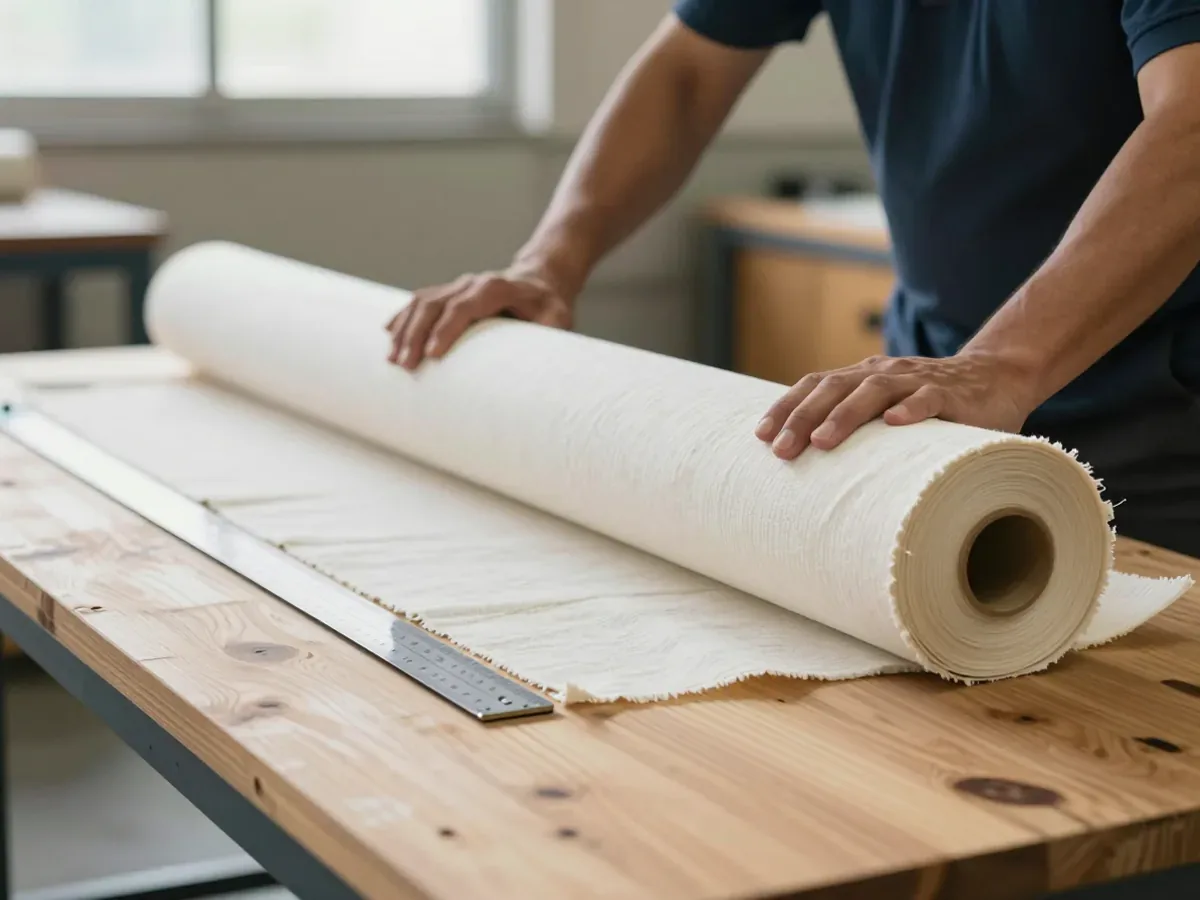
The canvas roll arrives before any bag exists, and it already sets the ceiling on how many trips the finished tote will survive. A 10 oz to 12 oz canvas is the usual balance between durability and comfort for a tote, while a 6 oz cloth folds small but carries little.
The receiving check is simple and physical. Cut a swatch, feel the weight, and compare it against the approved sample. A roll that feels lighter than the standard will produce bags that sag under a loaded shop.
This is also where the material story begins. Canvas is a woven cotton or linen fabric, and it breathes and wears differently from the thin film a plastic bag is made from. The comparison the buyer cares about starts with the roll, not the finished bag.
At the Cutting Table: Where Reuse Count Is Won or Lost
A tote earns its environmental case by being used hundreds of times, and the cutting table decides whether that is possible. Panels cut short leave the bag with less volume than the spec promised, and a bag that cannot hold a full shop gets left at home.
The base and corner seams are double stitched on a durable tote, and those seams take the load when the bag is set down full. A single row at the corner is the first place a heavy grocery run will open a gap.
Cutting also fixes the handle drop. If the strap is cut too short, the bag will not sit on a shoulder, and the user will reach for a plastic bag instead. That is a reuse failure created before a needle touches the cloth.
At the Handle Station: The Join That Outlives the Plastic Bag
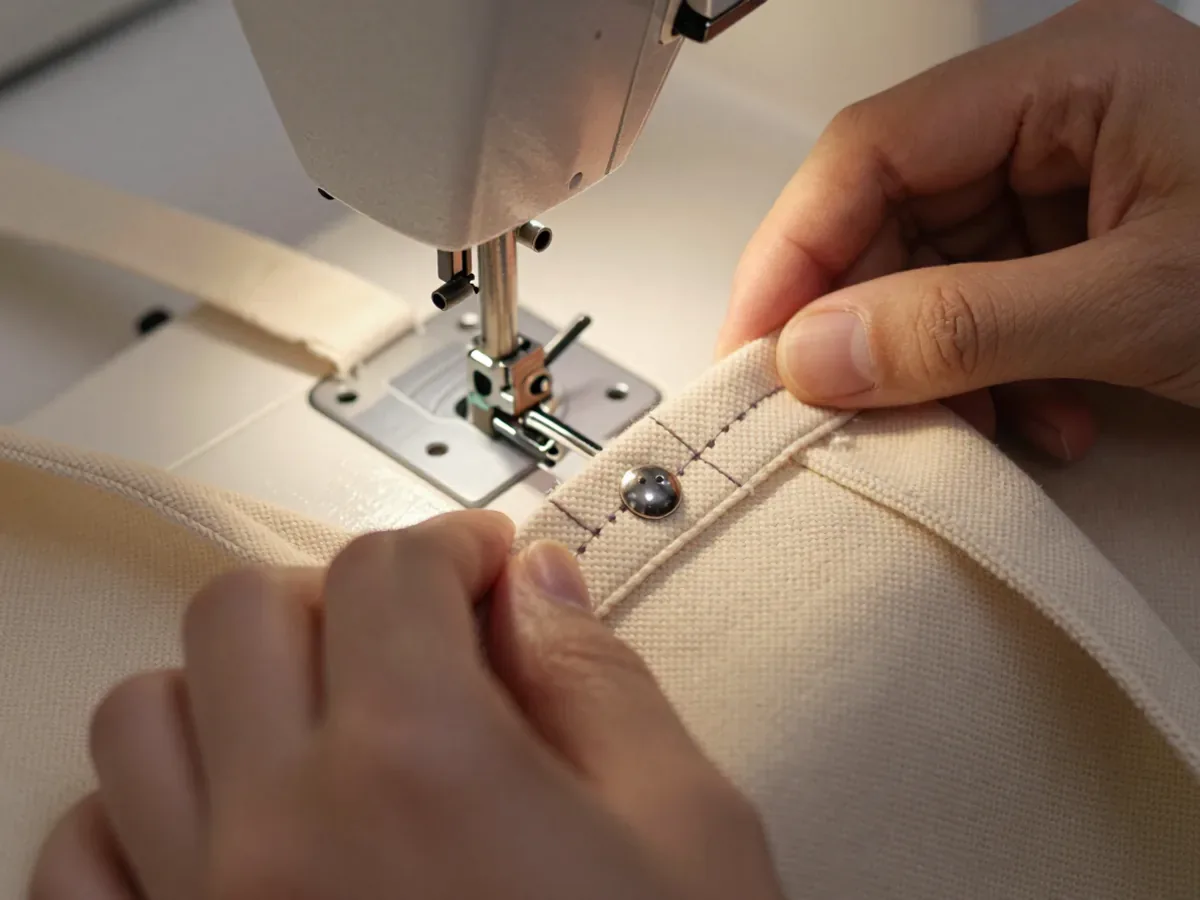
The handle is where a tote most often proves or loses its case against plastic. A plastic bag handle stretches and tears at the weld; a canvas handle has to be built so the join outlasts the body.
There are several ways to secure that join. Stitching reinforces the strap where it meets the bag body, and a cross-stitch pattern spreads the load across a wider patch of canvas. A metal rivet can be set through the strap for extra hold, and a rope handle can be threaded through a metal grommet.
Handle colour is a separate decision. Pantone matching lets the strap carry the brand colour, which a plain plastic bag cannot do without printing the whole film. The station check is to pull each handle hard before the bag moves on.
At the Print Station: Branding That Survives the Wash
A printed plastic bag carries a logo for one trip. A printed tote is expected to keep that logo through repeated washing, and the print method decides how long it lasts.
Screen printing lays logo artwork onto the fabric and suits bold, simple shapes. Heat transfer handles detailed custom logos on tote fabric, which is useful when the artwork has fine lines or gradients. Embroidery runs personalised monograms directly into the cloth and will not fade at all.
The station check is a wash test on a printed offcut, not on the finished bag. If the print cracks or lifts after a hand wash in cold water, the branding has failed even though the bag has not.
At Final QC: Four Checkpoints and What They Catch
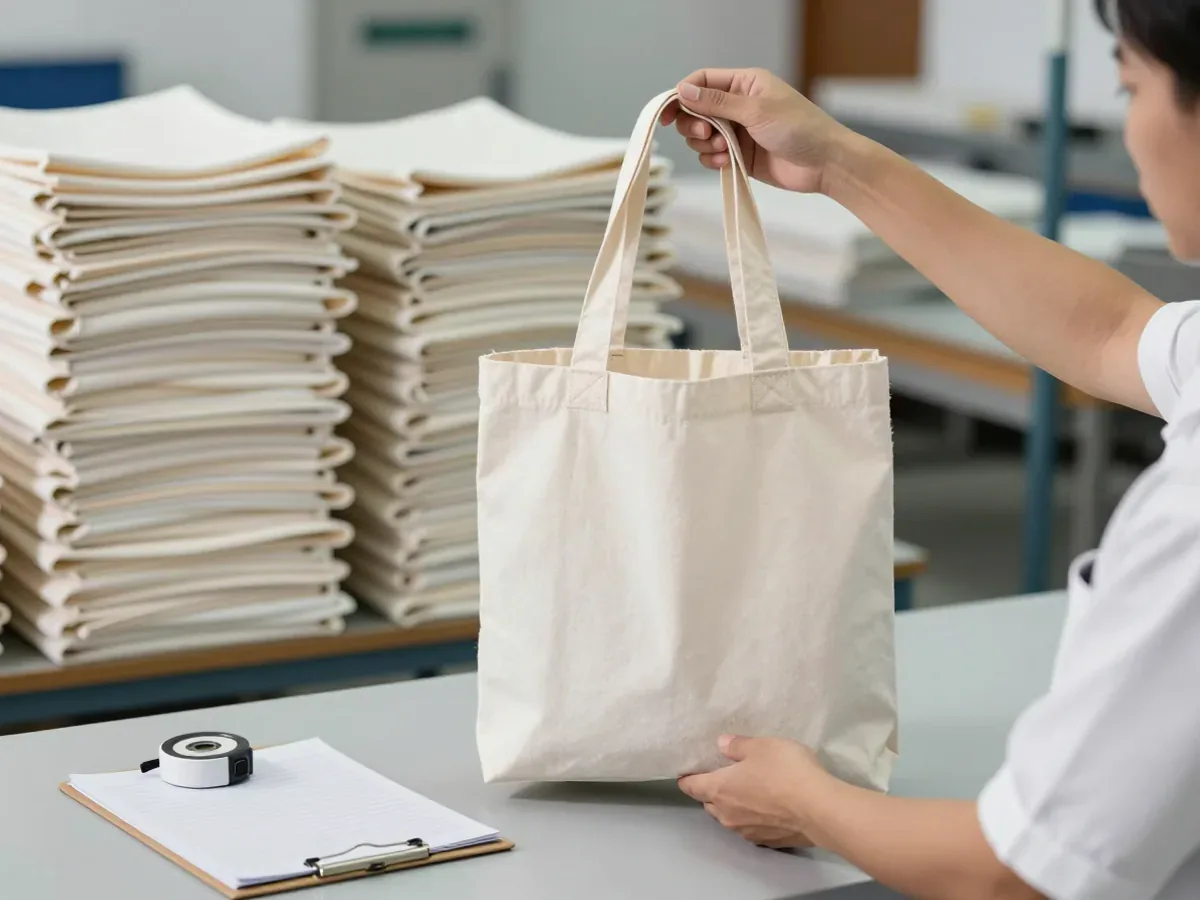
Every bag passes four QC checkpoints before packing, and each one catches a different kind of failure. The first looks at the body: size against the spec, seam integrity, and whether the base sits flat.
The second checks the handle join under load, because a strap that pulls out in the customer’s hand ends the reuse story immediately. The third inspects print quality and placement against the approved artwork.
The fourth is the overall look: colour consistency across the run, loose threads, and any mark that would make the bag look second hand before its first trip. A custom printed canvas bag is inspected for size and print quality at this stage, and the results are recorded before the cartons close.
At the Loading Bay: What the Carton Says About the Reuse Story
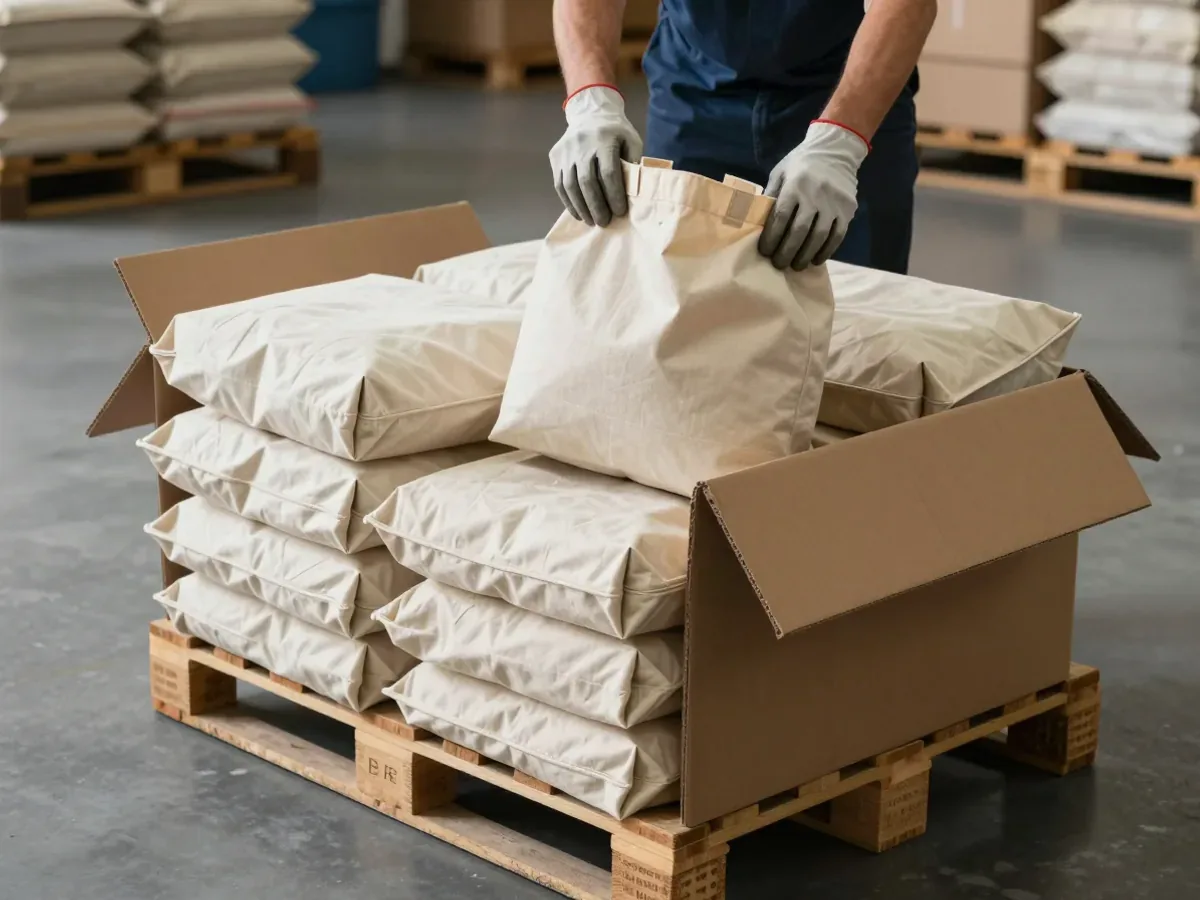
The carton is the last place the comparison can be lost. If the bags are packed loose, the handles crease and the print scuffs before the buyer ever sees them. If the polybag label and the carton label disagree on size, the warehouse will ship the wrong variant.
The loading bay check is a count and a look. Open one carton from the middle of the run, not the top, and confirm the bags match the approved sample. Check that the handle colour matches the Pantone reference and that the print is centred.
A tote that arrives creased and mislabelled will be treated as a cheap giveaway, and the buyer’s reuse message dies in the stockroom. Packing is part of the product, not an afterthought.
What to Write on the Next PO
The walk ends with a short list that turns the tote versus plastic argument into something a factory can build and a buyer can check. None of it is complicated, and all of it belongs on the PO rather than in a later email.
- Name the canvas weight and the intended load, so the roll and the pattern match the use.
- Specify the handle type and the join method: stitched, cross-stitched, riveted, or grommeted rope.
- Give the handle colour as a Pantone reference if brand matching matters.
- State the print method and require a wash test on an offcut.
- Require the four QC checkpoints and a middle-carton check at loading.
A tote beats a plastic bag at every station where the build holds up. The comparison is won at goods-in, at the cutting table, at the handle join, and in the carton, long before a shopper carries it home.
FAQ
Is a heavier canvas always the better choice for a reusable shopping bag?
No. A 10 oz to 12 oz canvas is the usual balance for a tote, while a 6 oz cloth suits light promotional use. Heavier canvas adds strength but also weight and stiffness, so match it to the load.
How do I know the handle will not fail before the bag body does?
Look at the join. Stitching, cross-stitching, a metal rivet, or a rope through a grommet all spread the load. Pull test each handle at the station and again at final QC.
Can the handle colour be matched to our brand colour?
Yes. Handle colour can be Pantone matched, which is one place a custom tote outperforms a printed plastic bag.
What does a final QC check actually look at on a printed tote?
Size against spec, seam and base integrity, handle join under load, print quality and placement, and overall colour consistency across the run. Every bag passes four checkpoints before packing.