The first mistake is a vague spec sheet, because it pushes the decision onto the factory and leaves the buyer with no basis to reject a.
Importers keep asking this season which documents an import custom packaging bags shipment actually needs. The answer is shorter than most guides suggest: 4 documents and 1 physical check, and every one of them starts with the spec rather than with the forwarder.
The customs documents are only as good as the sheet behind them.
The Import Checklist Before Loading
The first document is the spec sheet, because most return requests start there rather than in the warehouse. It has to name the fabric type, the dimensions with a tolerance, the print method and the load the bag is built for.
| Document | What it proves | Who owns it |
|---|---|---|
| Spec sheet | What the bag is made of and what it carries | Buyer and factory |
| Test report | The fabric carries the load on the sheet | Factory |
| Invoice and packing list | What is inside the carton | Buyer and supplier |
| Inspection record | The packed run matches the sheet | Factory, checked by the buyer |
The second is the test report that matches the spec. A burst strength report on the fabric is the record that the bag will carry the load named on the sheet.
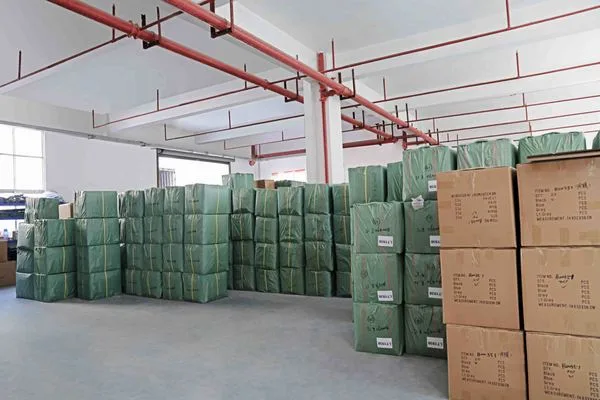
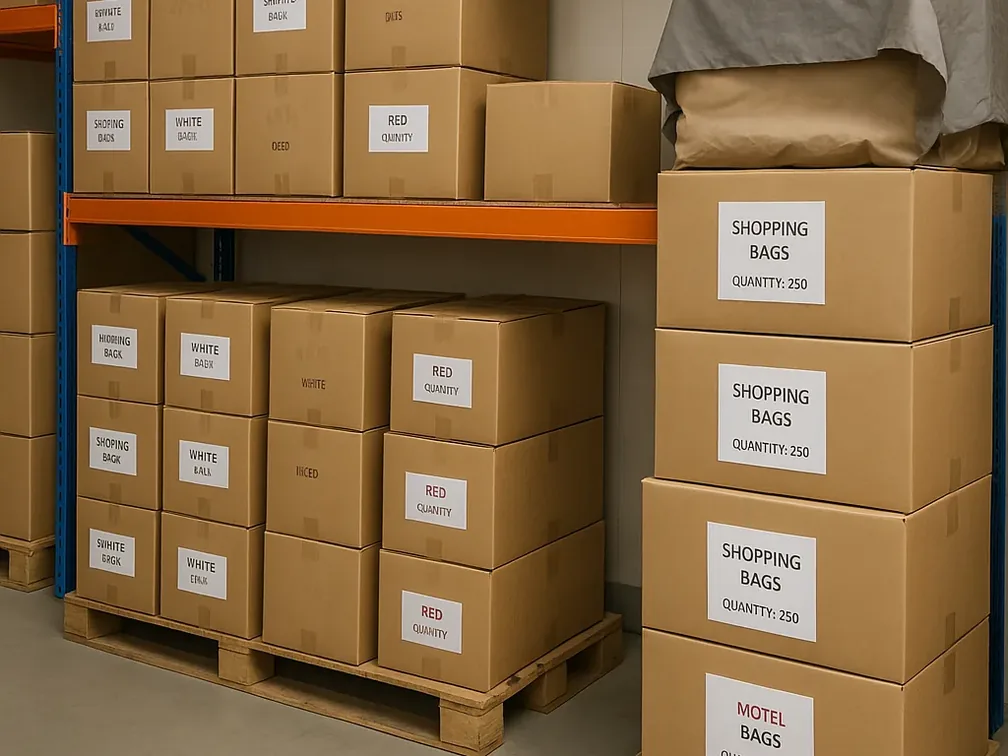
The third and fourth are the commercial invoice and the packing list, and the physical check is the pre-shipment inspection that samples the run. A shipment with a perfect document set and no inspection has paperwork rather than proof. The cartons are stacked and marked before loading, and the marks are checked against the list as they go.
The Four Checks In Order
- Spec sheet: name the fabric, the size with a tolerance, the print method and the load. A sheet that says heavy duty without a number is not a specification.
- Test report: ask for a burst strength report on the fabric from the same production batch, not a generic sheet from an earlier run.
- Documents: match the goods description on the invoice and packing list to what is inside the carton. A description that reads promotional goods where the box holds retail packed bags invites a question at the border.
- Inspection: pull samples from the packed cartons and check the seam, the print and the measurement before the container closes. The inspection record travels with the batch. Packed boxes go into the container only after that check.
The order matters because each check depends on the one before it. A test report cannot be matched to a spec that never named the load, and an inspection cannot pass a bag that the sheet never described.

Where Imports Go Wrong
The first mistake is a vague spec sheet, because it pushes the decision onto the factory and leaves the buyer with no basis to reject a bag. The second is a test report that does not match the production batch. A report from an earlier run proves that a different batch passed.
The third is a document set that describes the goods loosely. A packing list that says bags where the carton holds printed tote bags is a description that has to be corrected at the destination, which is slower than correcting it at the factory.
The fourth of the 4 mistakes is skipping the receiving check. Receiving is the first inventory count and the last chance to catch a short count or a damaged carton before it becomes a claim. A spot burst check on arrival is cheap insurance when the transit has been long.

Questions Importers Ask
Which documents does an import need?
The commercial invoice, the packing list, the bill of lading and the test report that matches the spec. The invoice and packing list have to agree with each other and with the cartons.
What should the spec sheet include?
Five lines: the fabric, the size and tolerance, the print, the load and the packing. The sheet is the document every other check refers back to.
Draw the sample from the middle of the pallet, not the top, and inspect 3 things: the seam, the print and the measurement. File the result under the batch number so it can be matched later.
What belongs on the carton label?
The description that matches the goods, the quantity and the marks the buyer's warehouse needs. A label that disagrees with the packing list is the error that stops a container.
What The Documents Have To Prove
The document set has one job: to prove that the goods inside the carton are the goods that were specified and tested.
The importer owns that proof rather than the supplier alone. The U.S. Customs and Border Protection guidance notes that CBP and the importing community share responsibility for compliance, which is why the goods description and the classification are part of the buyer's file.
Both CBP and the importing/exporting community have a shared responsibility to maximize compliance with laws and regulations.
U.S. Customs and Border Protection, Basic Importing and Exporting
Classification is the other half of that proof. The Harmonized System is used by more than 200 countries and economies as a basis for their Customs tariffs and for the collection of international trade statistics, which is why the goods description on the invoice has to be precise enough to classify. Packaging import documents are read against that classification.
Our warehouse labels the cartons by hand before dispatch, and the label is checked against the packing list as it goes on. The same cartons are stored by run before they are loaded into the truck for export. Every approved shipment passes 4 quality checkpoints, and the spec, the test, the print and the packing lines are checked at each one.

How To Verify A Shipment
Open one carton from the middle of the pallet rather than the top, and compare the bags with the approved sample. A top carton is the one the factory expects you to open.
Check the invoice, the packing list and the carton marks against each other, then check the count against the packing list. A mismatch on any of the 3 is a question to raise before the container is unloaded.
Keep the inspection record and the test report with the batch, so the next order has a baseline rather than a memory. That file is the import checklist for the next shipment.
The document side is set out in bag export documents, the packing spec is in retail ready tote bag packaging, and the run checks are in custom tote bag quality checks.