

Our own heavy duty moving bags already carry the parts that plan leans on: a top zip, wrap-around straps, a side grip, backpack straps and a label pocket, over webbing that runs the length of the.
Packing crews lose more time to picking a container than to lifting one, and a household move multiplies that loss across every room in the house. The same question keeps coming up from relocation teams working with military moving bags: what a standard kit would change on a real job.
The answer sits in the container decision, the load the bag carries and the way empty bags travel back, and one contractor’s PCS operation put a number on each of the three.
The move that had no standard container
A regional relocation contractor handled Permanent Change of Station moves for service members, roughly 2,400 household goods jobs a year across 3 states. The container mix on the truck was cardboard boxes, heavy duty plastic bins and rental totes, and no two crews packed the same way. New hires spent their first 3 weeks learning whichever method their crew leader used, which showed up later in damage claims and overtime.
The operations director traced it to one cause: the company had no standard container system. Crews arrived with a random assortment of box sizes, and a packer spent an average of 4.2 minutes per room deciding which container to use for each item, which on a 4 bedroom move became 67 minutes of labor that produced nothing.
The fix was a 3 tier kit in woven PP moving bags, in distinct sizes and distinct colors. It came after a sample evaluation and 2 rounds of specification refinement, which is the part worth copying: the kit was designed against real moves, not against a catalogue page.
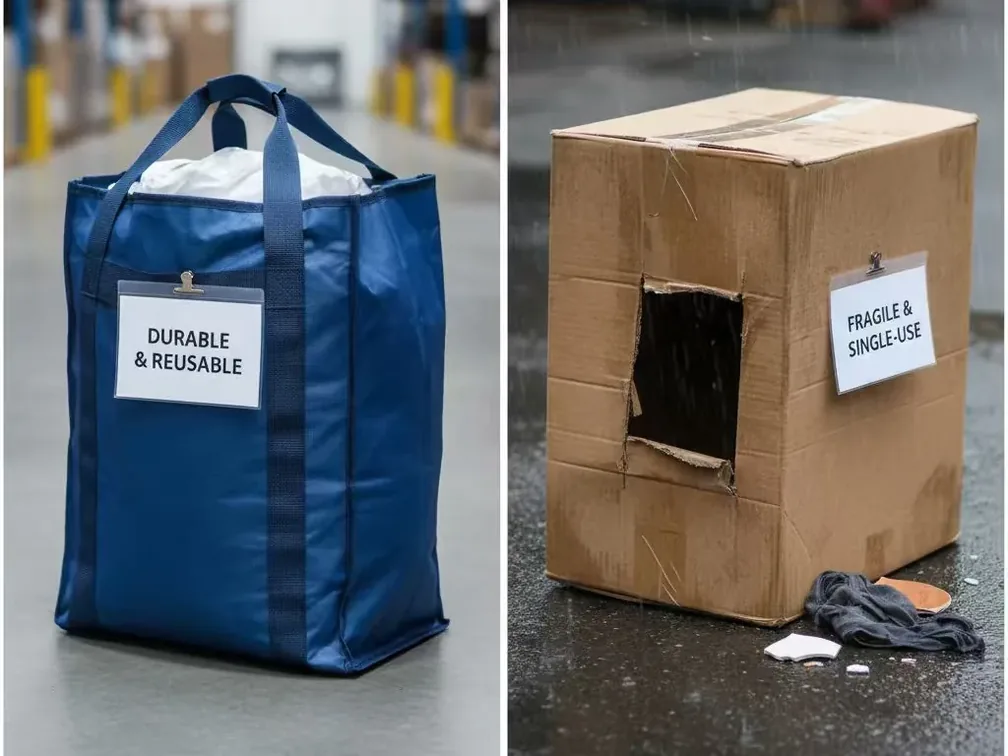
How the kit was built
- Fix the tiers first. Three sizes cover a house: a large bag for bedding and clothes, a medium for kitchen and living room loads, a small for lamps, frames and anything that breaks.
- Fix the room color next. Green goes to the bedroom, tan to the kitchen, black for fragile or sensitive items, so the choice is made by color before anyone reads a label.
- Fix the shell. A woven PP body with a laminated film surface for water resistance, reinforced webbing handles, zippers with double sliders and a clear window on the front for the room card.
- Fix the empty state. A bag that folds flat to 0.8 in is what makes a return trip work, and 200 folded bags fit in the space 40 assembled boxes used to take.
- Fix the kit count. The contractor took 2,400 large, 2,400 medium and 1,200 small bags, enough to keep 10 crews working with spares for rotation.
Our own heavy duty moving bags already carry the parts that plan leans on: a top zip, wrap-around straps, a side grip, backpack straps and a label pocket, over webbing that runs the length of the opening. Five sizes share that construction, so a kit can mix capacities without mixing quality. A full-length zip opens flat, which is what lets bedding go in without folding twice.
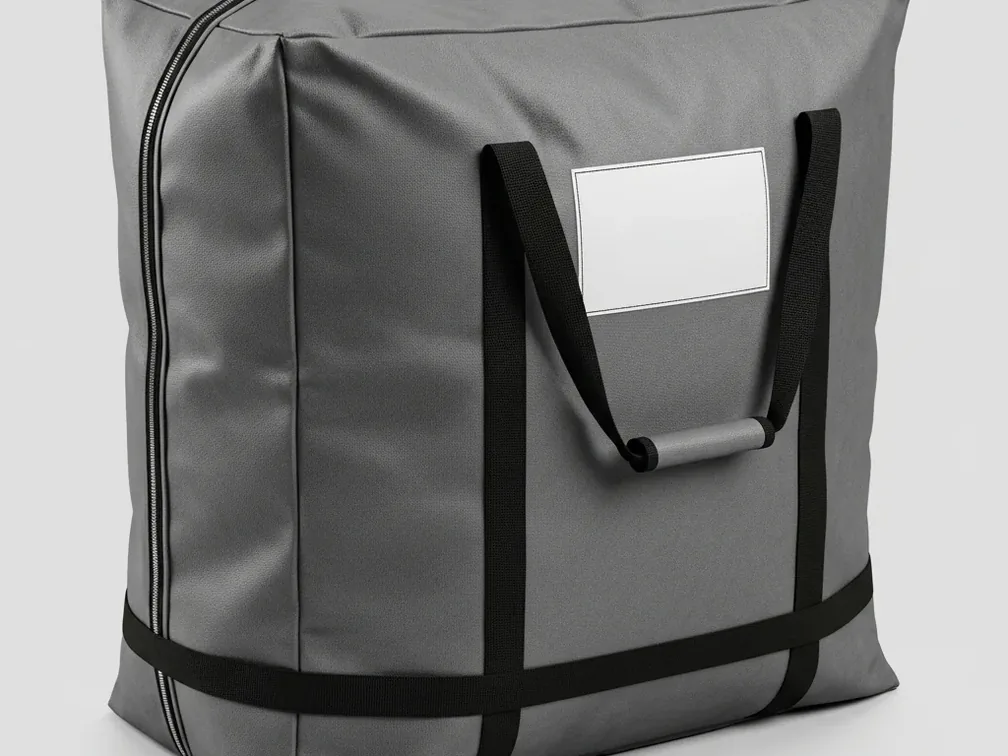
The 3 tiers a crew carries
| Tier | Color | What goes in | Why the tier exists |
|---|---|---|---|
| Large | green | duvet, pillows, folded clothes | one bag takes a bedroom load in a single carry |
| Medium | tan | pots, pans, small appliances | a wider opening for bulky kitchen items |
| Small | black | lamps, frames, fragile pieces | the shortest lift, kept away from heavy loads |
The color rule is what a crew learns first, because standardization removes the decision at the source rather than speeding it up, and the old job site asked the question on every item. In the deployed system a packer grabbed the right bag in under 30 seconds, where the same decision used to take about 4 minutes. The bags also opened wider than the boxes they replaced, so a comforter or a pair of pillows went in with one motion instead of being compressed into an undersized carton.
Buyers who compare moving bags with zipper closures to a simple top zip see the same logic at the opening: a zip that opens flat cuts a handling step. A room card in the clear window is the second half of that rule, and it is a feature we build into the face of the bag rather than a sticker added later. A bag that can be read from across the room is a bag that does not get opened to find out what is inside.
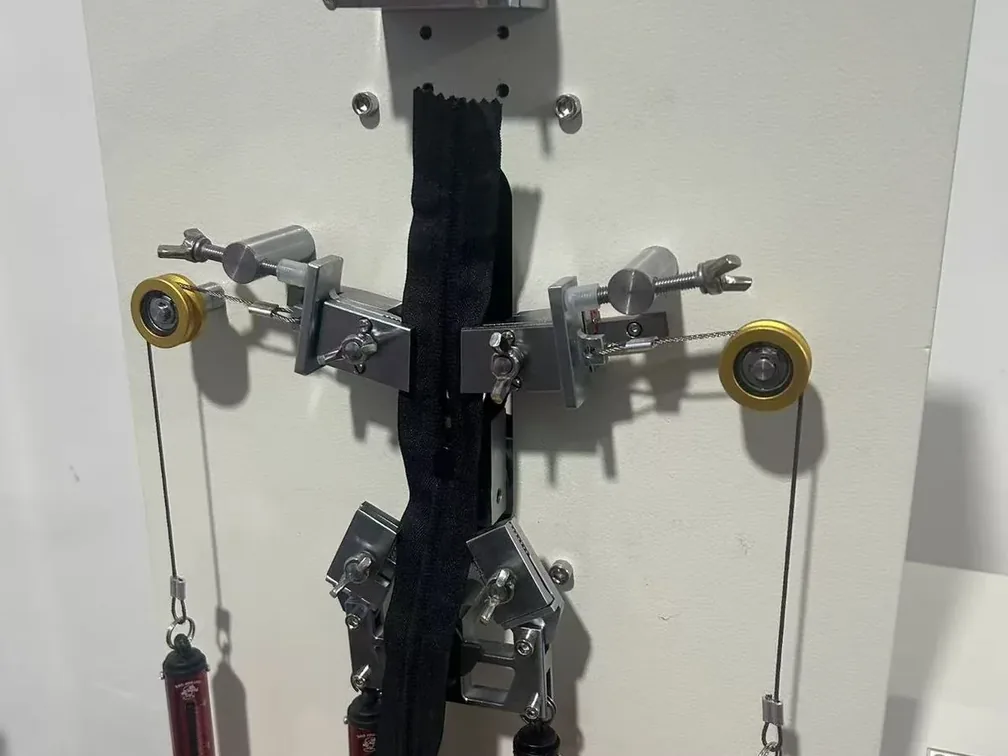
What the 5 test moves showed
The rollout ran in 3 phases over 90 days and phase one was sample approval. Samples of each tier went out in the specified colors and were tested on 5 actual PCS moves before the kit was committed: packed to 77 lb and carried up 2 flights of stairs, cycled open and closed 200 times, and sprayed with water to check the laminate.
That load test changed the handle. The original spec used 1.6 in webbing, comfortable at 55 lb and hand tiring at 77 lb, so the webbing moved to 2.0 in with padded grips. Weight and handle comfort are linked, and no fixed weight figure settles it, which is why the test has to be run with the load the crew actually carries. HSE manual handling guidance puts the point plainly.
The weight of a load is important, though the law does not set specific weight limits. Health and Safety Executive (UK), Manual handling at work
Phase two delivered 6,000 bags palletized in cartons of 25, sized so a forklift could handle them without a repack. All 6,000 passed incoming inspection. Phase three was a one page packing protocol and a short overlap period on both systems, after which crews learned the system in 2 hours instead of 3 weeks.
Questions from relocation teams
What bags do military movers use for PCS moves?
Contractors are moving to woven PP moving bags in standardized sizes, color coded by room. The bags replace cardboard because they fold, they reuse across hundreds of moves, and the color tells a packer where the bag belongs without a label read.
How much time does a standard kit save?
On the 4 bedroom move this contractor measured, packing time fell from 6.8 hours to 3.7 hours. The larger part came from the container decision disappearing, and the smaller part from bags that open wide enough to load bulky items in one motion.
How long does a woven PP bag last in commercial moving?
A woven PP bag with a laminated surface and reinforced handles typically runs 150 to 200 uses in commercial operations. Bags that only carry bedding last longer, up to 180 to 200 uses, while kitchen and garage bags with sharper contents average 120 to 140.
Does the kit work outside military relocation?
Yes. Any high volume operation that repeats a similar job benefits from the same standardization, which covers apartment turnover, corporate relocation, self storage and university move in programs.

What to standardize first
Start with color, not size. The contractor first considered one color in three sizes and the color coded version won because a crew member can pick the right bag from across a room, which saved half a minute per bag and compounded to 25 to 30 minutes on a job that packs 50 to 60 bags.
The second thing to standardize is the empty state. Rental bins take 3 times their filled volume back on the return trip and need a truck of their own, where folded bags ride home in the crew van. Our bags fold to 0.8 in and 200 of them fit in one storage compartment.
The third is the shell. A laminated woven PP face resists punctures from picture frames and lamp bases, and the corners of an overloaded carton are where cardboard fails first. Our own tarp style bags carry double stitched nylon binding at the handle for the same reason, and the zipper sample goes on the test bench before a kit ships.
A kit like this is really a set of packing bags for moving, sized and colored so a crew stops deciding and starts loading. Then plan for wear. Six months of field work needed 180 bags replaced for zipper failures, handle abrasion and one batch degraded by hydraulic fluid, which is normal for a fleet in daily use. Every order passes 4 QC checkpoints, and the QC team inspects a kit under durability testing before it leaves.
How to run a kit pilot
Four checks turn a pilot into a kit you can repeat, and 3 of them need only a loaded sample and a stopwatch.
- Time the container decision on one room before the kit arrives, so the change has a baseline.
- Test each tier on a real move, loaded to the weight the crew carries and carried up stairs.
- Check the handle at that weight and change the webbing if hands tire.
- Count the bags that come back damaged after the first month, then set a replacement allowance.
Shell strength is the one number worth asking for, and ASTM D5034 covers the grab test that pulls a clamped section until it breaks, so a supplier claim can be checked against a method rather than a photograph.
If the load is the next question, Pack Heavy Duty Moving Bags: The covers what goes in and what never does, Moving Bags vs Plastic Totes: Which covers the container choice, and Heavy Duty Moving Bags: The Cost covers the long run.
Related reading from the same line: Heavy Duty Moving Bags: The Cost.