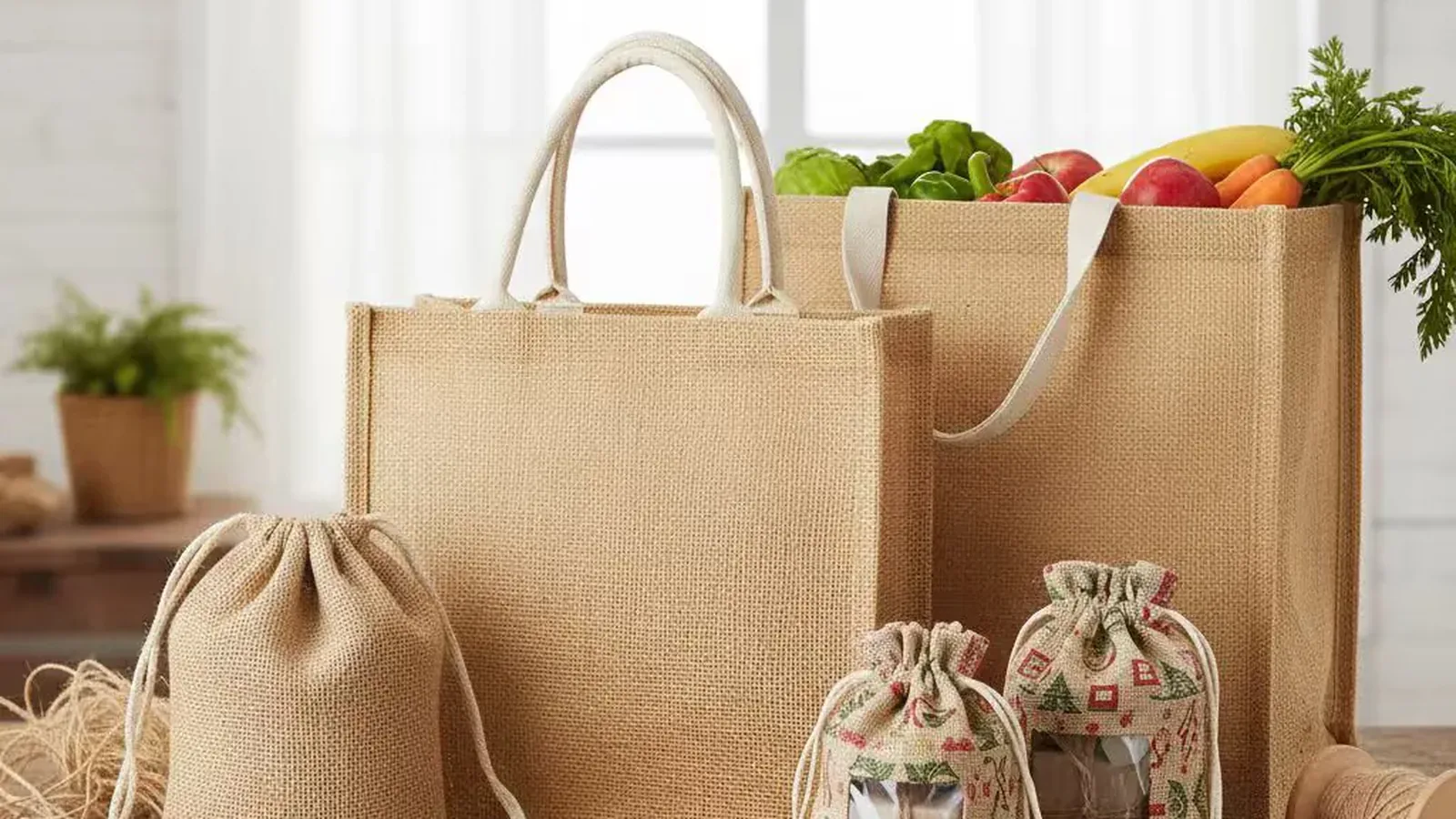
The old post's case was simple: events need high impact branding on a small budget, and a drawstring bag delivers visibility for very little, with 3 ways to use the same.
The sample round answers bulk drawstring bags: the seam, the handle join and the label are read on a sample before the batch. The old post opened on the same choice, that bulk drawstring bags are an affordable give away for a promotion or an event and that the wrong pick wastes the spend.
An events buyer asked me again this season why her drawstring bags were coming back from a careers fair with the cord pulled out of the channel, and the answer was not the cord at all.
It promised to keep buyers out of the costly mistakes between the sample and the delivery, and it covered cinch bags and drawstring backpacks in the same sweep. This guide keeps that promise and puts the material decision first, because every other problem follows from it.
The short answer
Bulk drawstring bags work as a giveaway because the format is light, cheap to print across a large area and easy to hand out, so a single order can cover an event, a school and a gym. The 3 decisions that decide the result are the shell, the print route and the cord hardware, and the shell has to be chosen from the event rather than from the artwork. A light polyester bag is right for a one day handout and wrong for a bag that goes to the gym 3 times a week.
Why the format carries a brand
The old post's case was simple: events need high impact branding on a small budget, and a drawstring bag delivers visibility for very little, with 3 ways to use the same format. The bag is light enough to hand out by the hundred and cheap enough that nobody refuses one.
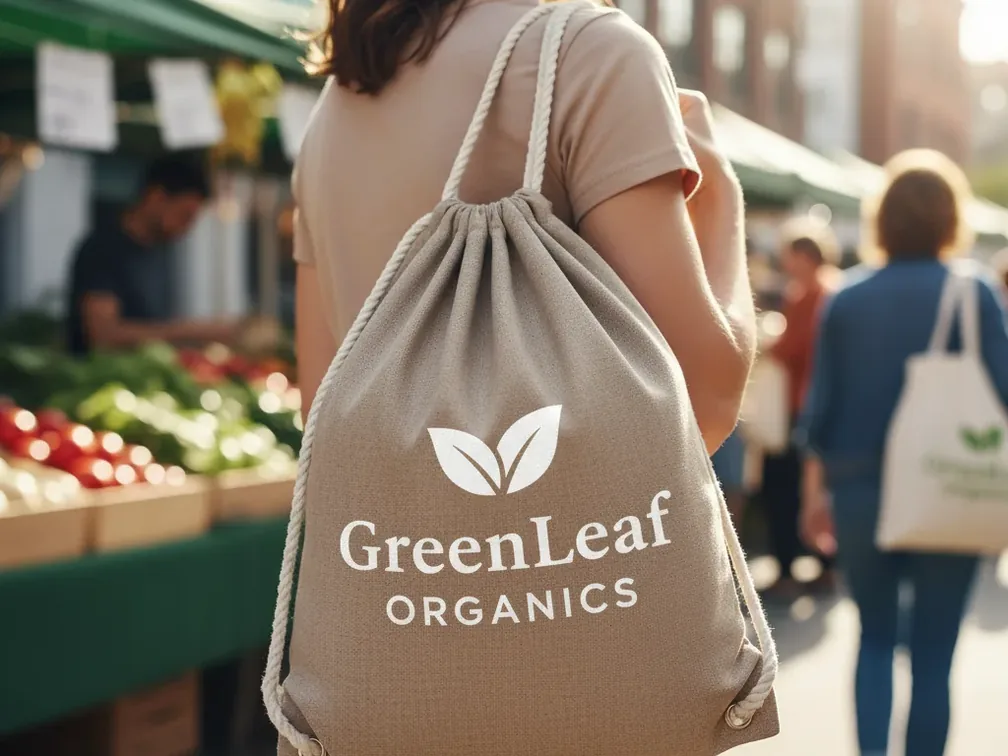
The reason it works after the event is that it fits almost everyone. Kids, students and adults all take a drawstring bag, because it is easy to carry and useful in a way that a leaflet is not. When the recipient uses the bag, the logo travels with them on a commute, at a gym or at school, which is the mobile exposure a giveaway is bought for.
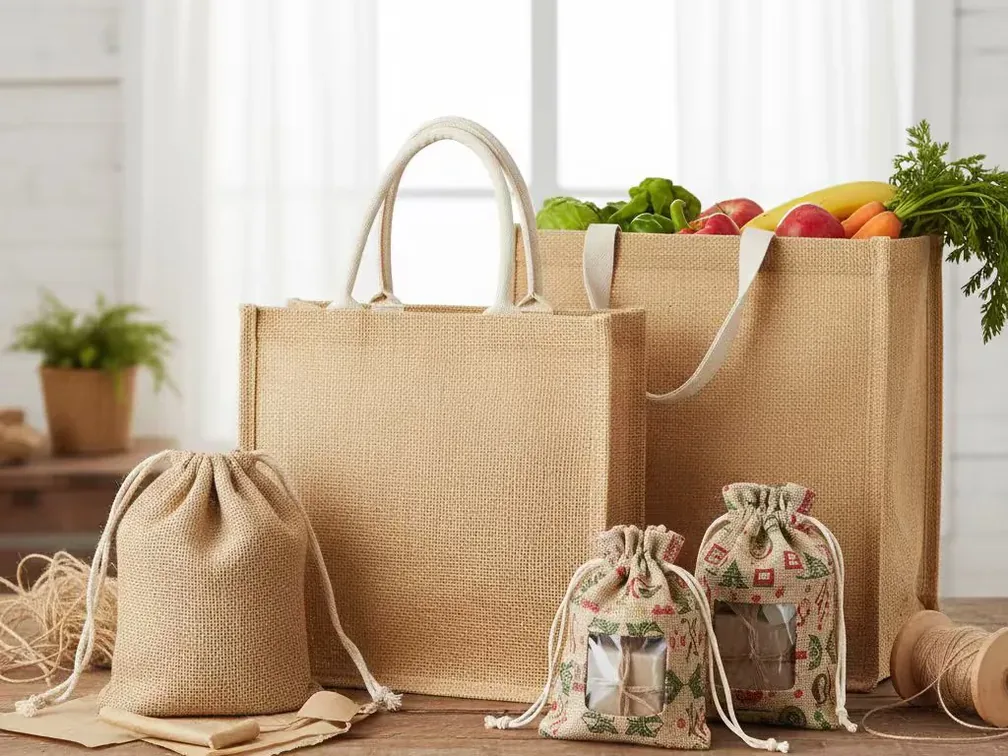
The catch is that a bag which is "not rare" is also easy to buy badly. The light shell that makes the handout cheap is the same shell that fails at the cord channel, and the print that looks bold on a screen can look thin on a fabric that lets the backing show through.
The 4 shells and what each one carries
Not all drawstring bags are the same, and the material decides the cost, the look and what the bag can claim. Polyester is the durable low cost route with a bright print, cotton and canvas give a natural feel, and the recycled options carry the eco message.
| Shell | What it does well | Where it stops | Event fit |
|---|---|---|---|
| Polyester | Light, low cost, bright print, resists a shower | It grips the cord least and shows a mark | A one day handout or a big volume run |
| Cotton | Soft, natural, takes a soft print | Colour can shift on a long run | A school or a brand with an eco line |
| Canvas | Heavier, premium feel, stands up | Heavier to ship and slower to print | A gym or a corporate gift |
| rPET | Recycled shell, same construction as the others | It is not the cheapest shell | A campaign with a sustainability promise |
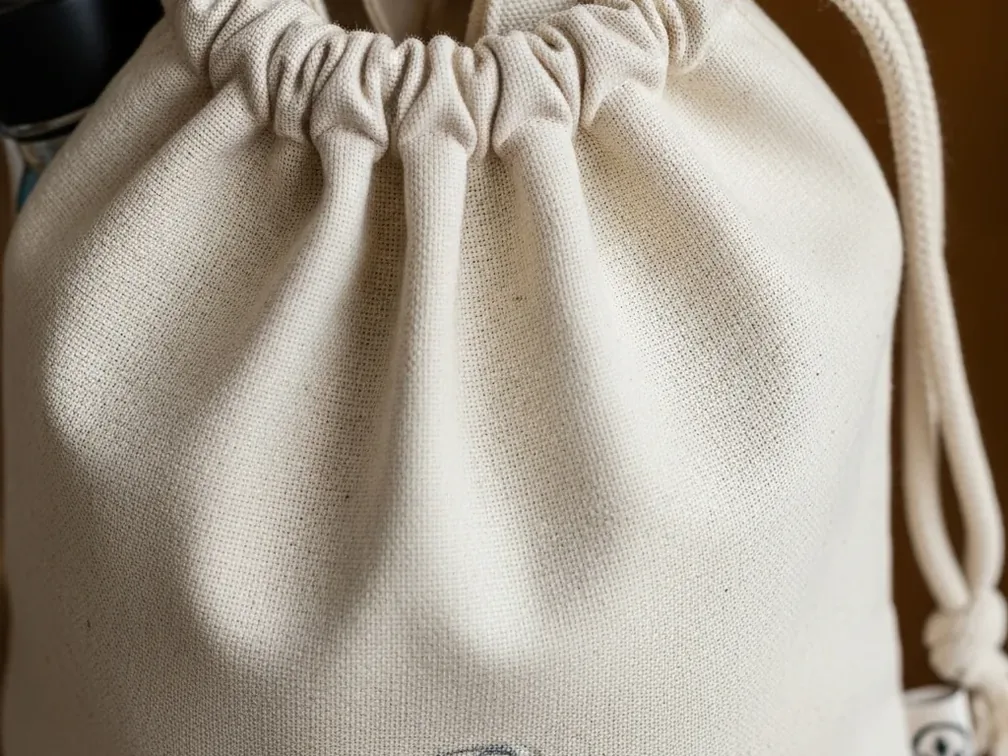
Every material has its trade off, and the useful question is which one the recipient will still carry next month. For a high quantity handout polyester is the sensible shell, and for an eco led brand rPET or cotton sends a stronger signal than a printed claim. The choice is a fit to the event, not a ranking.
The order the process actually runs in
The bulk order process runs through a fixed sequence, and the old post was right that most delays come from a step nobody owned rather than from the factory. It listed the sequence as the order quantity and the specs, the sample, production and the shipping terms, and each one has to be agreed before the next begins.
- Fix the shell and the size before the artwork, because a print that is built for cotton has to be redrawn for a coated polyester.
- Approve a sample with the real logo, since a proof on screen does not show how the ink sits on the fabric.
- Put the delivery date on the table early, because a giveaway tied to an event date cannot be pulled forward once the run has started.
- Ask for pre-production photos, which is the cheapest check a buyer can add to a bulk order.
A buffer is the other part of the plan. The old post advised keeping 2 to 3 weeks in hand for delays, which is the part most event buyers cut first and regret. The order that ships on time is usually the one that was placed with slack rather than the one that was rushed.
Print, cord hardware and the uses that fit
Customization is where a plain bag becomes a moving billboard, and the old post warned that a bad print choice wastes the budget faster than a bad shell. That is why custom drawstring bags are usually ordered from one shell with 2 artwork variants rather than the other way round. The 3 routes it named are screen printing for simple logos at volume, heat transfer for detailed or multicolour artwork and sublimation for an all over print on polyester.
The route follows the artwork and the shell, and it is worth stating plainly: our own ranges print by screen print or heat transfer, with a woven label for a mark that has to outlast the bag. For a one colour event logo a screen print is the cheapest route, and it holds the crisp edge that a fine coral or a small wordmark needs.
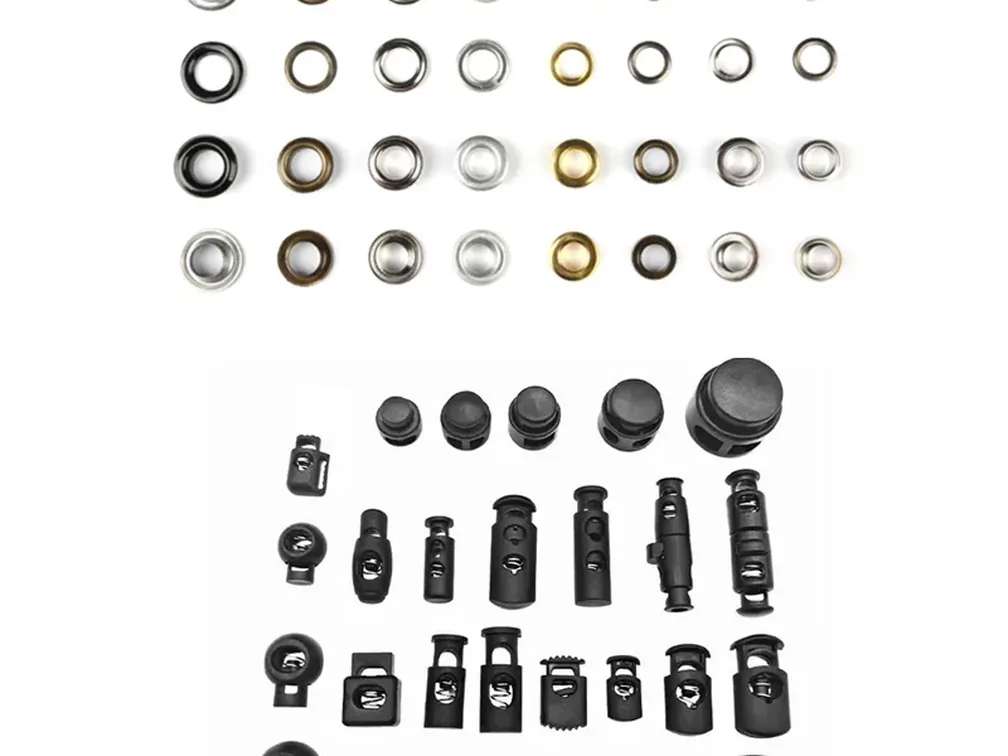
Placement is the next decision. The front centre is the area most people read, the mark should stay simple, and a design pushed into the seam is the mistake that hides it. On a drawstring backpack the cord anchors are the part that carries the load, so a buyer should look at the bar-tack rather than the print when the bag is for a gym.
The uses follow the shell. The old post put drawstring bags into events, schools, gyms and corporate gifting, and the same bag works in all four when the size is matched to what goes inside. A corporate gift is the one case where a small branded item inside the bag helps, because the bag becomes the packaging for a set rather than a single item.
Questions buyers ask before a drawstring order
Which shell suits a large giveaway?
The lightest polyester, when the bag is handed out once and carried for a day. It is also the shell that grips the cord least, so a bag that will be used for a gym needs a heavier cotton or canvas.
Can the same artwork run across 2 shells?
Only after a proof on each, because ink sits differently on a coated polyester and a cotton canvas. One design can run twice, but the proof is not transferable.
What makes the cord stay closed?
The channel and the hardware rather than the cord itself. A cord lock holds tension on a smooth fabric, and a stitched channel that is too wide lets the cord slip.
What is the realistic timing for an event order?
The old post recommended a 2 to 3 week buffer on top of the plan, and the sample is the step that usually uses it up.
What to order for an event season
The old post asked how to manage cost and budget in bulk, and the honest answer is that 3 choices do most of the work: the shell, the number of print colours and the timing of the run. Ordering outside the peak season avoids the rush, a 1 colour screen print keeps the print cost down, and sharing a container with other goods is the third lever.
The eco argument is worth keeping in proportion. Sustainability is closer to an expectation than a trend, and a recycled or organic shell supports the claim. What a buyer should not do is put the claim on the bag without the material behind it, because a recycled shell has to be the actual shell rather than a line in the artwork. rPET is woven from recycled bottles on the same construction as our other shells, so the swap is real when it is specified.
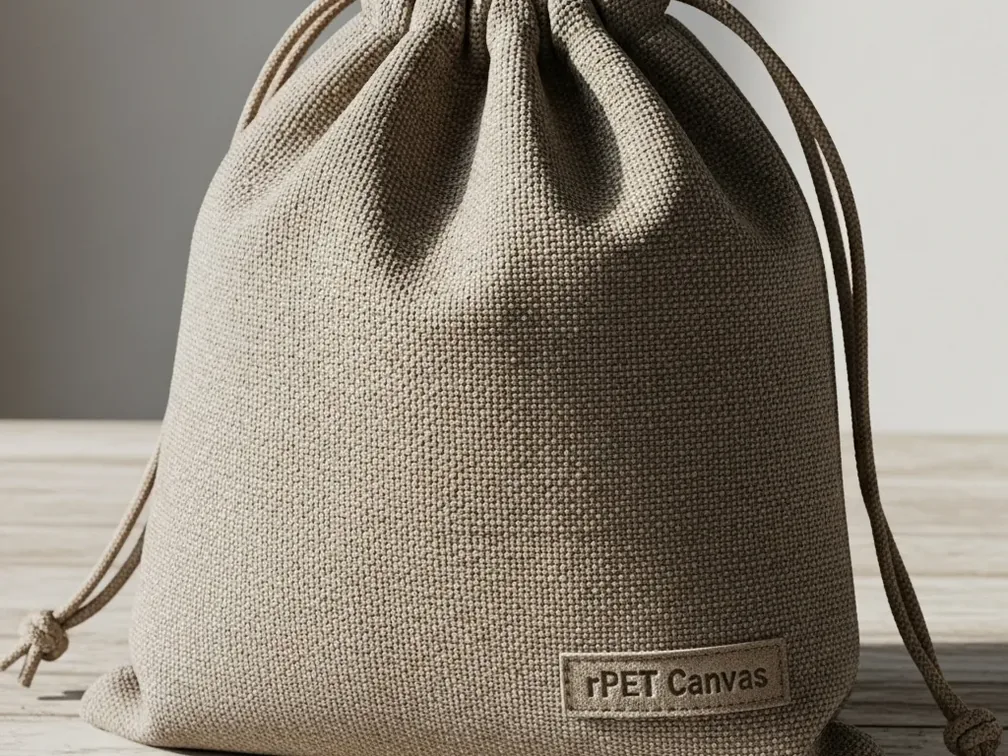
The old post closed on affordable, customizable and eco friendly as the 3 qualities of the format, and all 3 hold when the shell is matched to the event. A drawstring bag is the cheapest branded object most buyers will ever hand out, which is exactly why the spec has to be a decision rather than a default.
What to check on a bulk order
The sample round answers bulk drawstring bags: the seam, the handle join and the label are read on a sample before the batch. Every order passes 4 checkpoints on our line: incoming material, seams and the zip, the finished bag and the final count. A buyer can run the same 4 checks on the sample and again on the pre shipment photos.
- Pull the cord channel and the bar-tack, because the closure and the strap anchor are where a light bag fails.
- Check the print against the proof on the actual fabric, since the same artwork reads differently on polyester and on cotton.
- Confirm the packing, because a polybag, a retail carton and a per store count are different cartons and different jobs.
- Agree the after sales route before the order ships, so a defective unit or a short count has an owner rather than a conversation.
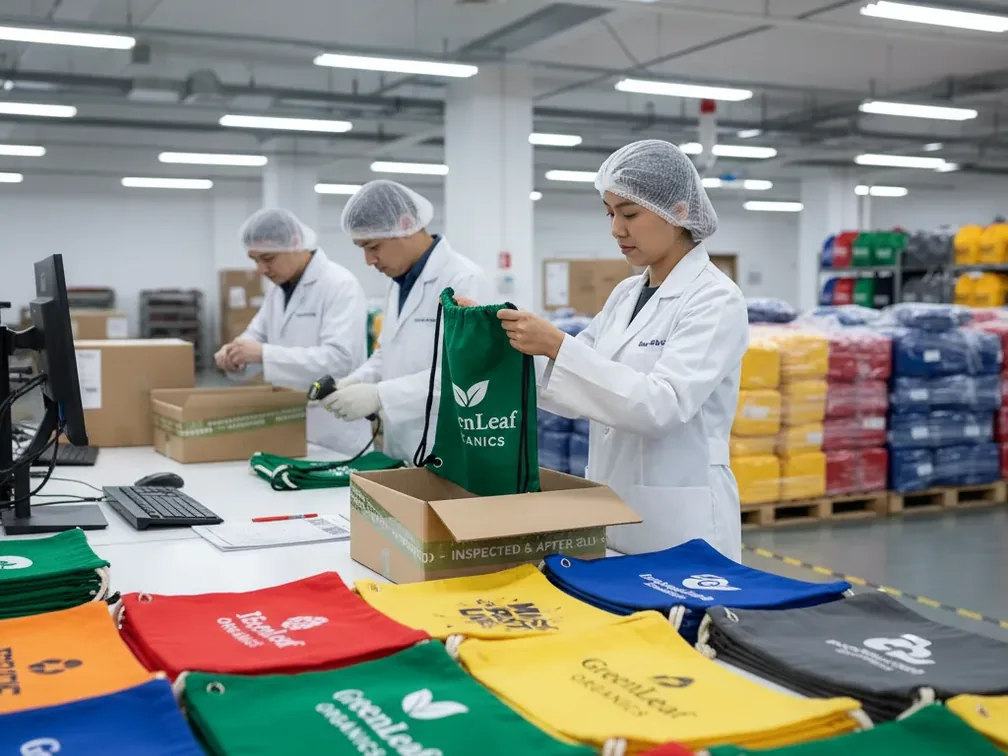
Quality control is the part that protects the brand rather than the bag, since a poor run or a late delivery does more damage than a good bag does good. The old post's own list of must haves was a sample approval, a pre shipment inspection and a packaging check, and that is still the shortest version of the process.
Two more details are worth fixing at the sample stage. Stock colours can be swapped for a Pantone match and a new size takes one sample round, so a colour change does not require a new bag. And the fabric can move across the range, from polyester and cotton to canvas, jute and rPET, without leaving the same line.
The EPA's advice on reusable bags is the plainest statement of the reuse case, and the recycling basics page ranks reuse above recycling.
Consumers also can reduce waste by using reusable shopping bags.
U.S. Environmental Protection Agency, Frequent Questions on Recycling
For the gym version of the same bag, a drawstring sports bag for the gym covers the training case, and whether drawstring bags are safe for toddlers covers the cord question for a young user.