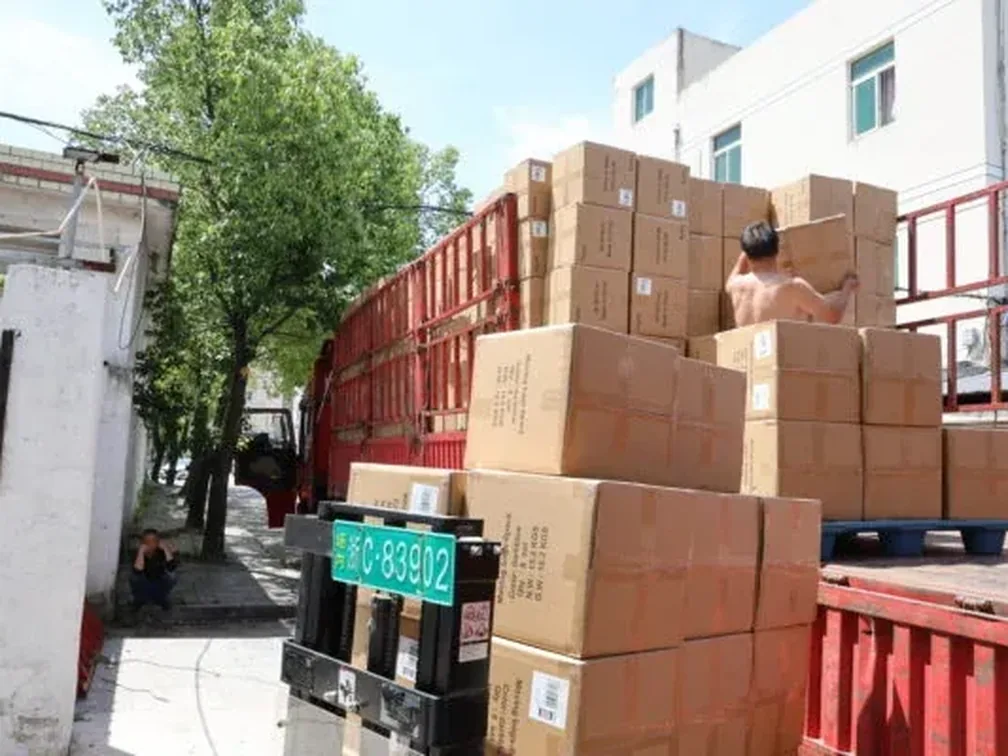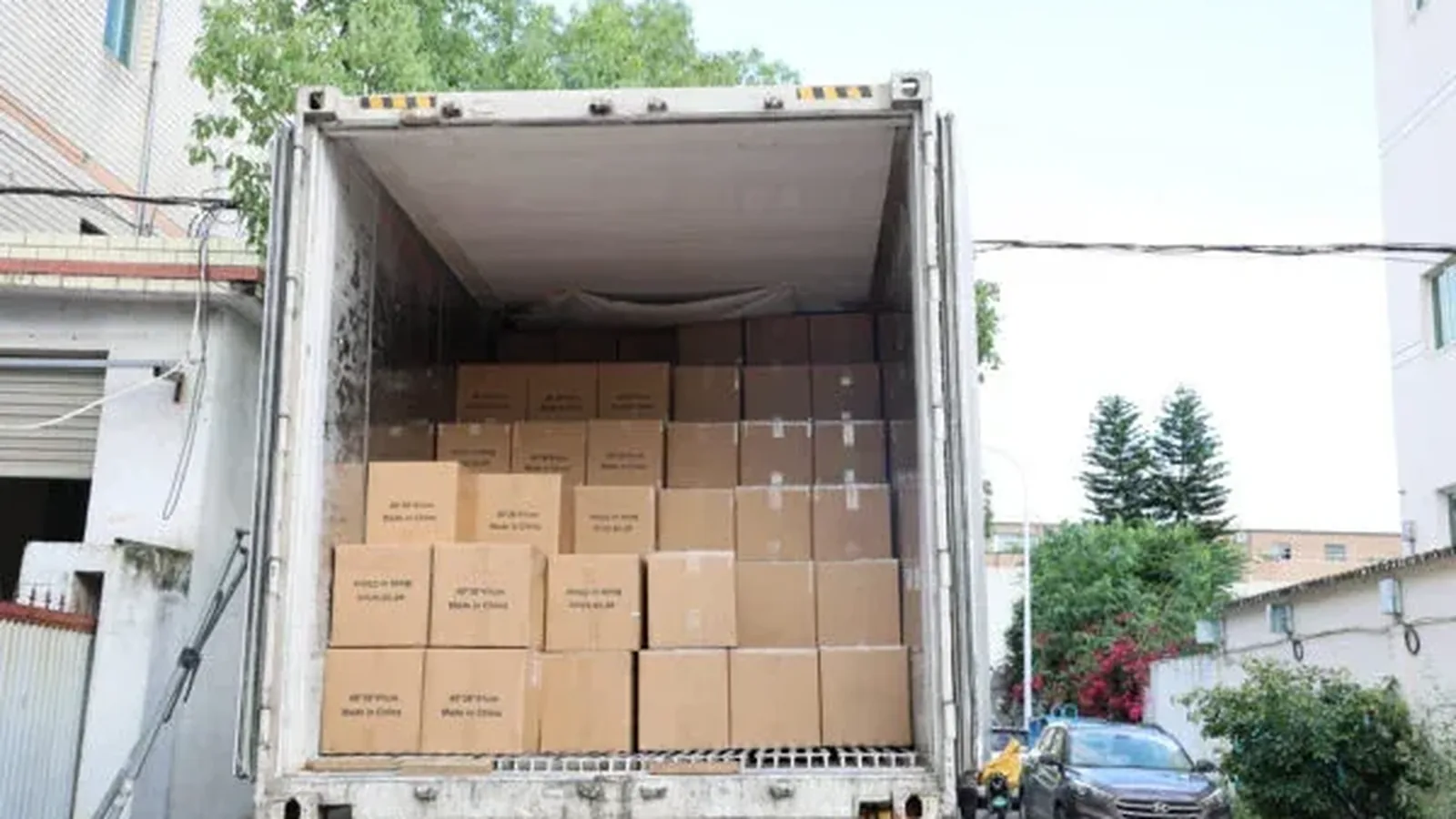
A 40ft box takes roughly 420 medium moving bags, 730 small ones or 310 large ones, and flat packing lifts those counts because a folded bag takes a fraction of its expanded volume. Bag size sets the number, so the count belongs in the spec stage rather than in the freight conversation.
The sample round answers moving bags per container: the seam, the handle join and the label are read on a sample before the batch. An importer asked me last week how many moving bags per container he should allow for, and the number he had been given, about 400, had no bag size behind it. That carton sheet stays on the desk beside the sample bag.
The question keeps coming back because a container count is usually fixed long before anyone agrees the bag size.
What the box really offers
A 40ft general purpose box is listed with a nominal volume of about 2,370 cubic feet, and the usable figure lands nearer 2,225 once wall curvature and the gaps between stacked cartons come out. That difference is why a count worked from the listed number always runs high.
Container capacity starts at the inside face: roughly 39.5 ft long, 7.7 ft wide and 7.8 ft high on a general purpose unit. Freight is charged on the cargo volume the box actually takes, so the outside shell never enters the maths.
A high cube box adds about 320 cubic feet of internal height, 8.8 ft inside against 7.8 ft, and that only earns its keep when cartons stack more than 5 levels or the bags load bulky. Most moving bag cartons are short enough that the general purpose box carries them without the taller shell.
The count by bag size
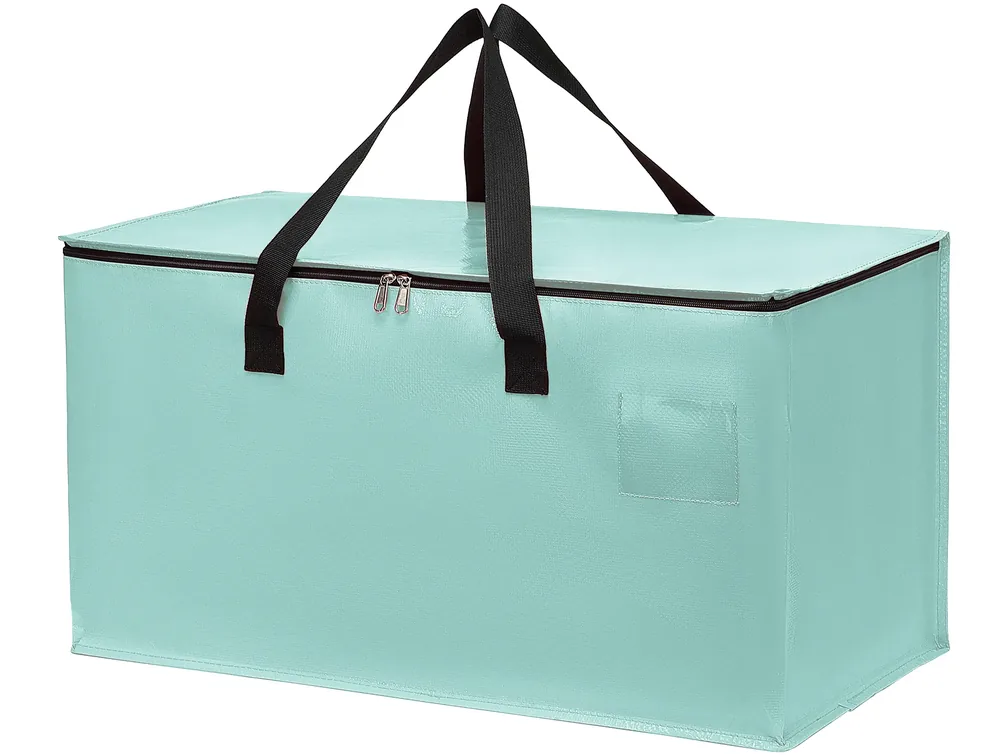
Moving bags come in 4 retail sizes that matter for a container count, and each one moves the number by a wide margin.
| Bag size | Dimensions (in) | Bag volume (cubic feet) | Per 40ft box | Typical load |
|---|---|---|---|---|
| Small | 24 x 16 x 12 | 2.7 | about 730 | books, shoes, linen |
| Medium | 28 x 18 x 16 | 4.7 | about 420 | clothing, kitchen goods |
| Large | 30 x 20 x 18 | 6.3 | about 310 | bedding, blankets |
| Extra large | 38 x 22 x 20 | 9.7 | about 200 | duvets, comforters |
The spread is the answer to the question. One box carries 730 small bags or 200 extra large ones, so a line that mixes sizes cannot be sized from a single average, and a volume breakdown per size is the only honest input a buyer can hand to a forwarder.
Read the volume column as the bag measured outside and multiplied through, which is the same unit a forwarder uses for container capacity. A bag at 4.7 cubic feet and a box at 2,225 cubic feet are figures you can divide, and that division is the whole calculation.
Flat packed or expanded
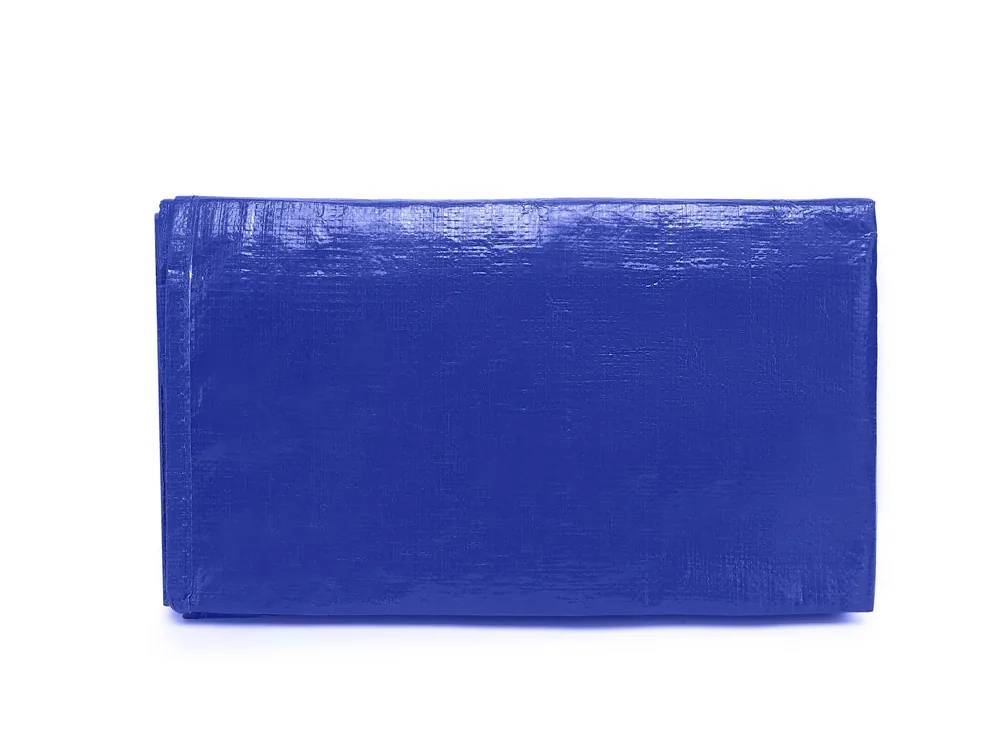
Bags ship collapsible, so the packing mode moves the count more than the bag does. A medium bag folded to a 28 by 18 by 2 inch pancake takes about 0.58 cubic feet against 4.7 expanded, an 8 times difference in raw volume before carton walls take their share.
The volume method has 3 steps: multiply the bag dimensions to get one bag in cubic feet, divide the usable box volume by that figure, then apply the packing factor, which sits between 0.85 and 0.90 for bags.
A medium bag at 4.7 cubic feet into 2,225 usable cubic feet gives about 477 at perfect packing, and the 0.88 factor brings that to about 420, which is the figure that goes into a loading plan.
The packing factor is the part buyers underrate. A mixed size line drops it toward 0.82 because mixed carton sizes leave more gaps, while a single size order holds 0.88, so the factor belongs in the plan before the box books rather than after it sails.
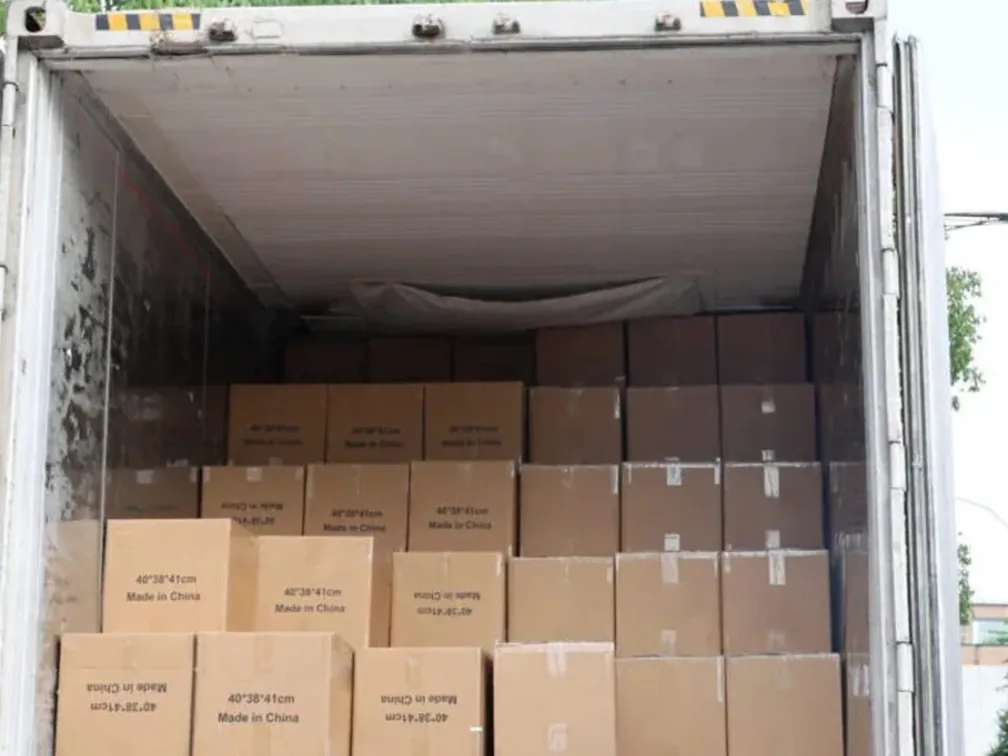
Packing mode is settled on our line before production starts, polybag, retail or per store packing, agreed with the buyer, and the cartons are counted and photographed before the container seals. A flat pack that changes after the loading plan is written is a different count.
Questions importers ask about container loads
How many moving bags fit in a 40ft container?
A 40ft general purpose box fits about 730 small bags, 420 medium bags or 310 large bags when the bags ship expanded and floor loaded, and flat packing lifts each of those figures.
What usable volume should the maths start from?
About 2,225 cubic feet after wall curvature and packing loss, and about 2,540 for a high cube box. Any figure much above that assumes a cube that does not exist in a real container.
Does weight limit a full container load?
No. Every box has a payload ceiling and for moving bags it almost never binds, because a full container of bags weighs around 1 to 2 tons against a ceiling built for far denser cargo.
Should the bags ship flat or expanded?
Flat. Folded bags load a third to a half more units per box, which is the packing mode to confirm in writing before freight is booked.
How many bags fit in a 20ft box?
About half of a 40ft load, roughly 210 medium bags after packing loss, which suits a first order, a retail test or a size pilot.
What the count means at the loading door
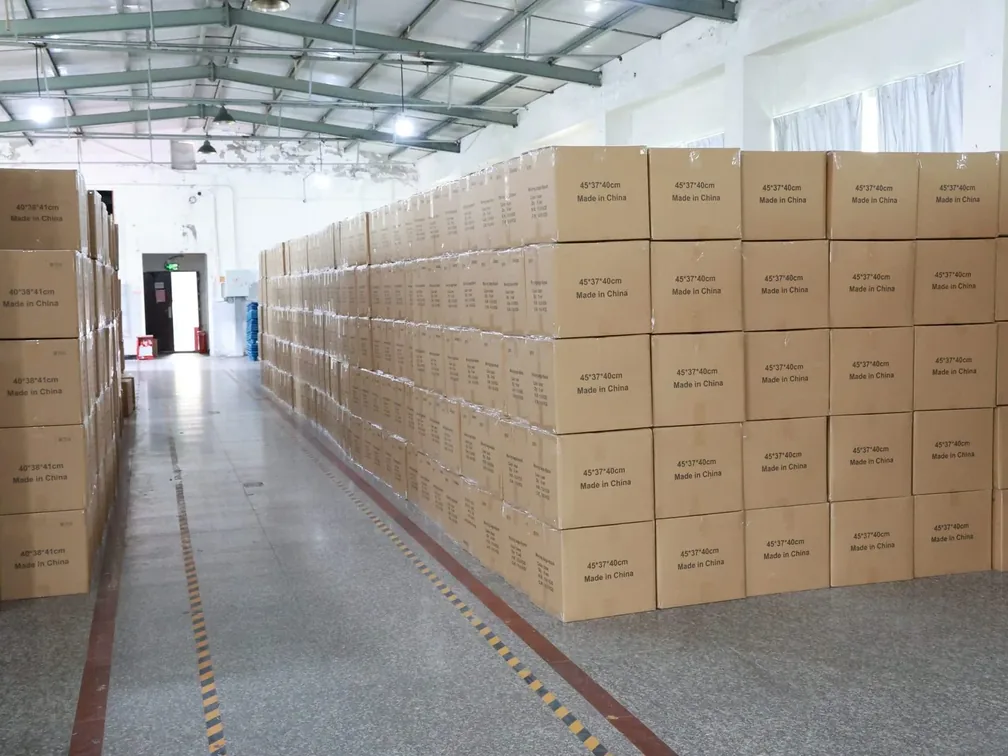
A count is only as good as the loading plan behind it. Order size should follow the box choice rather than drive it: a 20ft unit holds roughly half of a 40ft load, so the smaller box is the right place to test a size mix before committing to a full container.
Inside the box the cartons are stacked in rows and tiers with a height limit and an interlock, and the rule that governs a stack like that is blunt. 29 CFR 1910.176 asks for exactly what a loading plan should show.
Bags, containers, bundles, etc., stored in tiers shall be stacked, blocked, interlocked and limited in height so that they are stable and secure against sliding or collapse. 29 CFR 1910.176, U.S. Occupational Safety and Health Administration
Our own pack is a counted process: incoming fabric, webbing, zips and thread checked against the approved spec, pull and seam strength and bar tack tested on every batch, dimensions, handles and logo checked by hand, then cartons counted and photographed before the container seals. That is 4 checkpoints from incoming material to the final count.
The freight basis belongs in the same conversation, because the trade term decides who books the box and who carries the risk at each leg. The ICC lists the terms as 11 three letter rules, so a plan written against FOB names a port and a handover point that a plan written against DDP does not.
What to send before the box books
Before a purchase order is signed, run the numbers the way a forwarder will and ask the factory to confirm carton dimensions, bags per carton and a loading plan against the box you book.
- Bag dimensions: interior or exterior, expanded or folded, with the tolerance.
- Carton data: length, width, height, bags per carton and gross weight.
- Container plan: cartons per row, rows per tier, total cartons per box.
- Loading mode: floor loaded, palletized or in bales, with pallet dimensions.
- Freight basis: FOB, CIF or DDP, with the trade term named on the order.
If the returned plan is off by more than a rounding margin, ask why before approving. The cause is usually the packing factor, a carton dimension or a folding method, and all 3 are negotiable.
Then set the numbers in the spec: about 2,225 usable cubic feet for a 40ft box and 2,540 for a high cube, around 420 medium bags for the sized unit, flat packing lifting the count by a third to a half, and carton data plus the loading plan attached to the order.
The answer is a calculation, not a guess. Start from the usable volume, divide by the volume of one bag in its shipping state, apply the packing factor, and confirm the result against the loading plan that comes back.
Where the load inside the bag is the question, moving bag load capacity covers the pull test and the safety factor, and how a heavy duty bag is built covers the seam and handle work that decides whether the 420th bag arrives whole.